

Lingxin Intelligence Files for IPO: Bridging AI and Mental Health with Digital Therapeutics
Undoubtedly, technology empowerment has become one of the most talked-about and attractive directions for innovation in the current mental health industry.
As a result, AI-powered psychological robots and digital therapeutics (DTx)—intervention programs driven by software and grounded in evidence-based medicine, used to treat, manage, or prevent diseases—have frequently entered the public eye and gained increasing recognition from both the market and the general public.
Underlying this is the long-standing issue of insufficient supply-side resources in the industry. Public data indicates that by the end of 2020, there were only slightly more than 50,000 licensed psychiatrists (including assistant physicians) across China. Furthermore, although there are over one million certified psychological counselors in China, fewer than 100,000 are engaged in full-time or part-time work within the psychological counseling sector.
It is precisely for this reason that leveraging AI technology to deliver mental health services is regarded as an effective solution to the aforementioned challenges and a significant opportunity for the industry’s future development. Over the past year, this direction has also attracted considerable interest and investment from the capital market.
Amid this wave, Beijing Lingxin Intelligent Technology Co., Ltd. (hereinafter referred to as “Lingxin Intelligence”), established in November 2021, is undoubtedly a dark horse.
It is reported that Lingxin Intelligence was founded by Huang Minlie, a tenured associate professor in the Department of Computer Science and Technology at Tsinghua University and an expert in the field of artificial intelligence and natural language dialogue systems. Since its inception, the company has been dedicated to applying cutting-edge AI technologies to digital diagnostic and therapeutic services for mental health. By establishing an advanced AI-based digital therapeutics system, it provides high-quality, cost-effective, personalized, and round-the-clock emotional support, psychotherapy, and intervention solutions for clinical patients and the broader population with suboptimal psychological well-being, thereby delivering more scientific and efficient mental health services to users.
As one of the leading startups in the AI mental health sector with a strong foundation in Natural Language Processing (NLP), Lingxin Intelligence has developed an online platform for psychological counseling and peer support services, “Lingxin Youran,” as well as an AI digital therapeutic software, “Lingyou,” to serve users with varying levels of needs. At its inception, Lingxin Intelligence completed its angel round of financing.
As a company with a strong research background, how Lingxin Intelligence strikes a balance between scientific research and commercial implementation, and how its founder, Professor Huang Minlie, adapts to the transition from scientist to entrepreneur, have been issues of significant concern since the company’s inception.
To this end, VCBeat held a dialogue with Professor Huang Minlie and has compiled the interview content as follows: (The content has been slightly edited and abridged without altering the original meaning.)
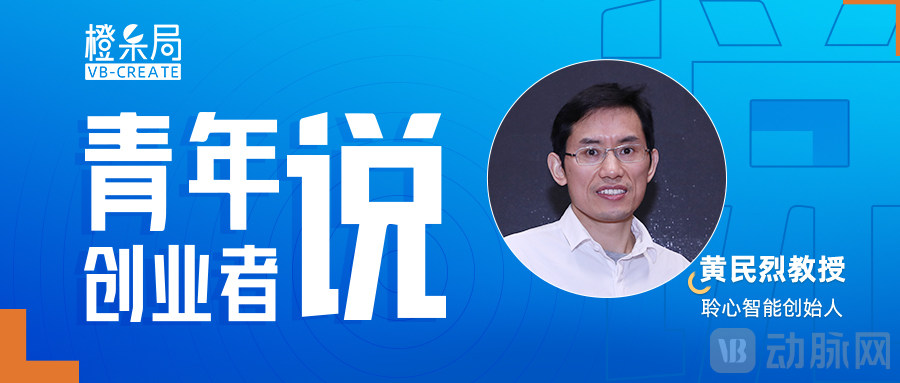
Dr. Huang Minlie graduated from the Department of Engineering Physics at Tsinghua University in 2000 and received his Ph.D. in Computer Science and Technology from Tsinghua University in 2006. His research interests primarily focus on artificial intelligence, natural language processing, dialogue systems, and related fields.
During his research tenure, Dr. Huang Minlie has published over 100 papers in top-tier international conferences and journals, receiving multiple Best Paper Awards or nominations at these premier venues. He has been supported by the National Science Fund for Distinguished Young Scholars and the Key Program of the National Natural Science Foundation of China. His accolades include the First Prize of the Wu Wenjun Artificial Intelligence Science and Technology Progress Award from the Chinese Association for Artificial Intelligence and the Hanwang Youth Innovation Award. Leading his research team, he pioneered internationally leading technologies such as emotional dialogue generation techniques and an emotional support dialogue framework. He developed EVA, a large language model in the field of Chinese dialogue systems, and Emohaa, an empathetic chatbot, which have been widely covered by Reference News, Xinhua News Agency, The Guardian, and MIT Technology Review.
Value-Driven, Technology-Centric
VCBeat Orange Bureau: In fact, you have already achieved numerous outstanding results in scientific research. Why have you now chosen to embark on the path of entrepreneurship? What catalyst prompted you to make this decision?
Professor Huang Minlie: Generally speaking, scientific research places greater emphasis on cutting-edge exploration, meaning that many research findings remain far from practical application. Our aim is to bridge this gap by translating research outcomes into real-world applications, addressing practical problems and creating value, thereby achieving genuine transformation of scientific achievements.
VCBeat Orange Bureau: From a scientific researcher to a market innovator, how did you adapt to this identity transition?
Professor Huang Minlie: In my view, the distinction between scientific research and market innovation is indeed quite apparent. Relatively speaking, the environment faced by scientific research is simpler; generally, once we recognize the significance of a problem, we can commence our investigation.
The environment for market innovation is rather complex; our first priority is to gain a thorough understanding of what companies in the same field are currently doing and which problems they have addressed.
Secondly, we must fully recognize our core strengths. For instance, in the mental health industry, our advantages in AI and technical capabilities are evident. Our team comprises dozens of researchers from Tsinghua University who have dedicated over a decade to research at the intersection of NLP dialogue systems and mental health, possessing internationally leading natural language processing technologies. Notably, we developed the world’s largest Chinese pre-trained dialogue model, which demonstrates globally leading performance in Chinese conversational abilities. Meanwhile, we also need to acknowledge and address the shortcomings inherent to being a latecomer in the industry.
Third, it is essential to understand which technologies can truly meet user and market demands. While scientific research may allow for a degree of flexibility, in the marketplace, users only pay for products that address genuine needs. Therefore, we have been continuously exploring and addressing how to best deploy our natural language processing (NLP) technologies in the most appropriate scenarios and how to more precisely satisfy user requirements.
Furthermore, we must also consider the market monetization cycle. In scientific research activities, R&D cycles of 10 or even 20 years are possible, but such timelines are clearly ill-suited to competitive market dynamics.
Exploring Breakthrough Paths with AI
VCBeat Orange Bureau: From the perspective of market applications, artificial intelligence and machine learning have a wide range of application scenarios. So why did you ultimately choose to apply them to the field of mental health?
Prof. Huang Minlie: The primary reason for choosing this field stems from our sense of social responsibility and commitment. A company’s development should not prioritize profit as its sole objective; it must also consider the value it delivers to society.
In the early stages, we certainly considered applying our technology to sectors with clearer commercialization paths and faster profitability. Ultimately, however, driven by a sense of social responsibility and value, we chose to focus on the field of mental health and psychological well-being. During the pandemic response in Xi’an and the Winter Olympics, our online psychological counseling platform, “Lingxin Youran,” launched pro bono psychological support services. The platform attracted tens of thousands of users, including university students, parents, and adolescents. Feedback indicated that text-based counseling and self-help intervention programs were particularly popular among adolescent users.
Nowadays, an increasing number of populations are facing various psychological issues. However, due to social stigma, low trust levels, and high costs of accessing services, users find it difficult to obtain immediate and inclusive professional mental health services. Therefore, helping users access professional and safe mental health services more conveniently is precisely the value and mission of Lingxin.
From a broader perspective, any industry seeking to transition from traditional models to intelligent systems must inevitably undergo three stages: “informatization, digitalization, and intelligentization.” However, the mental health industry currently faces numerous challenges in this process, presenting substantial opportunities and avenues for exploration.
VCBeat Orange Bureau: The integration of AI with mental health over the past two years is actually a topic being discussed by many innovative companies in the industry. How do you view this?
Prof. Huang Minlie: Overall, this illustrates new development trends within the industry. However, different teams possess distinct inherent characteristics, leading to variations in their approaches to technology enablement. Nevertheless, the overarching principle remains grounded in each team’s understanding of market needs and practical application scenarios.
VCBeat Orange Bureau: How do you view issues such as algorithmic bias and the "black box" problem that are frequently mentioned in AI and deep learning?
Professor Huang Minlie: There is also a substantial body of academic research addressing these issues.
Algorithmic bias, in fact, stems from inherent human biases. Human perspectives on specific issues are expressed through social networks and activities; the data derived from these public expressions are then incorporated into model training, thereby giving rise to algorithmic bias.
To minimize this issue, Lingxin Intelligence utilizes data sources that extend beyond psychological counseling to include a wide range of non-counseling datasets. This approach aims to ensure comprehensive coverage of diverse population samples and the majority of issues encountered by various groups. During data annotation, we perform more granular labeling across all potential dimensions.
Regarding the "black box" issue, many people currently view deep learning as an opaque black box and a formidable threat. In reality, however, this challenge can be addressed through algorithmic and engineering innovations.
For instance, we have adopted a relatively aggressive approach by leveraging neural network-based large language models (LLMs) to build our dialogue system, whereas many other systems remain hesitant to deploy such generative LLMs due to current concerns. Through this dialogue model, we have developed the emohaa chatbot, which has achieved significant breakthroughs in performance metrics such as user satisfaction assessment and dynamic risk evaluation. This has enabled the practical deployment of our large language model and endowed it with productization capabilities.
Meanwhile, this also demonstrates that we can innovatively apply tools to solve problems; the key lies in maintaining clear awareness and establishing corresponding mechanisms to mitigate and control potential issues.
VCBeat Orange Bureau: What is the current composition of the Lingxin team? And how do you strike a balance between technological R&D and commercial realities?
Professor Huang Minlie: Our team is, in fact, an interdisciplinary and cross-sectoral collaborative group. Essentially, half of our members are engaged in AI technology research, while the other half comprise clinicians, psychological counselors, and psychology experts with professional backgrounds in psychology and medicine.
By integrating expertise across technology, medicine, and psychology, our team drives product innovation in all aspects. Throughout the R&D process, we remain guided by market and user needs, continuously exploring the practical application of technologies and algorithms in the mental health industry.
Digital Therapeutics: The Time Is Now
VCBeat Orange Bureau: What is the overall layout of Lingxin Intelligence in terms of product research and development?
Professor Huang Minlie: At present, Lingxin Intelligence has multiple digital therapeutic projects actively underway in serious medical scenarios. The company’s most advanced project is a software solution for persistent depressive disorder, an intervention system that combines its proprietary AI with cognitive behavioral therapy, and it is currently undergoing clinical trials.
In the consumer healthcare sector, Lingxin is also deploying certain products, which will continue to be rolled out to the market.
Furthermore, the Lingxin team possesses significant advantages in natural language processing and conversational systems. Therefore, we aim to fully leverage our external professional technical capabilities to empower enterprises in the mental health sector, fostering synergy within the ecosystem.
VBOrange Bureau: Since digital therapeutics have been mentioned, has consideration been given to how to further improve user adherence during the product planning of digital therapeutics?
Professor Huang Minlie: First, we have established the uniqueness and scientific rigor of our product development by ensuring the distinctiveness, irreplaceability, and clinical efficacy of our product.
Meanwhile, we are also developing AI systems to enable personalized user interventions, ensuring that each patient receives a tailored treatment plan based on their individual circumstances. This approach aims to deliver highly customized care while enhancing both efficacy and adherence.
VBInsight Orange Bureau: What difficulties is Lingxin Intelligence currently facing in the product development process?
Prof. Huang Minlie: The biggest challenge actually lies in understanding users. While our technology can indeed be applied to products of various forms and scenarios, the most critical issue is determining which products will be accepted by the market and identifying the specific stages where our technology can play a pivotal role. We need to gradually overcome these challenges in our future development based on a deeper understanding of the market and users.
Furthermore, unlike conventional physiological diseases, mental disorders lack clear biomarkers as a basis for diagnosis. At present, dialogue remains the primary method for the diagnosis and treatment of mental disorders; however, machines struggle to generate the profound empathy characteristic of human interaction. The Lingxin team has conducted long-term research and accumulated extensive expertise in empathetic dialogue systems. Leveraging an understanding of psychological counseling theories, we guide users toward active reflection. Although this area of research and development presents significant challenges, we have achieved certain results and remain highly confident about the future.
VCBeat Orange Bureau: Overall, the AI mental health sector is still in its early stages of development. For Lingxin, future market entry may present challenges related to commercialization and technical capabilities. In this context, how can Lingxin Intelligence find a development pace that suits its own growth?
Prof. Minlie Huang: The industry is indeed in a relatively early stage, but there are many policy-driven tailwinds currently propelling the development of the mental health sector.
Currently, Lingxin’s primary objective is to continuously strengthen its foundational capabilities and refine its products. Additionally, we are actively pursuing external collaborations to fully leverage our technological advantages, achieve mutual benefits, and jointly promote the development of the industry.
VCBeat Orange Bureau: How would you go about selecting investors? And how do you view the relationship between investors and entrepreneurs?
Professor Huang Minlie: Mutual responsibility and support are essential. A startup is the entrepreneur’s child, while investors should act as supportive uncles or aunts. Entrepreneurs and investors are more akin to companions on a shared journey, requiring ample trust and aligned goals. Therefore, we hope that investors share a sense of responsibility toward social development and provide not only capital but also industry resources and deep sector expertise to continuously drive the company’s growth.
VCBeat Orange Bureau: Regarding its next steps for development, what are Lingxin Intelligence’s current plans?
Prof. Minlie Huang: Next, digital therapeutics will remain a key area of our ongoing development efforts. We have already initiated clinical trials for our digital therapeutic products to advance the registration and approval process with the National Medical Products Administration (NMPA).
Meanwhile, we will continue to build our data and technological moats. We have already accumulated specialized data in certain domains, and by leveraging our core technologies, we are able to develop products in entirely new forms.
Furthermore, we will intensify our efforts in future commercial implementation, clearly define commercialization scenarios, and build our own brand and platform. Leveraging the platform’s data accumulation and technological applications, we can further strengthen the competitive barriers to our corporate development.
Therefore, in the period ahead, we aim to attract more top-tier talent to strengthen our team and collaborate with like-minded investors to jointly drive the growth of both our enterprise and the industry.