

From Pivot to Power: Sesen Bio’s Strategic Evolution and Oncology-Focused Pipeline Anchored by Vicinium

Sesen Bio
Developer of Fusion Protein Drugs
"Sometimes, making the right choice is more important than hard work."
As the ancients said, “Fine birds choose their trees to nest in; wise ministers choose their lords to serve.” Scientific research follows a similar principle. Once a professional and excellent team is established, selecting the right direction becomes paramount. Only by pursuing a suitable and thriving field as its goal can the team further realize its value and achieve significant success.
Founded in Massachusetts, USA, in 2010, Sesen Bio is a late-stage company developing fusion protein therapeutics. Although it now boasts a unique Targeted Protein Therapeutics (TPT) platform to advance its novel anticancer drug pipeline, the company underwent significant challenges—including mergers and acquisitions as well as strategic transformations—before focusing on this field, requiring considerable effort to achieve its current success.
At its inception in 2010, the company was named Eleven Biotherapeutics (NASDAQ: EBIO), dedicated to the discovery and development of protein therapeutics for ocular diseases. In line with this strategic focus, the company’s early financing was allocated to the development of innovative eye-related protein therapies, including three federal grants awarded on November 5, 2010.
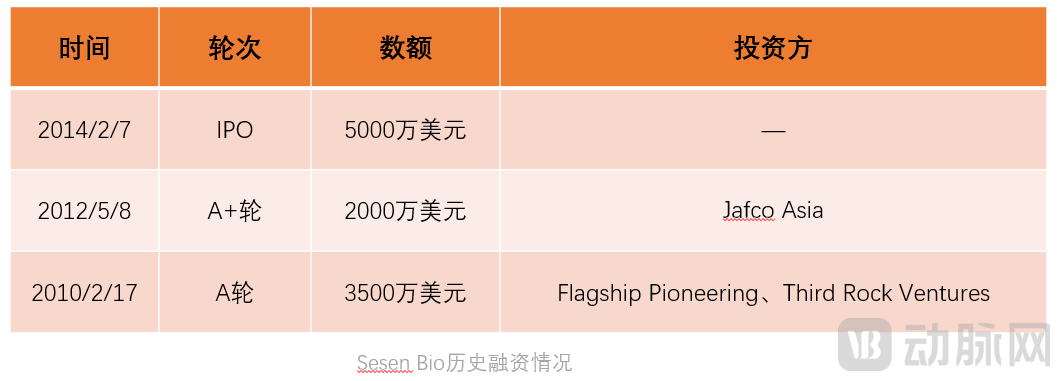
Based on the role of cytokines in ocular diseases and leveraging the company’s capability to design engineered proteins that modulate cytokine activity, EBI-031, a candidate product developed by Eleven Biotherapeutics (“Eleven”) through years of research and development, is an IL-6 inhibitor that targets the complex of free IL-6 and soluble IL-6 receptor (IL-6R), for the treatment of diabetic macular edema (DME) and uveitis.
It seemed that everything was back on track. However, Eleven did not continue down this path.
In August 2016, Eleven announced that it had entered into an exclusive license agreement with Roche regarding Eleven’s IL-6 antagonist antibody technology (including EBI-031). Under the agreement, Eleven granted Roche an exclusive global license to develop and commercialize EBI-031 as well as all other IL-6 antagonist antibody technologies owned by Eleven.Eleven received a $30 million payment from Roche, comprising a $7.5 million upfront fee related to the validity of the license agreement and a $22.5 million milestone payment triggered by the effectiveness of the Investigational New Drug (IND) application for EBI-031. Under the terms of the agreement, Eleven is also eligible to receive up to an additional $240 million upon achievement of certain future regulatory, development, and commercialization milestones.
In September of the same year, Eleven announced the acquisition of Viventia Bio, with the merged company continuing to operate under the name Eleven Biotherapeutics. After divesting its previous disease pipeline, Eleven subsequently focused on developing novel therapies in oncology, specifically antibodies or targeted protein therapeutics (TPT) genetically fused to cytotoxic proteins.
At the time of acquisition, Viventia Bio’s lead product candidates included Vicinium and Proxinium, indicated for the treatment of high-grade non-muscle-invasive bladder cancer (NMIBC) and advanced squamous cell carcinoma of the head and neck, respectively. Proxinium has been granted orphan drug designation by both the U.S. Food and Drug Administration (FDA) and the European Medicines Agency (EMA), as well as Fast Track designation by the FDA. Both candidates are anti-EpCAM (epithelial cell adhesion molecule) fusion proteins optimized for local intratumoral administration.
Eleven’s pipeline also includes Viventia’s early-stage portfolio of next-generation TPT candidates, which are designed for systemic administration and hold potential for treating a broader range of cancer types.
Dr. Abbie Celniker, a member of Eleven’s board of directors, stated, “The merged company will continue to support Roche in the development of EBI-031 and will use the funds obtained from this collaboration to further advance the development of Vicinium and Proxinium.”
On May 16, 2018, Eleven announced its renaming to Sesen Bio, and began trading on May 17, 2018, under the new Nasdaq ticker symbol “SESN”.
In the past few years, Sesen Bio has undergone a difficult transformation as a pharmaceutical company,The new name, Sesen, is an ancient symbol of the lotus, representing life and embodying the company’s mission to provide therapies that treat cancer.
2018 was a pivotal year for Sesen Bio, as the company advanced toward realizing its corporate vision and improving the lives of cancer patients.
Sesen Bio is advancing a broad pipeline of novel anticancer drug candidates—namely, antibody-drug conjugate (ADC) therapies—based on its Targeted Protein Therapy (TPT) platform.
Sesen Bio’s lead candidate, Vicinium (also known as VB4-845), was developed using the company’s proprietary targeted protein therapy platform for the treatment of high-grade non-muscle-invasive bladder cancer (NMIBC).
NMIBC is a highly prevalent cancer, yet clinical solutions have remained largely unchanged for over two decades. The standard treatment has been intravesical instillation therapy, primarily using Bacillus Calmette-Guérin (BCG). Although BCG is effective in many patients, it still falls short in terms of tolerability, and many patients experience disease recurrence.
In May 2019, Sesen Bio announced updated data from the Phase 3 VISTA trial. The preliminary findings were highly encouraging, demonstrating that Vicinum yields clinically meaningful efficacy, along with a favorable safety and tolerability profile, in the treatment of non-muscle-invasive bladder cancer (NMIBC), while avoiding issues related to bacillus Calmette-Guérin (BCG) refractoriness.
Vicinium is administered in exactly the same manner as bacillus Calmette-Guérin (BCG), but it operates through a different mechanism. Vicinium consists of a recombinant fusion protein that targets the epithelial cell adhesion molecule (EpCAM) antigen on the surface of tumor cells to deliver Pseudomonas Exotoxin A (ETA) as the protein payload. Constructed with stable genetically engineered peptide linkers, Vicinium ensures that the payload remains attached until it is internalized by cancer cells. In previous clinical studies conducted by Sesen Bio, EpCAM has been shown to be overexpressed in non-muscle-invasive bladder cancer (NMIBC) cells, while being minimally or not expressed on normal bladder cells, thereby reducing the risk of toxicity to healthy tissues and enhancing its safety profile.
Moreover, EpCAM is expressed in many cancers, giving Vicineum significant potential for the treatment of a broad range of solid tumors.
In August 2018, the U.S. Food and Drug Administration (FDA) granted Fast Track designation to Vicinium for the treatment of Bacillus Calmette-Guérin (BCG)-unresponsive high-grade non-muscle-invasive bladder cancer (NMIBC). In February 2021, Sesen Bio submitted a Biologics License Application (BLA) for Vicinium to the FDA.
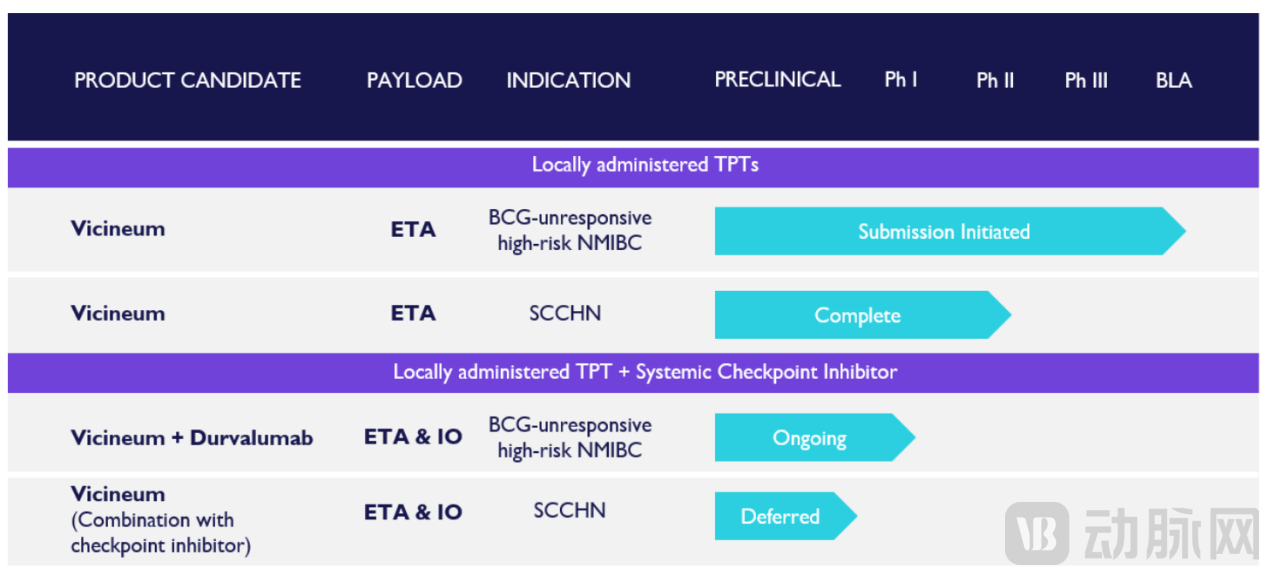
Furthermore, Sesen Bio believes that the cancer cell-killing properties of Vicinium promote an anti-tumor immune response, which can be effectively combined with immuno-oncology agents such as checkpoint inhibitors. The National Cancer Institute is investigating the activity of Vicinium in BCG-unresponsive non-muscle-invasive bladder cancer (NMIBC) in combination with durvalumab, an immune checkpoint inhibitor from AstraZeneca. This study aims to assess safety and tolerability, as well as the complete response rate and duration of response as key efficacy endpoints.
Sesen Bio has discovered that Vicinum also holds potential for treating squamous cell carcinoma of the head and neck (SCCHN).Sesen Bio has completed the Phase 1 trial of Vicineum for the treatment of SCCHN, demonstrating its antitumor activity and safety profile. The trial data also indicated that some patients who received intratumoral injections of Vicineum exhibited responses in non-injected tumors, suggesting that Vicineum can stimulate antitumor immune responses and synergize well with immunotherapy. In addition to the Phase 1 trial, Sesen Bio completed a Phase 2 trial in the United States, which showed tumor reduction in target lesions in 71% (10/14) of patients.
In addition to Vicineum, Sesen Bio is also exploring the next-generation payload known as deBouganin (VB6-845d).This engineered potent plant toxin can be deimmunized for systemic delivery, which would provide a broad therapeutic window if safety is ensured.
Vicineum is a “heavy sword” forged through years of painstaking effort by Sesen Bio. It not only bears witness to the company’s growth and represents its pinnacle achievement, but will also be used to pierce the barrier between Sesen Bio’s R&D and commercialization.
In February 2020, Sesen Bio underwent significant changes in its board of directors and management team. All these personnel changes and adjustments were made to pave the way for the commercialization and launch of its products. Sesen Bio began to vigorously promote the global commercialization of its primary candidate product, Vicineum.
Dr. Thomas Cannell, President and Chief Executive Officer of Sesen Bio, stated, “As we pursue regulatory approval in the United States and Europe, we will continue to seek partners outside the United States as part of our commitment to delivering our therapy to patients worldwide.”
In July 2020, Sesen Bio entered into an agreement with Qilu Pharmaceutical, granting Qilu the exclusive license to develop, manufacture, and commercialize Vicineum in China.In December of the same year, Sesen Bio once again entered into a Commercial Manufacturing and Supply Framework Agreement (the “CMO Agreement”) with Qilu Pharmaceutical. Under the CMO Agreement, Qilu will become part of the global commercial supply network for Vicineum. Upon completion of the technology transfer from Sesen Bio to Qilu for the manufacturing of Vicineum, Sesen Bio will receive a milestone payment of $2 million.
In December 2020, Sesen Bio entered into an exclusive licensing agreement with the multinational pharmaceutical company Hikma Pharmaceuticals to facilitate the registration and commercialization of Vicineum in the Middle East and North Africa.Under the terms of the agreement, Sesen Bio granted Hikma an exclusive license to register and commercialize Vicineum in 19 markets across the Middle East and North Africa, advancing Vicineum for the treatment of NMIBC and other types of cancer.
Hikma is the ideal partner for delivering Vicinum to patients with non-muscle-invasive bladder cancer (NMIBC) in the Middle East and North Africa (MENA) region. Hikma possesses strong expertise in commercializing innovative products in the MENA region and has a proven track record of serving patients worldwide. This partnership represents another significant step toward realizing the substantial global opportunity for Vicinum.
In October 2020, Sesen Bio selected Cardinal Health as its exclusive provider of third-party logistics (3PL) and specialty pharmaceutical distribution services for the commercial distribution of Vicineum in the United States.Cardinal Health will provide Sesen Bio with comprehensive end-to-end 3PL, order-to-cash management, and specialty pharmaceutical distribution services to support commercialization in the United States.
In August 2021, Sesen Bio entered into a registration and licensing agreement for Vicineum with Eczacibasi Pharmaceuticals Marketing (EIP), a pioneering Turkish pharmaceutical company focused on innovative branded products.Rapidly bring Vicineum to patients in Turkey. The partnership with EIP marks another step for Sesen Bio in fulfilling its mission to save and improve patients’ lives, as well as in realizing the significant global opportunities anticipated for Vicineum.
Under the terms of the license agreement, Sesen grants EIP an exclusive license to register and commercialize Vicineum in Turkey for the treatment of BCG-unresponsive non-muscle-invasive bladder cancer (NMIBC). Sesen Bio will receive a $1.5 million upfront payment and is eligible for additional regulatory and commercial milestone payments. Following commercialization in Turkey, Sesen Bio is also entitled to a 30% royalty on net sales in Turkey.
Despite having signed licensing agreements with multiple companies, Sesen Bio retains full development and commercialization rights for Vicineum in the treatment of NMIBC in the United States and other regions worldwide (Greater China, the Middle East and North Africa, and Turkey).