

Qianlan Health Files IPO Prospectus: Empowering Health Management Enterprises with an Integrated SaaS Platform and Resource Ecosystem
“For health management enterprises, what is needed may not be merely a simple software system, but also comprehensive supporting services, such as medical resource services, intelligent testing device services, and high-quality health products. The latter are even more critical to the development of health management operations. Unfortunately, technology-driven health management companies often overlook this point.”
One afternoon in March, Zhang Tao, founder of Zhejiang Qianlan Health Technology Co., Ltd. (hereinafter referred to as “Qianlan Health”), stated this with conviction.
This statement precisely encapsulates Qianlan Health’s business layout: a SaaS system that enables health management enterprises to deliver basic health management services, and a resource integration platform that provides these enterprises with supporting medical resources, service resources, hardware resources, and other complementary assets essential for their health management operations.
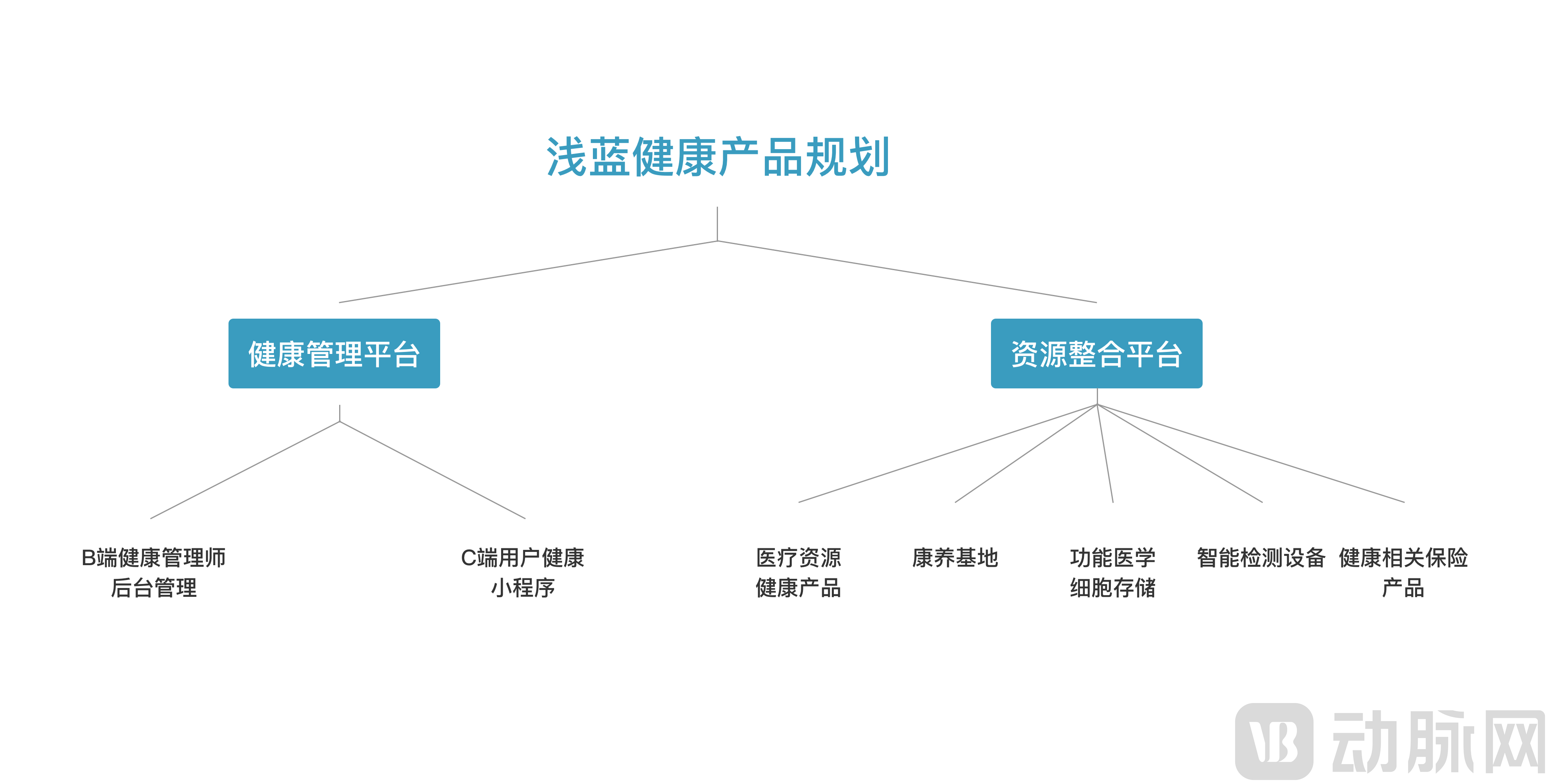
Qianlan Health Business Plan
Why has this “young” company chosen to position itself as a “connector” of industry resources, and what gives it the confidence to shoulder such responsibility? What specific value can Qianlan Health’s SaaS system and resource-matching platform bring to health management enterprises? What are its market strategies and future plans? In a one-hour interview, Zhang Tao answered all these questions for VCBeat.
Zhang Tao’s resume is rich and varied.
In 2009, after graduating from Wenzhou Medical University with a major in Information Management, Zhang Tao joined B-Soft, a publicly listed company specializing in healthcare informatics.
At the time, B-Soft was in the midst of developing a health management software solution. Upon joining the company, Zhang Tao participated in its research and development, forging an enduring bond with the field of health management.
By 2011, Zhang Tao had resigned from his position at B-Healthcare and co-founded a health management software company with a professor from Hangzhou Dianzi University; the company was later acquired by Zhengyuan Wisdom in 2015.
In the same year, Zhang Tao joined Lanxi Health, a joint venture established by Greentown Service Group, Bluescape Investment, and Neusoft Group. Over the next six years, he rose from Project Manager to Vice President of the Group and General Manager of its technology subsidiary.
What Has Zhang Tao Gained from Over a Decade of Professional Experience? He has acquired essential entrepreneurial competencies spanning software R&D, product design, market expansion, and corporate management; established a foundation for collaboration with thousands of health management enterprises; and, most importantly, developed keen insights into and judgment of the industry’s pain points.
In Zhang Tao’s view, while software can enhance service efficiency and quality for health management companies to a certain extent, the abundance of supporting resources is the core element driving their long-term development.
“In recent years, we have observed a significant surge in the number of health management companies, yet few have achieved substantial scale. Currently, the industry remains markedly regionalized and fragmented,” added Zhang Tao. The primary constraints on the expansion of health management enterprises stem from limited capabilities in expanding medical and customer resources. For most health management companies, these resources remain concentrated within their local markets.
Moreover, most start-up health management companies still lack the ability to accumulate local medical and customer resources, let alone expand into external markets.
While deepening his understanding of the industry, Zhang Tao also met two like-minded partners: Xiao Wenhui, who has over 20 years of experience in the health management sector and is one of the authors of books on health management in China; and Wang Xing, who has more than 10 years of experience in the internet technology industry, having previously worked in technical development at Meituan and WiFi Master Key, and possesses extensive experience as a serial entrepreneur.
In 2021, Zhang Tao co-founded Qianlan Health with the two other co-founders, establishing its core business as providing integrated solutions—encompassing products, services, and supply chain management—to health management enterprises. These solutions include a SaaS-based health management system integrating Traditional Chinese Medicine (TCM) and Western medicine, health management services, and product integration.
Qianlan Health’s core business is divided into two segments: software support and resource matchmaking. The former is delivered through a SaaS system, while the latter is facilitated by a resource integration platform.
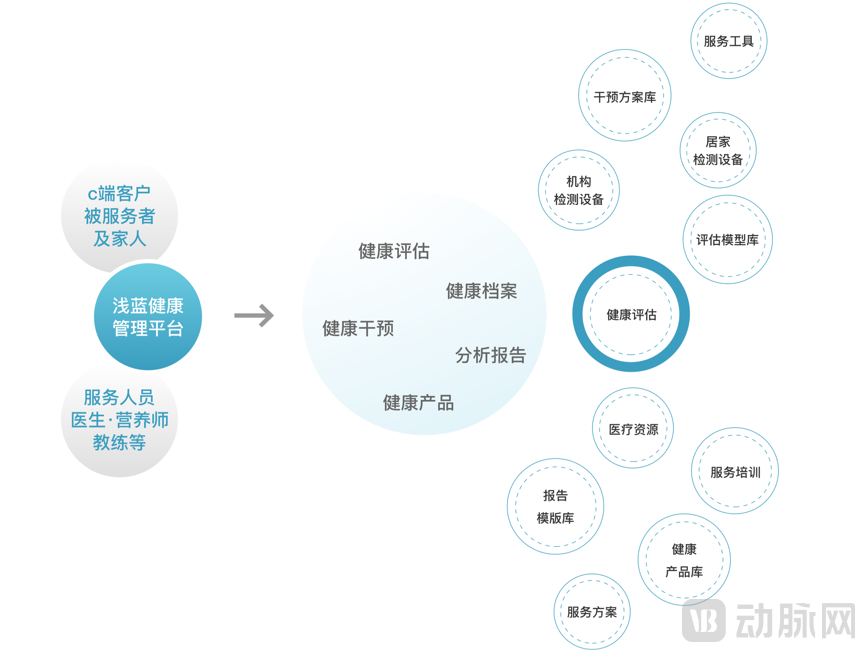
Qianlan Health Business Diagram
According to Zhang Tao, the SaaS system serves as the foundation of Qianlan Health’s business operations and primarily offers four core functions: establishing health records, conducting health assessments, implementing health interventions, and performing data analysis.
Health records form the foundation for health management companies to deliver health services. In this phase, Qianlan Health assists health management companies in acquiring customer health data—such as physical examination results, clinical visit records, and medication histories—through data interfaces, aligned with system-configured health data tags. Furthermore, Qianlan Health’s SaaS platform has established partnerships with leading hardware device manufacturers, enabling the transmission of customers’ daily health data into the system. This facilitates targeted daily health management services by health management companies.
In the interview, Zhang Tao emphasized that certain settings for health records within the Qianlan Health SaaS system can be personalized to meet the needs of different business scenarios of health management enterprises.
“For example, for a company specializing in traditional Chinese medicine (TCM) health management, there are more TCM-related syndrome indicators in the health records; whereas for a company focusing on post-checkup health management, checkup-related indicators will be more numerous and prioritized,” explained Zhang Tao.
andIn terms of health assessment, Qianlan Health’s SaaS system not only comes with more than 20 built-in health assessment models covering areas such as Traditional Chinese Medicine (TCM) treatment, disease risk, lifestyle, and mental health, but also supports enterprises in importing their own health assessment models.
Additionally,Notably, Qianlan Health’s assessment model also incorporates metrics such as user adherence to health guidance, enabling health management enterprises to deliver precise health management services and achieve targeted product conversion.“From the hospital’s perspective, the focus after a patient’s visit is on determining the appropriate treatment plan; whereas for health management companies, it is essential not only to ensure the rationality and professionalism of the health management plan but also to take into account users’ affordability and adherence.”
In terms of health interventions, Qianlan Health’s SaaS system features hundreds of integrated traditional Chinese and Western medicine intervention protocols. It not only enables phased, precise health intervention services but also automatically generates protocol summaries.
To achieve visualization of the health management service process and outcomes, the Qianlan Health SaaS system provides multi-dimensional monthly, quarterly, and annual service reports. It can also generate Personal Health Status Reports, Corporate Health Data Reports, and Industrial Park Health Status Reports with varying data dimensions based on different service entities, thereby empowering health management enterprises to visualize service effectiveness and refine service solutions.
Notably, as the entry point for Qianlan Health’s business with health management enterprises, the Qianlan Health SaaS system is priced at only RMB 30,000. “This price not only enables Qianlan Health to rapidly penetrate the market but also reduces operating costs for health management companies to a certain extent, making it affordable for them.”
As for why a resource integration platform should be established, Zhang Tao stated that this stems from a “contradiction” in the health management industry: On one hand, health management companies require a wide variety of resources with high standards and stringent requirements when providing health management services; on the other hand, most health management companies are currently small and fragmented. Consequently, it is difficult and costly for individual health management companies to acquire high-quality supporting resources.
Against this backdrop, Qianlan Health’s resource integration platform was launched.
According to Zhang Tao,Qianlan Health has established stable partnerships with large Grade A tertiary hospitals in China’s first- and second-tier cities, enabling it to directly provide high-quality medical resources to partner health management enterprises.
Moreover,Qianlan Health’s resource integration platform also provides health management enterprises with dozens of types of intelligent testing devices. Furthermore, it has established in-depth collaborations with leading domestic medical hardware manufacturers such as Yuwell, enabling direct access to their devices’ data interfaces.
Furthermore, VCBeat has learned that Qianlan Health’s investor, Zhejiang Qianning Health Industry Co., Ltd., has made external investments in traditional Chinese medicine (TCM) enterprises, including Hangzhou Qianningzhai TCM Clinic, Hangzhou Jiubao TCM Clinic Co., Ltd., and Bozhou Qianning TCM Technology Co., Ltd. Leveraging the investor’s accumulated resources in the TCM industry, Qianlan Health’s resource integration platform also offers TCM-based health food products, such as Huajuhong (Exocarpium Citri Grandis), secret-recipe pear paste, Xuanwu beans, Yuerong paste, and Daheche pills.
Why Include Traditional Chinese Medicine in Translational Products? Zhang Tao stated that there are two main reasons: first, to manage users’ health (or disease) conditions to the extent that hospital visits become unnecessary; and second, to improve the conversion rates of health management companies’ products on this basis.
Not only that,Leveraging its resource integration platform, Qianlan Health will also provide guidance services for corporate operations. “Through our collaborations with over a thousand health management companies across China, we have gained an in-depth understanding of their operational logic and accumulated extensive experience in managing such enterprises. Based on this expertise, we are well-positioned to offer operational support to health management companies.”
Furthermore, Qianlan Health is exploring pathways for the integration of insurance and health management, primarily by partnering with third-party health insurtech companies to provide two types of health insurance products to health management enterprises: customized health insurance for high-end clients, and complimentary health insurance bundled with corporate employee health management services.
At the end of the interview, Zhang Tao disclosed to VCBeat Qianlan Health’s development roadmap: over the next 1–3 years, the company aims to refine its products, strengthen its supply chain, build 200 high-quality customer case studies, and help 5,000 health management companies improve the efficiency and quality of their health management services.