

Breaking Through Johnson & Johnson's Dominance: How Chinese Innovators Are Disrupting the Global Ultrasonic Scalpel Market

ESM
Developer of High-End Medical Devices for Minimally Invasive Oncology Surgery

Surgnova
Provider of Comprehensive Solutions for Minimally Invasive Surgery

Panther Healthcare
Surgical Medical Device Manufacturer
A single company has managed to monopolize 90% of the global market for a certain type of high-end medical device.
This is not a delusional rambling, but an objective reality. Publicly available data shows that Ethicon, a subsidiary of Johnson & Johnson, previously monopolized 90% of the global market for ultrasonic surgical devices. (Note: The ultrasonic surgical devices discussed in this article refer to ultrasonic hemostatic scalpels.)
Johnson & Johnson’s annual report reveals that its Harmonic scalpel products serve as a key driver of rapid growth. Leveraging these products, the company’s surgical business revenue increased from $2.854 billion in 2004 to $9.501 billion in 2019.
In the 1920s, mechanical scalpels still dominated surgical practice. However, with the advent of high-frequency electrosurgical units, their rapid cutting speed, effective hemostasis, ease of operation, safety and convenience, and broad indications led to their widespread clinical adoption.
In the 1990s, with the widespread adoption of high-frequency electrosurgical units, their drawbacks gradually drew attention, such as causing thermal injury, excessive tissue damage, and smoke generation during surgery. At that time, the ultrasonic scalpel, as an innovative minimally invasive surgical instrument, gained immediate high clinical recognition upon its introduction and was rapidly promoted worldwide.
Ultrasonic scalpels are primarily used for cutting biological tissue and sealing blood vessels. An expert stated, “An ultrasonic scalpel converts electrical energy into mechanical energy, using an ultrasonic frequency generator to oscillate the metal blade at a rate of 55,000 times per second. When the high-speed oscillating blade contacts the tissue, it causes water molecules within the tissue to vaporize, breaks protein hydrogen bonds, leads to cell disintegration, and cuts or coagulates the tissue, thereby achieving vessel sealing and ultimately accomplishing tissue cutting and hemostasis.”
Leveraging its inherent technical advantages, the ultrasonic scalpel offers several benefits in clinical applications, including minimal bleeding, negligible thermal injury, reduced damage to surrounding tissues, rapid postoperative recovery, absence of tissue burns, and no smoke generation. In contrast to high-frequency electrosurgical units, the ultrasonic scalpel does not pass electrical current through the patient’s body during surgery, making it suitable for patients with implanted metal devices and thereby broadening its scope of application.
From its origins in plastic surgery to its current applications in gynecology, urology, thoracic surgery, hepatobiliary surgery, gastrointestinal surgery, head and neck surgery, otolaryngology, and pediatric surgery, the ultrasonic scalpel has been widely used inOver a dozen departments, covering uterine fibroid surgery, abdominal aortic aneurysm repair, rectal tumor resection, appendectomy, hemorrhoidectomy, adrenalectomy, and moreDozens of Surgical Procedures. Additionally, manufacturers of ultrasonic surgical devices continue to innovate, with ultrasonic bone scalpels already being applied in orthopedic surgery.
Just as high-frequency electrosurgical units have disrupted mechanical scalpels in certain fields, ultrasonic scalpels are also disrupting high-frequency electrosurgical units in specific areas.
According to data released by Frost & Sullivan, the global market size of ultrasonic scalpels, calculated at ex-factory prices, grew from USD 2.32 billion in 2016 to USD 2.87 billion in 2020, and is projected to reach USD 4.63 billion by 2025.
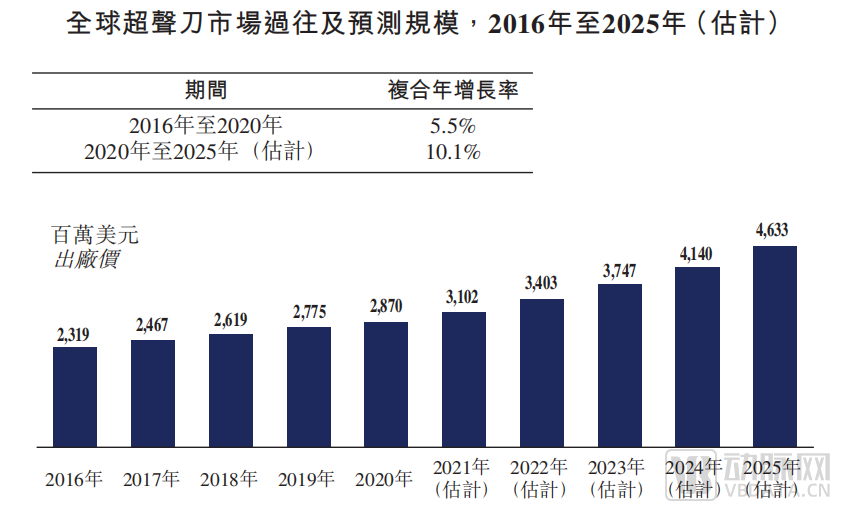
(Image source: Panther Healthcare's IPO prospectus)
In China, the ultrasonic scalpel market (calculated at ex-factory prices) grew from RMB 1.02 billion in 2016 to RMB 2.01 billion in 2020, and is projected to reach RMB 6.11 billion by 2025. Among these, domestic brands have demonstrated significant growth, with a compound annual growth rate (CAGR) of 102.1% from 2016 to 2020.
However, as of now, Johnson & Johnson still holds over 80% of the ultrasonic scalpel market in China. Globally, while other companies have entered the competition, Johnson & Johnson, which previously monopolized approximately 90% of the global ultrasonic scalpel market, continues to dominate with more than 60% of the worldwide market share.
In the ultrasonic scalpel market, where penetration rates stand at 27% in the United States but only 1.1% in China, how did Johnson & Johnson break through from scratch to achieve market monopoly? How has it consolidated its position to ensure a high market share? What lessons can Chinese ultrasonic scalpel manufacturers draw from this to achieve their own breakthroughs?
After nearly 30 years of development, the ultrasonic scalpel has now become a mainstream device in minimally invasive surgery worldwide. However, in the early stages of industry development, the ultrasonic scalpel market was virtually nonexistent.
The ultrasonic scalpel emerged in the 1950s and was first applied in the field of cosmetic and plastic surgery in the 1980s. In 1992, two clinical experts in the United States used Ultracision’s ultrasonic scalpel for laparoscopic surgery for the first time, marking its entry into the broader surgical market. Following the procedure, they stated, “The use of the ultrasonic scalpel resulted in minimal blood loss, effective hemostasis, reduced damage to surrounding tissues, and faster postoperative recovery for the patient.”
Leveraging the clinical advantages of ultrasonic scalpels, Ethicon Endo-Surgery, a subsidiary of Johnson & Johnson, acquired Ultracision, a leading company in the field, in 1995, and subsequently intensified its efforts to promote ultrasonic scalpels, train physicians, and optimize and iterate on its product offerings.
In promoting the ultrasonic scalpel, Johnson & Johnson has conducted global clinical trials and published the resulting data in prominent journals, thereby amplifying its impact. Meanwhile, the company has invited renowned experts to participate in academic conferences, publish papers, and deliver presentations on the clinical data and application advantages of the ultrasonic scalpel.
For example, in September 2000, a study supported by Johnson & Johnson was presented at the Annual Meeting of the American Academy of Otolaryngology–Head and Neck Surgery, concluding that the use of ultrasonic scalpels in tonsillectomy could significantly reduce patients’ pain and recovery time. Additionally, the article “Comparative Analysis of Ultrasonic Scalpel Surgery versus Conventional Surgery in Gastrectomy and Lymphadenectomy” was published in the International Journal of Surgical Oncology, concluding that ultrasonic scalpel surgery is safer and more effective, with less trauma, superior hemostasis, and fewer postoperative complications.
It is worth noting that these studies were not only presented at major academic conferences but also widely disseminated on medical websites and media platforms such as Medscape. In addition to these two studies, Johnson & Johnson has supported more research of this kind to promote the adoption of its ultrasonic surgical devices.。
Johnson & Johnson has also collaborated with renowned experts from top-tier hospitals to expand the indications for its Harmonic scalpel. By partnering with leading specialists across various departments—including gastrointestinal surgery, thoracic surgery, hepatobiliary surgery, urology, gynecology, otolaryngology, cardiovascular surgery, and general surgery—Johnson & Johnson has leveraged the advantages of the Harmonic scalpel to promote its adoption in these specialties for a wide range of surgical procedures. For instance, in the early 2000s, Johnson & Johnson introduced the Harmonic scalpel into cardiovascular surgery for use in coronary artery bypass grafting (CABG) with radial artery conduits. Due to its superior hemostatic performance, the device quickly gained favor among cardiovascular surgeons.
In addition, Johnson & Johnson has leveraged its extensive distribution channels to promote its Harmonic scalpel products in the global market. For instance, Johnson & Johnson pioneered entry into the U.S. and European markets and introduced the Harmonic scalpel to China in 1997. Starting from scratch, the Harmonic scalpel market in China was steadily cultivated by Johnson & Johnson, reaching a market size of RMB 1.02 billion by 2016.
Driven by Johnson & Johnson’s vigorous promotion, the global usage of its ultrasonic scalpel products grew from their initial application in 1992 to 14 million procedures by 2012. From zero to 14 million, and from 1995 to 2012, Johnson & Johnson spent nearly two decades bringing ultrasonic scalpels to markets worldwide. Today, Johnson & Johnson continues to promote ultrasonic scalpels through academic conferences and other channels.
Johnson & Johnson’s Monopoly on the Ultrasonic Scalpel Market: Another Key Factor Is Providing Its Products for Technical Training. From their initial training and first clinical applications, surgeons use Johnson & Johnson’s ultrasonic scalpels, which strongly cultivates their usage habits. Although forming such habits is challenging, breaking them often incurs even greater costs.
Data shows that Johnson & Johnson has established a Medical Professional Education Institute, integrating 24 specialized education institutes worldwide and multiple online educational platforms to help professionals such as doctors and nurses enhance their skills. Meanwhile, Johnson & Johnson has also promoted its ultrasonic scalpel products to medical schools and other institutions, enabling medical students to learn about and apply Johnson & Johnson’s ultrasonic scalpels.
Currently, Johnson & Johnson’s Medical Professional Education Institutes are distributed across 24 cities worldwide, covering countries such as the United States, the United Kingdom, Germany, Switzerland, Spain, Russia, China, India, Japan, South Korea, Singapore, Australia, and Brazil. Leveraging its global network of Medical Professional Education Institutes and local medical schools, Johnson & Johnson provides training on ultrasonic scalpel technology for clinicians and medical students, fostering a continuous pipeline of talent in the field and consistently advancing the development of ultrasonic scalpel surgery.
In addition to its advantages in distribution channels, Johnson & Johnson also maintains a technological lead.
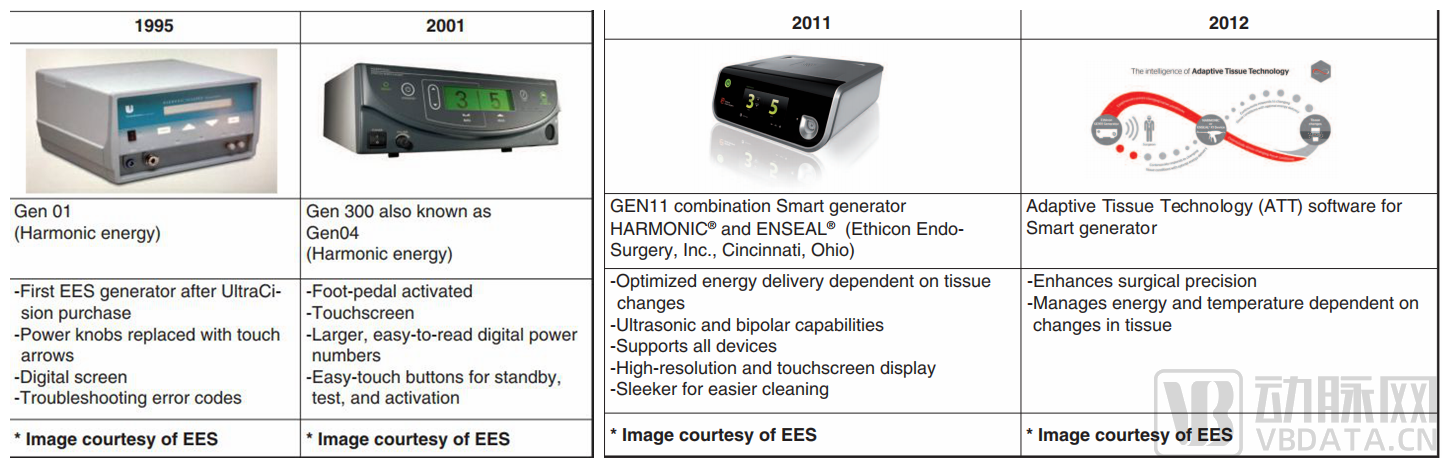
On the host side, Johnson & Johnson launched its first-generation ultrasonic scalpel generator system in 1995 and released the new Gen 300 ultrasonic scalpel generator system in 2001. Compared with the first-generation product, the Gen 300 can be turned on or off via a foot pedal, features a touchscreen interface, and allows control of standby, testing, and activation functions through touchscreen buttons.
In 2011, Johnson & Johnson launched the Gen 11, its third-generation ultrasonic scalpel generator system. This intelligent generator integrates both ultrasonic and radiofrequency energy, features a more user-friendly touchscreen interface, and has a reduced footprint, thereby saving valuable space in the operating room.
In 2012, Johnson & Johnson optimized the Gen 11 ultrasonic scalpel generator system by incorporating adaptive technology, which automatically adjusts the frequency based on the tissue type in contact with the transducer tip, thereby enhancing cutting efficiency and reducing surgical time. Clinical data demonstrate that, compared with ultrasonic scalpels lacking adaptive technology, devices equipped with this feature reduce thermal injury by 23% and shorten cutting time by 21%, offering significant advantages.
In terms of the blade tipJohnson & Johnson continuously introduces blade tips with diverse shapes and structures for various surgical procedures. For instance, its linear and curved ultrasonic scissor tips can be used for cutting, hemostasis, dissection, and tissue grasping. The blade tips are available in a variety of configurations, such as sharp-edged, blunt-edged, and flat surfaces, to meet the needs for coagulation and cutting of different tissues during surgery. Through continuous optimization and innovation, the indications for its blade tips have been steadily expanded—from sealing 3mm blood vessels to 5mm and then 7mm vessels; and from tonsillectomy to neck lymph node dissection and radical mastectomy. In conjunction with the generator system, its blade tips can be applied to an increasing number of surgical procedures.
Additionally, Johnson & Johnson has continuously optimized the handles for its ultrasonic scalpels, progressing from the scissor-style handle in 1992, to the pistol-grip handle in 1999, and then to the controllable pistol-grip handle in 2005, thereby stepwise enhancing the user experience.
Overall, Johnson & Johnson has educated the market through continuous product innovation and optimization, physician training, and aggressive promotion, thereby leveraging its first-mover advantage to monopolize the vast majority of the global ultrasonic scalpel market.
Seeing the broad market prospects for ultrasonic scalpels, multinational medical device companies such as Medtronic and Olympus have successively launched ultrasonic scalpel products and initiated commercial marketing. However, Johnson & Johnson still maintains the majority of the market share. How has it achieved this?
Industry insiders believe, “Johnson & Johnson’s ability to capture the vast majority of the market amid fierce competition is attributable to multiple factors.”
First, Johnson & Johnson has persisted in market cultivation, fostering the usage habits of clinicians., making it more costly for other companies to reverse physicians' usage habits in the competitive landscape.
Second, Johnson & Johnson’s products demonstrate a certain degree of technological leadership and clinical advantages, earning widespread recognition among physicians.Meanwhile, it offers complementary instruments and consumables such as endoscopes and sutures, enabling the provision of comprehensive surgical solutions to hospitals. This facilitates hospital procurement and reduces the potential surgical risks associated with the use of products from different brands.
Third, Johnson & Johnson boasts a robust service and sales team capable of promptly responding to and addressing the needs of clinicians.This stems from Johnson & Johnson’s substantial profits in the ultrasonic scalpel sector, which enabled it to leverage its financial advantages to build high-quality service and sales teams, thereby creating a virtuous cycle of “expanded service team → improved physician support → greater physician recognition → market expansion.” In contrast, other companies have faced sales obstacles for ultrasonic scalpels, resulting in limited investment in this area. Their smaller sales teams compared to Johnson & Johnson’s have constrained their service capabilities.
Therefore, leveraging its first-mover advantage, long-term market cultivation, comprehensive portfolio of surgical solutions, and excellent sales and service teams, Johnson & Johnson firmly dominates the majority of the global ultrasonic scalpel market. Unless disruptive technologies emerge in the ultrasonic scalpel field that Johnson & Johnson fails to monitor, the company will maintain its leading position in this sector for the long term.
In China, the minimally invasive surgery market is growing rapidly. Calculated at ex-factory prices, the ultrasonic scalpel market grew from RMB 1.02 billion in 2016 to RMB 2.01 billion in 2020, with domestic brands achieving a compound annual growth rate (CAGR) of 102.1% from 2016 to 2020.
In addition, in 2019, the number of minimally invasive surgical procedures per million population in the United States was 16,877, with a penetration rate of 80.1%. In China, there were only 8,514 procedures per million population, with a penetration rate of 38.1%. Compared with developed countries such as the United States, China’s minimally invasive surgery sector still has significant room for growth.
As the field of minimally invasive surgery represents a significant blue-ocean market, numerous domestic innovative enterprises—including ESM, Genesis, Panther Healthcare, Sumai Medical, SurgScience, and Surgnova—have entered this sector. However, these innovators also face the challenge of breaking the monopoly held by imported products.
In terms of market breakthroughsMost innovative companies plan to capture market share by leveraging the national centralized procurement policy and the wave of medical device exports. Specifically, as the state promotes the localization of medical devices, domestic innovative enterprises are poised to seize this opportunity, win bids in centralized procurement, and accelerate their market penetration. For instance, in December 2021, innovative companies such as Houkai Medical, Surgnova, and SurgScience all won bids in the centralized procurement of ultrasonic scalpel tips for a 16-province alliance led by Guangdong Province. The procurement volume and outcomes of this centralized procurement covered more than 50% of the Chinese market and population. In terms of product sales volume, domestic innovative companies have achieved significant results in centralized procurement.
For instance, companies such as Genesis, ESM, and Surgnova have all launched globalization strategies, exporting Chinese-made medical devices to the global market. In the international arena, they are penetrating overseas markets and capturing market share from multinational corporations by leveraging product differentiation, competitive pricing, and strategic global expansion plans.
Notably, in terms of product strategy, most companies choose to emulate Johnson & Johnson by adopting a platform-based layout.For example, ESM offers a comprehensive portfolio of minimally invasive surgical products for oncology; Genesis provides complete minimally invasive surgical solutions; Panther Healthcare supplies a series of minimally invasive surgical products, including staplers, ultrasonic scalpels, sutures, and hernia repair devices; SurgScience entered the market with ultrasonic scalpels and has expanded into intelligent minimally invasive surgery and surgical robotics; Surgnova focuses on minimally invasive surgery and interventional oncology, building three major technology platforms: surgical visualization, surgical energy, and tumor ablation. Through such platform-based strategies, domestic innovative enterprises are able to provide hospitals with comprehensive solutions.
Overall, leveraging national centralized procurement policies, the trend toward domestic substitution, and the wave of Chinese medical device exports, domestic innovative medical device companies are poised to rapidly achieve import substitution in the field of ultrasonic scalpels and launch strategic offensives into the global market. However, they must also contend with the formidable presence of Johnson & Johnson, Medtronic, and Olympus, while addressing various challenges such as established product usage habits and the development of comprehensive service systems.
The future of the ultrasonic scalpel market is bound to be dynamic and promising; we await with great anticipation.