

uLab Systems: Revolutionizing Orthodontics with AI-Powered Digital Solutions and Affordable Aligners

uLab
Developer of Digital Treatment Design Software and Orthodontic Products
According to data from Qianzhan Industry Research Institute, orthodontic patients accounted for 29.88% of dental visits in China, second only to dental implant patients at 40.02%.Orthodontics has become a truly hot sector in dental healthcare.
The human desire for straight, aligned teeth has persisted throughout the entire history of civilization. In the first century AD, the ancient Roman physician Celsus attempted to reposition displaced teeth by applying manual pressure with his fingers. During the first decade of the 21st century, orthodontic patients typically underwent an in-person consultation with their dentist, followed by a waiting period of up to two weeks, before finally receiving a set of metal appliances composed of brackets and archwires.
However, the orthodontics industry has changed significantly due to the application of digital orthodontic platforms and 3D printing technology.。
uLab Systems Founded: Providing Orthodontists with Fully Controllable Design Software and Low-Cost Aligners
uLab Systems, based in California, USA, is a company that develops AI-assisted software to streamline orthodontists’ workflows and provides them with customized aligners.Recently, the company secured $20 million in funding from CareCapital, a Chinese investor specializing in the dental sector. To date, it has completed seven rounds of financing, totaling $103.4 million. Moreover, uLab had already established an office in Shanghai, China, as early as 2019.
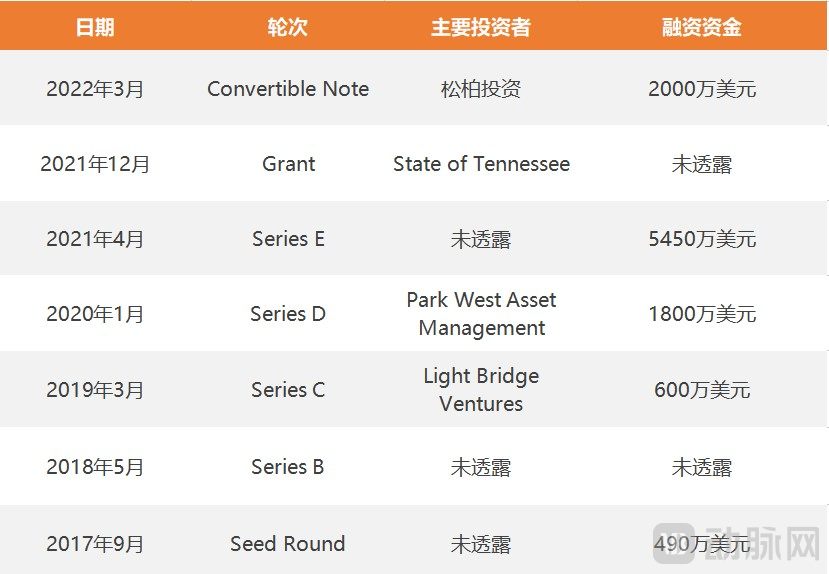
uLab Historical Financing (Source: Crunchbase)
uLab Systems was founded in 2015. Its two founders, Amir Abolfathi and Charlie Wen, along with Chief Commercial Officer David Thrower, had previously worked together at Align Technology, a leading company in orthodontics. Prior to founding uLab,They identified two irrational trends emerging in the orthodontics industry.:
First, during orthodontic treatment, the orthodontist is often the most experienced and knowledgeable about the patient’s condition, yet they must repeatedly communicate with third-party aligner manufacturers, and ultimately still need to make adjustments to the aligners they receive.;
Second, the involvement of third parties has increased costs., forcing doctors to raise the prices of orthodontic appliances to balance their revenues and expenses, which has led to increasingly higher prices for orthodontic appliances on the market.
Drawing on their years of experience in the orthodontics industry, Amir Abolfathi and Charlie Wen attribute the aforementioned trends to the lack of a fully self-controlled workflow platform for orthodontists. Motivated by this insight, they founded uLab Systems and launched two core products: uDesign, an orthodontic treatment planning software, and uSmile clear aligners.
uDesign Software: AI-Powered Rapid Chairside Orthodontic Treatment Planning
How does uDesign software optimize physicians’ workflows and reduce costs? First, let’s take a look.Traditional Orthodontic Treatment Process:
InPre-treatment, the patient should undergo clinical examination, take panoramic radiographs and lateral cephalometric radiographs, and make dental stone models using alginate impressions.
If using clear aligners, the intraoral images and data are transmitted to the aligner provider, with the dentist and the aligner fabrication technicians communicating online repeatedly to revise the treatment plan. Once the plan is finalized, the patient schedules a second appointment to confirm the plan with the dentist, and aligner production begins. Approximately one month later, the patient attends a third appointment to receive the aligners and formally commence orthodontic treatment, followed by follow-up visits every 2–5 months.
If using fixed appliances, after receiving the patient's records, the orthodontist analyzes the patient's condition and selects appropriate brackets and archwires. Formal orthodontic treatment commences at the second visit, followed by monthly follow-up appointments.
During the removal of fixed orthodontic appliances, the dentist also uses alginate impressions to create plaster models of the oral cavity, which are then sent to a laboratory for retainer fabrication; it typically takes about one week for the patient to receive the retainers.
Thus, it is evident that the traditional orthodontic workflow is time-consuming; patients must undergo repeated appointments prior to treatment, and clinicians cannot fully control the fabrication of orthodontic appliances.
uDesign software has established a digital platform covering the entire orthodontic workflow, including intraoral scanning and modeling, treatment planning, and aligner ordering.
When using the software, physicians require an intraoral scanner rather than alginate impressions., an informal survey by the Journal of Clinical Orthodontics revealed that 62% of orthodontists have already begun using intraoral scanners. After scanning a patient’s oral cavity with the scanner, it is possible toDirectly transfer the scanner's output files to the uDesign platform., the platform automatically identifies teeth, crops out extraneous parts of the image, and attaches virtual buttons for movement to each tooth image.
After the modeling is completed, the doctor begins to formulate the correction plan.
uDesign allows for various operations on dental images.: Move a single tooth individually, move any teeth as a group, or adjust the overall dental arch form. Throughout the movement process, a curved guide line ensures that the teeth remain in optimal positions, and the predicted final occlusion view is displayed in the upper right corner of the software interface.
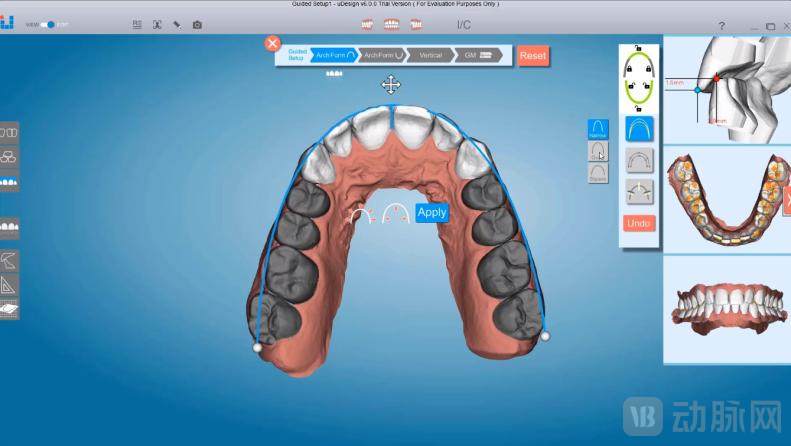
uDesign Software Interface
The software also has a built-in Guided Setup (GS) program., when the doctor opens the patient's oral scan, the software automatically generates an initial orthodontic treatment plan using AI algorithms. The doctor can make any adjustments to this template or create a new plan based on clinical experience.
uSmile Aligners: $19 per unit, capped at $950, with delivery completed within ten days
Once the treatment plan is finalized, the next step is to print each model file.
How to Print Aligners: uDesign Offers Three Options:
If a doctor's clinic has a 3D printer, the print file can be sent directly to the 3D printer. uDesign software is compatible with most 3D printers on the market, such as EnvisionTEC One, SprintRay Pro, and SprintRay MoonRay.
If the dentist does not wish to print the clear aligners in-house, uLab offers customized uSmile clear aligner services. The company collaborates with aligner material supplier Bay Materials, which provides the Zendura clear aligner material.
uLab has established its aligner manufacturing facility in Memphis, Tennessee, adjacent to the world’s largest transportation hub. This strategic location ensures delivery of fabricated aligners within 3–10 days. The return shipping boxes are printed with the clinic’s logo, helping dentists build their own brand identity. The aligners provided are not limited to a single type; clinics can order custom-made clear aligners or metal braces individually, or opt for a combination of both.
If the patient is eager to begin orthodontic treatment, the clinician may 3D-print the first two sets of aligners in-office, with the remaining aligners fabricated by uLab.。
uSmile clear aligners are sold to dentists at a price of $19 per unit, billed individually. The maximum charge per case is capped at $950, with no fees applied beyond this amount. Assuming dentists charge patients a one-time flat fee, the cost of the aligners is fixed at a maximum of $950; the fewer aligners used, the lower the cost, thereby increasing the profit margin.
This pricing model offers another advantage: if a patient experiences a minor relapse in the future, they only need to pay for a few sets of aligners, rather than restarting the entire orthodontic treatment.
Virtual Bracket Removal Feature: Streamline Tedious Steps to Save Time for Professional Procedures
The final step is to remove the orthodontic appliances and switch to retainers after the completion of orthodontic treatment.
If fixed orthodontic appliances need to be removed, the uDesign software features a one-click bracket removal function that virtually removes brackets from the images generated through intraoral scanning and modeling., retainers can be fabricated based on the images, and the brackets are removed only when the retainers are received. This approach ensures that tooth relapse does not occur due to any time gap between the orthodontic appliance and the retainer.
To integrate all functionalities into the uDesign software in a rational manner, uLab has partnered with EasyRx, a digital workflow integration platform. This collaboration not only enables seamless connectivity across various workflows but also allows clinic staff to work remotely.
Charlie Wen, the company’s founder, commented on their software: “To put it hyperbolically, even a layperson can start using the software right out of the box. If a doctor becomes proficient with uDesign, they can formulate a treatment plan within ten minutes. Moreover, the software records user preferences, becoming increasingly intuitive over time and further reducing the time required for treatment planning.”
To enhance software usability,uLab has established two learning channels: uLab University, which provides one-on-one training for orthodontists, and the Digital Assistant Academy, which offers training for dental assistants.
uDesign software entered the U.S. market in September 2020 and the Canadian market in March 2021., from the initial small-scale trial of version 4.5 to today’s version 6.0. Over the past few years, uLab has established partnerships with multiple dental clinics and related organizations, such as the Japanese dental clinic Dental Assist, the U.S. orthodontic organization SG Management LLC (Schulman Group), and an orthodontist club, Mari's List.
According to uLab, as of March 2022,They have completed the design of 400,000 uLab aligners and retainer cases in North America.
The Domestic Clear Aligner Orthodontics Market: While Digitalization in Orthodontics Is Important, Talent Development Remains the Core
For a long period, dental care was largely neglected in China. However, with rapid economic growth in recent years, rising educational attainment, and the advent of the “appearance economy,” demand for oral healthcare has been continuously increasing. According to forecasts by Minsheng Securities Research Institute, China’s oral healthcare market is expected to reach $75.2 billion by 2030, with a compound annual growth rate (CAGR) of 10.7% from 2019 to 2030.
The WHO has listed malocclusion, dental caries, and periodontal disease as the three major oral diseases. The prevalence of malocclusion in China is 74%, yet the treatment rate among the primary orthodontic population (aged 6–40) is only 0.43%.
The mainstream types of orthodontic appliances include metal bracket appliances, ceramic bracket appliances, lingual invisible appliances, and bracketless invisible appliances. The first two can be referred to as traditional fixed appliances, while the term "invisible appliances" in the narrow sense specifically refers to the last type.
Clear aligners are more aesthetic and comfortable than the aforementioned alternatives, earning them consumer preference. Their market share rose from 2.9% in 2015 to 10.5% in 2019. However, compared with the 33.1% penetration rate in the United States, China’s clear aligner orthodontics market remains a blue ocean.
Numerous companies participate in the domestic market competition for clear aligners, but this market strictly adheres to the Pareto principle (80/20 rule), whereby leading enterprises account for 80% of sales revenue.
Currently, the core competitiveness of orthodontic companies lies in their ability to recruit and retain dentists. Traditional orthodontists typically require 5–7 years of training, and the orthodontic industry places significant emphasis on physicians’ professional reputation. Data from the China Health Statistics Yearbook 2020 show thatFewer than 6,000 licensed orthodontists in China, there is a significant shortage. In the future, cultivating more orthodontists and increasing the average annual case volume per dentist will be key priorities for companies in this sector.