

WeDoctor's Yan Jinhong Advocates Shifting Healthcare from 'Price-Based' to 'Value-Based' Models
How Does “Internet + Healthcare” Facilitate Chronic Disease Management? How Can Digital Health-Led Regional Healthcare Reforms Become a Model for the New Healthcare Reform? What Development Trends in China’s Digital Health Sector Do These Initiatives Reflect?
On March 31, Yan Jinhong, Senior Vice President of WeDoctor, appeared on 36Kr’s “Super Kr ‘Listen’” program. Under the theme “China-Style HMOs Driving Healthcare Services from ‘Price Differentials’ to ‘Efficiency Differentials,’” she shared WeDoctor’s innovative practices in building a Digital Health Maintenance Organization (HMO) and discussed trends in smart healthcare with Professor Huang Yuzhang from the Chinese Center for Disease Control and Prevention.
For several years, Ms. Liu, a patient from Tianjin, suffered from diabetes and struggled with ineffective management of this chronic condition. However, within just a few months of participating in a pilot program for integrated online-and-offline digital chronic disease management services, she not only achieved stable blood glucose levels but also reduced her monthly medication costs by 70%, becoming a “star of blood sugar control” among her friends. This is a real-life case shared by Yan Jinhong.
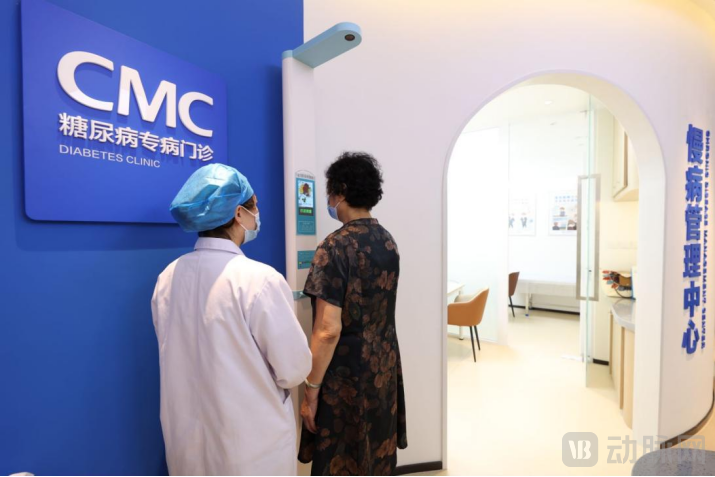
Yan Jinhong introduced that WeDoctor has established standardized Chronic Disease Management Centers (CMCs) in collaboration with 50 primary healthcare institutions in Tianjin, with the prospect of achieving full coverage of chronic disease management services across the city by the end of 2022. By digitally reconstructing every stage of the medical process—pre-consultation, during consultation, and post-consultation—and implementing measures such as personal health records and intelligent management of chronic disease complications, the CMCs provide patients with comprehensive, full-cycle health management services. Statistical data show that the total number of chronic disease patients with established health records in Tianjin’s CMCs has exceeded 600,000, including over 220,000 diabetes patients and more than 380,000 hypertension patients. Among the managed chronic disease patients, the standardized management rate for diabetes reached 76.68%, and the overall blood glucose control rate was 55.68%, representing a 19.68 percentage point increase compared to pre-management levels.
Regarding the value brought by digital healthcare, Professor Huang Yuzhang stated that the internet has improved the accessibility and affordability of medical services. Due to factors such as the high penetration rate of smartphones and the rapid development of 4G/5G technologies, China possesses certain advantages in developing internet-based diagnosis and treatment models. He further noted that chronic diseases and common illnesses will represent highly valuable application scenarios and key directions for the development of internet healthcare.
Tianjin has achieved remarkable results in grassroots chronic disease management, benefiting from bold attempts to systematically leverage digitalization to advance healthcare reform. In 2020, the Tianjin Municipal People's Government and WeDoctor signed the "Strategic Cooperation Agreement on Digital Health." Led by Tianjin WeDoctor Internet Hospital, this initiative collaborated with 16 districts and 266 primary healthcare institutions across the city to establish a tightly integrated internet-based medical consortium—the Tianjin Grassroots Digital Health Community. This effort implemented the unified "Four Clouds" platform (cloud management, cloud services, cloud pharmacy, and cloud diagnostics) alongside standardized offline chronic disease management centers, providing community residents with integrated online-and-offline medical and health services encompassing prevention, diagnosis, treatment, management, and wellness.
Yan Jinhong introduced that a breakthrough lies in the Tianjin Primary Care Digital Health Consortium’s exploration of medical insurance payment models—such as bundled payments and disease- or capitation-based bundled payments—with chronic disease management as the entry point. Under global budget management, the consortium is implementing an incentive and constraint mechanism of “retaining surpluses and not covering deficits,” along with a health accountability system, based on assessments of healthcare and health management quality. This effort aims to gradually establish a Health Maintenance Organization (HMO) model centered on health.
As of February 28, 2022, all 266 primary healthcare institutions in Tianjin had fully implemented the Cloud Management, Cloud Services, and Cloud Pharmacy modules of the “Four Clouds” platform. Leveraging this digital cloud infrastructure, the Tianjin Primary Care Digital Health Consortium has cumulatively served over 1.27 million patient visits. At the 2021 National Conference on Promoting Best Practices in Healthcare Reform, the Tianjin Primary Care Digital Health Consortium was ranked first among the “Top Ten New Initiatives for Advancing Healthcare Reform and Improving Public Health.”
Currently, China’s economy is rising rapidly, and its aging society is accelerating, leading to increasingly strong demand for high-quality medical services. In contrast, high-quality nursing and medical resources remain relatively scarce and unevenly distributed, resulting in a pronounced imbalance in supply. With the application of next-generation information technologies such as “Internet Plus,” artificial intelligence (AI), and big data in the healthcare sector, healthcare management and service models are being reshaped.
Professor Huang Yu Zhang has long been attentive to the development of artificial intelligence (AI) in healthcare. He noted that AI is currently being widely applied across the medical field, spanning areas such as disease prevention and screening, chronic disease management, and clinical treatment support, garnering significant recognition from numerous healthcare institutions and medical professionals. It is reasonable to infer that as medical AI continues to mature, it will inevitably exert a profound impact on the traditional healthcare system across multiple dimensions, including technology and service delivery.
Yan Jinhong believes that digital healthcare will become more deeply integrated with the traditional healthcare system in the future. Empowering primary care with digital capabilities and implementing the tiered diagnosis and treatment system are inevitable paths for development, while “medical consortia” and “health accountability systems” will be two key terms in breaking through industry bottlenecks. Specifically, as the healthcare system shifts from being “treatment-centered” to “health-centered,” health insurance funds are gradually introducing payment reforms based on outcomes, such as capitation and diagnosis-related groups (DRGs). In this context, internet-based medical consortia built on digital platforms can quickly penetrate the core of the healthcare service system, becoming an important vehicle for the rational allocation of medical resources.
“The Digital Health Community,” a new digital HMO model, represents a significant initiative by WeDoctor. The industry widely recognizes that this HMO model has effectively driven a transformation in the healthcare service system from “price differential” to “efficacy differential.” Previously, fee-for-service payment models led to certain drawbacks, such as overtreatment and waste of medical insurance funds. Currently, performance-based payment for chronic disease management guides patients to seek medical care in an orderly manner and promotes the rational allocation of medical resources. Meanwhile, it establishes an incentive and constraint mechanism for healthcare providers oriented toward health management outcomes, thereby truly shifting the focus from “disease-centered” to “health-centered” care.
According to Yan Jinhong, leveraging its robust capabilities in healthcare, pharmaceuticals, data, and insurance, WeDoctor has established “City HMOs” in multiple regions, including Tianjin, Shandong, and Fujian. These initiatives have revitalized local medical resources, enhanced primary care service capacity, and built an efficient health management system centered on health. Furthermore, WeDoctor has implemented various other HMO models across China, such as “Specialty Disease HMOs,” which focus on chronic disease management and explore bundled payment methods by disease type and per capita; “Community HMOs” and “Enterprise HMOs,” which provide integrated online-and-offline digital healthcare and health maintenance services for community residents and corporate employees, respectively. These efforts have effectively improved users’ health indicators and curbed the growth rate of medical expenses.