Certainty vs. Uncertainty in Life Science Tools: Strategic Choices Between Depth and Breadth – VB ThinkTank Insights
The outbreak of the COVID-19 pandemic served as a free, nationwide advertisement for the in vitro diagnostics (IVD) industry. Factors such as raw material supply disruptions caused by the pandemic accelerated the rise of outstanding domestic raw material manufacturers. The upstream IVD tools sector has also transformed from an inconspicuous “water seller” into a highly visible and prominent industry. The Anhui IVD centralized procurement initiative has further drawn attention to the critical impact of cost-side improvements on downstream product pricing. Consequently, an increasing number of companies are opting to adopt domestically produced raw materials.
Policies, capital, and enterprises... all seem to have brought deterministic growth to the upstream IVD industry. However, the unpredictability of the pandemic, the intense "involution" among companies, and the business gains derived from special circumstances have introduced significant uncertainties to the development of the IVD industry in the post-pandemic era.
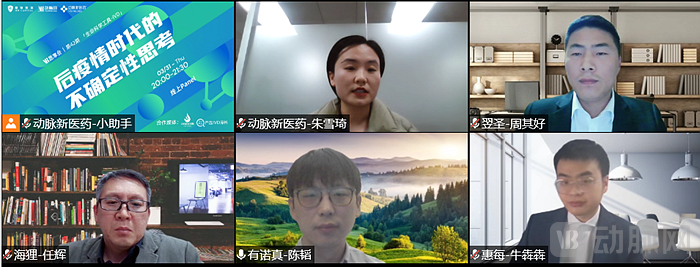
Recently, VCBeat and VBNewMed, in collaboration with Huimei Capital, invited representative companies from the upstream tools segment of the IVD industry—Beaver Biotech, Yeasen Biotechnology, and Younuozhen Biotech—to launch a discussion titled “Reflections on Uncertainty in the Post-Pandemic Era.” From emergence to expansion, from deep specialization to broad diversification, and from obscure paths to essential routes, this initiative examines how Chinese enterprises have achieved late-mover advantage in the upstream sector of the IVD supply chain.
“The pandemic has accelerated the development of the IVD industry, and nanomagnetic beads, as a new material technology in the biological field, have also experienced rapid growth. Nanomagnetic beads have a history of over 40 years, but their widespread application in the biological field has been around for approximately 20 years. Since graduating from university, I have accumulated more than 20 years of experience in the biomedical field. During my postdoctoral research in the United States, my primary research focus was on the structural biology of membrane proteins and bio-nanomaterials.”
“In my research, I utilized the most advanced magnetic nanobead products available at the time, gaining a profound appreciation for the revolutionary technological breakthroughs driven by such foundational innovations. In 2010, I returned to China and conducted relevant surveys, discovering that only a few laboratories in the country were engaged in magnetic bead-related research, with virtually no large-scale industrial applications. In 2011, I founded Beaver Nano in Suzhou Industrial Park, positioning the company to focus on magnetic bead technology and its application development.”
“Our initial product line consisted of cross-linked agarose magnetic beads, primarily used for protein purification. Between 2013 and 2015, China’s molecular diagnostics industry, particularly the genetic testing sector dominated by next-generation sequencing (NGS), experienced rapid growth, driving demand in the nucleic acid extraction market. During this period, around ten startups emerged in China’s magnetic bead sector, all focusing on product development for this application area. This marked Haierui’s second-generation magnetic bead product: silica hydroxyl core-shell magnetic beads. Since 2017, chemiluminescent immunoassays based on magnetic particle methods have become the mainstream technology in immunodiagnostics, with nearly all magnetic bead raw materials relying on imports. In response, Haierui initiated research and development on its third-generation technology: uniform-sized magnetic microspheres with a multi-layered sandwich structure.”Ren Hui, founder of Hailei Bio, stated.
Currently, the applications of magnetic nanobeads in separation, purification, and analytical detection are primarily categorized into two types. The first type involves non-specific separation and purification, which relies on biochemical reagent technologies to isolate and extract active ingredients, such as in various nucleic acid extraction protocols. The rapid expansion of the magnetic nanobead industry during the COVID-19 pandemic was driven by the beads’ significant advantages in high throughput and automation, which effectively addressed the urgent need for rapid processing of large batches of samples in COVID-19 nucleic acid testing. The second type comprises specific capture applications that primarily utilize labeled immunoassays, known as biofunctional magnetic beads, including applications in chemiluminescence, probe-based capture, and cell sorting.
After a decade of development, China’s nanomagnetic bead technology in the first category of applications has largely replaced imports and gradually achieved large-scale mass production. However, in the second category—biofunctional magnetic beads for capture applications—domestic suppliers currently lack significant competitiveness, with the market still heavily reliant on imports.This type of magnetic bead involves high technical barriers and complex manufacturing processes, often requiring dozens of steps. The production cycle takes at least 1–2 months, mass production capacity is limited, and product stability is poor.
Ren Hui stated:“In this niche field, we still need long-term accumulation of technology and experience.I believe,The future development trend of magnetic nanobeads should be the development of biofunctionalized magnetic beads.“Post-pandemic, I also hope that domestic magnetic bead technology enterprises can collaborate synergistically to jointly advance the technology toward applications in functional assays, chemiluminescence, and cell therapy.”
Zhou Qihao, Vice President of Yeasen Biotechnology, added:“Enzymes and magnetic beads share many similarities. First, developing a basic enzyme is not particularly difficult; however, producing high-quality enzymes and scaling up manufacturing present significant barriers. Although enzymes have been known for over a century, it has been less than 50 years since thermostable enzymes were discovered and applied in automated PCR. Even among enzyme products from major international brands, many of the molecular enzymes offered by these industry giants were launched more than a decade ago.”This is because the evolution and screening of enzymes constitute a major undertaking, with significant barriers spanning from small-scale laboratory samples to industrial-scale fermentation, purification, and control of batch-to-batch consistency.
“Ten years ago, the enzyme sector was not valued by the capital market. Coupled with inadequate funding, talent, and infrastructure at that time, the industry’s development stagnated. The outbreak of COVID-19 highlighted the significant shortfall in enzymatic production capacity. National attention and the introduction of relevant policies have since accelerated industrial growth. To date, beyond product iteration, technological advancements among downstream in vitro diagnostics (IVD) companies have posed new challenges for enzymes, such as achieving faster amplification rates, improved tolerance, lyophilizability, and cleaner control over pathogenic contaminants.”
“Overall, the enzyme industry is currently in a phase of rapid development following its emergence.”
For customer bases not associated with COVID-19-related enterprises, such as Nuozhen Biotech, Chen Tao, Founder and CEO of Nuozhen Biotech, stated:“Our current business is primarily B2B, with most products sold to industrial clients, particularly large-scale industrial customers with long-term, stable relationships. The COVID-19 pandemic, as an unforeseen factor, accelerated industry development. However, in the long run, there is little room for shortcuts in B2B business.”
“Broadly speaking, product performance resembles a functional curve, composed of a parametric component and a functional component. The functional component encompasses our proprietary process technologies and patented technologies; variations in this function drive innovation in both business models and products. The parametric component refers to the commissioning phase of industrial-scale processes, focusing on optimizing each parameter to meet commercialization standards. Only by combining exclusive technologies with refined process expertise to satisfy the needs of a broad spectrum of downstream customers can sustainable growth be naturally achieved.”
Niu Benben, Vice President of Investment at Huimei Capital, summarized:“The pandemic has indeed drawn greater attention to the entire upstream IVD industry. Short-term supply-demand gaps have enabled many companies to secure commercial orders and attract capital interest. However, with the rapid influx of new entrants and a swift increase in investment, the sector is showing signs of overheating.”
“However, the fundamental outlook for investment in life science reagents remains positive this year. This is because the underlying development drivers—such as the broader context of centralized procurement, the domestic substitution of IVD raw materials, and the cross-industry applications of life science reagents—remain unchanged. Favorable factors, including China’s future global advantages in manufacturing, continue to exist, so interest in the IVD raw materials sector remains high. In this context, as investors, we will certainly apply more stringent screening criteria to projects, placing greater emphasis on companies with core competencies and global competitive advantages.”
Pandemic as a Catalyst: A Growing Number of Enterprises Entering the Market,
The Window for Gains Continues to Narrow, Yet Fundamentals Remain Strong
The COVID-19 pandemic served as a free, nationwide advertisement for the IVD industry.
Ren Hui said:“Since the pandemic, policy incentives, increased investor attention, and market demand have created numerous opportunities for upstream raw material suppliers. Previously, Haili Biological’s annual R&D expenditure was only around RMB 2–3 million; it has now reached RMB 10–20 million. Following our latest financing round, we will continue to increase R&D investment, deepening our technological expertise and broadening the scope of our applications.”
Amidst a vibrant capital market last year, Yeasen Biotechnology completed financing rounds totaling nearly RMB 900 million. Zhou Qihao stated:“Following the financing round, our first priority is to define the company’s future strategic positioning. Yeasen Biotechnology aims to become a leader in life science tools. This vision carries two key implications. First, we will maintain a sharp focus on life science tools, with all business operations centered around this core. We will not directly engage in downstream genetic testing and therapy, thereby avoiding competition with our downstream customers. Staying true to our original mission of helping customers create value, we are committed to delivering exceptional service. Second, we aspire to become a global leader in the tools industry. Yeasen Biotechnology will actively expand its product portfolio in the tools segment. Currently, we have established more than ten R&D centers and manufacturing bases in Shanghai and Wuhan. As the life sciences industry continues to evolve, Yeasen Biotechnology is dedicated to developing more products that benefit our customers, ultimately improving public health and well-being.”
“In addition, Yeasen Biotechnology will also expand its overseas presence by establishing a global R&D center. Of course, we are also allocating a portion of our funds to talent development, recruitment of high-level professionals, and the construction of sales channels. Although the COVID-19 pandemic has prompted many companies to enter this sector, creating an appearance of hyper-competition to outsiders, the true definition of ‘involution’ is competition that fails to generate economic value. In contrast, the current industry competition is value-creating, as it drives rapid technological advancement.”
Chen Tao added:“Although Younuo Bio did not seize the opportunity presented by the COVID-19 pandemic to expand its business, from a long-term perspective, we have steadily and deeply advanced our protein engineering and development technologies, providing high-quality services to established corporate clients. As a result, we continue to secure substantial business in protein and antibody development and engineering. Since its inception, Younuo Bio has maintained strong profitability.”
“Given that the company is still relatively young and continues to require the addition of a significant number of specialized professionals, Youzhen Biotech maintains a cautious approach toward large-scale financing. After securing a certain level of cash flow, we are currently focusing on deepening our technological capabilities rather than pursuing rapid expansion. Currently, 99% of Youzhen Biotech’s development activities are non-exclusive, which provides us with the opportunity to commercialize these developed assets through distribution channels, thereby productizing our accumulated assets and expanding our business footprint.”
Overall, Niu Benben stated:“In terms of certaintyThe proportion of domestically produced IVD products is continuously increasing, and many imported enterprises have also begun to establish factories in China, bringing great opportunities for the introduction of domestically produced IVD raw materials. In the future, there will be dual growth drivers for the upstream IVD industry: the increase in the proportion of domestic production and the growth of the downstream IVD industry itself. In addition, from a global perspective, China's current talent and overall industrial development environment have extremely high global comparative advantages. Therefore, whether it is the development of domestic IVD raw materials or the globalization of domestic life science companies, there is certainty of vigorous development.
“From the perspective of uncertainty, against the backdrop of the COVID-19 pandemic, some enterprises, despite lacking strong core competencies, have found their own ways to survive during this special period. Although there is uncertainty about how many waves of COVID-19 outbreaks will occur and even whether the virus will coexist with us in the long term, the influx of new market entrants has plunged many low-barrier product categories into fierce price wars. Consequently, we are witnessing a continuous narrowing of the window for COVID-related benefits, and companies without core competitiveness are likely to be gradually phased out.”
Ren Hui stated:“Rather than becoming a life sciences giant, Beaver Bio’s strategy is to be a ‘small but specialized’ biomaterials company. From the perspective of materials science development, Beaver Bio has only 10 years of industrialization history, leaving a significant gap compared with foreign giants. Of course, investment in capital and talent can greatly accelerate our process of achieving domestic substitution.”
"The continuous deepening of technology and the ongoing optimization of production processes constitute the journey of a company's growth and expansion.""Therefore, Beavers' original aspiration is to establish our brand in the global life sciences field. As for whether focusing on a single domain will quickly lead to an industry ceiling? I don't think so! Because it is the depth of technology that determines the breadth of industrial development."
So, how can one rapidly expand and close the gap with industry giants? Zhou Qihao stated:“With resources in place, the most critical factor is pinpointing the company’s strategic positioning. Broadly speaking, the life sciences sector is poised for sustained growth in the future. By securing a clear position within this broader landscape and defining the company’s business model, corresponding strategic deployments can be implemented concurrently. Furthermore, to maintain long-term competitiveness in the industry, it is essential not only to possess technological innovation capabilities that meet customer needs but also to thoroughly understand customers’ actual requirements and establish mechanisms for deep collaboration. To this end, Yeasen Biotechnology has established multiple application R&D centers covering areas such as IVD, RDC, NGS, and mRNA. These centers deeply engage in customers’ R&D projects, helping them complete development tasks and shorten R&D cycles, thereby fulfilling Yeasen’s mission of ‘creating value for customers and making the world healthier and happier.’”
Delving into the depth of technology holds significant implications for the subsequent expansion of a company’s breadth. Chen Tao cited an example, stating:“Currently, Nuozhen Bio possesses nearly 8,000 soluble human proteins with native conformations. Leveraging these proteins, we are collaborating with several leading enterprises both in China and abroad to develop and engineer novel monoclonal antibodies against various proteins, which will serve as a significant resource pool for the industry.”
“Should companies expand? For enterprises, the answer is invariably yes; the difference lies in the chosen path of expansion. Some companies opt to expand by focusing on a single product, deepening its development, and then extending its applications and pursuing global expansion around that core product. Other companies expand through mergers and acquisitions, driven by customer needs.”“There is no inherent superiority or inferiority among expansion models; any model that suits a company’s development is a sound one,” said Niu Benben.
Niu Benben said:“How long it will take to become a life sciences giant is a rather broad topic. Since we are following the path traversed by overseas giants and leveraging emerging new product development technologies, we enjoy an advantage in terms of growth speed. However, it is also evident that overseas life sciences giants have accumulated their strengths over a prolonged period. It must be acknowledged that there remains a significant gap between domestic companies and these international leaders.”
“Although capital and new technologies are accelerating progress, the time required for the industry’s objective development laws to take effect cannot be overlooked. In the future, domestic companies can first aim to grow into leading life sciences giants in China within 8–10 years, and then further evolve into global life sciences leaders. We are willing to invest the time and patience to achieve this goal.”
Ren Hui added:“Although companies operate in different niche sectors, they are essentially serving the same life sciences platform. For instance, enterprises leverage medical testing platforms to separately develop antibodies, enzymes, and magnetic bead technologies. We hope to see greater collaboration and mutual support within the industry, including the sharing of customer resources, insights into customer needs, and customer experience data, so as to jointly drive the development and growth of the sector.”
Niu Benben concluded:“From a specific domain perspective, all players are developing on the same platform, optimizing their respective products to gradually replace imports. From a macro perspective, everyone is committed to the development and progress of the life sciences industry; we should maintain an attitude where cooperation outweighs competition, jointly driving the industry’s growth.”
For more information about this issue’s activities, please scan the QR code below to access the video replay (Kind reminder: The official event will be held atReplaying videostarting from the 17th minute).

For more follow-up industry information on life sciences, please scan the QR code below to add our assistant and join the “Life Science Tools” Industry Exchange Group.