

Altos Labs Raises $3 Billion to Pioneer Cellular Reprogramming for Anti-Aging Therapies

Altos Labs
Anti-aging Technology R&D Provider
Humanity’s pursuit of longevity, and even immortality, has endured through the ages. In ancient China, Qin Shi Huang crossed vast oceans in search of an elixir of life; in modern times, American billionaire James Bedford had his body cryopreserved in the hope of future revival. While aging is inevitable, people deeply desire long, happy lives, giving rise to a thriving anti-aging market that continues to heat up with advances in science and technology.
In recent years, investment in the anti-aging sector has surged; major pharmaceutical companies such as Novartis and Johnson & Johnson have actively entered the market; and anti-aging innovators like Calico Life Sciences, Juvenescence, and Samumed have emerged in large numbers.
According to a report released by market research firm Zion Market Research, the global anti-aging market size reached $191.7 billion in 2019, representing a year-on-year growth of 8.3%; it is projected to reach $216 billion in 2021, with a year-on-year growth rate of 7.5%.
Cellular reprogramming technology is at the forefront of anti-aging research. As individuals age, cells in the human body gradually senesce, losing their capacity to effectively perform tissue repair, cellular regeneration, and differentiation, thereby leading to the onset of various diseases. Cellular reprogramming refers to the process by which differentiated somatic cells are restored to a pluripotent state under specific conditions, forming embryonic stem cell lines and even further developing into a new organism. Currently, there are multiple methods for inducing somatic cell reprogramming, including somatic cell nuclear transfer, cell fusion, transcription factor induction, and small molecule compound induction.
Altos Labs (hereinafter referred to as “Altos”) was established in the first half of 2021. It is a biotechnology company dedicated to uncovering the deep biology of cellular reprogramming for rejuvenation to restore cellular health and resilience. Within less than a year of its founding, Altos secured a cumulative $3 billion in financing, with strong support from Israeli billionaire Yuri Milner and Amazon founder Jeff Bezos. Its team includes four Nobel laureates, as well as numerous leading scientists, clinicians, and executives from academia and industry.
Altos Labs’ cutting-edge anti-aging technology, star-studded team, and substantial funding have captured global attention, placing it firmly in the spotlight. Join us as we explore the unique appeal of Altos Labs.
In October 2020, during the crisp and clear autumn season, top scientists from around the world gathered at a luxurious residence in Los Altos Hills, California, to engage in focused discussions on leveraging biotechnology to extend human lifespan.
The two-day scientific conference led to the establishment of an innovative biotechnology company, Altos.
Altos Labs’ three co-founders are all leading figures in academia and industry: Hal Barron, Rick Klausner, and Hans Bishop.
Hal Barron, currently President of Research and Development and Chief Scientific Officer at the British pharmaceutical giant GlaxoSmithKline (GSK), will join Altos Labs as Chief Executive Officer and Chair of the Board of Directors on August 1, 2022. Prior to joining GSK, Hal Barron served as President of Research and Development at Calico, an anti-aging biotechnology company; Executive Vice President and Chief Medical Officer at Roche, a global pharmaceutical giant; Senior Vice President and Chief Medical Officer at Genentech, a biotechnology company; Non-Executive Director and Chair of the Science and Technology Committee at Juno Therapeutics, a biopharmaceutical company; and Non-Executive Director at GRALL, a medical technology company focused on early cancer screening. Hal Barron holds a Bachelor of Science degree in Physics from Washington University in St. Louis and a Doctor of Medicine degree from Yale University.
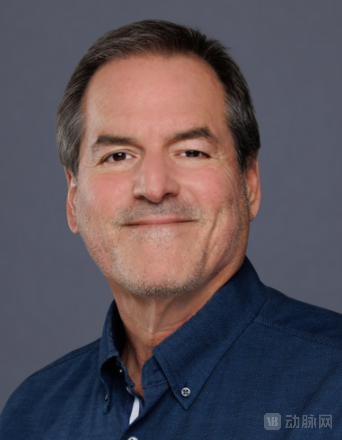
Hal Barron, President of R&D and Chief Scientist
The other two co-founders also previously served at Juno and GRAIL. In addition to being the former Director of the National Cancer Institute, Dr. Klausner was a founder and board member of both Juno and GRAIL, while Dr. Bishop served as the former Chief Executive Officer of Juno and GRAIL.
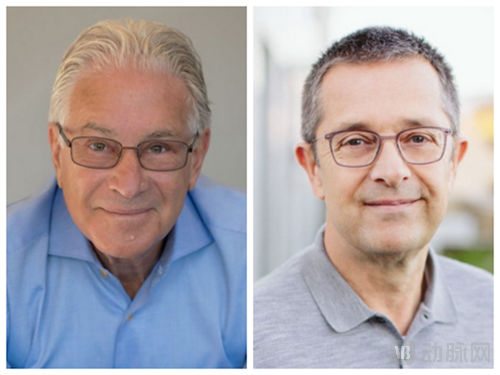
Left: Dr. Rick Klausner; Right: Dr. Hans Bishop
The three founders, long-time friends with prior experience co-managing a company, share mutual understanding and trust, thereby fostering the company’s healthy development.
In addition to its distinguished and experienced founders, Altos’ star-studded team also includes four Nobel laureates.

It is reported that Altos Labs attracts scientists with annual salaries of $1 million or more, without requiring them to deliver products or generate revenue in the short term, as other companies in the same sector do. Instead, the company has committed to allowing them unrestricted freedom to investigate the mechanisms of cellular aging and explore methods to reverse it.
Altos Labs has raised a cumulative total of $3 billion in funding within less than a year of its establishment, with an investor lineup that includes top-tier billionaires such as Israeli billionaire Yuri Milner and Amazon founder Jeff Bezos.
For a long time, differentiated somatic cells were considered the final stage of cellular development, and this process was deemed irreversible. However, cell reprogramming technology has broken with traditional thinking.
In 1964, J. B. Gurdon first destroyed the nucleus of an unfertilized egg cell and then injected into it the nucleus from a tadpole epithelial cell, ultimately resulting in the formation of a normal frog.
In 1997, researchers used somatic cell nuclear transfer to reprogram somatic cells from a mammalian sheep into a totipotent embryonic state, leading to the birth of Dolly, the cloned sheep.
In 2001, M. Tada established a somatic cell reprogramming system using cell fusion technology.
In 2006, Shinya Yamanaka’s laboratory successfully reprogrammed somatic cells into induced pluripotent stem cells (iPSCs) using four transcription factors: Oct4, Sox2, Klf4, and c-Myc. Derived from somatic cells such as blood or skin cells, iPSCs are reprogrammed to an embryonic stem cell-like state and can differentiate into various cell types. These functional cells hold promise for applications in disease treatment, drug screening, and toxicity testing. The discovery of iPSCs has overcome the limitations related to cell sources and ethical concerns associated with the clinical application of pluripotent stem cells, enabling the establishment of patient-specific iPSCs for personalized therapy and opening up new frontiers in reprogramming and regenerative medicine. For this contribution, Yamanaka was awarded the Nobel Prize in Physiology or Medicine in 2012.
Thus, cell reprogramming technology has undergone the developmental stages of somatic cell nuclear transfer, cell fusion, and induced somatic cell reprogramming.
Subsequently, scientists around the world have successively discovered safer and more efficient protocols for inducing pluripotent stem cells.
Scientists believe that cell reprogramming technologies, represented by induced pluripotent stem cell (iPSC) technology, have broad applications, one of which is the potential to extend human lifespan. Altos Labs’ vision is to investigate how cell reprogramming technologies can be leveraged to delay aging and ultimately extend human lifespan.To this end, Altos has invited Dr. Shinya Yamanaka, the Nobel laureate and inventor of iPSC technology, to serve as its Senior Scientific Advisor, overseeing Altos’ research activities in Japan.
Furthermore, to further research knowledge related to cellular health and programming for the development of innovative drugs.Altos Labs has also established research institutes in the San Francisco Bay Area and San Diego, United States, as well as in Cambridge, United Kingdom, staffed with numerous world-class principal investigators led by Dr. Peter Walter, Dr. Juan Carlos Izpisua Belmonte, and Dr. Wolf Reik, respectively.

Globally, technologies aimed at delaying aging are still in the early stages of research and development, with no substantial results achieved yet. The market is just beginning to take off, but many pharmaceutical companies have already started to actively position themselves in this field.
Novartis began investigating the immune-boosting effects of rapamycin in the elderly as early as 2014. In 2017, it sold two clinical-stage drug candidates related to this research to PureTech Health, with its subsidiary resTORbio tasked with continuing their development; Novartis retained a 15% equity stake in the venture. In February 2022, Novartis granted Cambrian Biopharma, a longevity biotechnology company, exclusive global rights to a selective rapamycin analog. This drug candidate was designed and characterized by Novartis. Early trial data indicated that the drug could prevent or reverse multiple age-related health deficits in mice, effectively extending their average lifespan by 31%.
Another major pharmaceutical company, Celgene, has been committed to advancing the anti-aging R&D projects of its spin-off, Celularity. Focused on placental stem cell-based anti-aging therapies, Celularity completed a $210 million Series A financing round in February 2018.
In addition to large pharmaceutical companies, a number of startups focused on anti-aging have sprung up like mushrooms after rain.
In 2013, Google established Calico LLC, a biopharmaceutical company dedicated to research on human longevity, with a primary focus on developing technologies to combat cancer, age-related diseases, and extend lifespan. In March 2017, Calico and C4 Therapeutics, a cancer treatment company, announced a five-year strategic partnership to develop small-molecule protein degradation therapies for the treatment of age-related diseases, including cancer. On July 27, 2021, Calico announced an expansion of its collaboration with pharmaceutical giant AbbVie to discover, develop, and commercialize new therapies aimed at helping patients address age-related conditions, including neurodegenerative diseases and cancer.
Juvenescence, founded in 2016, is dedicated to exploring innovative therapies that extend human lifespan and maintain physiological health. The company develops products targeting senescent cells through investments and the establishment of joint ventures with specialized pharmaceutical R&D firms. In August 2019, Juvenescence completed a $100 million Series B financing round.
After the overseas anti-aging market got off the ground and gradually accelerated, this sector in China remains a blue ocean.In 2017, Li Ka-shing invested in ChromaDex, a U.S.-based upstream raw material supplier of NMN, to develop anti-aging drugs, marking one of the few domestic investments in this sector. Currently, R&D efforts in China’s innovative drug landscape remain focused on oncology, autoimmune diseases, psychiatric disorders, and other life-threatening conditions, with relatively little attention devoted to longevity-related research; consequently, companies operating in this niche are few and far between.