

ZHENHEALTH Secures CE Medical Device Certification for Proprietary AI-Powered Ophthalmic Imaging Software Ahead of IPO
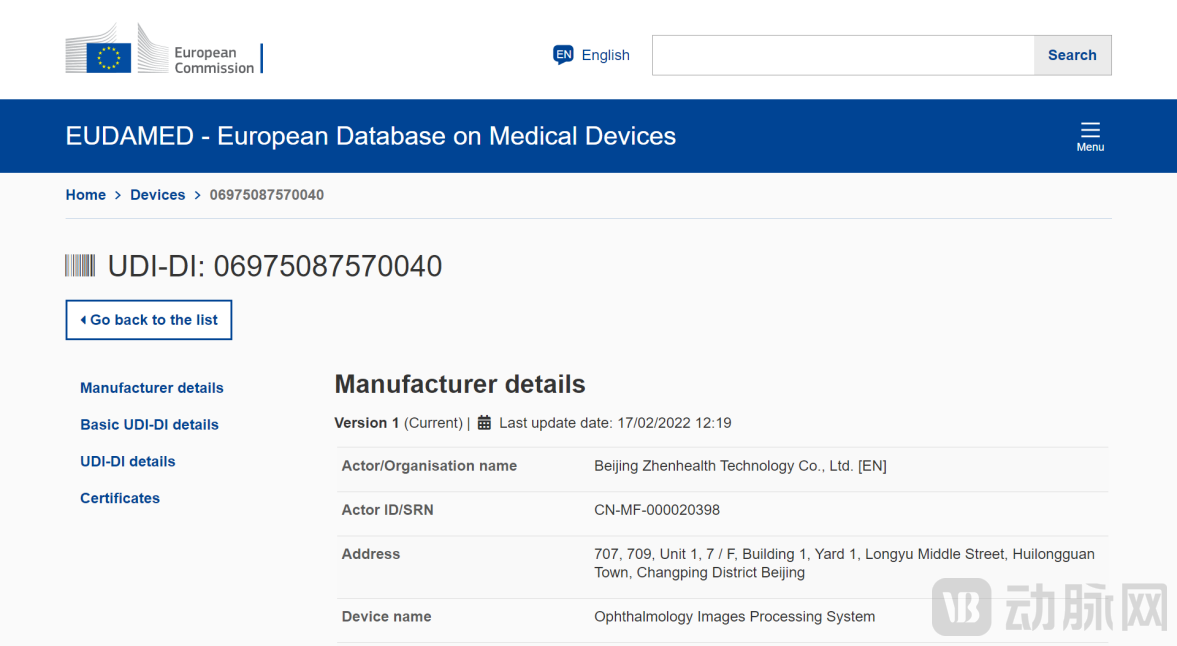
Recently, Zhizhen, an AI-powered visual health service provider, announced that its self-developed ophthalmic image processing software has officially received CE medical device certification from the European Union. This product can seamlessly integrate with a wide range of ophthalmic devices worldwide, delivering core clinical functionalities such as lesion annotation, image enhancement, and data encryption for various types of ophthalmic images. It is designed to assist physicians in diagnosing and flagging eye health risks for patients. In the future, it can be extensively applied across diverse clinical settings, including ophthalmology, health examination departments, endocrinology, internal medicine, community healthcare, and family practice, significantly improving the efficiency and effectiveness of eye health screening. The approval of EU CE medical device certification means that this product can now be marketed in all EU member states, marking a solid step forward for Zhizhen’s self-developed medical-grade software in the international market.

Rising Global Prevalence of Eye Diseases: Technology Brings Broader Opportunities for Eye Health
At least 2.2 billion people worldwide suffer from vision impairment or blindness, with at least 1 billion of these cases being preventable or still amenable to cure. Population aging, coupled with changes in lifestyle, is leading to a sharp increase in the number of individuals affected by eye diseases and vision impairment.
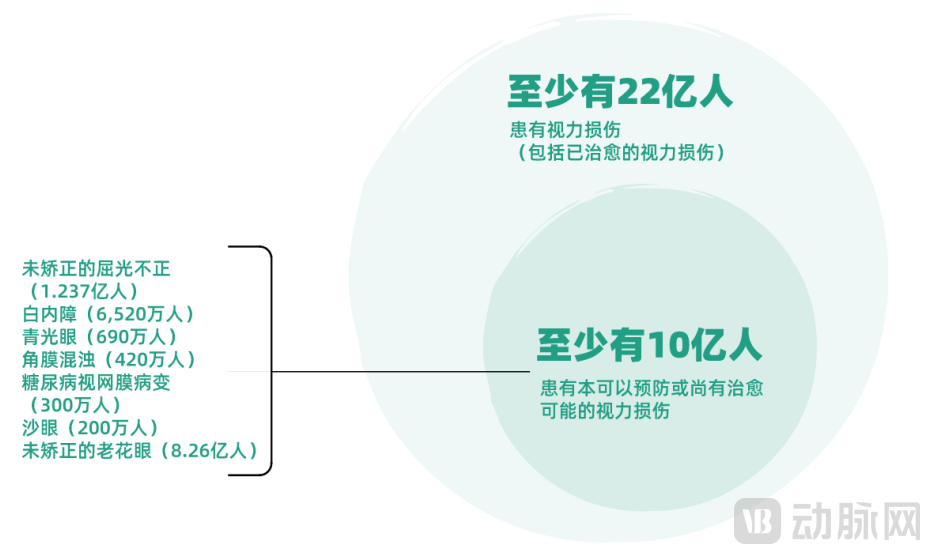
※Source: WHO (World Health Organization)
In addition, many systemic diseases or systemic medications can cause ocular complications or lead to specific ocular changes, which may result in blindness in severe cases. Common fundus diseases include diabetic retinopathy, hypertensive retinopathy, and arteriosclerosis of the fundus arteries. These are highly prevalent conditions associated with systemic diseases that are often overlooked, and they have become the leading cause of blindness among the elderly population. With early detection and intervention, 80%–90% of patients with fundus diseases can avoid blindness.
Furthermore, many chronic diseases, such as hypertension, atherosclerosis, diabetes, and kidney disease, often present with early signs in the fundus during onset. By implementing chronic disease management through ocular conditions, patients with chronic diseases or those at risk can effectively carry out disease prevention, monitoring, and management.
In 2003, the United Kingdom established a national systematic screening program for diabetic retinopathy. After seven years of systematic screening, diabetic retinopathy was no longer the leading cause of blindness among the working-age population in the UK. This demonstrates that comprehensive, efficient, and timely ophthalmic screening can significantly reduce the number of patients suffering from visual impairment and blindness.
Ophthalmic Screening Becomes a Key Lever: Technology Empowers Efficient and High-Quality Ophthalmic Screening Efforts
Zhenzhi’s self-developed ophthalmic image processing software seamlessly integrates with a variety of ophthalmic devices, enabling the acquisition, viewing, transmission, and processing of diverse types of ophthalmic images. The software also features lesion annotation, image enhancement, and encryption capabilities, assisting physicians in providing patients with eye health risk alerts.
This system can be widely applied in clinical settings such as ophthalmology, health examination departments, endocrinology, internal medicine, community healthcare, and family practice. It significantly enhances the efficiency and effectiveness of eye health screening, helping physicians address challenges throughout the entire workflow—from patient record creation to report generation—including cumbersome testing procedures, prolonged cycles, disorganized data, and asynchronous information. By establishing a standardized, end-to-end management process and leveraging artificial intelligence to empower non-ophthalmologists in conducting early eye health screenings for high-risk populations, the system helps effectively control ocular diseases and complications associated with chronic conditions and aging.
In the European Union market, which has long been characterized by high barriers and stringent entry requirements, the “CE” mark is a mandatory certification and a prerequisite for the free circulation of products within the EU. The approval of Zhizhen’s ophthalmic image processing software for CE medical device certification represents another milestone breakthrough in ophthalmic healthcare and signifies a solid step forward in Zhizhen’s international expansion strategy.
Previously, Zhizhen’s independently developed portfolio of hardware and software products has obtained medical device registration certificates issued by the China National Medical Products Administration (NMPA). The company also holds nearly 100 patents worldwide. Its self-developed AI-assisted diagnostic products have been clinically adopted by renowned public medical institutions in China, such as Peking Union Medical College Hospital and the Chinese PLA General Hospital (301 Hospital). Against the backdrop of the “Healthy China” initiative, Zhizhen has developed a one-stop intelligent health screening and assessment solution tailored to diverse scenarios within the broader health industry. This solution is now widely deployed in thousands of primary healthcare institutions, physical examination centers, optometry centers, insurance agencies, pharmacies, and other settings, addressing the needs for ocular and systemic health management across various health contexts. As a national high-tech enterprise, Zhizhen leverages its profound technical expertise in artificial intelligence to provide users with full-lifecycle eye health services.
As a startup in the AI healthcare sector strategically invested by Baidu, Zhizhen leverages advanced technologies such as Baidu Medical Brain’s visual-semantic analysis, combined with its extensive library of precisely annotated clinical fundus images and a team of authoritative medical experts in China, to jointly develop an AI-based screening solution for eye diseases. The solution has achieved precise grading of diabetic retinopathy (DR) and diabetic macular edema (DME), with all performance metrics endorsed by leading medical experts in the industry. The company has received investments from Baidu, Shengjing Capital, Plum Blossom Ventures, Jinpu Investment, Daowei Capital, and Huaxia Fund. In January 2022, Zhizhen announced the completion of its Series B financing round, raising nearly RMB 100 million. Reportedly, Zhizhen is also preparing for its Series C funding round.
ZHENHEALTH, established in 2015, is an AI-driven eye health technology services and management company. Its team comprises experts from top global academic research institutions and Fortune 500 high-tech companies. Leveraging years of extensive expertise in artificial intelligence, cloud computing, big data, and internet-based operational models, ZHENHEALTH integrates and optimizes high-quality domestic and international medical resources to achieve seamless connectivity among users, healthcare services, and medical technologies, thereby delivering comprehensive eye health products and services that combine efficiency, effectiveness, and efficacy for the general public.
Zhizhen Products is dedicated to the management of visual health for the general population. Its product line addresses eye health management needs across the entire human lifespan, including neonatal fundus screening, visual health management for children and adolescents, adult eye health and risk assessment, management of hypertensive disorders in pregnancy and related complications, and eye health and complication assessment for middle-aged and elderly individuals as well as those with chronic diseases.

In January 2022, Zhizhen Health was recognized as one of the first batch of Beijing’s “Specialized, Refined, Distinctive, and Innovative” (SRDI) enterprises, providing a powerful impetus for the company’s further development and leapforward growth. By continuously deepening its path of “specialization, refinement, distinctiveness, and innovation,” Zhizhen Health remains committed to enhancing its independent innovation capabilities and core competitiveness, addressing critical pain points in eye healthcare through technological solutions. Looking ahead, Zhizhen will continue to uphold its corporate vision of “ensuring healthy eyes for every family,” steadily increasing investments in clinical research and the translation of health technology achievements. Driven by technology, the company is dedicated to delivering high-quality, accessible, and affordable visual health services to its customers.