

What Drives Scientists Who Have Already Embarked on the Entrepreneurial Journey?
A recent set of data has caught our attention.
According toVBOrange BureauStatistics show that in the first quarter of 2022, a total of 56 early-stage investment and financing transactions occurred in China’s healthcare sector, with total funding exceeding RMB 3.5 billion. Notably, among the 56 startups that completed early-stage financing in the first quarter,Over 90% of founders have a scientific background, and most of them graduated from top-tier domestic or international research universities.
There are underlying reasons for this. On one hand, research institutes have vigorously encouraged scientists to launch startups in recent years, fostering a favorable entrepreneurial environment. On the other hand, the healthcare sector is increasingly extending into high-tech domains, which imposes higher requirements not only on startups but also on their founders.
But in fact,Scientist-led entrepreneurship is a process of “survival of the fittest,” with only a very small minority ultimately achieving success.. This is because there is still a long way to go in transitioning from a scientist to an entrepreneur, involving shifts in mindset, technological innovation, and the integration of market resources, among other factors.
So, what exactly did those “very few” get right on their entrepreneurial journeys? What were their motivations for setting out? And what advice can they offer to those who follow? To uncover the answers to these questions,VCBeat Orange BureauIn-depth interviews were conducted with five scientist-founders: Wang Yingqi, Founder of Topview Medical; Zhou Guanqun, Chief Technology Officer of Yangqi Intelligence; Gong Enhao, Founder of Deepwise Medical; Wang Yutian, Chairman of Pumeisheng Pharmaceutical; and Li Rui, Founder of Qingying Huakang.
Why Set Out?
"Setting off is often the hardest part, but it is also the most captivating."
Wang Yingqi, Founder of Topsee Medical: Compared to “working for others,” I still prefer entrepreneurship.
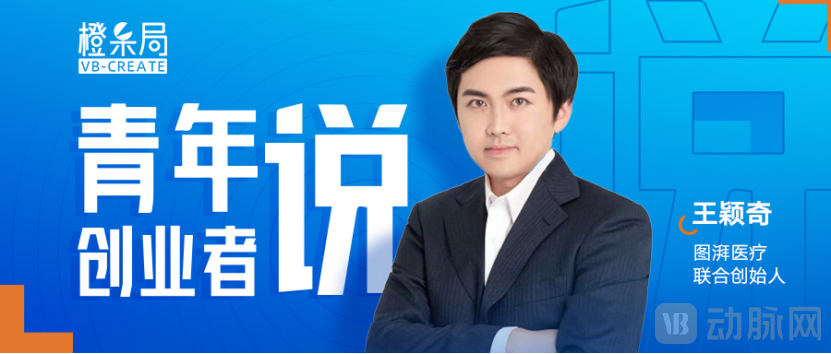
During Wang Yingqi’s master’s studies, he had already embarked on his entrepreneurial journey. However, due to a lack of experience, this venture did not last long, enduring for only seven or eight months in total.
Although his first entrepreneurial venture failed, Wang Yingqi was not overly discouraged. After completing his master’s degree, he quickly joined a Tsinghua-affiliated enterprise.PINS Medical, and became a standard “wage earner.”
However, this “employment stint” did not last long. At the end of 2016, he left PINS Medical. There were two reasons for his departure: first, the therapeutic areas focused on by PINS did not align well with Wang Yingqi’s areas of expertise; second,Compared to working as an employee, Wang Yingqi prefers entrepreneurship.。
After leaving PINS Medical, leveraging Tsinghua University’sX-Lab Startup Exchange Platform, Wang Yingqi encounteredProfessor Huo Li, Department of Electronic Engineering, Tsinghua University, the two parties hit it off immediately upon their first meeting and jointly became co-founders of Topvue Medical.
Zhou Guanqun, Chief Technology Officer of Yangqi Intelligence: Scientific research is about discovering patterns, while entrepreneurship is about applying those patterns to solve problems.
In the first decade of embarking on an entrepreneurial journey,Zhou GuanqunHe has been engaged in physics research on particle accelerators and X-rays. However, he is not satisfied with this, because in his view,Most scientific research is frontier-oriented and cannot address practical problems or improve people’s quality of life in the short term.
It is precisely with this in mind that Zhou Guanqun hopes to translate his scientific research achievements into practical applications, benefiting more people. Especially in the field of medical innovation, the core has always been to address clinical issues and benefit more patients. Therefore, he co-founded the company with Zhou Haotian and Tian Yuan, whom he had known since their university days.Yangqi Intelligence, with a focus on overcoming the challenges of “high-precision navigation in cancer radiotherapy.”
Gong Enhao, Founder of Deepwise Medical: Finding the Endeavor That Maximizes Your Value Through Continuous Exploration and Trial
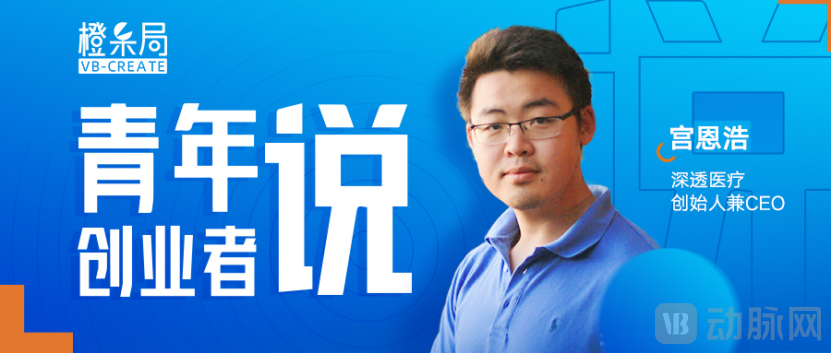
During his undergraduate studies, Gong Enhao was consistently engaged in scientific research in the laboratory. He later went to Stanford University to participate in super-resolution imaging research, co-developed the image editing software Polarr, and ultimately declined a teaching position to dive into the vast world of entrepreneurship by foundingAI Medical Imaging Company: Subtle Medical。
In Gong Enhao’s view, the journey from his student days to dedicating himself to scientific research and then to entrepreneurship has been a process of self-discovery and self-awareness, as well asThe Process of Continuously Seeking Optimization Under Full Exploration. Only through continuous experimentation and sustained exploration can one discover their true strengths and maximize their value.
Wang Yutian, Chairman of Pumeisheng Pharmaceutical: Entrepreneurship is a natural outcome that emerges when basic research reaches a certain depth.

Academician Wang Yutian has devoted more than three decades to investigating the mechanisms of major neurological disorders and developing innovative therapeutics. His team has published dozens of breakthrough papers in top-tier journals such as *Science*, *Nature*, and *Cell* and their subsidiary journals. To date, he has authored over 160 publications, which have accumulated more than 30,000 citations.
In addition to his role as a scientist, Academician Wang Yutian is also a successful entrepreneur with over a decade of experience in the biopharmaceutical industry. In foundingPumeishengPreviously, Academician Wang Yutian also co-founded Canada-basedNoNO IncPharmaceutical companies andPrimary PeptidesPharmaceutical Company.
When asked about the reasons for starting a business, Academician Wang Yutian believed that there was no particular reason.Because when basic research is sufficiently deep and pioneering, entrepreneurship becomes a natural progression.
Li Rui, Founder of Qingying Huakang: The Popularization of Technology Cannot Be Achieved Through Scientific Research Alone; a Commercial Entity Is Essential.
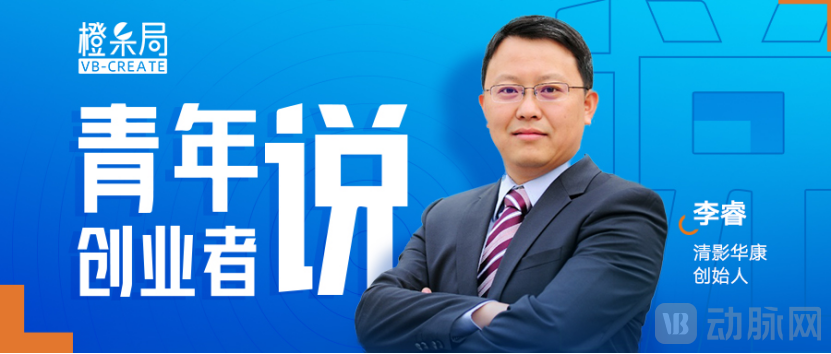
In 2005, Li Rui, who earned his Ph.D. from Tsinghua University, joined Wandong Medical and worked as an engineer for four years. During these four years, Li Rui was exposed toMagnetic Resonance Imaging—a more functional imaging technology. In 2009, Li Rui returned to the research community and conducted postdoctoral research at the University of Washington in Seattle. He returned to Tsinghua University in 2011 to continue his scientific research.
After a period of research, Li Rui and his team achieved breakthrough results in plaque imaging, which received consistent acclaim from both study participants and clinicians in subsequent trials. It was at this juncture that Li Rui realized such advanced imaging technologies should not be confined to academic institutions or limited to a select few Tier 3 Grade A hospitals; instead, they warranted widespread adoption. However, this goal could not be achieved through scientific research alone, necessitating the establishment of a commercial entity.
Therefore, in 2016, Li Rui establishedQingying Huakang, and transferred the relevant intellectual property rights to this company through equity contribution based on valuation, officially embarking on the journey from technology transfer to commercialization.
What Did They Do Right?
It is not easy for scientists to start a business.
According to the world-leading technology transfer company in the United States,Bastilledata show that,The failure rate of startups founded by professors at U.S. universities is as high as 96–97%., which indicates that most technologies developed by professors fail to evolve into products that truly benefit people; instead, as companies encounter setbacks, these technologies are often lost.
The same holds true in China. Although many scientists have moved from the laboratory to the entrepreneurial arena, those who truly can"Survive"and"Living Well"are few and far between. This is because, for scientists, questions such as how to better engage with the market, how to manage teams efficiently, and how to set the right pace for corporate advancement are highly specific and thorny challenges—ones that often lie beyond their current capabilities.
What exactly did the scientist-founders who have taken the lead do right?
Wang Yingqi, Founder of Topview Medical: Emotional “Talent Selection” and Rational “Choice of Investment Institutions.”
Wang Yingqi once stated,The growth speed of Tupai Medical exceeded his expectations.. While external factors certainly played a role, the primary driver was internal orientation—namely, Wang Yingqi achieved two critical milestones:One point is the emotional “selection of candidates,” and the other is the rational “selection of investment institutions.”。
Let’s start with “talent selection.” In Wang Yingqi’s view, founders should embrace this mindset from the very first day of their company’s establishment, namely thatRecognize the importance of teamwork and have full confidence in your team. Founders must never assume they can do everything themselves. If you aspire to accomplish something great and build a great company, your core responsibility is to continuously identify the most outstanding and professional talent in the industry to handle specialized tasks, foster effective collaboration among these high-caliber professionals, and ultimately build a strong and stable team.
In fact, this is exactly what Wang Yingqi did. To identify outstanding talent amidst the vast sea of people, he, during the period from 2018 to 2021,Over the past four years, there were nearly 200 flight records in total., of which 90% are for recruitment purposes.
"Selecting Investment Institutions" RevisitedOver the past four years, TopEye has completed five rounds of financing. Wang Yingqi attributes this smooth progress to his own unique “methodology.”
First, in terms of awareness, Wang Yingqi believes that one should not be overly concerned with short-term gains and losses, but rather consider the long-term partnership potential of investment institutions and whether they can provide high-quality resources;Secondly, in terms of pacing control, Wang Yingqi believes that one must keenly observe market changes and respond appropriately, namely by initiating fundraising at an appropriate time before a major milestone and fully ensuring the smooth achievement of business milestones;Finally, in terms of target selection, Wang Yingqi believes that to achieve "precision," one should select relatively familiar investment institutions in the early stages, and industrial investment institutions can be chosen in the middle and later stages.
Gong Enhao, Founder of Deepwise Medical: One is the approval system, and the other is the implementation system.
Deepwise Medical was founded in 2017 and secured FDA clearance just one year later. To date, its clinical solutions have been deployed in nearly 100 hospitals and imaging centers worldwide. When discussing the key factors behind this success, Gong Enhao highlighted two aspects:One is the approval system, and the other is the implementation system.
Let’s start with the approval system.. In Gong Enhao’s view, within the approval process, it should first be clarified that regulatory agencies have their own approval procedures and may not respond as quickly to new technologies; however, they are undoubtedly committed to providing safer services to healthcare institutions and the public as soon as possible. Therefore, ensuring technological safety is certainly a major priority.
But how can this be achieved technically? It requires companies to maintain continuous and thorough communication with regulatory authorities, truly clarifying and understanding the regulators’ reasoning framework. Only in this way can regulators gain a sufficiently in-depth understanding of your product within their own approval system, thereby minimizing the time cost associated with obtaining product approval. Therefore, this is not an adversarial relationship, but rather one of mutual assistance and collaboration.
On the Implementation FrameworkIn the implementation phase, it is essential to recognize that the healthcare system is unique, characterized by long sales cycles; therefore, medical sales cannot be rushed. Furthermore, successful product adoption requires deep industry insights, specifically addressing whether hospitals are willing to use the product and whether it can deliver clear value to payers.
From this perspective, product R&D should focus on optimizing the underlying architecture to benefit both physicians and patients, while ensuring high quality and efficiency from the physicians’ standpoint. Furthermore, product design should strive for compatibility with all imaging equipment, avoid disrupting clinicians’ existing workflows, and prioritize local data storage to meet security requirements.
Li Rui, Founder of Qingying Huakang: Scientific Research and Entrepreneurship Should Not Be About Balance, But Integration.
Qingying Huakang was established in 2017, and from its inception, it has beenMint Angel Fund, TusStar, Shuimu VenturesHaving been “spotted” by top-tier investment institutions, it has gradually grown into a leading enterprise in high-resolution magnetic resonance vessel wall imaging technology.
From Li Rui’s perspective, in addition to driving technological R&D based on genuine clinical needs and entrusting specialized tasks to professionals, there is another crucial factor:Bridging Research and Entrepreneurship。
For scientists, entrepreneurship may seem like a balancing act between the dual identities of scientist and entrepreneur, but that is not entirely the case,Rather than a balance, it is more accurately described as a fusion of two identities.Researchers are already responsible for guiding students in their research work, and the outcomes of these research projects may eventually be translated into commercial products. On one hand, enterprises can provide financial support to research teams for conducting studies and experiments; on the other hand, the findings from these research teams can offer technical support and endorsement for the company’s product development.
Building on this foundation, Qingying Huakang has established a technology transfer platform aimed at co-developing and commercializing innovative projects in collaboration with research institutes. In the future, Qingying Huakang will further build a product commercialization platform and partner with hospitals to create a resource network. By jointly advancing research with hospitals and gathering evidence-based medical data for its products, the company aims to position its standardized solutions as strong clinical necessities.
What Do They Want to Tell Future Generations?
In the past year or two, driven by policy and market conditions, an increasing number of scientists have begun to step out of their laboratories and into the marketplace, butHow to Start a Business Remains the Biggest Challenge Facing Scientists at This Stage. At this point, we might as well heed the advice of those who have been through it.
Gong Enhao, Founder of Deepwise Medical: Not Only Conduct Research, But Also Develop Technology, and Devote More Time to Technological Development.
The “long board” of a startup must be sufficiently prominent, i.e.Startups should choose sectors with substantial market potential and possess robust core technologies., this is the core driving force that truly propels corporate growth.
Therefore, when your research requires a high degree of alignment with clinical applications, your objectives become very clear: it is not merely about pure modeling or publishing papers, but rather about whether you can ultimately deliver clinical value and truly optimize workflows for patients and hospitals. This is fundamentally a question of technological value.
One possible difference in entrepreneurship is that you not only need to consider the application of technology in a specific scenario, but also ensure that the technology achieves relatively good results in all scenarios. Therefore, entrepreneurs need to invest more effort and energy.Not only should you focus on research, but also on technology, devoting more time to technological development.. As the company continues to grow, it will be necessary to explore more cutting-edge technologies and recruit team members, which will also require extensive planning.
Li Rui, Founder of Qingying Huakang: The value of innovation is not truly realized until it becomes a commercial product.
From research outcomes to commercial products, this process involves numerous stages and requires the contributions of multidisciplinary talent. Innovation is a critical component of original innovation, but it is merely the starting point, not the entirety. Therefore,The value of innovation is not truly realized until it becomes a commodity.
In this process, as the technology holder, scientists must have a clear understanding of the innovation’s value and strictly adhere to regulatory standards throughout the entire translation process; otherwise, they risk creating future liabilities for themselves.
Wang Yutian, Chairman of Pumeisheng Pharmaceutical: The Prerequisite for Developing High-Quality Drugs Is That Basic Research Must Be In-Depth and Groundbreaking.
In Wang Yutian's view,To develop high-quality drugs, the most critical factor is that your basic research must be both in-depth and groundbreaking.Historically, drug development has been arduous and often ended in failure due to a variety of factors. One key reason is the imprecise selection of drug targets. Therefore, more in-depth and innovative research is needed to identify new targets. Once novel mechanisms of action are discovered and true targets are identified, the precision and success rate of drug design will increase significantly.
Unlike major pharmaceutical companies, which select known targets for drug development based on market demand, basic scientists discover new targets while investigating unknown mechanisms and then pursue drug development according to the indications associated with these targets. Drug discoveries by scientists are often byproducts of their research, with translation occurring as a natural outgrowth once foundational research has reached a certain depth. Consequently, the likelihood of successful development increases significantly.
Zhou Guanqun, Chief Technology Officer of Yangqi Intelligence: Be passionate and align with actual market demands.
Zhou Guanqun believes that whether joining a startup or founding one’s own company, the first prerequisite is to be passionate about the chosen venture. During the entrepreneurial or professional journey, one may encounter numerous challenges, such as capital constraints, market pressures, and technical hurdles; however, genuine passion for the work will ensure perseverance.
Furthermore, a shift in mindset is also required. In startups, the primary objective is not scientific exploration; rather, technology must be aligned with actual market demands to effectively address industry pain points. Only in this way can products achieve commercial viability and ensure the sustainable development of the startup.
"The Path of Entrepreneurship Is Long and Arduous, Yet Every Step Counts"
Success on the entrepreneurial journey is not always fully replicable.
This is because each scientist who successfully transitions from the laboratory to the marketplace starts from a different point, with varying resources and opportunities.
However, regardless of their individual differences, there must be commonalities in certain key aspects.First, technically, it must be closely aligned with market demand and feature original innovation.; secondly, in terms of the team, one must entrust professional matters to professionals and place full trust in the team;Then, in terms of selecting investment institutions, it is akin to taking a nail in search of a hammer; select different investment institutions at different stages;Finally, in terms of self-awareness, it is essential to distinguish between scientific research and entrepreneurship. While scientific research can be idealistic, entrepreneurship is grounded in reality, as the primary objective of a business from its inception is profit generation.