

Tallywell: Building a Digital Closed-Loop Ecosystem for Women's Health from Prevention to Diagnosis and Treatment
From the hospital informatization initiatives that began in the 1980s, to the emergence of pharmaceutical e-commerce in the early 2000s, followed by the subsequent development of telemedicine, and culminating in the recent rise of internet hospitals and digital healthcare, the forms of digital health have continuously evolved, becoming increasingly integrated into people’s daily lives.
Andrew, Founder of Ruiping HealthIt is believed that, for a long time, although digital healthcare in China has been continuously developing, it has primarily existed as a supplement to offline medical services. However, with the outbreak of the COVID-19 pandemic and the rapid growth of the internet, people’s healthcare consumption habits have undergone many irreversible changes. This has elevated digital healthcare from merely complementing traditional medical services to becoming a critical component of the healthcare system. The significant importance of digital healthcare in this era is evident from the growth rate of the digital healthcare market in China and globally over the past two years.
Shenzhen Ruiping Health Technology Co., Ltd.(Shenzhen Ruiping Health Technology Co., Ltd., hereinafter referred to as “Ruiping Health”) was established in 2017. Its core team members hail from Harvard Medical School, the University of Oxford, the Salk Institute, and MIT. The company has forged deep collaborations with authoritative medical testing institutions in China, key hospitals and healthcare organizations across the country, and is conducting academic research projects with the biomedical professorial team at City University of Hong Kong, integrating high-quality pharmaceuticals, medical devices, and software/hardware products tailored to various vertical disease areas. With a foundation rooted in medical professionalism,Digital-Driven, Precise, and Efficient Closed-Loop Medical Services for “Prevention, Diagnosis, and Treatment”。
Andrew, the founder of Ruiping Health, graduated from the Department of Computer Science at MIT. The core team members all come from families of physicians, having been immersed in the healthcare industry since childhood, which has given them a profound understanding of the pain points in traditional medical care. Meanwhile, their professional background in computer science enables them to be highly optimistic about the prospects of digitalization.
Andrew believes that digital health is a highly promising industry capable of fundamentally reshaping the structure and development trajectory of the entire healthcare system, thereby making high-quality, reliable medical services more convenient, precise, and accessible.
When discussing the original intention behind the establishment of Ruiping Health, Andrew stated: “We would like toTwo pain points are addressed, the first beingConvenience of Healthcare ServicesOur generation enjoys the conveniences of digitalization in every aspect of daily life: we can order food delivery, hail rides, and travel the world with just a smartphone. Digital innovation has permeated various industries, facilitating our lives in numerous ways. However, the pace of digitalization in the healthcare industry has been relatively slow. Often, even for minor ailments, we still need to visit hospitals for consultations, registration, and examinations, getting bogged down in a series of cumbersome procedures. As internet and digital technologies have largely resolved challenges related to clothing, food, housing, and transportation, the pain points in medical services have become particularly prominent.
From Andrew’s perspective, these healthcare processes can be significantly transformed through digitalization and intelligence. Home-based testing is akin to a seatbelt in a moving car; major diseases often present early indicators that can be detected, allowing for effective improvement or even cure through simple interventions. Ruiping Health aims to start with the digitalization of home-based testing, leveraging this“Digital Seatbelt,” enabling early prevention, early detection, and early intervention to facilitate easy treatment. Subsequently, Ruiping Health will"Step-by-step expansion of services to cover every segment of the healthcare system, establishing a closed-loop digital ecosystem spanning diagnosis, treatment, and prevention."
“The second is to address the issue of highly concentrated and severely imbalanced supply of high-quality medical resources.First, high-quality medical resources are scarce and highly concentrated in a few Grade 3A hospitals located in select cities. Second, while pricing at large hospitals in first-tier cities is market-driven, smaller hospitals in third- and fourth-tier cities may face issues stemming from resource imbalances and information opacity. Unlike abroad, China’s large population base makes it difficult to achieve comprehensive coverage of medical services; therefore, having physicians provide in-home services would be extremely challenging. The solution lies in leveraging digital healthcare services to reach households, thereby improving the efficiency with which citizens access high-quality medical care.Andrew said.
Ruiping Health aims to address the shortage of high-quality, scarce medical resources through digitalization and intelligence. Digital healthcare can substantially extend premium medical resources and technologies to grassroots levels and households, thereby benefiting the general public. This includes establishing a digital medical expert system that disseminates the knowledge, experience, and expertise of top-tier specialists to a broader population at lower marginal costs. Such an approach holds significant social value in China, where a population of 1.4 billion is served by only two million primary care physicians.
Currently,Ruiping Health has vertically integrated multiple stages in the women's health niche, including disease prevention, diagnosis, and treatment, to create the digital health brand Tallywell, known in Chinese as Tiweier.“Ti” represents 1/15 of a pixel in computing, serving as a precise unit of measurement. It also embodies Ruiping Health’s philosophy of delivering precision health management to clients through accurate data quantification.

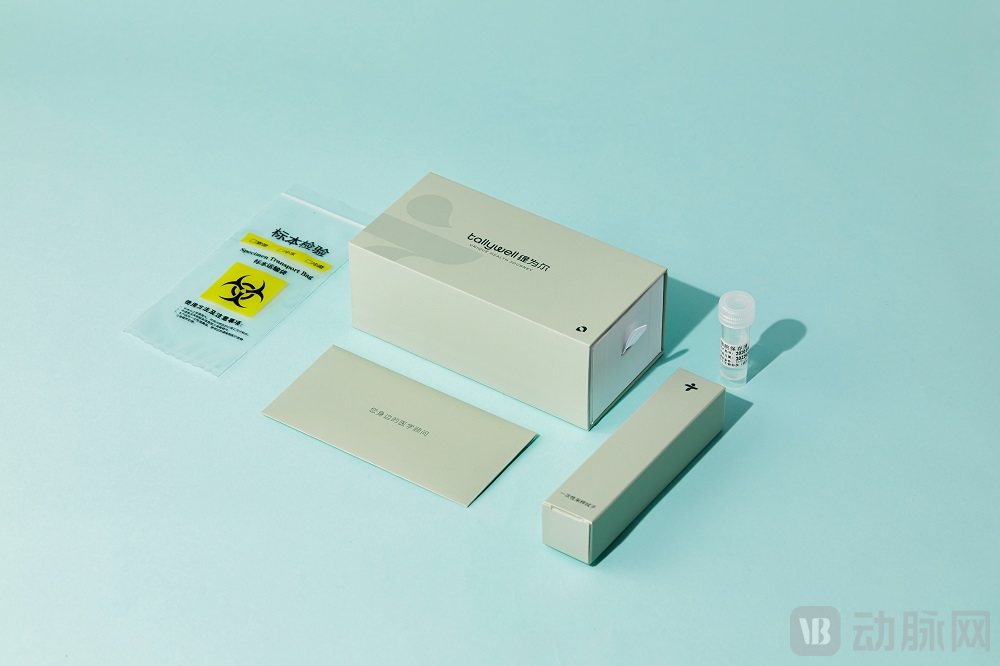
According to Andrew, Tallywell currently offers 27 HPV genotyping home self-test kits, covering the 27 high-risk and low-risk HPV types commonly found in Chinese women. Additionally, HPV genotypes associated with cervical cancer, condyloma acuminatum, and oral cancer are also included.
The product employs advanced flow cytometry-based fluorescent hybridization technology and utilizes liquid-phase techniques to extract viral DNA. Its sampling accuracy meets hospital-grade standards, with a detection accuracy of 99.7%.
Furthermore, the partnered testing center holds both College of American Pathologists (CAP) accreditation and ISO 15189 certification, the gold standard for medical laboratories. It has long provided services to numerous Grade A tertiary hospitals and chain health examination centers, issuing reports equivalent to those from Grade A tertiary hospitals, thereby demonstrating professionalism and authority.
Andrew summarized the advantages of Tallywell as follows: First, it focuses on end-to-end services for specific niche diseases, offering greater professional medical attributes and service completeness than comprehensive platforms. Second, by integrating digital products with offline services, it truly delivers a complete service system tailored to specific indications in an efficient, convenient, and user-familiar manner. Third, building upon specific indications, it has established a professional, high-quality team of experts and a supply chain network, leveraging digitalization and intelligence to extend these services to a broader population at minimal marginal cost.
Next, Tallywell will also launch corresponding at-home testing products for conditions such as female gynecological inflammation.
Within the ecosystem of pharmaceuticals, healthcare services, and insurance, platforms play a critical role as both gateways and connectors. As “gateways,” they initiate engagement through at-home testing, serving not only as entry points for user traffic but also as channels for collecting health data, while marking the starting point for users’ access to medical services.
“Connector” signifies that, through collaboration and interaction with hospitals, pharmaceutical companies, and insurance providers, the platform can connect and integrate all stakeholders related to specific indications, delivering a vertically integrated service loop encompassing “prevention, diagnosis, and treatment” for customers.
To create a more comprehensive “prevention, diagnosis, and treatment” service workflow, the Tallywell platform has also launched numerous derivative services and products, with its HPV vaccine appointment information service being a flagship offering that has gained widespread popularity. “For HPV-related conditions, providing vaccine-related services is an indispensable aspect. Therefore, we have incorporated vaccine appointment information as a key component into our overall service chain,” said Andrew.
Taking HPV as an example, Andrew outlined the implementation of a closed-loop service encompassing diagnosis, treatment, and prevention: Starting with at-home testing, if the result is negative, users are offered consultation for HPV vaccination appointments and regular screening. For low-risk positive infections, platform physicians provide guidelines for daily lifestyle adjustments and recommend auxiliary rehabilitative medical products to help boost immunity and clear the HPV virus. For clients with high-risk positive results, the online healthcare service platform facilitates referrals to local Grade A tertiary hospitals for consultations. Based on medical advice, the platform collaborates with pharmaceutical and medical device partners to supply corresponding medications and products, enabling more users to access convenient, high-quality, top-tier medical resources and products at affordable prices.
Currently, Ruiping Health has completed two rounds of financing, benchmarking against the U.S.-listed company HIMS. Andrew stated, “HIMS in the United States is a vertically integrated service provider for men’s health solutions, while Meiyou in China is an internet-based service platform for women’s health. Ruiping Health aims to first establish itself as a digitally enabled, vertically integrated service provider for women’s health in China. Therefore, our latest round of financing was jointly invested by the angel investors of both HIMS and Meiyou. At present, Ruiping Health’s Tallywell platform has accumulated nearly 100,000 users with precise needs related to HPV, and its average monthly gross merchandise value (GMV) has reached several million yuan.”
“This year, we are also developing home-based self-testing and comprehensive solutions for COVID-19. We anticipate that in the future, COVID-19 may coexist with us in a form characterized by low case fatality and pathogenicity. Accordingly, we need to prepare to approach the prevention, diagnosis, and treatment of COVID-19 as we would for chronic diseases,” said Andrew.
Looking ahead, in the short term, beyond HPV, gynecological inflammation, and COVID-19, Ruiping Health’s Tallywell platform will enter the maternal health sector this year. It will launch corresponding products and services targeting the testing, treatment, and prevention of specific indications, and will also introduce a series of auxiliary consumer products centered around health-related lifestyle scenarios for female users.
“Today, as the power of ‘her’ rises, women’s healthy lifestyles have become a vertical sector worthy of attention and in-depth cultivation,” said Andrew. Notably, Ruiping Health has also assembled a professional supply chain team and health consultation team with medical backgrounds, ensuring product quality at the source for users.
In the long term, Ruiping Health aims to gradually expand into other critical disease areas that significantly impact human life, aging, illness, and death, such as a broader range of malignant tumors, respiratory diseases, and cardiovascular and cerebrovascular disorders. By combining its self-developed products with widely recognized distributed products from the market, the company seeks to augment capabilities beyond its digital platform’s information services. This strategy will enhance digital healthcare offerings across various specialized disease verticals, enabling high-quality medical resources to flow at low cost, across regions, and without socioeconomic barriers, thereby extending equitable access to a larger population.