

Medtronic Announces 12-Month Real-World Data from IN.PACT™ AV Access Post-Approval Study Demonstrating Superiority Over PTA in Arteriovenous Fistula Stenosis

Medtronic
Medical Device Manufacturer

On April 15, 2026, Medtronic announced the 12-month follow-up data from the IN.PACT™ AV Access Post-Approval Study (PAS) at the Society of Interventional Radiology (SIR) Annual Scientific Meeting in Toronto.These data further confirm the efficacy and safety of the drug-coated balloon (DCB) in treating arteriovenous fistula (AV fistula) stenosis.
——You can long press the QR code of the Yikan editor to get the original text——

Figure 1. MedtronicDrug-Coated Balloon (DCB) Schematic Diagram
I. Clinical Background: The Treatment Dilemma of Arteriovenous Fistula Stenosis
Percutaneous Transluminal Angioplasty (PTA) mechanically crushes stenotic lesions through high-pressure balloon dilation, but this procedure itself exacerbates vascular injury, thereby inducing intimal hyperplasia. Data shows that the target lesion patency rate at 6 months post-PTA is only about 46%, and within one year, more than half of the patients require re-intervention.
Drug-Coated Balloon (DCB) resolves this dilemma through "targeted drug delivery": Paclitaxel on the balloon surface rapidly transfers to the vessel wall during expansion, inhibiting smooth muscle cell proliferation and blocking neointimal hyperplasia at its source. The IN.PACT AV DCB employs a proprietary urea excipient technology, ensuring efficient drug transfer within 30-60 seconds and prolonged tissue retention for up to 180 days.The IN.PACT AV Access pivotal RCT published in The New England Journal of Medicine in 2020 has demonstrated that DCB significantly outperforms PTA in terms of target lesion patency at 6 months.Medtronic's latest research data released this time,This provides clinicians with a superior interventional option compared to traditional PTA, further solidifying the role of DCB in AV fistula treatment.
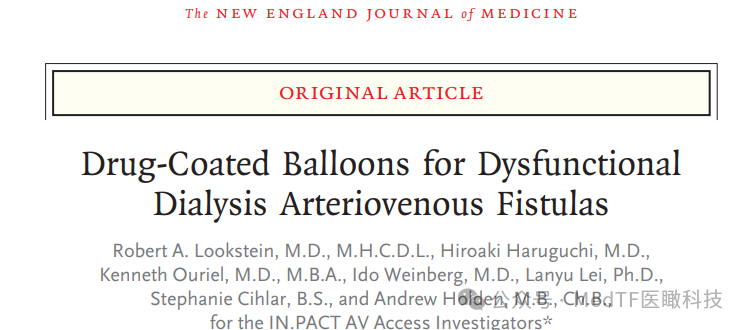
Figure 2.Published in The New England Journal of Medicine in 2020
2. IN.PACT AV DCB: Product Design and Technical Features
IN.PACT AV DCB is a paclitaxel-coated percutaneous transluminal angioplasty balloon catheter, used for the treatment of obstructive lesions in native AV fistulas with a length ≤100mm and reference vessel diameter of 4-12mm. Its core design features include:
Proprietary Drug Coating Technology:IN.PACT AV DCB utilizes a proprietary drug/excipient formulation, combining the anti-proliferative drug paclitaxel with a urea excipient. During balloon dilation, the drug rapidly transfers to the vessel wall within 30-60 seconds, forming a drug reservoir. In vitro studies show that the drug can remain in the tissue for up to 180 days, continuously inhibiting intimal hyperplasia.
Large Diameter Coverage (up to 12mm):Unlike other peripheral DCBs, the IN.PACT AV DCB is specifically designed for AV fistula stenosis, offering a maximum balloon diameter option of 12mm. AV fistulas are located in the superficial veins of the upper limbs, where vessel diameters are typically larger, and this size range covers the vast majority of clinical needs.
Short Rod Design:The short rod design reduces operation time during surgery and improves the convenience for the surgeon.
Indications and Regulatory Status:IN.PACT AV DCB received FDA 510(k) approval in November 2019 for the treatment of AV fistula stenosis in ESKD dialysis patients. Its technology is derived from Medtronic's IN.PACT Admiral DCB (approved in 2015 for superficial femoral artery lesions) but has been specifically optimized in size range for AV fistulas. Outside the markets of the United States, Canada, and Japan, IN.PACT Admiral DCB has obtained CE certification and can also be used for AV fistula treatment.
3. IN.PACT AV Access Post-Market Study: Design and Key Results at 12 Months
3.1 Study Design
The IN.PACT AV Access Post-Market Study is a prospective, multicenter, single-arm study conducted across 17 clinical centers in the United States, aiming to evaluate the safety and effectiveness of the IN.PACT AV DCB in a real-world dialysis population with a high burden of comorbidities. The enrolled patients are all ESKD dialysis-dependent individuals with multiple comorbid conditions. Key endpoints include primary patency of the target lesion at 12 months, primary access patency, number of reinterventions, and safety events.
The characteristics of the study population reflect the complexity of the real world: 51.6% of patients had brachiocephalic fistulas, 20.8% had brachiobasilic fistulas, and 20.8% had radiocephalic fistulas; the most common lesion locations were the cephalic arch (25.8%) and venous outflow tract (25.2%); 59.5% were primary lesions, and 40.5% were non-stent restenotic lesions.
3.2 12-Month Patency Rate Results
At 12 months, the primary patency rate of the target lesion was70.2%, The primary patency rate of the access pathway was52.6%These data are highly consistent with the 12-month results observed in pivotal RCTs (65.3% and 55.1%) and are all superior to historical control data for PTA (46.3% and 35.0%).
3.3 Re-intervention and Infection Rate
The study also recorded two important clinical endpoints that have a direct impact on patients' quality of life:
Number of Re-interventions: The average number of re-interventions per patient within 12 monthsLess than once, lower than the average level of 1.5 times per year reported in the literature.
Severe Infection Rate: The rate of serious infections over 12 months is13.4%, lower than the 19%-23% reported in the literature.
These data indicate that the IN.PACT AV DCB not only outperforms PTA in maintaining patency but also effectively reduces the overall treatment burden and infection risk for patients.
3.4 Comparison with Key RCT and PTA Data
| 70.2% | |||
| 52.6% | |||
| <1 time | |||
| 13.4% |
4. Medtronic's Continuous Layout in the Peripheral DCB Field
4.1 Technical Iteration and Evidence Accumulation of the IN.PACT Series
IN.PACT AV DCB is not the only product by Medtronic in the peripheral DCB field, but an important member of its IN.PACT product family. IN.PACT Admiral DCB was first approved by the FDA in 2015 for the treatment of lesions in the superficial femoral and popliteal arteries above the knee, becoming a crucial tool in the interventional treatment of peripheral artery disease (PAD). IN.PACT AV DCB received FDA approval in 2019, marking Medtronic's expansion of DCB technology into the specialized area of AV fistula maintenance.
Medtronic's evidence accumulation strategy for the IN.PACT series is clear: from pivotal RCTs (published in NEJM) to post-market studies, and then to 5-year long-term safety follow-ups, forming a complete chain of evidence. The IN.PACT AV Access trial has confirmed the sustained superiority of DCB vs. PTA up to 3 years and demonstrated safety for up to 5 years. The construction of this body of evidence provides clinicians with comprehensive decision-making support from short-term to long-term outcomes.
4.2 Competitive Landscape of the Peripheral DCB Market
The peripheral DCB market is one of the fastest-growing segments in the field of cardiovascular interventions. According to industry data, the global peripheral DCB catheter market is expected to be valued at approximately $1.32 billion by 2025 and will grow to $2.35 billion by 2032, with an annual compound growth rate of about 8.47%.
The main participants include international giants such as Medtronic, Boston Scientific, Biotronik, BD, Philips, as well as China-produced enterprises like Endovastec, Guichuang Tongqiao, and Cinepax. Medtronic takes the leading position in two major application areas, femoropopliteal artery and AV fistula, with its IN.PACT series. In the peripheral DCB field, giants like Medtronic and Boston Scientific dominate, while China-produced enterprises are accelerating their catch-up.
5. Expert Opinion: The Clinical Value of Real-World Evidence
Sanjay Misra, MD(Professor of Radiology at Mayo Clinic, Principal Investigator of this study)
"Real-world evidence is crucial for understanding the performance of therapies outside of controlled trial environments. The IN.PACT AV post-market study provides important confirmation — in complex dialysis populations, drug-coated balloon treatment can offer consistent and safe outcomes for AV fistula maintenance in everyday clinical practice."
David Moeller(Senior Vice President and President of Peripheral Vascular Health at Medtronic)
"These robust real-world data are an important addition to the body of clinical evidence supporting the role of IN.PACT AV DCB in AV fistula maintenance. We are proud to lead the generation of long-term clinical evidence in this field and are committed to improving the long-term patency of AV fistulas for ESKD patients requiring dialysis, while reducing their need for reintervention."
6. Clinical Significance and Prospects
The 12-month results of the IN.PACT AV post-market study have clear clinical guidance value:
Real-world validation, enhancing clinical confidence:In a real-world patient population with high comorbidity, the patency rate of IN.PACT AV DCB is highly consistent with the results of pivotal RCTs. This validation is crucial for extending RCT evidence to routine clinical practice.
Reduce the Burden of Reintervention:The number of re-interventions less than once per year is below the average level reported in the literature. Each reduction in re-intervention means that patients experience one less vascular puncture, one less X-ray exposure, and one less postoperative recovery.
Lower risk of infection:The serious infection rate of 13.4% is significantly lower than the 19-23% reported in the literature. Infection is an important cause of hospitalization and mortality in dialysis patients, and the potential advantage of DCB in reducing infection risk deserves attention.
Consolidate Medtronic's Leadership Position in the Peripheral DCB Market:The IN.PACT series has formed a product matrix covering two major indications: femoropopliteal arteries and AV fistulas. IN.PACT Admiral is used for peripheral artery disease, while IN.PACT AV is used for AV fistula maintenance. The two are technically homologous and complementary in indications.
With the continuous growth in the number of dialysis patients worldwide, the demand for effective AV fistula maintenance treatments will keep rising. The 12-month real-world data of the IN.PACT AV DCB provides new evidence-based support for clinicians choosing this technical approach. For millions of ESKD patients, minimally invasive treatment options that reduce the frequency of reinterventions and lower infection risks mean fewer hospitalization days and a higher quality of life.
——You can long press the QR code of the Yikan editor to get the original text——

? Click to view more exciting content
Announcing the Acquisition of AVS! Orthopedic Giant Stryker Crosses Over to Join the IVL Battlefield