Home From Product Export to Standard Setting: Pudong Medical Robots Accelerate Global Expansion with IPO Filing

From Product Export to Standard Setting: Pudong Medical Robots Accelerate Global Expansion with IPO Filing

Jun 10, 2026 16:57 CST Updated 16:57
MedBot

Surgical Robot Developer

Fourier

Intelligent Robot Developer

Siyi Intelligent

Developer of Medical Rehabilitation Robots

ZDROID MEDTECH

Rehabilitation Robot R&D and Manufacturer

图片

baa088afa4a03b2b047b3deee198553f.jpg

(Image source: MicroPort Dynamic)


Recently, at the “Challenges in Laparoscopy, Robotics & AI (CILR)” international conference, hailed as the global urology “Super Bowl,” Professor Zhang Xuepei remotely operated theMedBotThe independently developed Toumai® robot successfully completed key steps, including renal tumor resection, control of the retrohepatic inferior vena cava, tumor thrombus resection, and reconstruction of the inferior vena cava.


Over 1,000 urology and robotic surgery experts from 60 countries worldwide, along with more than 8,000 international colleagues participating online, jointly witnessed this milestone moment in the field of remote surgery.


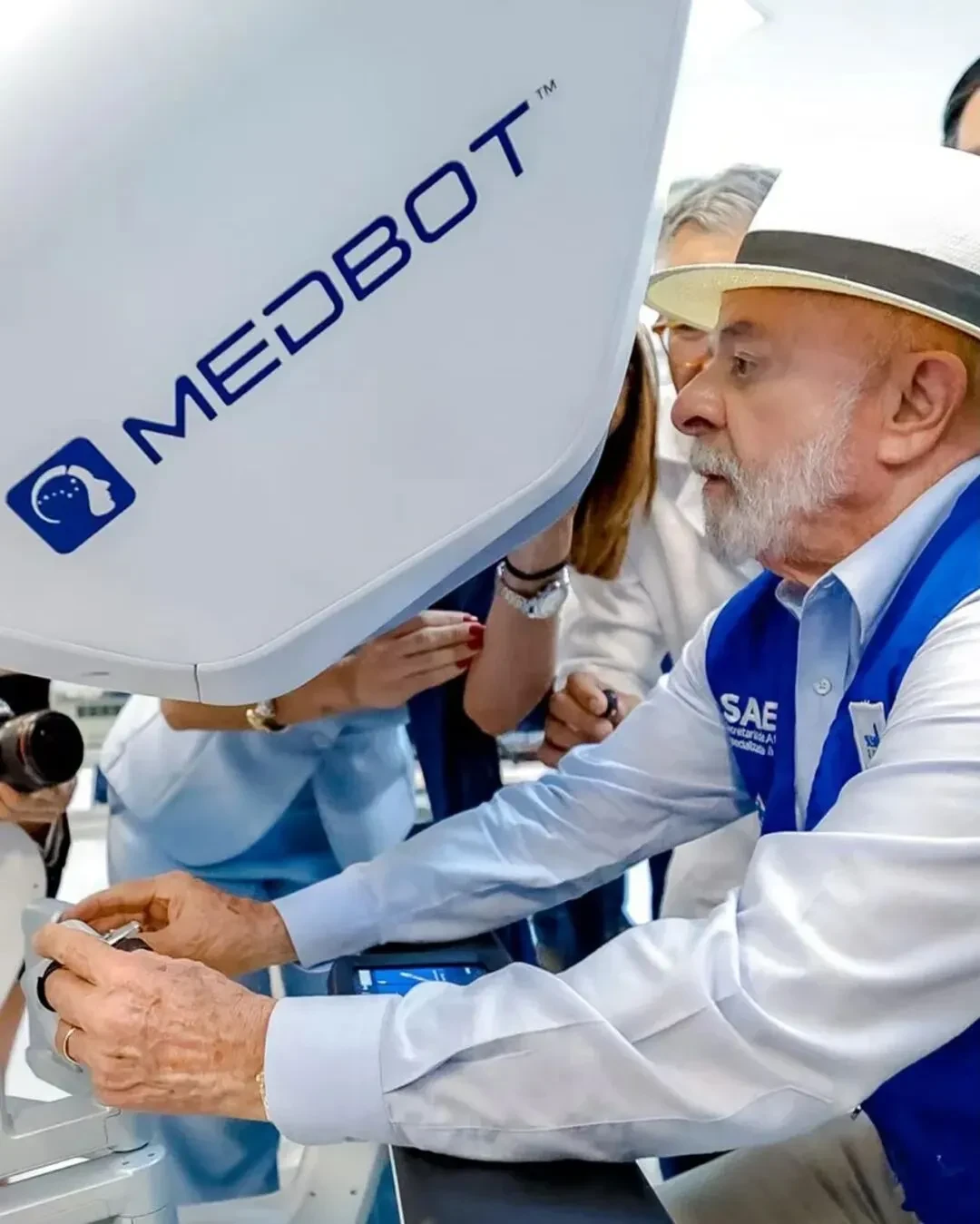
Furthermore, just recently, Brazilian President Luiz Inácio Lula da Silva shared a special experience on his social media accounts: at the newly inaugurated “Clinical Research and Robotic Surgery Center” at Barretos’ Hospital de Amor, he successfully operated the robotic arms of a Toumai® surgical robot located 1,400 kilometers away at the Institute for Advanced Research in Minimally Invasive Surgery (IART) in Salvador, by performing a remote surgical simulation using the Toumai® system. He highly praised this technology as “integrating technology, science, and humanistic care.”


In the field of rehabilitation robotics,Fourier, Siyi IntelligentHas successively entered into strategic partnerships with overseas institutions to deepen innovative global cooperation in embodied health and wellness;ZD MedicalStarting from Hong Kong, gradually enter the markets of Southeast Asia, the Middle East, and Europe.


Currently, medical robots in Pudong are transitioning from the "technology validation" phase to a new stage of "large-scale global expansion," and withTechnological InnovationOpen EcosystemGlobal Collaborationposture, becoming the navigator of this wave.

Image
Image

Technological Innovation: Showcasing China’s Medical Technological Prowess to the World

InSurgical RobotField,MedBothas become a benchmark for Chinese-made surgical robots going global. In April 2025,Toumai® Remote has received NMPA approval, becoming the world’s first remotely operated surgical robot system approved for market launch. It is also the only surgical robot globally to have obtained U.S. FDA IDE approval, enabling cross-state remote surgical clinical studies within the United States.


Data shows that half of all remote robotic surgeries worldwide utilize the Toumai® robotic system, which has set over 60 world-first records. In 2025, MedBot’s overseas sales revenue reached RMB 400 million, a year-on-year increase of 287%, with the proportion of revenue from overseas markets rising to 73%.

79f8292d5df8cb50850c6aa75421558f.jpg

President Lula Experiences Toumai® Remote Surgery Technology

(Image source: MedBot)


The breakthrough of Toumai in the Brazilian market is particularly representative. Shortly after its approval for listing in China, the Brazilian Health Regulatory Agency (ANVISA) approved the remote marketing authorization of “Toumai.” In February 2026, Toumai officially entered Brazil’s public healthcare system, achieving routine implementation of multi-specialty remote surgeries. This marks a transition in the global expansion of Chinese-made surgical robots from merely “selling equipment” to “exporting medical service capabilities.”


Today, MedBot is deeply engaged in building robotic surgical ecosystems across various countries, promoting the global sharing of medical resources through technological innovation. By enabling advanced medical technologies to transcend geographical barriers, MedBot benefits patients in more nations and contributes to the construction of a "Global Community of Health for All."


Rehabilitation RobotLeveraging broader application scenarios and more flexible commercialization pathways, it has become the "vanguard" in the global expansion of medical robots from Pudong.
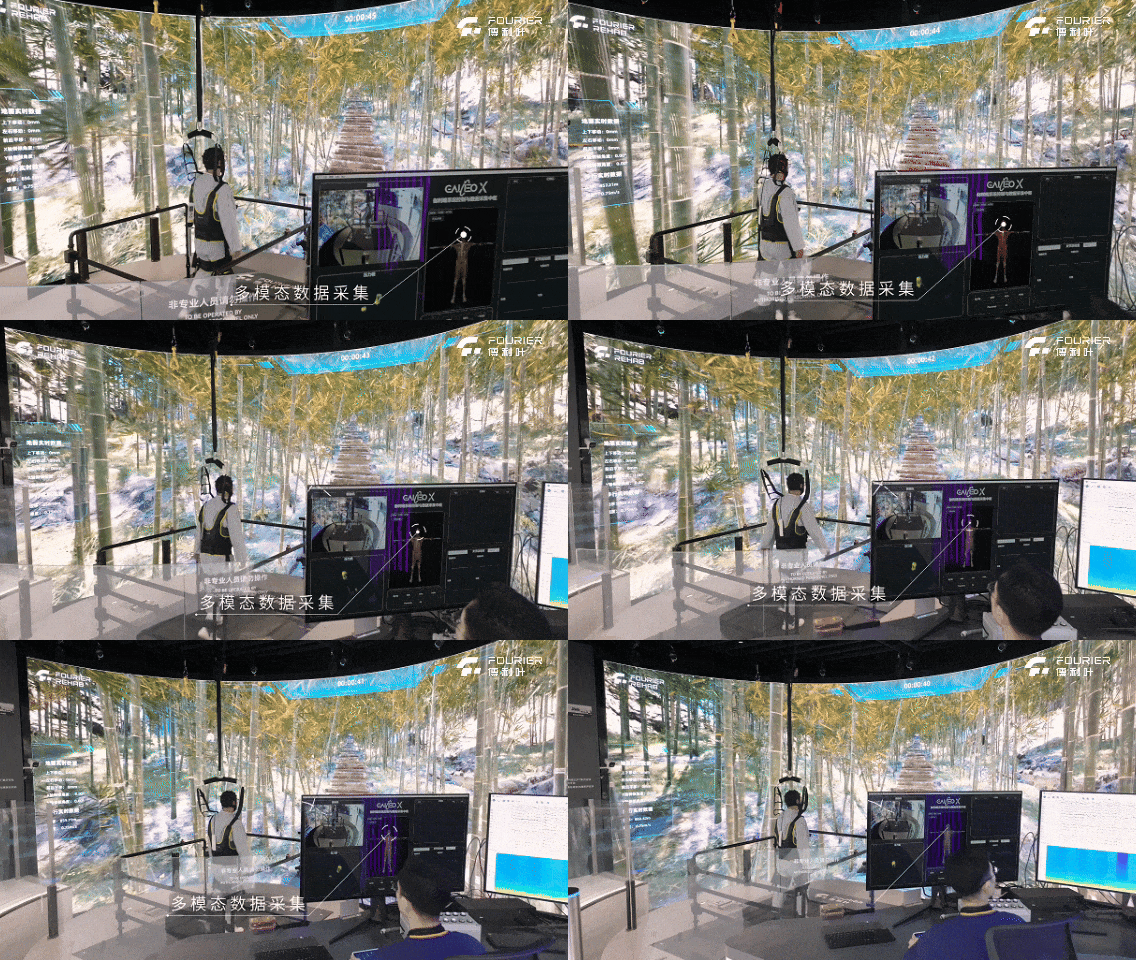

Image

Brain-Computer Interface Integrated with the Galileo System for Multimodal Data Acquisition

(Image source: Fourier)


FourierFourier is the most representative enterprise in this sector. Owen Teoh, General Manager of Fourier’s Overseas Business Department, revealed that the company’s overseas revenue in 2025 increased by more than 100% year-on-year. In May 2026, Fourier renewed its strategic partnership with Singapore’s National Healthcare Group and established a collaboration with Nagoya University, deepening cooperation in three key areas: establishing a joint rehabilitation innovation center, large-scale clinical application validation, and global knowledge exchange.


Fourier’s overseas expansion strategy follows a clear “tiered logic”: starting with product exports, building brand influence through technology demonstrations and academic exchanges, then advancing to technical collaborations and joint standard-setting, ultimately establishing a multidimensional global network encompassing products, services, and talent. Taking the Singapore partnership as an example, since establishing a strategic cooperation in 2021, both parties have jointly launched multiple pilot projects, including integrating Fourier’s GRx humanoid robot with remote photoplethysmography (PPG) technology to achieve non-contact vital signs monitoring.


eb2787f2b239b77a7050f2507dfd35d1.png

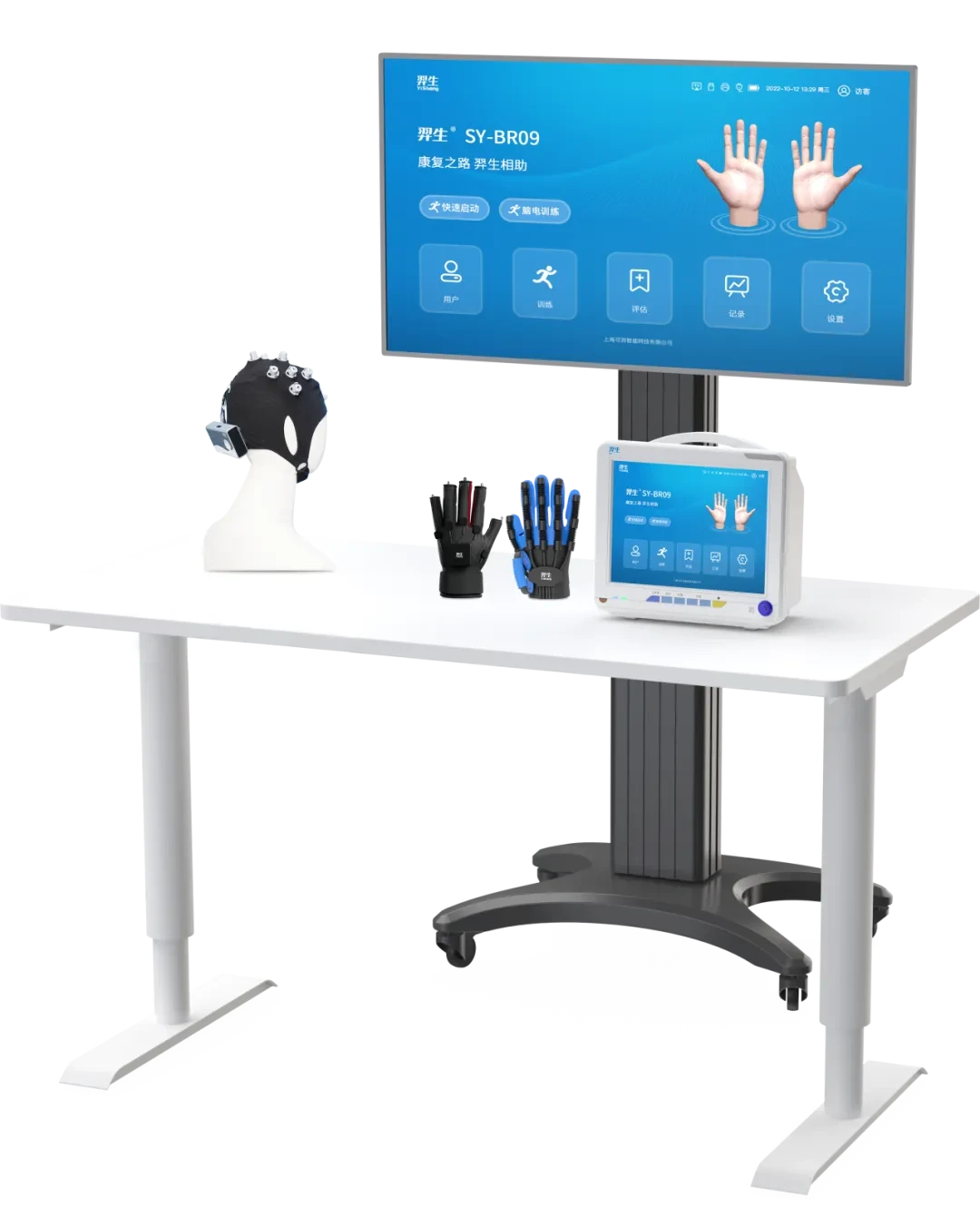
Yisheng® Brain-Computer Interface Hand Function Rehabilitation Robot

(Image source: Siyi Intelligent)


Siyi IntelligentIt has also gradually secured a place in the global intelligent rehabilitation market through technological innovation, collaborative expansion, and localized services.


In 2023, the Siyi Brain-Computer Interface (BCI) Hand Function Rehabilitation Robot officially received Class II medical device registration certification, becoming the first BCI-based hand function rehabilitation device deployed for clinical application in China. The company’s series of products, including the hand function rehabilitation robot, lower-limb soft exoskeleton, and upper-limb rehabilitation robot, have successively obtained multiple authoritative certifications from the NMPA, FDA, and EU CE.


Currently, Siyi Intelligent’s related products have entered more than 80 countries and regions, over 4,000 medical institutions, and more than 60,000 households, serving millions of people worldwide.


49c2ba61a8481cfed22f7c0f33558f1a.jpg

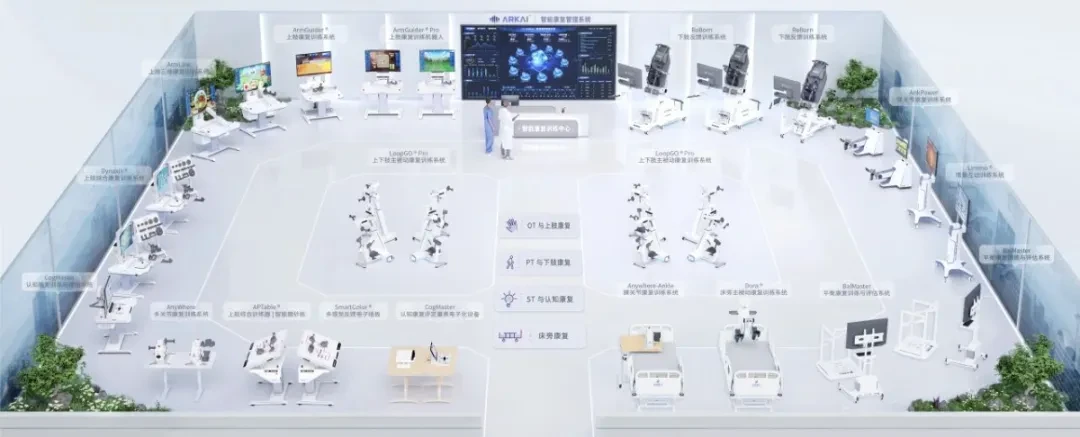
Intelligent Rehabilitation Training Center

(Image source: ZD Medical)


ZD MedicalThe company plans to use Hong Kong as a starting point to gradually enter the markets of Southeast Asia, the Middle East, and Europe, focusing on demographics with strong economic capacity and a focus on quality of life, in order to build a flagship brand. “Going global alone is lonely; we hope to leverage the Shanghai Enterprises Overseas Cooperation Alliance to join forces with other Shanghai-based companies in expanding overseas, showcasing China’s technological strength in rehabilitation medicine to the world,” said Wang Daoyu, Founder, Chairman, and CEO of ZD Medical.



Image

Institutional Innovation: From “Standard Following” to “Standard Leading”

Despite the strong momentum of Chinese medical robots going global, challenges remain not to be overlooked.


Mutual Recognition of Standards and Registration Approval Are the Primary Barriers to Global Expansion. As strictly regulated products, medical robots face diverse regulatory frameworks across different countries and regions. FDA and CE certifications in European and American markets involve lengthy cycles and high costs, while emerging markets often require localized clinical validation.


A relevant official from the Pudong New Area Administration for Market Regulation stated that, currently, Chinese enterprises going global face no longer just the issue of single-product compliance, but a comprehensive challenge involving rule comprehension, system construction, and international trust.


Image


Zhangjiang Pharma Valley Integrated Service Center leverages aggregated service resources and an optimized industrial ecosystem, with a core architecture built around three major hubs: innovation origination, achievement showcase, and one-stop services. It provides comprehensive coverage across the entire enterprise development lifecycle through three main modules—integrated consulting, review and approval, and industrial ecosystem—encompassing 12 specific service items such as investment promotion and onboarding, registration guidance, and global expansion support for enterprises. This initiative aims to advance the global strategic layout of more companies, realizing the vision of “innovating in Zhangjiang, growing in Zhangjiang, and going global from Zhangjiang.”


Pudong has also been making continuous efforts in institutional innovation. In April 2026, at the policy briefing session on certification, accreditation, inspection, and testing to support high-quality industrial development in Shanghai’s Pudong New Area, following 2021MedBotwithShanghai Institute for Medical Device TestingAfter jointly participating in the formulation of China's first core general basic standard in the field of surgical robots, the two parties have once again joined hands, planningContinue to jointly explore and tackle key challenges in fields such as remote surgical robots and AI-enabled medical devices, promoting the international recognition of Chinese medical device products.


Meanwhile, the Pudong New Area has introduced“Several Measures for Certification, Accreditation, Inspection and Testing to Support High-Quality Industrial Development in Pudong New Area”, introducing 14 specific measures that focus on the core industrial needs of integrated circuits, biopharmaceuticals, and artificial intelligence, directly addressing the development bottlenecks faced by enterprises, namely the inability to conduct tests, incomplete testing coverage, and inaccurate test results. Among these, Article 7, “Promoting Alignment with International Mutual Recognition Systems,” is particularly critical. The Shanghai Institute of Medical Device Testing is actively joining international standardization organizations to promote mature Chinese standards globally, while also collaborating with internationally accredited authoritative bodies to issue test reports that are directly recognized under international mutual recognition agreements.


This institutional innovation—shifting from “selling products” to “building ecosystems,” and from “following standards” to “leading standards”—is clearing key obstacles for the global expansion of Pudong’s medical robotics industry. As Chinese standards gradually align with and even influence international rules, the overseas rollout of Pudong-made medical robots will accelerate further, delivering Chinese solutions to patients worldwide.

Image


Cover image is AI-generated