

Research Launched on Medical Expenditure Structure of Cancer Patients under the Social-Commercial Insurance Integration Mechanism
Currently, residents in China face a relatively heavy medical burden.
On the one hand, there is a rise in disease incidence and persistently high mortality rates attributable to diseases.Malignant tumors and cardiovascular and cerebrovascular diseases are currently the leading causes of death among Chinese residents. Among these, malignant tumors account for the highest proportion of disease-related deaths in urban areas. In rural areas, the mortality rate from heart disease has been steadily rising, surpassing that of cerebrovascular diseases and malignant tumors to rank first in 2020.
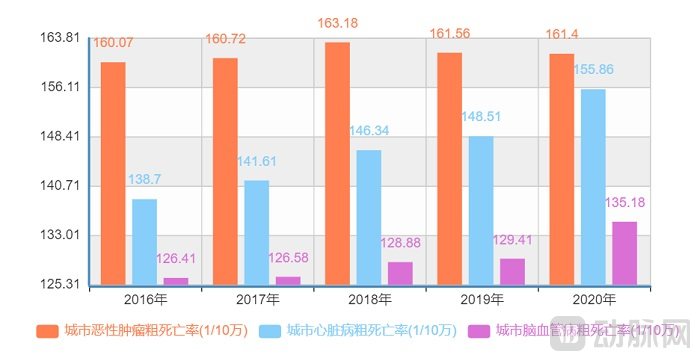
Source: National Bureau of Statistics; Crude mortality rates (per 100,000) for the top three diseases in urban areas
On the other hand, medical expenditures caused by diseases remain high.China’s healthcare expenditure has risen year by year, surging from RMB 502.6 billion in 2001 to RMB 7.2 trillion in 2020, a 14-fold increase. In 2020, government health spending amounted to RMB 2.1 trillion, social health spending to RMB 3.02 trillion, and out-of-pocket household health spending to nearly RMB 2 trillion, indicating that the financial burden on individuals remains substantial.
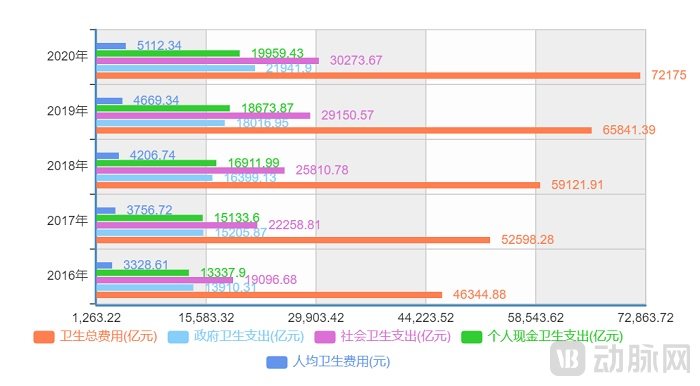
Source: National Bureau of Statistics
In the course of its development, China has gradually established a multi-tiered healthcare security system, with medical assistance as the safety net, social insurance as the mainstay, and other supplementary medical insurance and commercial health insurance as supplements. However, currently, social insurance funds are under significant payment pressure. Commercial insurance, which serves as a beneficial supplement to social insurance, remains underdeveloped. Although the overall disease burden on individuals has decreased, the absolute value has increased, and people still face substantial financial pressure.
What is the current state of the medical financial burden on patients with malignant tumors and other chronic diseases? What are the clinical diagnosis and treatment patterns for patients with malignant tumors? What are the key pain points in the coverage provided by basic medical insurance and commercial health insurance?
In order to better address the aforementioned questions and further enhance the effectiveness of the multi-tiered medical security system, on April 9, 2022, the Health Development Research Center of the National Health Commission and the Beijing Zhongkanglian Telemedicine Technology Research Center jointly initiated“A Study on the Structure of Medical Expenditures for Patients with Malignant Tumors and Other Chronic Diseases under the Combined Mechanism of Social Insurance and Commercial Insurance”The project kick-off meeting was successfully held. The project is executed by Huiyi (Tianjin) Health Technology Co., Ltd., with support from Taikang Life Insurance, Sunshine Life Insurance, and Munich Re.
Hao Xiaoning, Director of the Health Security Research Department at the Health Development Research Center of the National Health Commission; Cai Jianqiang, Deputy Director of the National Cancer Center and Vice President of the Cancer Hospital of the Chinese Academy of Medical Sciences; Gao Hui, Director of the Comprehensive Healthcare Reform Division of the Tianjin Municipal Health Commission; Tang Jisong, Vice President of the China Social Insurance Society; Gu Jin, President of Peking University Shougang Hospital; Song Guohong, Director of the Department of Breast Medical Oncology at Peking University Cancer Hospital; Liu Lei, Honorary Chairman of the Beijing Zhongkanglian Telemedicine Technology Research Center, and Director Lu Bing; Zhu Minglai, Professor in the Insurance Department of the School of Finance and Director of the Health Economics and Health Security Research Center at Nankai University; Ning Yuguang, General Manager of the Medical Cost Control Department within the Health Insurance Division of Taikang Life Insurance Head Office; Yan Qi, Head of the Executive Office of the Health Insurance Division at Sunshine Life Insurance; Wang Hui, General Manager of the Life and Health Insurance Division of Munich Reinsurance Company (China); Li Ruining, General Manager of Huiyi Health Technology Co., Ltd.; and Hao Duan, Deputy General Manager, jointly initiated the thematic seminar.
Deepening Healthcare Reform to Better Build a Multi-Tiered Medical Security System
Since the deepening of healthcare reform in 2009, and particularly since the 18th National Congress of the Communist Party of China, China has advanced the development of five key components of its basic healthcare system. Significant progress has been made in areas including basic medical insurance, essential healthcare services, pharmaceutical supply assurance, modern hospital management systems, and the tiered diagnosis and treatment system.
The Government Work Report has set forth requirements for the next steps. The healthcare reform authorities will continue to focus on deepening the promotion of the “Sanming Experience,” advancing the coordinated reform of medical care, health insurance, and pharmaceuticals (the “Three-Medical Linkage”), promoting high-quality development of public hospitals, and expanding and optimizing the equitable distribution of high-quality medical resources, thereby establishing a new pattern of orderly medical consultation and tiered diagnosis and treatment. A series of measures, including safeguards for drug supply and reforms of the health insurance system, will be implemented to deepen healthcare reform while providing high-quality and efficient medical and health services. These efforts aim to address the difficulties and high costs associated with accessing medical care for the general public, facilitating a shift from a disease-centered approach to a health-centered one.
The launch of the research project titled “Study on the Structure of Medical Expenditure for Patients with Malignant Tumors and Other Chronic Diseases under a Combined Mechanism of Social Insurance and Commercial Insurance” will constitute an important component in deepening healthcare reform. In accordance with the direction of healthcare reform initiatives,The implementation of this project will demonstrate its effectiveness in the following dimensions:
First,, from the perspective of healthcare supply side, it will prompt us to improve the quality and level of healthcare service system supply, providing patient-centered, continuous and integrated medical and health services covering the entire life cycle for cancer patients and chronic disease patients.
Secondly,, from the perspective of healthcare demand, how to enhance the level of medical security, particularly how to distinguish between basic and non-basic coverage, involves determining the role of commercial insurance, defining the scope of coverage for basic medical insurance, and improving its benefit levels. This includes advancing volume-based procurement of pharmaceuticals and medical consumables, incentivizing hospitals to prescribe negotiated drugs, and implementing the “dual-channel” mechanism to ensure patients have access to affordable, high-quality medicines both within and outside hospital settings. The conduct of this research will provide support for addressing these issues.
Again, the research may involve enhancing the governance capabilities and standards of stakeholders in healthcare delivery, health insurance, and pharmaceuticals. By improving the management of both basic medical insurance and commercial health insurance, further curbing unreasonable expenditures, and better leveraging the supplementary role of commercial insurance, this effort will hold significant practical and long-term implications for advancing the construction of a “multi-tiered healthcare security system.”
Multi-party Participation to Jointly Promote the “Establishment of a Multi-tiered Security System”
In light of this, the Health Development Research Center of the National Health Commission and the Beijing Zhongkanglian Telemedicine Technology Research Center jointly initiated a research project. “By selecting patients with chronic diseases such as malignant tumors from certain Grade A tertiary hospitals as the target population, this study investigates the actual medical expenses incurred by patients both in-hospital and out-of-hospital, as well as the expenditure structure comprising basic medical insurance, critical illness pooling, commercial insurance, and out-of-pocket payments. The aim is to provide data support for optimizing the coverage scope and benefit levels of supplementary protections such as commercial insurance, thereby facilitating the establishment and optimization of a multi-tiered security system with universal coverage and a rational structure.”
Hao Xiaoning, Director of the Health Security Research Department at the Health Development Research Center of the National Health CommissionIt points out that through standardized diagnosis and treatment, along with “social-commercial integration” insurance coverage, the quality of medical care can be further improved, ultimately enhancing the healthy life expectancy of the overall population and truly aligning with the goals of the “Healthy China Strategy.”
Liu Lei, Honorary Chairman of the Beijing Zhongkanglian Telemedicine Technology Research Center and Director of the Strategic Development CommitteeIt is noted that in recent years, China has basically established a multi-tiered healthcare security system, with medical assistance as the safety net, social insurance as the mainstay, and other supplementary medical insurance and commercial health insurance as supplemental layers. Therefore, facilitating seamless integration among the various tiers of the medical insurance system, helping commercial insurance develop a value-based healthcare reimbursement standard system aligned with China’s national conditions, fully leveraging the market-oriented advantages of commercial health insurance, and enhancing the public’s sense of gain in healthcare coverage constitute a highly important task at present.
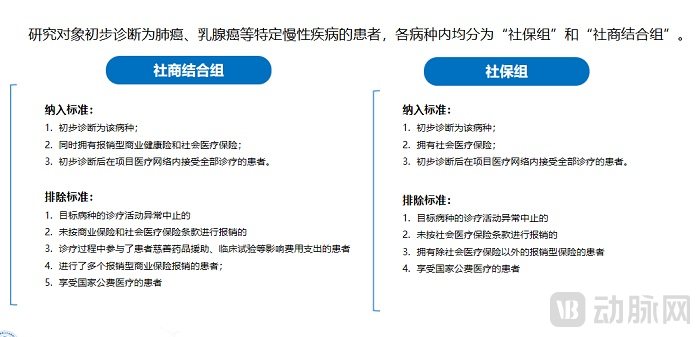
Currently, the projectScope of Diseases Covered in the Initial Phase, including lung cancer, breast cancer, liver cancer, gastric cancer, colon cancer, rectal cancer, prostate cancer, and kidney cancer,Pilot Program in Selected Cities (Phase I)Including provinces and municipalities such as Beijing, Tianjin, Shanghai, Guangdong, Hubei, Hunan, and Sichuan, with plans to gradually expand coverage to the entire country in later stages. It is reported that during the implementation of the project, data and econometric models will be actively employed to scientifically analyze the matching between supply and demand. The implementation of the projectOn one hand, it will focus on the current status of the demand side for medical consultations and healthcare services among the general public; on the other hand, it will take into account the development of the supply side, including medical insurance, commercial health insurance, the pharmaceutical industry, and healthcare services. The ultimate goal is to promote the coordinated reform of healthcare delivery, medical insurance, and pharmaceuticals, ensure effective policy alignment, and generate synergistic momentum for reform.Its objective is to provide a decision-making basis for the innovation and improvement of systems and policies.
As previously mentioned, the existence of insufficient “coordination” highlights that the establishment of a multi-tiered medical security system inherently requires active participation from various levels and stakeholders.Just as the participants included entities such as the Health Development Research Center of the National Health Commission and the China Social Insurance Association, this initiative calls for collaboration and joint efforts among multiple government departments in the first place. Secondly, the participation of various hospitals, including commercial insurance institutions, is also in line with the core objective. While ensuring basic medical security, it is necessary to further enrich the supply of supplementary medical insurance and commercial health insurance products, while simultaneously enhancing the level of coverage for critical and severe diseases as well as diversified medical services, thereby achieving a balance between supply and demand.
Huiyi Health Technology Co., Ltd., as the organizer of the project, as a third-party service company dedicated to the integrated development and innovation of healthcare, pharmaceuticals, and insurance, throughout its past growth,Collaborated with over 30 insurance companies, pharmaceutical enterprises, and platforms on multiple products, serving nearly 5 million users.
Li Ruining, General Manager of Huiyi Health“We have gained a profound understanding of this issue. Through years of practice in the insurance and third-party service sectors, we have witnessed firsthand the hardships faced by patient families—such as falling into or returning to poverty due to illness, and struggling to access competent physicians and effective medications. Significant financial resources and precious treatment windows are often wasted in the process of seeking medical care and drugs. Commercial health insurers aim to provide more customers with tailored products, health maintenance services, timely claim payouts upon illness, and one-stop, worry-free medical management services covering the entire course of disease, thereby offering peace of mind and reassurance. This enables physicians to deliver standardized diagnostic and treatment pathways without concerning themselves with patients’ ability to pay.”
In fact, as Li Ruining stated, “Delving deeper into the scope of commercial insurance claims and medical services for various diseases, and calculating the cost standards for claims and medical services under reasonable and standardized diagnostic and treatment pathways, holds historical value and significance for the long-term development of the overall commercial insurance industry.”
The project is progressing steadily, with related results to be released in succession.
As planned, the project will leverage data and experience accumulated during the pilot phase to gradually expand the range of diseases covered and the geographic scope of investigation, thereby conducting extensive in-depth research. Subsequently, over the three-year project implementation period, it will regularly release interim research reports.The research findings will further promote health economics studies across all sectors of society and ultimately help gradually establish standardized clinical practice guidelines for commercial insurance, thereby advancing the development goals of commercial health insurance: broad coverage, multi-tiered protection, long-term coverage periods, and stable reimbursement ratios.
By analyzing the structure of patients’ medical expenditure, relevant research findings will ultimately provide a decision-making basis for high-quality, standardized diagnosis and treatment, thereby helping to alleviate the financial burden on patients and promoting the high-quality development of China’s multi-tiered healthcare security system.