

Oral COVID-19 Drug Concept Stock Expands: PROTAC Biotech Haichuang Pharma Debuts on STAR Market

Hinova pharma
Clinical-Stage Innovative Drug Developer
On April 6, 2022, Kintor Pharmaceutical announced key Phase III clinical data for its androgen receptor (AR) antagonist “Proxalutamide” in the treatment of COVID-19 patients. Influenced by this news, shares of Kintor Pharmaceutical on the Hong Kong Stock Exchange surged by more than 200% at one point during the day.
Today, the STAR Market welcomed another company focused on AR antagonists—Hinova Pharmaceuticals. Hinova Pharmaceuticals issued a total of 24.76 million shares at an offering price of RMB 42.92 per share, with an opening price of RMB 41. The company raised a total of RMB 1.063 billion, primarily to increase investment in innovative drug R&D and the construction of production bases.
Hinova Pharmaceuticals and Kintor Pharmaceutical are similar in that their core pipelines focus on drug development targeting the androgen receptor (AR). As pharmaceutical companies in the clinical research stage, neither has achieved commercialization, with annual R&D expenditures still exceeding RMB 200 million. As innovative drugs move beyond the phase of mere storytelling, investors’ demands have become increasingly specific: they expect companies to demonstrate short-term profitability while also establishing innovative technological barriers for long-term future development.
Striking a balance between certainty and innovation is the secret to Hinova Pharma’s solid foothold.
1Certainty: HC-1119 Competes to Be the First Domestically Produced Oral COVID-19 Drug
The certainty of Hinova Pharmaceuticals lies in its most advanced pipeline candidate, HC-1119.
HC-1119 is an androgen receptor (AR) antagonist primarily indicated for the treatment of metastatic castration-resistant prostate cancer (mCRPC). Having demonstrated safety and efficacy in humans during Phase I clinical trials, the drug was granted permission by both the U.S. Food and Drug Administration (FDA) and the National Medical Products Administration (NMPA) to proceed directly to Phase III clinical trials. As a first-line therapy, HC-1119 received approval from both the FDA and NMPA in 2019 to enter global multicenter Phase III clinical trials, with the New Drug Application (NDA) submission anticipated in 2023. As a last-line therapy, it also received NMPA approval in 2019 to enter Phase III clinical trials, with the NDA submission expected within 2022.
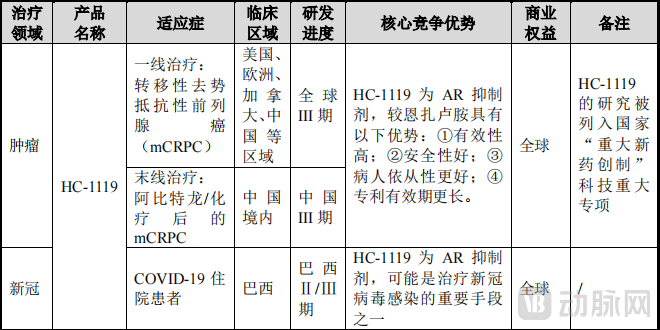
An examination of Hinova Pharmaceuticals’ indication portfolio for HC-1119 reveals that androgen receptor (AR) antagonists are not only applicable in the treatment of metastatic castration-resistant prostate cancer (mCRPC), but also hold promise as a key therapeutic approach for coronavirus disease (COVID-19).
Why Can AR Antagonists Become Potential Drugs for Treating COVID-19?As is well known, the androgen receptor (AR) has long been a well-established target in cancer therapy. However, in June 2020, American hair specialist Andy Goren discovered an association between androgenetic alopecia and the pathogenesis of COVID-19, noting that clinical observations showed a predominance of male patients with more severe disease. Tracing the underlying mechanism, researchers found that the binding of androgens to AR can upregulate the expression of TMPRSS2 and ACE2 in prostate cells. TMPRSS2 and ACE2 are essential mediators for SARS-CoV-2 entry into human cells, as they facilitate the fusion of the viral envelope with the cell membrane, thereby enabling viral entry.
Therefore, similar to Kintor Pharmaceutical, Hinova Pharmaceuticals is also exploring the potential of HC-1119 in treating COVID-19. The treatment of hospitalized COVID-19 patients was approved by ANVISA in Brazil in July 2021 to enter Phase II/III clinical trials, and it is expected that an Emergency Use Authorization (EUA) and New Drug Application (NDA) can be submitted as early as 2022, making it another oral anti-COVID-19 drug.
2Innovation Barriers: Dual Technology Platforms
Hinova Pharma’s innovation potential stems from its dual-platform strategy combining deuterium technology and PROTAC.
First Major Platform: Deuteration Technology
Deuterium (D) is an isotope of hydrogen (H), also known as heavy hydrogen. Because deuterium carries a neutron that hydrogen lacks, it exhibits chemical properties similar to those of hydrogen. However, deuterium can form carbon-deuterium (C-D) bonds that have lower vibrational frequencies and are more stable than carbon-hydrogen (C-H) bonds, thereby resisting chemical or enzymatic cleavage. On the other hand, deuterium has a smaller molar volume and lower lipophilicity than hydrogen, is twice as heavy as hydrogen, and forms C-D bonds that are shorter than C-H bonds. The low vibrational stretching frequency of the carbon-deuterium bond results in a lower ground-state energy compared to the carbon-hydrogen bond, contributing to its greater stability in oxidation reactions.
C–H bond cleavage is a common feature in drug metabolism. As deuterated C–D bonds are more difficult to break, deuterated compounds exhibit slower metabolic rates, which can prolong the half-life and/or increase the exposure of the active drug, thereby reducing dosing frequency or dose. This substitution can also reduce toxicity by decreasing the formation of toxic metabolites.
Advantages of Deuterium Technologylies in:
I.Increase drug exposure, thereby prolonging the duration of drug action in the body;
II.Reduce Specific Metabolites, improve the metabolic profile;
III.Reduce mutual conversion, stabilize stereoisomers, and reduce side effects;
IV.Reduce the First-Pass Effect, thereby increasing oral bioavailability.


List of Global Deuterated Drugs in Phase III Clinical Trials
As of August 31, 2021, a total of seven deuterated drugs worldwide had reached Phase III clinical trials. Among them, three deuterated drugs in Phase III clinical trials or later stages were being conducted in China, namely Hinova Pharmaceuticals’ HC-1119, Bristol Myers Squibb’s BMS-986165, and Zeltin Pharma’s Jakotinib.
Second Major Platform: PROTAC
PROTAC, or Proteolysis Targeting Chimera technology, is a novel targeted therapeutic approach that leverages the intracellular ubiquitin-proteasome system (UPS) to selectively eliminate denatured, mutated, or oncogenic proteins within cells. The concept was first proposed in 2001 by Professor Craig Crews and colleagues in the United States.
Unlike traditional small-molecule drugs and monoclonal antibodies, PROTACs function by bringing the target protein into proximity with an E3 ligase to induce ubiquitination, thereby triggering degradation of the target protein. As an “event-driven” modality, PROTACs do not need to directly inhibit the functional activity of the target protein, nor do they require prolonged, high-affinity binding. Consequently, they can target proteins with smooth surfaces lacking small-molecule binding pockets, as well as many targets that are undruggable by small molecules or inaccessible to antibodies.
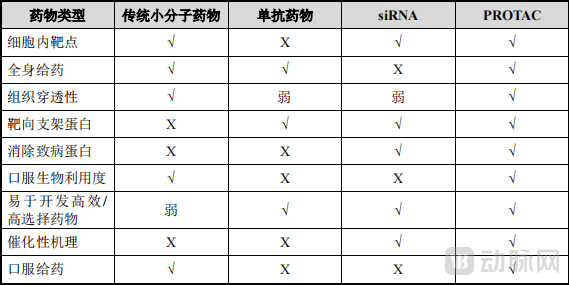
Comparative Analysis of the In Vivo Mechanisms of Action of Several Typical Drug Classes
In contrast, traditional small-molecule drugs and monoclonal antibodies typically function by continuously occupying the active sites of target proteins to inhibit their activity, a mechanism known as “occupancy-driven.” Such agents require adequate dosing, sufficiently long half-lives, and high affinity, which can readily lead to significant side effects, off-target toxicity, and drug resistance.
As the target-protein recognition moiety in PROTACs, the ligand does not need to possess inhibitory or activating functions against the target protein; any ligand capable of binding to the target protein has the potential to be further developed into a PROTAC compound. In comparison, PROTACs offer significant advantages, including high selectivity, potent degradation activity, the ability to target traditionally “undruggable” proteins, and the capacity to overcome small-molecule drug resistance, with broad therapeutic applications. Consequently, PROTACs have emerged as a promising approach for addressing undruggable targets and drug resistance.
As of August 31, 2021, there were eight oral PROTAC drugs in clinical development globally: ARV-110, ARV-471, CC-94676, CFT7455, KT-474, NX-2127, HSK29116, and BGB-16673. Early clinical data have validated the efficacy and safety of PROTAC therapeutics, and multiple PROTAC drugs are expected to gain regulatory approval in the near future, thereby benefiting patients.
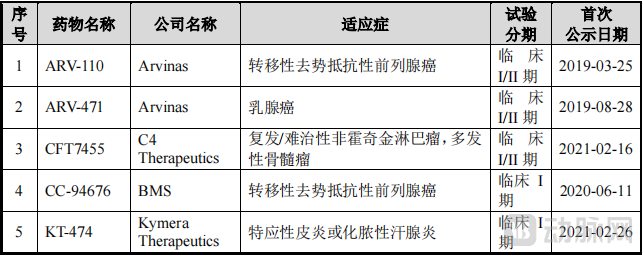
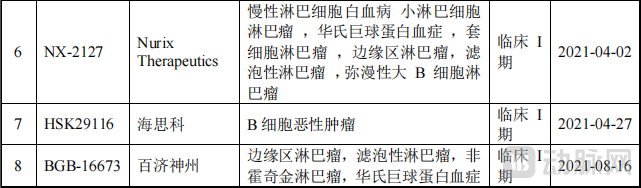
Oral PROTAC Drugs in Global Clinical Trials
Therefore, no PROTAC drugs have been approved globally to date. The two most advanced candidates are Arvinas’ ARV-110 (NCT03888612) and ARV-471 (NCT04072952), which are being developed for the treatment of metastatic castration-resistant prostate cancer and breast cancer, respectively.
In China, the only oral PROTAC drug candidate that has entered clinical trials is HSK29116 from HaiSiKe (Haisco Pharmaceutical), which targets Bruton’s tyrosine kinase (BTK) for the treatment of relapsed or refractory B-cell malignancies. Kintor Pharmaceutical’s topical PROTAC drug GT20029 has received implicit clinical trial approval from the Center for Drug Evaluation (CDE). It targets the androgen receptor (AR) and is developed as a topical therapy for androgenetic alopecia and acne.No oral PROTAC drugs targeting AR have entered the clinical stage in China.。
Due to the relatively high molecular weight of PROTACs, addressing oral bioavailability and stability has remained a persistent challenge in PROTAC drug development. Other challenges associated with PROTAC technology include off-target effects, cell permeability, oral bioavailability, molecular stability, and drug resistance. For instance, while PROTAC drugs can directly degrade target proteins and theoretically overcome resistance issues associated with conventional targeted therapies, the most advanced PROTAC candidates globally are still in clinical trials and have not yet received marketing approval. Consequently, clinical resistance has not yet been observed. However, whether PROTAC drugs themselves may induce novel mechanisms of resistance warrants further investigation.
Leveraging its two major technology platforms, Hinova Pharmaceuticals Inc. has established a comprehensive pipeline system. According to the company’s prospectus, Hinova currently has 10 drug candidates in development, nine of which are independently developed novel drugs and one of which is an in-licensed novel drug.
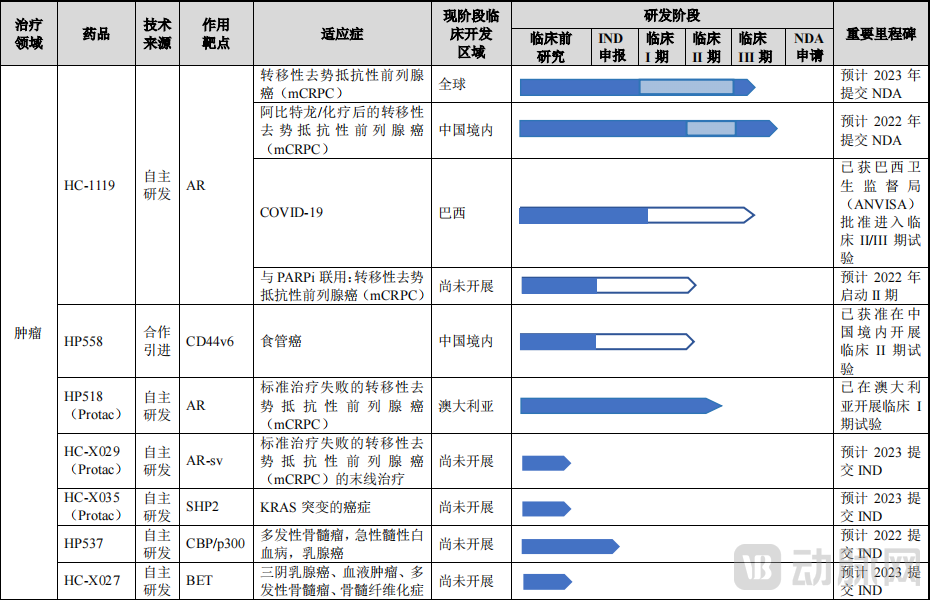
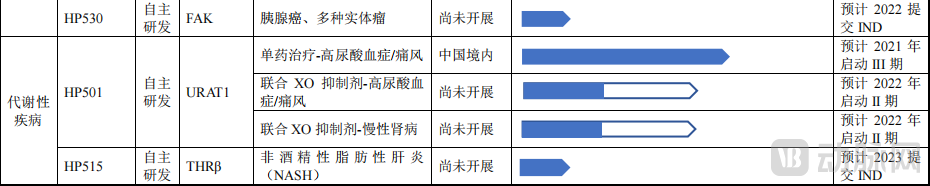
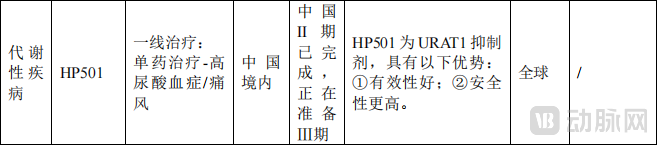
HP501 has completed Phase II clinical trials for the indication of monotherapy in hyperuricemia/gout, and is currently preparing the protocol for Phase III clinical trials, with the Phase III trial expected to commence in 2021.
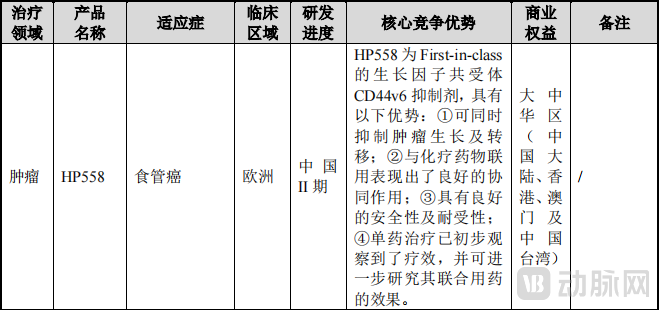
HP558 is a first-in-class inhibitor of CD44v6, a growth factor co-receptor. It has completed Phase I clinical trials in Europe and has been approved to conduct Phase II clinical trials in China, with the Phase II trial expected to commence in 2021.
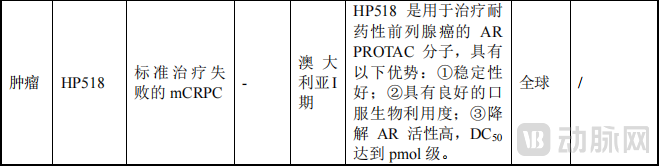
HP518 is a PROTAC drug targeting the androgen receptor (AR), capable of degrading both wild-type and mutant AR. It demonstrates favorable oral bioavailability and holds potential for overcoming resistance in prostate cancer. Phase I clinical trials have been initiated in Australia. This isChina's First Oral AR PROTAC Drug。
3Secured RMB 1 Billion in Series C Financing Prior to IPO
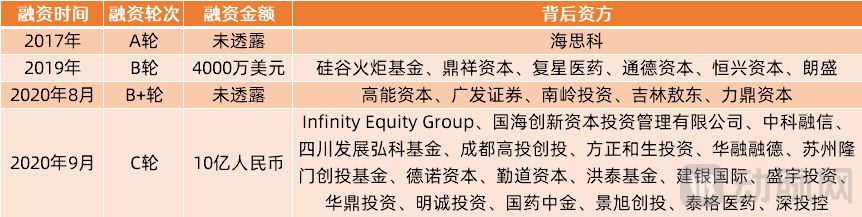
Achieving accurate, forward-looking strategic layout is challenging even for professional investors. Prior to its initial public offering, Hinova Pharma completed four rounds of financing, gaining recognition from more than 30 investment institutions. Notably, its Series C financing round reached RMB 1 billion, with prominent investors including CCB International, Sinopharm Capital, Tigermed, and Denovo Capital.
Lin Yunfeng, Founding Partner of Denuo Capital“It is stated: ‘Hinova Pharma’s top-tier international R&D team, efficient clinical development pace, and balanced yet differentiated pipeline give us firm confidence that it will inevitably grow into a leading global innovative pharmaceutical company. With the completion of Phase III clinical trials for HC-1119 in the treatment of prostate cancer, the formal initiation of patient enrollment for its Phase II/III clinical trials for COVID-19 in Brazil, and HP-501 poised to enter Phase III clinical trials, Hinova Pharma will enter the product commercialization stage in 2023.’”
“Meanwhile, Hinova Pharma is a first-tier enterprise in the PROTAC field in China.” Lin Yunfeng added, “We firmly believe that, leveraging its PROTAC-based targeted protein degradation technology platform, Hinova Pharma will continue to develop internationally leading innovative drugs targeting undruggable targets and addressing drug resistance issues.”
In the secondary market, publicly listed biotechnology companies with PROTAC as their core technology have demonstrated strong market capitalization performance globally, such as Arvinas ($4.241 billion), C4 Therapeutics ($1.944 billion), Kymera Therapeutics ($3.172 billion), and Nurix Therapeutics ($1.430 billion).
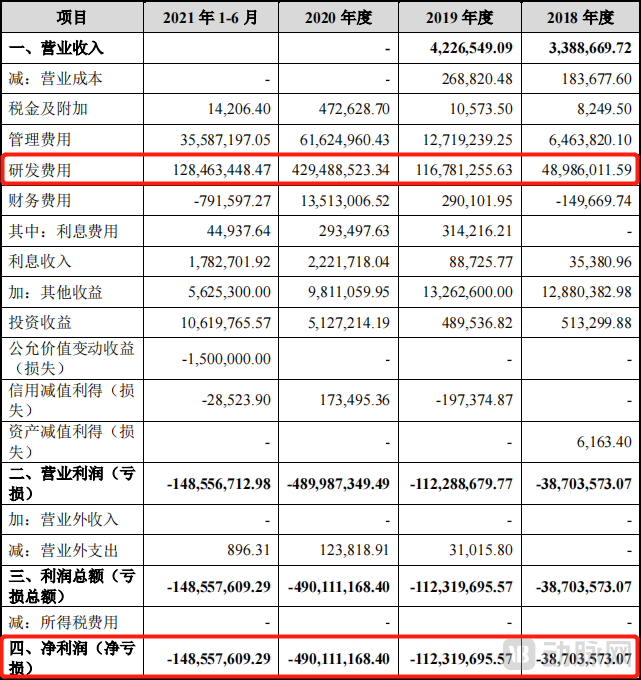
Hinova Pharma previously licensed HC-1119 to Haisco Pharmaceutical, but later reacquired the rights. The costs incurred from this reacquisition caused fluctuations in Hinova Pharma’s profits in 2020. Consequently, the company reported a significant net loss in 2020. As there were no similar acquisition activities in 2021, the net loss decreased compared to the same period of the previous year.
In terms of R&D investment, it is evident that Hinova Pharmaceuticals has continuously increased its spending as its products approach the commercialization stage. The company’s R&D expenditures amounted to RMB 48.986 million, RMB 117 million, RMB 429 million, and RMB 128 million in 2018, 2019, 2020, and the first half of 2021, respectively, each accounting for more than 75% of its total expenses, underscoring its strong commitment to product development.

Hinova Pharmaceuticals is prioritizing the use of raised funds to further intensify its product R&D efforts. Additionally, as HC-1119 has entered Phase III clinical trials and HP501 is expected to enter Phase III clinical trials within 2022, Hinova Pharmaceuticals needs to begin constructing a large-scale R&D and production base to ensure sufficient manufacturing capacity.
4Small-Molecule Degraders: A Hundred Schools of Thought Contend—Which Targeting AR Will Take the Lead?
As mentioned above, whether it is inhibitors, antagonists, or PROTAC degraders, targeting AR for the treatment of prostate cancer is almost a pipeline layout direction for the top few pharmaceutical companies.
Prostate cancer is one of the most common malignant tumors worldwide. In China, it ranks sixth in incidence and seventh in mortality among male malignancies. From 2015 to 2019, the number of new prostate cancer cases in China increased from 88,000 to 108,000, representing a compound annual growth rate (CAGR) of 5.3%. The number of new cases is projected to reach 144,000 by 2024 and 199,000 by 2030, with a CAGR of 5.6%.
Prostate cancer is an epithelial malignant tumor occurring in the prostate, characterized as a multi-stage progressive disease. However, due to the low rate of prostate-specific antigen (PSA) screening among Chinese men, the penetration of early diagnosis and screening for prostate cancer remains low in China.
Androgen deprivation therapy (ADT) is a cornerstone in the treatment of prostate cancer. Prostate cancers that continue to progress despite sustained ADT are classified as castration-resistant prostate cancer (CRPC). In-depth investigations into the pathogenesis of CRPC have revealed that the androgen receptor (AR) plays a pivotal role in disease progression, thereby establishing AR as a critical therapeutic target. Consequently, AR inhibitors, antagonists, and degraders have emerged as key modalities for the treatment of prostate cancer.
AR inhibitors primarily block cellular molecular pathways by inhibiting the androgen receptor (AR). Such drugs include flutamide, bicalutamide, nilutamide, enzalutamide, apalutamide, and darolutamide. Currently, there are six AR inhibitors approved for marketing in both China and the United States, as follows:

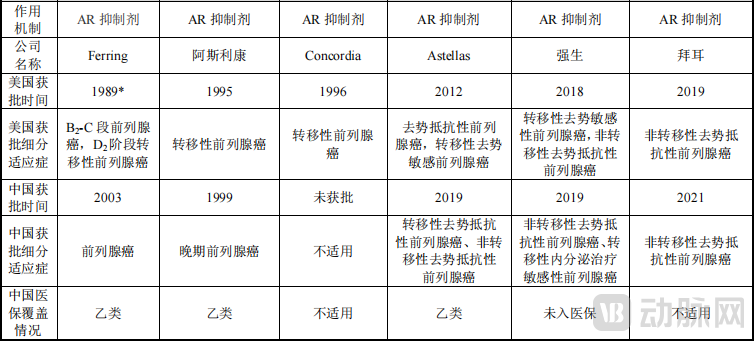
Compared with marketed small-molecule inhibitors, small-molecule degraders leveraging PROTAC technology demonstrate superior efficacy. Long-term use of traditional androgen receptor (AR) small-molecule inhibitors can lead to partial agonist activity and the development of drug resistance, which has become a key focus for the application of PROTAC technology.
For example, first-generation AR inhibitors such as bicalutamide exhibit weak binding affinity to the androgen receptor (AR) and suboptimal therapeutic efficacy, potentially inducing AR mutations during treatment. Due to the development of resistance, bicalutamide has been phased out in European and American markets. Second-generation AR inhibitors, such as enzalutamide, demonstrate strong AR binding affinity and can overcome resistance caused by mutations arising from prior use of first-generation AR inhibitors.
However, second-generation androgen receptor (AR) inhibitors can also induce new mutations during treatment, leading to drug resistance. AR mutations primarily consist of point mutations around the ligand-binding domain and splice variants involving deletion of the ligand-binding domain (such as AR-V7). Consequently, second-generation AR inhibitors, including enzalutamide, apalutamide, and darolutamide, demonstrate suboptimal efficacy in prostate cancer patients harboring AR-V7 splice variants and certain point mutations (e.g., F876L). Research data indicate that approximately 20–40% of patients treated with second-generation AR inhibitors exhibit AR-V7 mutations.
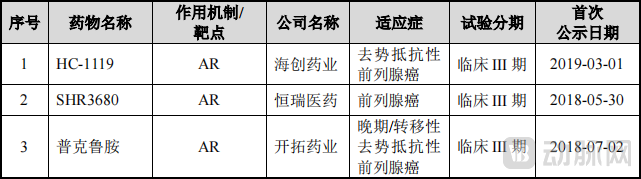
Currently, the androgen receptor (AR) inhibitors for prostate cancer treatment with the most advanced clinical progress in China are Hinova Pharmaceuticals’ HC-1119, Hengrui Medicine’s SHR3680, and Kintor Pharmaceutical’s proxtalutamide, all of which have entered Phase III clinical trials.
From this perspective, Hinova Pharma’s flagship pipeline HC-1119 will face multifaceted commercial competition in the future. It remains to be seen who will emerge as the first mover.