

Switzerland: The Small Nation Behind Global Pharma Giants Roche and Novartis Files IPO Prospectus
In the latest global ranking of pharmaceutical companies,RocheandNovartisRanking fourth and fifth, respectively, these two leading pharmaceutical companies share another commonality beyond their close rankings: both are from Switzerland.
When Switzerland is mentioned, most people may picture tranquil towns nestled along the shores of Lake Geneva, the majestic Alps, or the country’s highly refined financial and precision engineering industries.
But that is not the whole story. This small European country, with an area of just over 40,000 square kilometers and a population smaller than that of Hangzhou, also holds a little-known yet highly prestigious title:"Global Leader in Cutting-Edge Technologies"。
What is the evidence? Let the data speak.
First, in terms of influence, since 2012, SwitzerlandRanked First in the Global Innovation Index for Nine Consecutive Years; secondly, in terms of R&D intensity, Switzerland invested a total of approximatelyCHF 30.45 billion, accounting for 3.4% of GDP,R&D Intensity Ranks Second Globally; Finally, in terms of actual output, Switzerland is a major country for patent applications,Consistently Ranked Among the Top Ten Globally in Number of Patent Applications, in addition, Switzerland is also a globally recognized international research hub, home to numerous world-leading R&D institutions and academic establishments.
A high-level R&D system has created Switzerland’s high-quality industrial foundation. It is reported that this small European country, with a population of only 8.6 million, possesses14 Fortune 500 Companies, including global pharmaceutical giantsRocheandNovartis。
So, as a small European country, how exactly did Switzerland nurture these two pharmaceutical giants? VCBeat’s Orange Insight Bureau conducted an in-depth analysis.
“The Wisdom of Small Nations in ‘Focusing on Their Own Well-Being’”
Behind every achievement, there are traceable patterns.
In 1780,The World's First Plastic Surgery ClinicEstablished in the town of Ward, Orweib, by the clinic’s founderJean-André Venel(Jean-André Venel) successively invented the corset and leg braces to treat children with scoliosis and congenital foot deformities. This marked the beginning of Switzerland’s exploration in the medical industry.
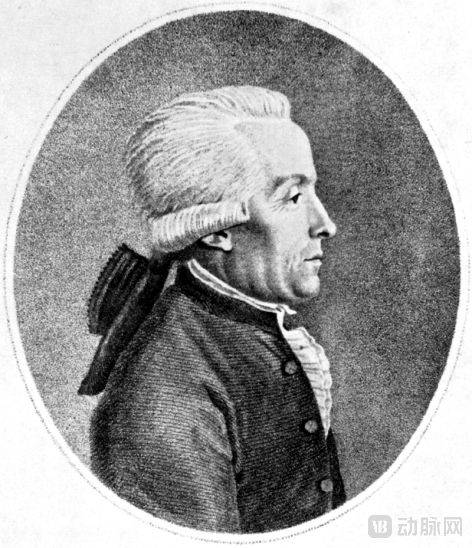
Figure | Jean-André Venel
In 1815,Switzerland became the world's first permanently neutral country.. Since then, Switzerland has become akin to the “Peach Blossom Spring” depicted by Tao Yuanming, rapidly transforming into a developed industrial nation driven by the Industrial Revolution,Its medical technologies have also shifted from manual craftsmanship to the technology-driven industry.。
But how to make the transition? This often requires a "guide," and this "guide" is the Nobel laureate, Swiss scientistEmil Theodor· Kocher(Emil Theodor Kocher)。
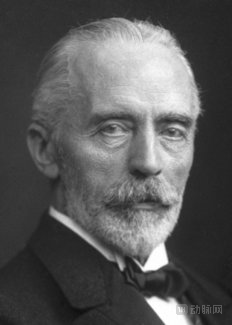
Figure | Theodor Kocher
As Chief of Surgery, Kocher invented numerous medical devices throughout his life, the most famous of which is"Kocher Clamp", which is a device used to achieve hemostasis during surgical procedures. In addition, Kocher was an authority on goiter, as well as on the pathology and surgical treatment of the condition. In 1909, based on the methods he had summarized for examining goiter,Kocher became the first Swiss national to win the Nobel Prize.。
It was under Kocher’s inspiration that Switzerland accelerated its research and development in the medical field, and by the early 19th century,Switzerland has emerged as the hub of European medical technology and the birthplace of world-leading innovations., numerous cutting-edge medical achievements emerged during this period, such as keratometers for measuring corneal refractive power and refraction, as well as improvements to hemoglobinometers.
Just as the Swiss healthcare industry was on an upward trajectory, World War II broke out. However, this did not hinder Switzerland’s development. As a “permanently neutral country,” Switzerland was spared the devastation of war and seized the opportunity to vigorously expand its healthcare sector. During this period, Switzerland reached the peak of its prowess in medical services, healthcare systems, and medical innovation capabilities.
After nearly four centuries of development, the Swiss healthcare industry market has become highly mature. According to industry reports, in 2019, there were approximately1,400 Companies in the Healthcare Industry, with total sales amounting toCHF 17.9 billion, equivalent to 2.6% of Switzerland's total GDP.
“The Twin Stars”: The Growth Histories of Roche and Novartis
It has been said that,Switzerland is an ideal location for pharmaceutical manufacturing, as well as a hub for those driving political and strategic discourse in the pharmaceutical industry.
Is this really the case? We may find the answer by examining the growth trajectories of Roche and Novartis.
Let's start with Roche.. Roche, which built its fortune on vitamins, did not have an easy path in its entrepreneurial journey.
In the 1970s, Roche faced a series of setbacks, including the Visco accident in Italy, price cuts on Valium, and intense competition in the vitamins market. Meanwhile, the global oil crisis led to a significant rise in the prices of chemical raw materials, resulting in substantial losses for Roche. By 1978,Roche was on the verge of bankruptcy, with its market capitalization falling to a historic low of CHF 6.3 billion.
Yet at this very moment, Roche’s “savior” appeared: the renownedFritz Gerber. Under Gerber’s leadership, Roche implemented a series of reforms, adhering to a market-oriented approach,Mandate R&D personnel to step out of the laboratory and understand market demands。
In addition, between 1980 and 1989, Gerber frequently made acquisitions centered on its strategic pipeline, adhering to the principle of low pricing.Acquired nearly 15 companies.By the late 1980s, four core business segments—pharmaceuticals, diagnostics, vitamins and specialty chemicals, and fragrances and flavors—had gradually taken shape. Consequently, Roche reorganized around these four core businesses to form a holding group.
In 1990, Roche spent a huge amount of money to purchaseGenentecha 60% stake, thereby making a decisive entry into the biotechnology sector; two decades later, Roche fully acquired Genentech for $46.8 billion, marking the emergence of Roche as a global pharmaceutical giant.
Nowadays, Roche is at the peak of its momentum, achieving a total of in 2020CHF 58.3 billionoperating revenue, andTop of the Global Pharmaceutical Company Rankings; a total of in 2021CHF 62.8 billionoperating revenue, ranking third on the global pharmaceutical companies' revenue leaderboard.
After Roche, Now Novartis. Although Novartis was founded a full century later than its “elder brother” Roche, it may be better known among many Chinese people. This is largely due to the 2015 Chinese film “Dying to Survive,” which featured the so-called “miracle anti-cancer drug”—GleevecIt is produced by Novartis.
As the first molecularly targeted therapy to reach the market, Gleevec ushered in the era of molecularly targeted cancer therapy and is hailed as a landmark discovery. Since its launch in 2001, the drug’s annual sales have risen steadily, peaking at $4.6 billion in 2011.
But this is merely the “tip of the iceberg” for Novartis. As one of the world’s top three pharmaceutical companies, Novartis has achieved numerous “first-in-class” innovations, including those in 2017The World’s First CAR-T Drug, Kymriah, 2019Zolgensma: The First Gene Therapy for Pediatric Spinal Muscular Atrophy (SMA)Wait.
These “blockbuster drugs” helped Novartis achieve in 2020$48.65 billiontotal revenue, with net profit reaching as high as $8.07 billion. In 2021, Novartis achieved revenue$51.626 billion, ranking sixth globally.
This is no easy feat. In the pharmaceutical industry, many giants have suffered setbacks and failed to achieve their goals. Therefore, Roche and Novartis must have done something right.
The first point is to prioritize R&D. Whether it is Roche or Novartis, neither has ever been “stingy” with their investment in research and development since their inception. According to data, in 2021, Roche’s R&D expenditure$16.1 billion, accounting for 21.83% of total revenue; Novartis's R&D investment in 2021$9.54 billion, accounting for 18.48% of total revenue. It is reported that among the top 10 global pharmaceutical companies, Roche and Novartis rank third and fourth, respectively, in R&D intensity.
The second point is the M&A strategyFor any industry giant, mergers and acquisitions (M&A) are a “mandatory course” on the path to growth. Taking Roche as an example, its first M&A deal saved it from the brink of bankruptcy, while the acquisition of Genentech was a critical step in establishing Roche as a global pharmaceutical powerhouse.
Novartis has followed a similar path. Since its inception, Novartis has been on a trajectory of mergers and acquisitions, acquiring Allergan (U.S.) in 2000 and Lek, a Slovenian generic drug manufacturer, in 2002. In the same year, it attempted to acquire Roche but was unsuccessful. Subsequently, it continued to expand through acquisitions, including Hexal from Germany and AveXis, a U.S.-based gene therapy biotechnology company.
3. Prioritize Talent. In fact, whether in research and development or mergers and acquisitions, specific individuals are required to execute these activities; therefore, talent has played an extremely important role in the process of corporate development.
Taking Novartis as an example, the company launched its “10x Talent Development Strategy” in 2020, which includes the 10x “Best Career for Employees” initiative and the 10x “Global Talent Exchange” program. The aim is to encourage more employees to “step out of their departments” and even “go abroad,” as this is essential to continuously unlock the team’s innovation potential.
Yet none of this would be possible without the efforts made by the Swiss government behind the scenes.
The Swiss Government’s “Do’s” and “Don’ts”
For enterprises, their own efforts constitute the baseline for their growth, whileThe external environment determines where its ceiling lies.. For Roche and Novartis, on their arduous journey toward becoming global pharmaceutical giants, in addition to their own efforts, the surrounding environment has also provided them with substantial support.
So, what kind of assistance is it exactly? This brings us to the Swiss government’s"有所为”and"Knowing What Not to Do"。
Let’s start with “What Not to Do”. A senior Swiss figure once publicly stated, “A country should not have a policy specifically dedicated to promoting innovation, because few countries have had successful innovation policies,”The reason Switzerland can achieve excellence in innovation is precisely because it has no innovation policy.”
This approach is, in fact, well-founded. Medical innovation and translation constitute a relatively flexible and diversified process. Therefore, the Swiss government does not mandatorily engage in innovation or industry policy-making in the narrow sense. Instead, it allows innovators to independently explore, experiment, and learn from failures within the competitive market landscape, thereby identifying market potential and driving market development.
Revisiting “Taking Action”Medical innovation and translation are not easy tasks, as the objective conditions required are extremely complex. It is difficult for innovators alone to make significant progress. Therefore, to promote the translation of medical innovations, the Swiss government has established a comprehensive innovation system from top to bottom and from surface to depth.
The first point is the existence of specific policies that support medical innovation.. The Swiss government has formulated “"Three Major National-Level Key Research Programs", namely the “National Research Programmes,” which are interdisciplinary and cross-sectoral initiatives launched to address pressing issues facing Switzerland; the “Priority Research Programmes,” which organize collaborative research among research institutions, universities, and enterprises to bridge the gap between basic research and applied research as well as the development of new technologies and products; and the “National Centres of Competence in Research,” which concentrate funding to establish comprehensive research centers for conducting studies.
It is reported that each initiative provides substantial research grants for innovation projects through the National Science Foundation and the Innovation Promotion Agency, thereby fostering collaborative innovation between universities and enterprises, as well as advancing basic scientific research and technology transfer.
The second point is possessing a world-leading level of education.Switzerland boasts a highly dense network of higher education institutions, comprising 12 national public universities. Among these, ETH Zurich and EPFL are administered by the federal government, while the remaining ten are cantonal universities. According to the Times World University Rankings, seven Swiss public universities rank among the top 150 globally. This academic excellence provides the foundational impetus for medical innovation in Switzerland.
The third point is possessing Europe's most powerful and innovative biotechnology base.Switzerland is home to four biotechnology industry clusters: Bio Alps, Bio Valley Basel, Zurich Med Net, and Bio Polo Ticino. Among them, Bio Alps is the most renowned biotechnology park in Europe, hosting five business incubators such as Bio Ark, Biopole, and Neode, along with nearly 200 biotechnology companies. These include world-class pharmaceutical and biotechnology enterprises such as Serono, Medtronic, and OMPharma, as well as prestigious universities and research institutes.
Fourth, it possesses a distinctive industrial system.. Industry is a major pillar of Switzerland’s national economy, with its industrial output once accounting for approximately 50% of the country’s gross domestic product (GDP). This robust industrial base has created greater opportunities for the integration of medicine and engineering, thereby accelerating research and development in cutting-edge medical technologies in Switzerland.
The fifth point is the possession of a highly developed financial industry.. As a preeminent global financial power, Switzerland is home to four of the world’s 25 most competitive banks. This substantial financial strength provides robust funding support for medical innovation in Switzerland. It is reported thatSwitzerland accounts for 40% of Europe’s total investment in medical innovation.
It is precisely through the synergistic interplay of the Swiss government’s “active engagement” and “strategic restraint” that Roche and Novartis, the “twin stars” of the global pharmaceutical industry, have emerged.
Currently, innovation and translation are becoming the main theme of the development of China's medical industry. This is a consensus in both the scientific research community and the industrial sector. However, it must be recognized that China's medical innovation field is still in its early stages, with significant gaps compared to foreign countries in terms of original innovation capacity and conversion rates.
This is inevitably a resistance, but it is also a driving force.
Therefore, at present, while continuously refining our own innovation capabilities, we urgently need to explore pioneers with advanced experience in medical innovation, such as Switzerland, so as to break through entrenched paradigms and achieve comprehensive progress in the field of medical innovation.