

Benchling, Backed by 200,000 Scientists, Files for IPO with $6.1B Valuation

Benchling
Developer of Life Science Cloud Platform
A young entrepreneur born in the 1990s is preparing to go public on the New York Stock Exchange.
In November 2021, Benchling completed a $100 million Series F financing round, reaching a valuation of $6.1 billion. Since then, rumors have persisted that Benchling plans to go public in 2022.
In 2012, Sajith Wickramasekara, then just 22 years old, identified a business opportunity in the MIT laboratory based on his own research experience: developing software tools for scientists and pharmaceutical R&D organizations to enhance research and development efficiency. Thus, Benchling was born. Over the past decade, Benchling has expanded rapidly, evolving from a small startup founded in an MIT dormitory into a software unicorn serving 200,000 researchers.
In 2021, Benchling successively completed its Series E and F funding rounds, raising a cumulative total of $300 million and pushing its post-money valuation to $6.1 billion (approximately RMB 38.46 billion). Notably, just one year earlier (in 2020), the company’s valuation stood at only $850 million.
How Did Benchling Grow? Can It Justify Such a High Valuation? VCBeat Attempts to Answer These Questions Through an Analysis of Limited Available Data.
The story of Benchling begins at the Massachusetts Institute of Technology (MIT). At that time, Sajith Vickramasekara was merely an undergraduate student. With a background in computer science and experience working in biological laboratories, he frequently encountered frustration due to the outdated technologies and analytical tools prevalent in life science labs. These limitations often prevented him from accurately executing his intended experiments and research on the first attempt. “I spent considerable time dealing with lost data and repetitively performing tasks that had already been done.”
Speaking of his original intention for starting a business, Sajith once said, “As a programmer, I had access to efficient, fast, and user-friendly tools that enabled seamless collaboration with others. However, in the biology laboratory, where I was engaged in more impactful yet complex work, the available tools were extremely limited—nothing more than Excel spreadsheets and paper notebooks. This undoubtedly made the work of researchers even more challenging. In this highly unfavorable scenario, I identified a business opportunity: to build software programs that would sustain and accelerate the pace of scientific research.”
Thus, in 2012, he co-founded Benchling with Ashu Singhal, a fellow MIT student, building a suite of applications centered on an electronic lab notebook (ELN) to help life scientists design, run, record, and search experimental results.
ELN is the digital alternative to traditional paper laboratory notebooks. It was proposed by Dr. Raymond E. Dessy in 1994 and gained popularity after being adopted by major international pharmaceutical companies such as Merck & Co. in 2007, leading to its emulation and promotion by mid-sized drug research and development institutions.
Although ELNs can quickly and easily acquire and reuse scientific results from other analytical software applications, for a long time they have failed to match the sophisticated, high-efficiency software found in other industries. Due to the small market size (approximately $550 million annually) and weak competition, ELNs have suffered from a lack of innovation, featuring outdated main interfaces, data storage, and analytical capabilities, as well as lacking cloud access functionality, thereby causing significant inconvenience to laboratory informatization.
In the early days, Benchling’s values and objectives had yet to take shape, and its product was focused on a niche vertical market that was “small and specialized,” leading many to doubt the company’s growth potential. John Cumbers, founder of the synthetic biology community SynBioBeta, once recalled why he had rejected Benchling: “I simply didn’t think there was a market for it; no one would pay for biology software.”
Most investment firms struggled to understand what Benchling was doing or the scale of its potential. The exception was Paul Graham, co-founder of Y Combinator. “I recall him saying that individuals working in biology are critical, so becoming their essential software platform would undoubtedly prove valuable,” said Sajith. In 2014, YC participated in Benchling’s seed funding round.
Benchling’s initial funding round got off to a strong start, and subsequent rounds of financing appear to have proceeded smoothly ever since, with the company never experiencing significant revenue-related hardships.
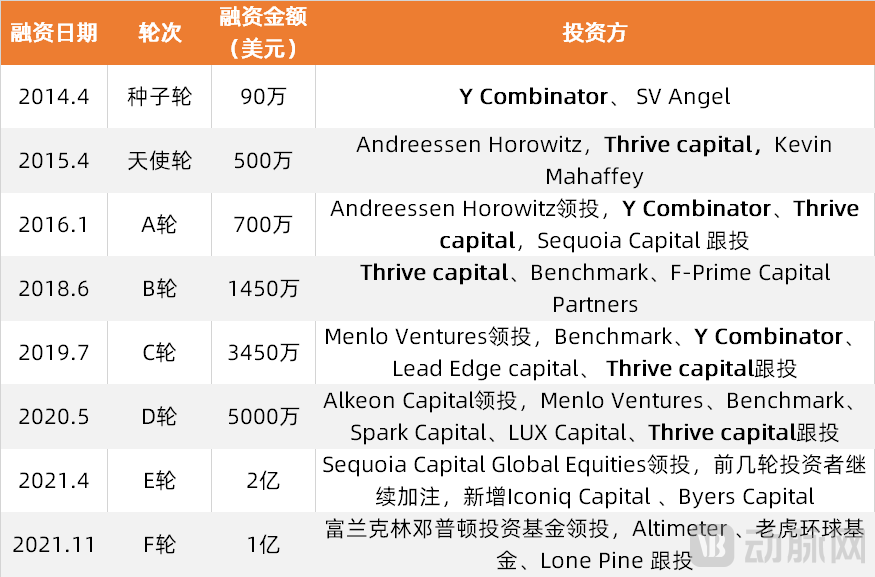
Throughout Benchling’s fundraising journey, numerous investment firms have consistently increased their stakes. From the seed round to Series F, Y Combinator invested four times, serving as a loyal corporate companion. Thrive Capital was even more committed, investing six consecutive times and supporting the company from the angel round through Series E. Sajith revealed that Thrive Capital learned about Benchling through recommendations from scientist friends and has maintained a bullish outlook on the company. “He also encouraged us to engage more with scientists and not become fixated on short-term revenue. This long-term perspective is highly compelling.”
Behind Benchling’s IPO push stands a roster of star investors and renowned institutions. Their eager participation reflects not only optimism about the digitalization of laboratory operations but also strong recognition of Benchling’s value. It is reported that Benchling will leverage its latest round of financing to continue advancing product development and expand into global markets. Following the establishment of its EMEA headquarters in Zurich, the company will focus on scaling its business across Europe, the Middle East, and Africa.
In just over a year since entering the EMEA market, Benchling has acquired more than 120 customers in Europe, including Alchemab Therapeutics, AviadoBio Ltd, Cutis AG, the Tree of Life project at the Wellcome Sanger Institute, Selexis SA, and Syngenta, while growing its European team to more than 90 employees.
To enhance its capabilities and strengthen its technological moat, Benchling launched its first acquisition since its inception. In February 2022, Benchling acquired Ovewatch Analysis, a provider of preclinical biopharmaceutical analysis software. Subsequently, Ovewatch’s products will be integrated into Benchling’s software suite.
Overwatch Research, a configurable end-to-end research management and execution system, expands the capabilities of the Benchling R&D Cloud. With this acquisition, Benchling will create the industry’s first comprehensive cloud-native in vivo solution, complete its early development product suite, help customers accelerate the timeline to clinic, and expand Benchling’s presence in Europe.
Benchling Launches Cloud-Based Collaboration Tool, Committed to Building a Cloud Platform for Life Science R&D Technologies, Providing Scientists with Rich Resources to Enhance the Efficiency of Biotechnology Development. Benchling’s cloud platform is specifically designed for technology development, enabling the standardization and integration of relevant R&D data. The platform’s features include cloud-based notebook storage, data sharing, and workflow management. In 2016, Benchling was described as the “Google Docs” of the life sciences sector.
After completing its seed funding round, Benchling expanded its user base from 2,000 to 40,000 within a year and partnered with renowned laboratories and companies in the industry, such as MIT Labs, Editas Medicine, and other top-20 pharmaceutical laboratories in the United States.
In 2019, Benchling’s user base reached 170,000, and the company began to enhance its cloud platform for life sciences R&D, expand its scale and product market, and introduce new offerings such as data and analytics dashboards.
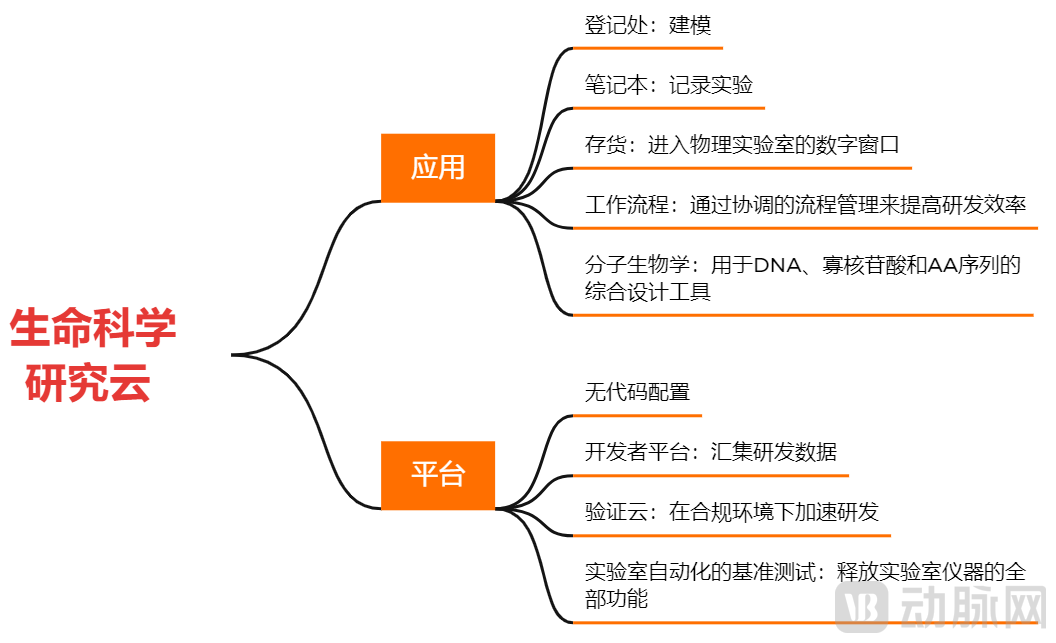
Benchling for Lab Automation
Life sciences companies are heavily investing in laboratory automation to enable high-throughput workflows, but existing laboratory automation software is too rigid to accommodate the highly iterative and dynamic demands of modern life sciences. This creates bottlenecks in data aggregation and hinders sample traceability. Consequently, in January 2020, Benchling launched its laboratory automation software, Benchling for Lab Automation.
This product provides researchers with a centralized environment to design, document, and run up to 10,000 samples in a single experiment, while digitally tracking the results for each sample. By connecting liquid handlers, analytical instruments, and other devices to Benchling’s cloud platform, researchers can analyze experimental results and processes at scale, enabling deep biological intelligence and unlocking new insights to accelerate breakthroughs.
“Now, researchers can conduct more experiments in less time, saving 10 hours per experimental run and unlocking the full potential of laboratory automation,” said Saji. “By integrating hardware and software, we are helping modern scientists harness the power of biological intelligence—complete traceability of every experimental sample, result, and process—to uncover deeper insights and achieve breakthroughs at unprecedented speed.”
Benchling for Lab Automation addresses the limitations of current laboratory automation solutions by providing scientists with a flexible, seamless interface between the Benchling platform and laboratory robots, thereby enhancing scientist productivity and keeping pace with evolving R&D processes.
Benchling for Lab Automation features three key capabilities: it enables truly intelligent research by providing end-to-end traceability for every sample and experiment, allowing scientists to link sample data, experimental results, and protocols to facilitate the comparison of tens of thousands of sample outcomes across different experimental runs; it offers seamless data interoperability with Benchling, eliminating the need for manual data uploads; and it provides flexible configuration, integrating with most liquid handling robots and off-the-shelf analytical instruments, enabling researchers to dynamically configure new workflows without writing any code.
AI-driven drug discovery company Recursion is advancing a new generation of data-centric drug discovery through Benchling for Lab Automation. By employing high-throughput, high-content, data-centric approaches to industrialize drug discovery, its partnership with Benchling will enable flexible and seamless capture of standardized data across numerous large-scale assays.
Since 2020, Benchling has entered a phase of rapid growth, driven by advancements in the biotechnology industry. Over the past two years, Benchling’s customer base has more than doubled annually, achieving breakthroughs in areas such as biopharmaceuticals, biofuels, and materials. In terms of solutions, Benchling has also entered a new stage by launching offerings for early-stage development and RNA.
RNA Therapy Support
In June 2021, Benchling launched new features to support the design, analysis, and modification of RNA therapeutics and other oligonucleotides.
RNA therapeutics are driving a monumental shift in biopharmaceuticals from the traditional “single drug, single target” approach to multidimensional and iterative targeting. However, no software solution currently on the market can simultaneously address both the biological and chemical properties of RNA therapeutics while capturing the complete workflow for designing, analyzing, and testing complex biomolecules. Consequently, scientists have been striving to standardize the modeling of chemically modified biomolecules and to correlate structural features with experimental impacts on stability, efficacy, and potency.
Benchling collaborates with researchers focused on RNA therapies to develop RNA therapeutic solutions that address the specific needs of this hybrid model. By unifying traditionally siloed tasks and stages into a single cloud-based solution, Benchling enables researchers to streamline biological and chemical workflows, thereby enhancing work efficiency and experimental success rates.
Scientists using Benchling can achieve:
Easily Create Complex Oligonucleotides Based on Contextual Experimental Insights:Benchling eliminates the need for researchers to repeatedly create RNA structures from the atomic level. The visualization capabilities of the Benchling HELM Editor are specifically designed for oligonucleotide-level editing, allowing users to zoom in and out of specific regions for modification. Experimental data is linked within Benchling’s solutions, making high-quality data actionable throughout the oligonucleotide design process.
Standardize data and streamline collaboration to accelerate the entire RNA therapy lifecycle:Benchling’s monomer library enables researchers to quickly search for and customize the most common nucleobase monomers. Embedded HELM notation supports the standardized representation of complex biomolecules, allowing multidisciplinary teams to access, understand, and contribute to ongoing molecular development. The robust integrated platform facilitates the registration or creation of oligonucleotides through uniqueness checks, saving time and preventing redundant work.
Enter the Early-Stage R&D Phase
In 2021, Benchling announced its entry into the early-stage R&D market, enabling scientists to seamlessly transition from research to development within a single system for the first time. To this end, Benchling introduced three key innovations:
First, restructure the workflow.Benchling Expands Its Workflows Application to Support Collaboration Across Cross-Functional R&D Teams. Users can now coordinate task requests and processes across teams, trace experimental protocols, samples, and inventory information, thereby improving operational management efficiency for project leads.
Second, structured templates.With Benchling’s new, more structured templates, development teams can easily create shared, standardized workflows for reproducible experiments, analytical testing, QC protocols, and more, and lock these procedures to meet regulatory and compliance requirements.
Third, Validated Cloud was released.To enable customers to operate using a unified, validated informatics solution. Research teams can leverage Benchling’s applications for molecular design, registration, and experimentation. Development teams can advance projects within the same secure, compliant, and trusted environment, which is capable of withstanding rigorous regulatory validation. R&D organizations benefit from greater control and compliance in validated environments, improved technology transfer between R&D stages, and faster assembly of data packages for regulatory submissions.
Benchling seized the opportunity in the niche ELN market, transforming ELNs from mere record-keeping systems into comprehensive software suites that enhance scientists’ workflows and boost their productivity, thereby revolutionizing the market.
Over the past decade, Benchling has provided its Community Edition free of charge to the academic community, modernizing research workflows for more than 200,000 scientists across over 7,500 universities and institutions, while also delivering R&D software services to more than 600 companies worldwide.As of the fiscal quarter ending October 2021, demand for Benchling’s R&D Cloud surged, with revenue growing by triple digits year-over-year and the customer base expanding by 70% year-over-year.
In an interview with Forbes, Benchling founder Sajith shared two reasons for the company’s success.
Focus.Benchling focuses on biotechnology R&D. The volume of paper-based records in laboratory settings is staggering, and laboratory equipment is also generating vast amounts of data. Therefore, the laboratory industry requires high-quality software solutions to align with scientists’ workflows. Many Benchling employees have research backgrounds, enabling them to accurately empathize with scientists’ pain points and uncover their needs. “Go one mile deep, not one mile wide, in the field of biotechnology R&D.”
Practicality.Scientists are burdened with heavy R&D responsibilities; rather than forcing scientists to adapt to products, it is the products that must adapt to scientists in order to truly deliver value. Benchling aims to be the first software scientists open upon entering the laboratory and the last one they close after finishing their work. “Reasonable collaboration and user-friendly software programs are among the key reasons for Benchling’s significant breakthroughs.”
In the ELN sector, in addition to companies specializing in the development and implementation of laboratory information management systems (LIMS) and electronic laboratory notebooks (ELN), such as Benchling and LabWare, pharmaceutical and medical device giants including Thermo Fisher Scientific, Agilent Technologies, Abbott Laboratories, and Siemens Healthineers are also equipping themselves with ELNs or other digital tools through acquisitions or in-house development.
Chinese ELN providers are by no means inferior to their foreign counterparts. Innovative domestic companies such as Create-Tech, Eagle Valley Information, Zebrafish, and Shipu Technology are refining their foundational technologies and uncovering customer needs to empower scientists. However, laboratory digitalization in China is still in its early stages, leaving significant gaps in the market.
Benefiting from robust economic and research ecosystems, overseas markets possess sufficient capital to explore uncharted territories, driving rapid digitalization in laboratories. In response, domestic innovators can follow suit by leveraging the technologies and product designs of foreign counterparts, while implementing targeted optimizations and upgrades tailored to local needs, thereby avoiding unnecessary detours.
Laboratories are the foundation of the biotechnology industry. Over the past two years, driven by the digital transformation of pharmaceutical companies, the catalytic impact of the COVID-19 pandemic, and rapid advancements in digital technologies, laboratory scenarios have gained increasing visibility across the market, signaling an emerging opportunity. However, no one can remain at the forefront of a trend indefinitely; only innovators with genuine technological advantages and close customer alignment will continue to thrive after the hype subsides.
Further Reading: