

China's First Minimally Invasive Absorbable Hemostatic Gel Demonstrates Superior Clinical Performance Over Imported Counterparts, Poised to Disrupt Market Monopoly

HUANOVA
Medical Device and Consumables R&D, Production, Promotion, and Sales
Hemostatic fluid products, as essential items in complex surgeries, are widely used in minimally invasive surgery, neurosurgery, spinal surgery, and other procedures. In this niche segment dominated by imported products, imported hemostatic fluids have established an annual sales volume exceeding hundreds of millions of U.S. dollars.
“The introduction of imported hemostatic fluids has provided an excellent solution for intraoperative hemostasis in clinical settings. However, the retail price at domestic clinical endpoints ranges from RMB 3,000 to 3,500 per unit, and as imported products, they are often not covered by insurance or have very low reimbursement rates, imposing a heavy financial burden on patients,” Dr. Wang Huanan, founder of HUANOVA, told VCBeat.
Against the backdrop of a year-on-year increase in surgical volume and the rapid rise of minimally invasive surgery in China, there is an increasingly urgent clinical demand for high-end, cost-effective, domestically produced hemostatic materials suitable for minimally invasive applications.
Recently, HUANOVA announced its independently developed absorbable hemostatic gel product, "Ke Ning Colloidose"®” interim clinical trial data, which isThe First Domestically Produced Hemostatic Gel Consumable for Minimally Invasive Applications, featuring excellent injectability and moldability, complete in vivo biodegradability and absorbability, and a broad range of clinical applications. It can perfectly adhere to bleeding wounds to achieve hemostasis, while its submicron-scale microstructure further facilitates the activation of the body's own coagulation cascade, thereby accelerating hemostasis with superior efficacy. Additionally, it offers advantages such as biocompatibility and biosafety.
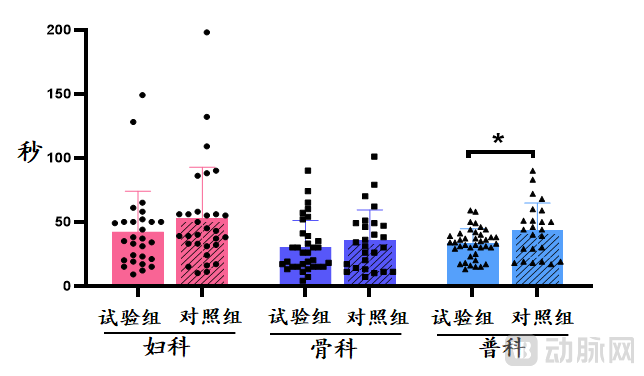
Colloidose®Comparison of Current Clinical Human Trial Data Between Hemostatic Gel (Experimental Group) and Imported Hemostatic Fluid (Control Group) (* indicates p<0.05, representing a statistically significant difference)
Clinical trials have shown that in gynecological surgery, Colloidose®The hemostatic gel (experimental group) had a mean hemostasis time of 42.5 s, while the imported hemostatic fluid (control group) had a mean hemostasis time of 53.1 s;
In orthopedic surgery, Colloidose®The hemostatic gel had a mean hemostasis time of 30.5 s, while the imported hemostatic fluid had a mean hemostasis time of 35.7 s;
In general surgical procedures, Colloidose®The average hemostasis time for the hemostatic gel was 33.2 seconds, compared to 43.5 seconds for the imported hemostatic fluid; furthermore, Kening Colloidose®The hemostasis time of the hemostatic gel in general surgery was significantly shorter than that of imported products (p<0.05).
As can be seen, Colloidose by Kening®It demonstrates strong performance in key metrics such as time to effective hemostasis, offering exceptional cost-effectiveness, and is poised to bring disruptive innovation to China’s high-end trauma hemostasis market.
According to Frost & Sullivan, the number of surgical procedures in China reached 60.43 million in 2018, with a historical compound annual growth rate (CAGR) of 8.4%. The CAGR is projected to be 8.0%, reaching 88.80 million procedures in 2023 and 152 million in 2030.
The number of surgical procedures has steadily increased, driving concurrent growth in hemostatic products essential for surgeries. Domestically produced biomedical hemostatic products are expanding rapidly at an annual growth rate of 22.5%. However, these products are predominantly low-end consumables, such as hemostatic gauze, hemostatic sponges, and hemostatic membranes. Although they account for 78% of the entire hemostatic consumables market, they are primarily used to manage bleeding in open surgeries, requiring prolonged physical compression by physicians and are only suitable for scenarios with regular wound shapes and minimal blood loss.
Moreover, the production and manufacturing processes for raw materials used in low-end hemostatic consumables, such as hemostatic gauze and sponges, are relatively simple and yield low added value. These products face technical bottlenecks, including tissue compression due to water absorption and swelling at the wound site, incomplete wound sealing leading to easy oozing, and poorly controllable degradation rates.
As minimally invasive and refined surgical procedures rapidly replace traditional open surgeries, the demand for high-end hemostatic materials is rising quickly. Data from 2018 shows that in most general Grade IIIA hospitals in China, the proportion of minimally invasive surgeries has approached 30% of all surgical procedures, with even higher shares in cardiovascular, orthopedic, gynecological, and general surgical operations.
For high-tech, high-precision surgical procedures such as minimally invasive surgery, neurosurgery, and spinal surgery, traditional bulk and preformed hemostatic consumables are completely unable to meet the demand,High-end novel hemostatic materials that are suitable for endoscopic injection, can solidify and maintain their shape after injection, are biodegradable and absorbable, do not expand in volume upon blood absorption, and offer superior biocompatibility need to be selected.Hemostatic fluid is the representative product.
Imported hemostatic fluids can be injected via minimally invasive catheters, which facilitates coverage of bleeding wound surfaces, butLow viscosity and failure to solidify after injection render it ineffective for hemostasis in wounds with high blood flow; it is frequently washed away by blood flow during surgery, resulting in hemostatic failure.However, for wounds with minimal bleeding, it can achieve a certain degree of physical barrier or sealing at the bleeding site and is biodegradable and absorbable; therefore, it has gained a certain level of clinical acceptance.
HUANOVA’s hemostatic gel, developed using next-generation self-healing material technology, has brought a ray of hope to China’s breakthrough of the import monopoly on high-end hemostatic consumables and the enhancement of hemostatic efficacy in high-precision surgeries.
HUANOVA's Absorbable Hemostatic Gel: Colloidose®Based on the self-assembly of gelatin submicron particles, it exhibits excellent injectability and moldability, allowing for direct application via laparoscopic catheters to achieve hemostasis in visceral abdominal bleeding. After implantation, it can be degraded and absorbed by the body.Fills the gap in domestically produced injectable and moldable hemostatic materials.
In large animal hemostasis trials and clinical human trials,Colloidose®It significantly outperforms imported hemostatic fluids in two key indicators: mean time to effective hemostasis and material degradation profile.
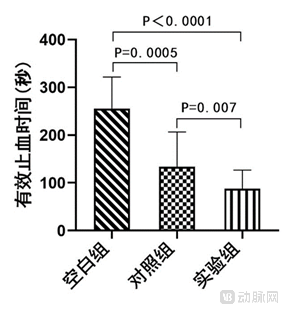
Colloidose®Data on Effective Hemostasis Time in Animal Experiments: Hemostatic Gel (Experimental Group) vs. Imported Hemostatic Fluid (Control Group) (No Treatment Applied to the Blank Group)
Experimental data from a liver hemorrhage model in large-animal pigs show that Colloidose®The mean effective hemostasis time was 87 seconds, significantly shorter than the 114 seconds observed with the imported hemostatic agent. Analysis of wound healing at the hepatic implantation site and implant degradation revealed that wounds treated with HUANOVA’s Colloidose® and the imported hemostatic fluid both healed well within four weeks. No material residue was observed in the HUANOVA group, whereas residual material was still present in some animals in the imported product group at four weeks.
In 2021, HUANOVA initiated clinical trials in humans at six medical institutions, including West China Hospital of Sichuan University. Recent interim data, based on more than 270 enrolled clinical cases, demonstrated the efficacy of Kening Colloidose.®It demonstrates safe and efficient hemostatic effects in minimally invasive and precision surgeries, represented by gynecological minimally invasive surgery, orthopedic spinal surgery, and general surgical minimally invasive procedures.
As can be seen, Colloidose by Kening®Elevating the performance of high-end hemostatic consumables to a higher level, while also promising significant cost reductions.Bringing more cost-effective choices to doctors and patients.
According to HUANOVA: “Colloidose®“Expected to receive approval as a Class III medical device and enter clinical trials in China in early 2023.”
HUANOVA's Colloidose®Its superior performance across multiple metrics is underpinned by its exclusive core “hard” technology—"Self-healing materials"。
"So-called Self-Healing Materials"i.e., the material can autonomously restore its structure and mechanical strength after being damaged by stress,Just as the liquid metal robot in the classic sci-fi film *Terminator 2* can heal instantly after being injured, the medical materials developed by HUANOVA also exhibit self-healing properties. After being cut, the material can seal the incision within seconds, restoring its original structure and strength.

In the classic sci-fi film *Terminator 2*, the liquid metal robot can heal instantly after being injured.
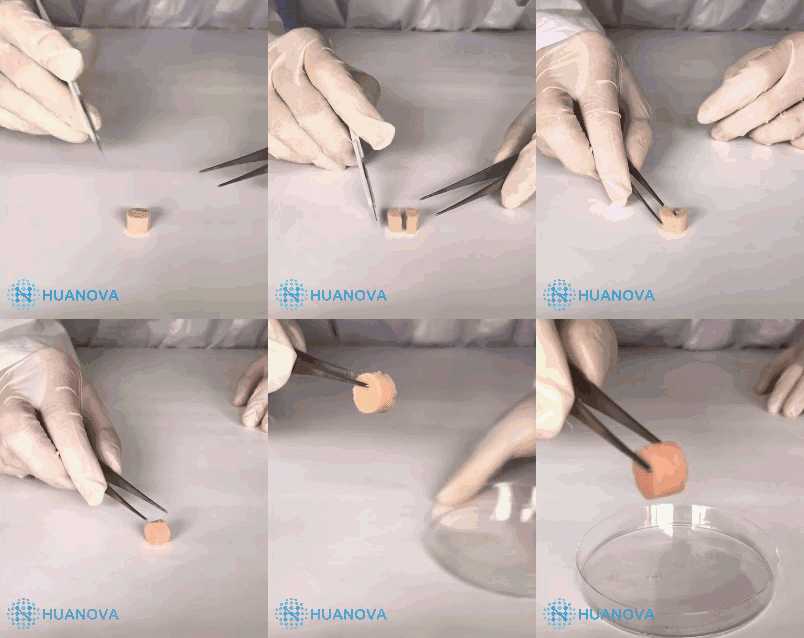
HUANOVA’s Proprietary “Black Tech” for Self-Healing Gel Materials
It is reported that imported hemostatic fluid products are designed with gelatin particles at the millimeter scale. During use, these gelatin particles are mixed with liquids such as normal saline to form a paste-like injectable fluid. Due to its low viscosity and lack of mechanically strong gel solid formation, it is referred to as a "fluid."
During hemostasis, gelatin particles accumulate at the site of bleeding trauma to form a physical barrier; however, this design mechanism inevitably results in low mechanical strength of the hemostatic material. Consequently, it is difficult to achieve rapid hemostasis for wounds with substantial blood loss and high mechanical strength requirements, leading to a narrow range of indications. It is not suitable for conditions such as carotid artery hemorrhage, which are characterized by massive, spurting bleeding and high blood pressure.
HUANOVA has opted for a technological approach distinct from that of imported products,Colloidose®It adopts the design principle of self-healing hydrogel materials.
Dr. Wang Huanan holds a Ph.D. in Biomedical Engineering from Sichuan University and a Ph.D. from the Radboud University Medical Center in the Netherlands. He completed his postdoctoral training at Harvard Medical School and the Harvard John A. Paulson School of Engineering and Applied Sciences. With over 20 years of research experience in the field of biomaterials, he began technical development and fundamental research on self-healing hydrogel materials as early as 2010.
According to Dr. Wang Huanan, self-healing materials are a cutting-edge hotspot in the field of smart materials. This concept was proposed in 2001 by two American scientists, Professors White and Sottos, and was selected by the premier technology review publication, MIT Technology Review, asOne of the Top 20 New Materials Shaping the Future, but the application of such innovative material technologies in the medical field remains a blank.
HUANOVA was established in 2017, and isThe world’s first industrial company to apply self-healing material technology to human clinical medical scenarios, filling a gap both domestically and internationally.
Compared with imported hemostatic fluids that achieve hemostasis through the accumulation of millimeter-sized particles, HUANOVA's Colloidose®Hemostatic gel is based on the self-healing principle, with the gel material exhibiting shear-thinning and self-healing properties, as evidenced by the gel's ability toInitiates autonomous restoration of its structural integrity and mechanical strength within seconds., without the need to introduce chemical cross-linking reactions, it is possible toIt solidifies into a gel within seconds after injection into the wound., andAchieve sufficient mechanical strength to seal bleeding wounds and provide compressive hemostasis.。
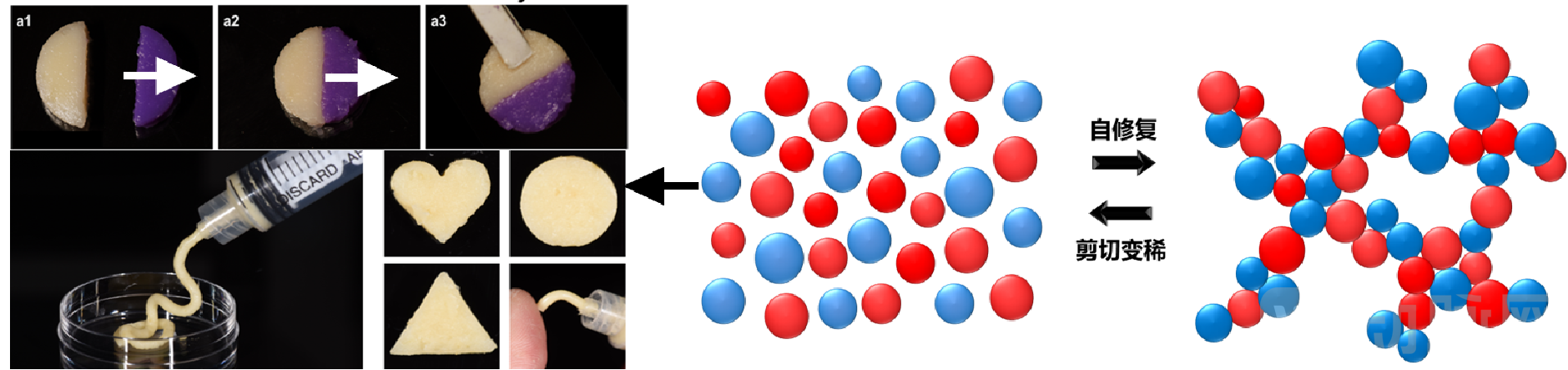
HUANOVA’s Platform “Hard Tech”: Technical Principles of Self-Healing Colloidal Materials
In addition, Colloidose by Kening®Leveraging the small-size effect of submicron gelatin colloidal particles, which possess a higher specific surface area, and given the excellent swelling properties of gelatin, blood components can be rapidly absorbed, leading to rapid dehydration of the blood; therefore, it canAchieves extensive adhesion of blood cells and platelets, accelerating coagulation.. Meanwhile, it can adsorb fibrinogen from the blood, activate its own coagulation effect, and further promote coagulation.
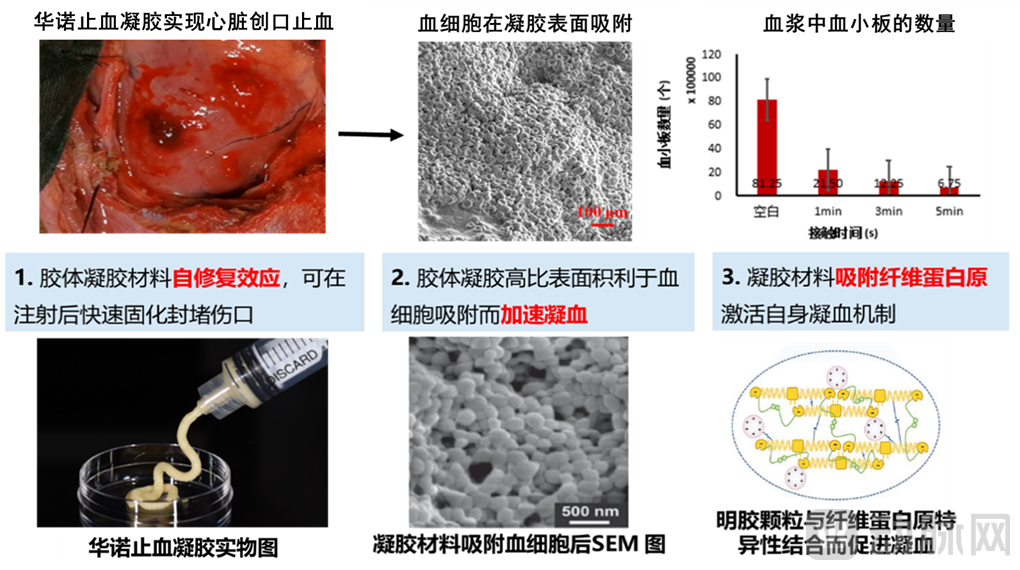
HUANOVA Colloidose®Triple Hemostatic Efficacy of Hemostatic Gel
Therefore, based on innovative self-healing hydrogel technology, Colloidose®Significantly enhanced physical strength,Achieves a strength increase of more than two orders of magnitude compared to imported hemostatic fluids, it can achieve stable hemostasis for carotid artery bleeding, demonstrating remarkable performance in mean time to effective hemostasis, wound healing, and material degradation.
In the future, as surgical trauma continues to decrease, minimally invasive surgery will undoubtedly become the preferred approach for both physicians and patients. Within this trend, the market prospects for biodegradable biomedical materials, particularly high-end hemostatic consumables, are promising, with their market size expected to expand rapidly in tandem with the growing number of minimally invasive procedures.
Moreover, in conventional open surgeries, there is an accelerating trend of minimally invasive, precision hemostatic materials replacing traditional hemostatic products. Statistics show that injectable hemostatic materials currently account for over 21% of applications in general surgical open procedures.
“Addressing the needs for trauma repair, in the future,”Beyond hemostatic functionality, biomedical materials will possess additional multifunctional capabilities.For example, controlling inflammation and infection around wounds, and delivering growth factors that induce bone growth. These are all directions in which HUANOVA's Colloidose® hemostatic gel can expand its applications. The team has now confirmed the hemostatic gel consumablesIt enables sustained long-term release of protein factors, serves as a gel carrier for cell culture to achieve immune isolation and cell induction, acts as a carrier for small-molecule drugs such as antibiotics or anesthetics, and can be used as a dermal filler in medical aesthetics to promote enhanced neofibrogenesis.”
“HUANOVA’s Colloidose® Hemostatic Gel will be more than just a simple hemostatic material; it is an innovative ‘universal’ medical carrier capable of delivering enhanced functionality and superior therapeutic outcomes,” stated Dr. Wang Huanan.
It is worth noting that,HUANOVA's self-healing medical adhesive belongs to foundational general-purpose technology, offering significant scalability.
HUANOVA is targeting the regenerative medicine market, with wound repair as its initial focus. Products currently under development include hemostatic materials and tissue adhesives. The next step isOrthopedics, Medical Aesthetics, and Clinical DentistryDirection: The injectable bone repair gel developed by the company has the same composition as bone tissue and can effectively promote new bone growth.
“The commonality in the development of these clinical consumable products is their focus on novel medical materials designed for minimally invasive and precision surgical applications. Meanwhile, the self-healing material platform can serve as”3D Printing, Cell Delivery, Drug Carriers, Tissue EngineeringandOrgan ManufacturingAs a foundational platform for such applications, HUANOVA looks forward to establishing collaborations with more upstream and downstream industry partners to jointly expand the application scenarios and market for novel medical carriers. The ultimate goal is to provide comprehensive solutions in regenerative medicine, leveraging self-healing hydrogels as the underlying technology.”