

Triastek's 3D-Printed Modified Drug T20 Receives FDA IND Approval, Marking a Milestone in Digital Pharmaceutical Manufacturing
TRIASTEK
3D-Printed Drug R&D and Equipment Developer
In March, the drug “T20” received Investigational New Drug (IND) approval from the U.S. FDA for clinical trials, becoming the third 3D-printed pharmaceutical product worldwide to enter the clinical trial application stage. The IND approval of T20 is a milestone in the field of 3D-printed pharmaceuticals, marking the increasing maturity of 3D printing technology in drug manufacturing.
Approximately 30 institutions worldwide are researching 3D printing pharmaceutical technology, including pharmaceutical giants such as Merck KGaA (Germany) and Merck & Co. (USA). Two companies have already achieved industrialization of the technology and applied it to drug product development: Aprecia in the United States and Triastek in China (Nanjing Triastek Pharmaceutical Technology Co., Ltd., abbreviated as “Triastek”).
T20 is a 505(b)(2) product developed based on a novel “3D-printed pharmaceutical” technology known as MED (Melt Extrusion Deposition), pioneered by TRIASTEK. Founded in 2015, TRIASTEK is China’s first 3D-printed pharmaceutical company. As a digital-enabled foundational manufacturing process, MED introduces new approaches to drug product design, establishes a new paradigm for product development, and enables a new model for pharmaceutical production, thereby advancing the digitalization and intelligentization of pharmaceutical technologies.
TRIASTEK Tackles the Pain Points of Top-Selling New Drugs by Improving Patient Adherence
T20 is the second product in TRIASTEK’s proprietary global T-series. The regulatory pathway for T20’s U.S. FDA registration is 505(b)(2). The reference listed drug is the world’s best-selling anticoagulant, which ranked as the top-selling small-molecule drug globally for four consecutive years starting from 2018. Its clinical indications include reducing the risk of stroke and systemic embolism in patients with non-valvular atrial fibrillation, as well as preventing and treating deep vein thrombosis (DVT) and pulmonary embolism (PE).
Dr. Xin Liu, Senior Director of Drug Product Development at TRIASTEKSpeaking to VCBeat, the company explained that its decision to select this originator drug for improvement was primarily driven by the clear need for enhancement associated with the medication. By leveraging TRIASTEK’s MED 3D printing technology, new value can be created for both patients and pharmaceutical companies.

Dr. Liu Xin, Senior Director of Drug Product Development at TRIASTEK
T20, the originator drug, is an immediate-release tablet that requires twice-daily administration. According to recommendations from key clinical opinion leaders in the United States, changing the dosing frequency from twice daily to once daily would reduce the medication burden for patients with atrial fibrillation, improve adherence among those being treated for the prevention of deep vein thrombosis (DVT) and pulmonary embolism (PE), and lower the risk of thrombotic events, thereby providing patients with a superior clinical treatment option.
Public information indicates that the originator has made multiple attempts to develop a once-daily formulation of the drug using various technical approaches, including osmotic pump-controlled release and solid dispersion technologies. However, compared with immediate-release formulations, the modified-release formulations at equivalent doses demonstrated a relative bioavailability in humans of only 50% to 70%. The key technological barrier for the originator’s reformulation lies in the drug’s low solubility and significantly reduced permeability as it transits through the intestine to the distal small intestine and ascending colon, which hinders effective absorption.Low solubility and low permeability have thus become major challenges in the development of once-daily improved new drugs.
With clear needs for improvement creating new value for patients and pharmaceutical companies, the original T20 product naturally came into TRIASTEK’s sights. Dr. Liu Xin explained,The project initiation rationale for the company’s global T-series products is primarily based on five key considerations.:
First,The originator company has a strong incentive to conduct lifecycle management for small-molecule drugs, namely global blockbusters;
Second,These drugs have clear clinical improvements that benefit patients;
Third,From a technical perspective, 3D printing technology can optimize pharmacokinetics/pharmacodynamics (PK/PD) and other parameters of drugs, fully demonstrating its technological advantages;
Fourth,Allow sufficient time window for the development of second-generation products;
Fifth,Plan to engage with the originator manufacturer for global sales of the iterated product.
In short, TRIASTEK’s global T-series products will be improved versions developed for blockbuster drugs worldwide. By creating new value for patients and pharmaceutical companies through these improvements, the series will provide iterative products for lifecycle management of originator drugs, thereby extending drug lifecycles and enhancing their commercial value.
On the T20, TRIASTEK leverages innovativeDigital Formulation Development Methodsand exclusiveProgrammable Drug Delivery Technology, optimizing the pharmacokinetic profile enables drug delivery to the appropriate gastrointestinal site at the right time and with the proper dose, which is particularly beneficial for the gastrointestinal absorption of drugs with low solubility and low permeability, thereby providing a technical solution for the development of pharmaceutical products requiring advanced formulation technologies.
In 2021, after completing the preliminary feasibility study for T20, TRIASTEK submitted a Pre-Investigational New Drug (Pre-IND) meeting request to the U.S. FDA. The FDA agreed that T20 could file for marketing approval by establishing a bridge to the reference listed drug through clinical pharmacokinetic studies, thereby significantly saving time and costs in product development. The T20 product prototype developed by TRIASTEK has been validated in beagle dogs, and the company will advance to small-scale clinical pharmacokinetic studies of T20 in the next phase.
Proprietary Hot-Melt Extrusion Deposition (MED) Process: Innovative 3D Printing Technology Accelerates Pharmaceutical Digitalization
Addressing the limitations of originator drugs and filling gaps that originator manufacturers cannot cover, TRIASTEK is able to launch its global T-series products by leveraging a comprehensive suite of digital formulation development technologies and end-to-end technical solutions spanning the entire pharmaceutical value chain.
Dr. Senping Cheng, Founder and CEO of TRIASTEKExplained: Centered on MED 3D printing technology, TRIASTEK hasProduct Design, Product Development, Product ManufacturingandProduct SupplyFour dimensions have reshaped the lengthy pharmaceutical value chain, ushering in a new paradigm for formulation development and intelligent pharmaceutical manufacturing. Through novel dosage form design, the efficacy and safety of drug products are enhanced; furthermore, intelligent continuous manufacturing improves product quality and supply flexibility. Patients, pharmaceutical companies, and regulatory authorities alike can benefit from this emerging technology.

Dr. Senping Cheng, Founder and CEO of TRIASTEK
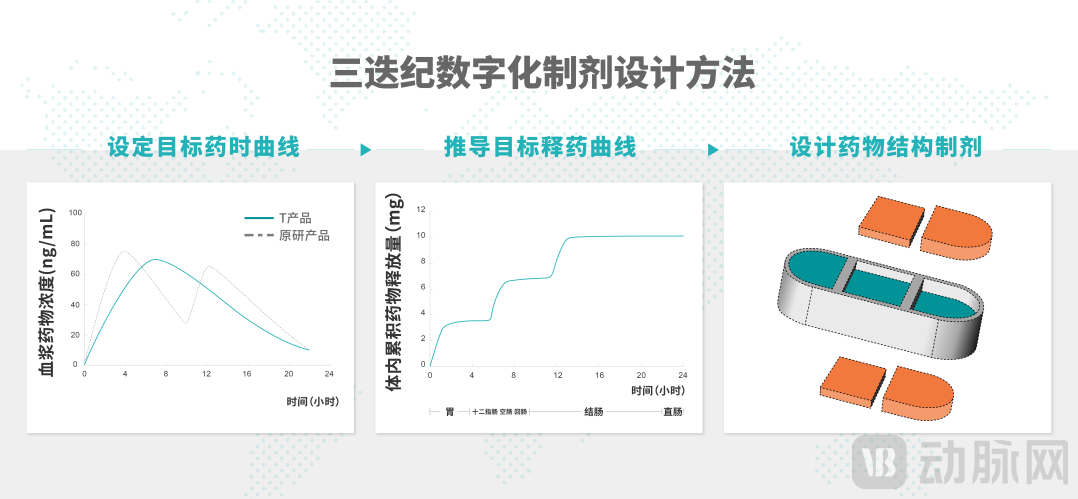
Specifically, inProduct DesignStage, TRIASTEK utilizes computer-aided design to create three-dimensional structures for drug dosage forms, enabling programmable control over the timing, location, rate, and pattern of drug release, thereby achieving“3R” Precision Controlnamely, delivering the drug to the correct gastrointestinal location (Right location) at the right time (Right time) and in the right amount (Right amount), thereby ensuring effective absorption. The “3R” precision control enables flexible combination of drug release mechanisms, facilitating the convenient development of combination drug products. By modifying the formulation structure design, the same platform can achieve different drug release profiles, thus providing a rich array of product design strategies to meet diverse medical and clinical needs. On one hand, it offers new solutions for the development of new molecular entity drugs that require complex formulation technologies; on the other hand, it allows for the development of improved new products with greater clinical value by optimizing pharmacokinetics.
InProduct Development Phase, TRIASTEK employs a “Dosage Form by Design (3D Formulation by Design, abbreviated as 3DFbD)” digital development approach, which designs dosage form structures and formulations based on target drug release behaviors, revolutionizes the traditional long-cycle, trial-and-error-based formulation development paradigm. This approach eliminates reliance on human expertise and experience, thereby enhancing the efficiency and success rate of product development while reducing development time and costs.
AtProduct Manufacturing Phase, MED’s dedicated 3D printing production line for pharmaceuticals has achieved automated and continuous manufacturing of drug formulations. Unlike other continuous drug manufacturing approaches that “link traditional pharmaceutical processes in series,” MED’s 3D printing-based continuous manufacturing represents an “end-to-end” novel process and a digital pharmaceutical production paradigm. The entire MED 3D printing system involves only a few streamlined steps:Weighing and Blending, Hot-Melt Extrusion, 3D Printing, Inner and Outer Packaging. This production line integrates Process Analytical Technology (PAT) for full-process monitoring, with quantifiable and monitorable manufacturing process parameters and process analytical data. Such a manufacturing approach enhances drug product quality, reduces production costs, and facilitates regulatory oversight.
InProduct Supply Phase, the modular production line design and continuous manufacturing approach of MED can beFlexible Productionto meet market supply demands of varying scales. Unlike traditional formulation technologies, which can only increase production capacity by scaling up volume, MED enables flexible output control by adjusting the duration of continuous manufacturing or freely implementing module replication (scale-out) within the production line, thereby satisfying market supply requirements across different scales. For instance, although orphan drugs and blockbuster drugs differ in their production volume needs, they can potentially be co-manufactured on the same MED production line; alternatively, for the same product, sample preparation can be completed on a single production line throughout different market phases, from the growth stage to the plateau stage.
Reshaping the Foundational Pharmaceutical Manufacturing Process: The Commercialization Journey of Technology-Platform Companies
“Across various industries, production technologies and manufacturing models are undergoing significant changes,” said Dr. Cheng Senping. From the perspective of the overall technological evolution in manufacturing, the earliest approach was “subtractive manufacturing,” which later evolved into “formative manufacturing (molding)” during the industrialization phase. It was not until the emergence of 3D printing technology in the 1980s that “additive manufacturing” took shape. Since then, various 3D printing technologies have sprung up like mushrooms after rain, with representative techniques including Stereolithography (SLA), Fused Deposition Modeling (FDM), Selective Laser Sintering (SLS), and Powder Binding (PB).
3D printing technology has been widely applied in the field of medical devices, but it remains an emerging technology in the pharmaceutical sector.
In 1996, Professor Michael Cima of the Massachusetts Institute of Technology (MIT) pioneered the use of binder jetting 3D printing technology for pharmaceutical manufacturing, subsequently attracting numerous institutions to follow suit with their own research. However, commercial 3D printing equipment designed for other industries is difficult to directly adapt for pharmaceutical production due to the sector’s more stringent requirements, which mandate compliance with Good Manufacturing Practice (GMP) standards and ensure high-quality outcomes in terms of product safety, efficacy, and regulatory conformity.
This also means that TRIASTEK needs to successfully navigate all three technical directions: device development, materials research, and structural formulation research.In 2015, TRIASTEK pioneered the foundational technology of Melt Extrusion Deposition (MED), achieving successive breakthroughs in multiple core technologies, including precision extrusion and high-throughput production. These original technological advancements enabled this emerging pharmaceutical manufacturing technology to successfully transition from the laboratory stage to industrial application and mass production.
The continuous and digital transformation of the pharmaceutical industry is a key direction for industrial reform promoted by drug regulatory authorities worldwide, including the U.S. FDA, the European EMA, and China’s NMPA.
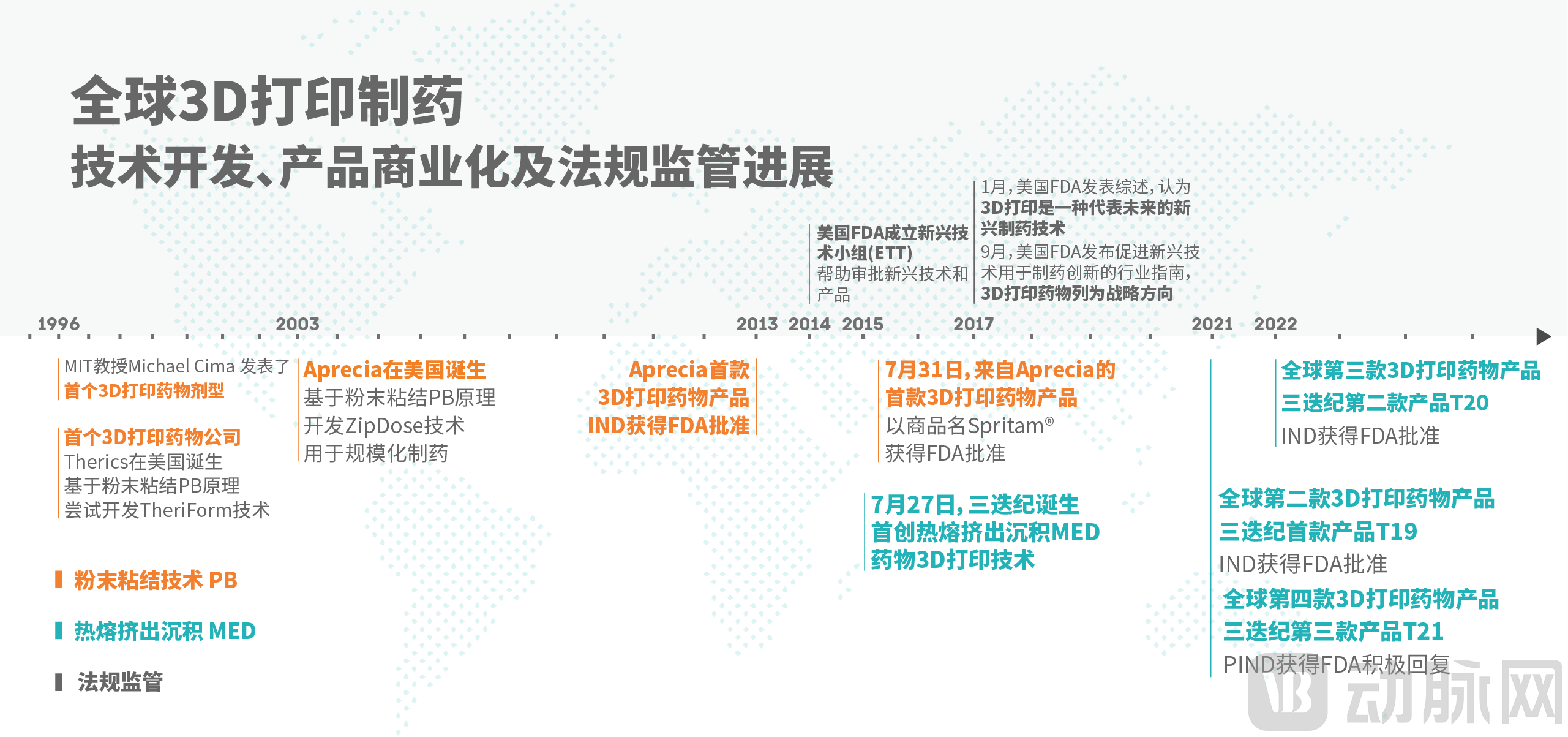
In 2014, the U.S. Food and Drug Administration (FDA) established the Emerging Technology Team (ETT) to facilitate the review of emerging technologies and products. In 2015, Spritam, the world’s first 3D-printed drug product based on powder bed binder jetting technology, was approved in the United States. In 2017, the FDA issued an industry guidance to promote the use of emerging technologies for pharmaceutical innovation, with 3D-printed drugs identified as one of the strategic priorities. In 2020, TRIASTEK’s MED 3D printing technology was accepted into the FDA’s Emerging Technology Program by the ETT. The ETT recognized it as a novel manufacturing approach for controlled-release oral solid dosage forms and highly endorsed its process innovation featuring fully automated integration of Process Analytical Technology (PAT) and feedback control. In 2021, the Center for Drug Evaluation (CDE) of China’s National Medical Products Administration (NMPA) issued a notice soliciting public comments on the ICH guideline “Q13: Continuous Manufacturing of Drug Substances and Drug Products,” following the publication of a related review article.Looking Ahead to the Era of Accelerated Personalized and Intelligent Drug Delivery Enabled by 3D Printing.
Currently, few pharmaceutical companies in China possess capabilities in continuous manufacturing and digitalization; TRIASTEK is one of the few. As a next-generation digital pharmaceutical technology, TRIASTEK’s MED (Melt Extrusion Deposition) technology is poised to drive fundamental innovation and transformation within the industry. Digital approaches to formulation development and manufacturing processes, underpinned by emerging technologies, can facilitate comprehensive upgrades across every stage of the entire pharmaceutical value chain.
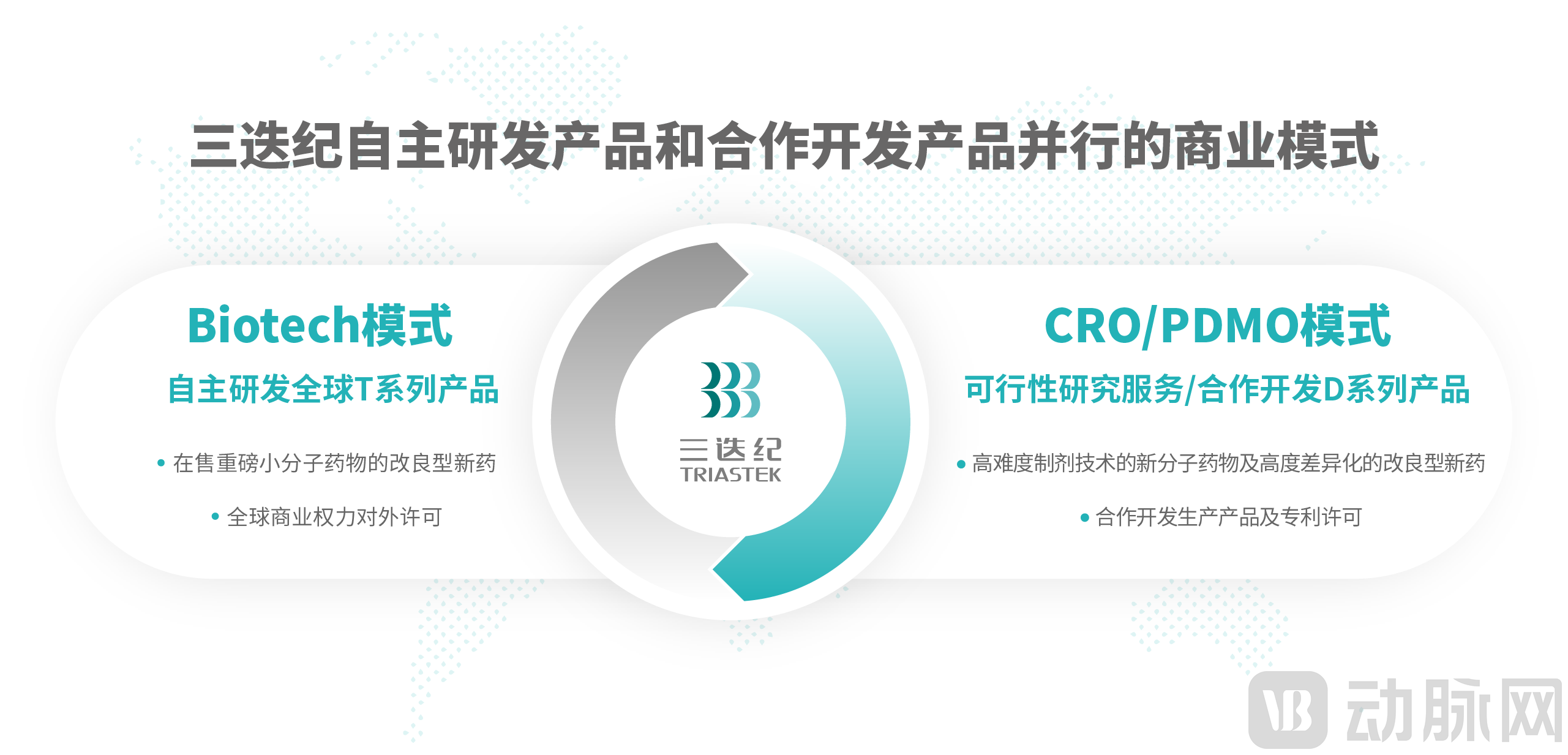
TRIASTEK is positioned as a 3D-printed drug technology platform company, possessingSelf-developed ProductsandCo-developed ProductsParallel Business Model. In addition to its independently developed global T-series products, TRIASTEK leverages its proprietary 3D-printed formulation technology platform to collaborate with multinational and domestic pharmaceutical companies in the joint development of 505(b)(1) products featuring complex formulation technologies, as well as highly differentiated 505(b)(2) products. Currently, TRIASTEK has established partnerships with multiple multinational and domestic pharmaceutical companies and holds the most comprehensive patent portfolio in the global field of 3D-printed medicines, accounting for over 20% of patent applications.
When discussing TRIASTEK’s vision and strategy, Dr. Cheng Senping, the company’s founder and CEO, stated that TRIASTEK aims to become a globally influential intelligent pharmaceutical company. Guided by this vision, the company has formulated a three-step development strategy,This is the development path of a self-defined emerging technology pharmaceutical company. In1.0 Eraduring the technology development phase, implementing an intellectual property-driven strategy;Era 2.0This phase focuses on product development and business expansion. Adhering to an “open strategy,” the company collaborates with global pharmaceutical enterprises by sharing technical resources to commercialize emerging technologies. The third phase marks TRIASTEK’s globalization era, as it steps into3.0 Era, aspiring to become a leading global provider of intelligent pharmaceutical technologies.
In the global landscape of 3D-printed pharmaceuticals, only two companies have successfully transitioned from technology development to industrialization. The first is Aprecia Pharmaceuticals, the U.S.-based developer of Spritam; the other is TRIASTEK. In China, TRIASTEK truly represents the industry, having pioneered a new digital pharmaceutical sector from scratch and driving innovation in foundational manufacturing processes. Globally, TRIASTEK holds a leading position in advancing its clinical pipeline, establishing itself as a frontrunner in the field of 3D-printed medicines.Poised to Become the Company with the Greatest Commercial Potential in This Sector。