

TRIANA Biomedicines Files for IPO to Advance Its AI-Driven Molecular Glue Platform Targeting 'Undruggable' Proteins

Triana Biomedicines
Molecular Glue Therapeutics Developer
In the early 19th century, as human understanding of matter advanced to the molecular and atomic levels, pharmaceuticals entered the era of small molecules.
In the early 21st century, gene sequencing technology propelled small-molecule drugs into the era of targeted therapy, marking a period of significant prominence for this class of therapeutics. In 2000, eight of the top ten best-selling innovative drugs globally were small-molecule drugs, whereas by 2019, this number had declined to only four.
Identifying protein targets is key to developing small-molecule drugs. According to the Human Protein Atlas, there are approximately 19,000 proteins in the human body. Currently, 5,068 proteins are known to be associated with diseases, among which around 700 have been utilized as targets in approved drugs, and approximately 1,200 are considered potentially druggable. The remaining more than 3,000 proteins are referred to as “undruggable” targets.
The “golden age” of small-molecule drug development in the early 21st century was largely driven by the discovery of numerous disease targets; however, there are currently fewer than 200 potential novel drug targets that align with traditional development paradigms.
In the 2020s, did small-molecule drugs seem to enter an era of “declining heroism”? Yet, in a twist of fate, researchers have turned their attention back to targets previously labeled as “undruggable,” focusing on targeted protein degraders.
In the current field of protein degraders, PROTAC technology and molecular glue degraders are attracting the most attention from pharmaceutical companies and investors.
Complementing Traditional Small-Molecule Drugs, Triana Leverages Molecular Glues to Target and Degrade "Undruggable" Proteins
TRIANA Biomedicines is a biopharmaceutical company developing molecular glue degraders through an intelligent platform. The company was co-founded in 2019 by investment firms RA Capital Management and Atlas Venture, and is headquartered in Massachusetts, USA.
The founding of Triana Biomedicines is essentially a story of two companies being brought together. Prior to the establishment of Triana, both RA Capital and Atlas were considering developing their respective molecular glue ventures. RA Capital took the lead by establishing a company named Santi Therapeutics. Subsequently, Atlas approached them with a proposal to merge their concepts into a single entity, giving rise to Triana.
Patrick Trojer, who joined Triana in September 2021, currently serves as the company’s Chief Executive Officer. Previously, he held the position of Chief Strategy Officer at Constellation Pharmaceuticals. In addition to Mr. Trojer, Triana’s leadership team includes several professors specializing in protein degradation and Jesse Chen, the Chief Technology Officer and Co-Founder from RA Capital, among others.
When explaining the company’s name, Trojer stated: “TRIANA is a portmanteau of the English word ‘try’ and the Hispano-Celtic term ‘ana,’ meaning ‘three rivers.’ This signifies both that TRIANA was co-founded by two companies and reflects the mechanism of action of molecular glues.”
Traditional small-molecule inhibitors impede protein function through occupancy-driven mechanisms. Within human cells, there also exists an event-driven protein degradation system: the Ubiquitin-Proteasome System (UPS). When misfolded soluble proteins appear in the cell, they are tagged with ubiquitin. The proteasome recognizes these ubiquitin tags and degrades the proteins for recycling. Approximately 80% of cellular proteins are degraded via this pathway.
So, is it possible to tag those “undruggable” disease-causing proteins with ubiquitin labels to induce their degradation?
Initially, scientists believed that tagging misfolded proteins with ubiquitin was a function of the proteasome. However, in 1980, a researcher at the National Cancer Institute discovered a class of ubiquitin ligases known as E6-AP, revealing that ubiquitin tags are formed by E3 ubiquitin ligases through protein–protein interactions.
Molecular glue degraders are a novel class of small molecules, typically with a molecular weight below 400 Da, that induce ubiquitin E3 ligases to tag target proteins with ubiquitin.
For molecular glues to exert their effect, they must first bind to a ubiquitin E3 ligase to form a binary complex, thereby creating a surface on the binary complex that can engage the target protein. The target protein then binds directly to this binary complex to form a ternary complex (the molecular glue alone does not bind to the target protein), ultimately leading to the ubiquitination of the target protein.
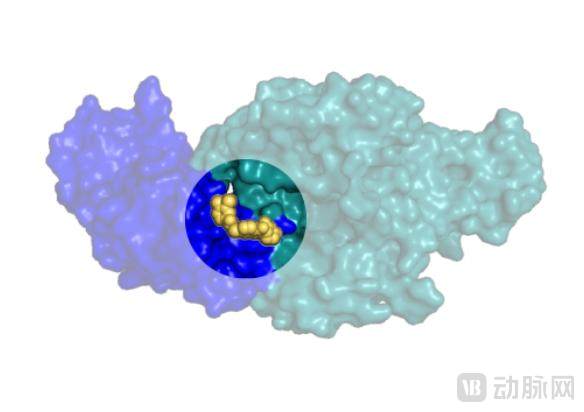
Schematic Diagram of Molecular Glues. Image source: Triana official website
When discussing molecular glues, it is impossible to overlook another protein degradation technology: PROTACs. Both operate through the ubiquitin-proteasome system but differ in molecular design. A PROTAC molecule resembles a structure with two extending arms—one binding to the target protein and the other to an E3 ubiquitin ligase. Therefore, PROTACs require a binding “pocket” on the target protein.
Molecular glues need only exhibit weak affinity for either the target protein or the E3 ubiquitin ligase, with most displaying weak affinity for the E3 ubiquitin ligase. In the absence of a molecular glue, the two proteins show negligible affinity; however, once the ternary complex (E3 ubiquitin ligase, molecular glue, and target protein) is formed, the affinity increases dramatically, sometimes by up to 1,000-fold.
Compared with traditional small-molecule drugs, molecular glues do not need to continuously exert their biological functions; they merely act as catalysts. Once the E3 ligase tags the target protein with ubiquitin, the molecular glue’s mission is complete, and it moves on to engage the next protein molecule. Consequently, the amount of molecular glue required is less than that of the target protein.
Scientists once believed that molecular glues could catalyze the interaction between any two target proteins and ubiquitin ligases. However, it was later discovered that a prerequisite for molecular glue activity is the existence of intrinsic affinity between the two proteins, even if such affinity is weak.
Develop a best-in-class platform to advance molecular glues from serendipitous discovery to systematic screening
Identifying target proteins and E3 ubiquitin ligases with high affinity is central to the development of molecular glues and represents the first step in Triana’s molecular glue discovery process.
Unlike molecular glue degraders, PROTAC molecules directly bind to the target protein. Pharmaceutical companies can identify potential PROTAC candidates by combinatorially assembling and screening libraries of three components: a target-protein-specific ligand, an E3 ubiquitin ligase-specific ligand, and a linker.
Since molecular glues do not require “binding pockets,” they are difficult to identify through direct component screening. Currently, most companies in the molecular glue space rely on serendipitously discovered molecules or focus on E3 ligases. Scientists have identified over 600 E3 ubiquitin ligases, but fewer than 10 have been publicly validated for use in targeted protein degraders. (Source: Huachuang Securities)
Triana CEO Trojer stated, “While these approaches can be effective at times, they lack systematic rigor and remain constrained by random selection. Targeting a specific E3 ligase is insufficient to treat all diseases, whereas our ambitions extend far beyond any single indication.”
TRIANA chose to start with target proteins that are highly associated with diseases. Trojer described their process of developing molecular glues as akin to solving a jigsaw puzzle: the target protein is the first piece, the compatible E3 ubiquitin ligase is the second, and the molecular glue is the third.
To enable systematic screening of molecular glues, TRIANA has developed a platform called “best-in-class.”
The platform incorporates an AI algorithm designed to identify protein surface features potentially involved in protein interactions. Validated and tested on existing protein interaction networks, this algorithm predicts which target proteins exhibit higher affinity and ranks E3 ligases based on their likelihood of forming complexes with the target proteins.
Having resolved the matching issue between the target protein and the E3 ligase, the next step is to identify the “third piece of the puzzle”: a suitable molecular glue.
The first class of molecular glues discovered by scientists were several immunomodulators, such as thalidomide, lenalidomide, and pomalidomide. These compounds were marketed as antitumor agents before their mechanisms of action were fully understood, and it was only years later that they were confirmed to be molecular glues.
Thus, it is evident that more molecular glues may still be hiding in plain sight.
To “mine” these molecular glues, TRIANA has established a One-Bead-One-Compound DNA-Encoded Library (OBOC-DEL), a novel technological platform that facilitates drug discovery by screening the binding affinity between small molecules and proteins. Here, “small molecules” encompass both traditional drug-like small molecules and macromolecules with distinct chemical features.
Triana’s selection of molecular glues also incorporates Lipinski’s Rule of Five—the chemical properties that oral small-molecule drugs should possess, such as no more than five hydrogen bonds and a molecular weight below 500 Da. This rule helps improve the in vivo absorption rate of compounds. This is one area where molecular glue degraders have an advantage over PROTAC technology, as PROTAC molecules often struggle to comply with the Rule of Five.
Although TRIANA aims to develop molecular glues for a wide range of diseases, Trojer stated that they are currently focused solely on the field of oncology.
Recently, Triana Biomedicines completed a $110 million Series A financing round. The round was co-led by Lightspeed Venture Partners and the company’s seed investors, RA Capital Management and Atlas Venture, with participation from Pfizer Ventures and others.
Trojer stated that they plan to engage in the development of a drug by the end of 2022 and release data to validate the utility of their best-in-class platform. They also intend to announce one or two candidate drugs next summer and file for clinical testing of at least one drug by 2024 at the latest.
Targeted Protein Degraders Enter Clinical Trials in Bulk, with Pfizer and Bayer Joining the Fray
As the number of remaining novel targets dwindles, small-molecule drug-induced targeted protein degradation has emerged as a new direction in drug development.
PROTAC technology was first proposed in 2001, and the first PROTAC degrader entered Phase I clinical trials in 2019. Molecular glue degraders, which offer a broader scope of application and higher oral bioavailability, are also garnering increasing attention; however, no targeted protein degradation drugs have yet been approved for market launch.
According to data from Huachuang Securities, as of the end of 2021, at least 17 protein degraders had entered clinical development globally, with 16 targeting oncology. Among these, 12 utilized PROTAC technology and 5 employed molecular glue technology.
Among molecular glues that have entered clinical development, the most advanced is MBS’s iberdomide for the treatment of multiple myeloma, which has progressed to Phase III clinical trials.
Among publicly listed companies globally focused on targeted protein degradation, those in the PROTAC field include Arvinas, Nurix, Kymera, and C4 Therapeutics, while Monte Rosa is a key player in the molecular glue domain.
In 2021, pharmaceutical giants such as Pfizer, Bayer, and Eli Lilly also made strategic moves in the field of protein degradation, completing multiple mergers, acquisitions, or collaborations valued at over $1 billion each.
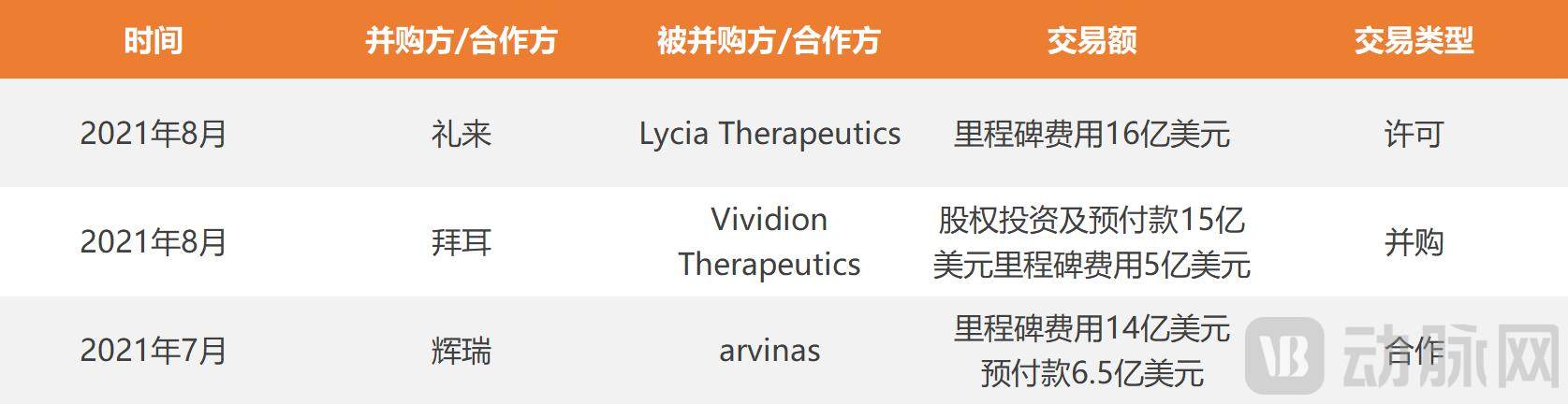
Selected Transactions in the Protein Degradation Field by Pfizer, Bayer, and Eli Lilly in 2021
There are more than ten leading companies in China involved in the field of protein degradation, most of which are focused on PROTAC projects. Among them, Haisco Pharmaceutical, Kintor Pharmaceutical, and BeiGene have already entered Phase I clinical trials.
Overall, targeted protein degradation technology demonstrates significant advantages in exploiting “undruggable” targets. With a vast number of E3 ligases yet to be developed, the field—although still in its early stages of application for emerging technologies such as PROTACs and molecular glues—is already exhibiting a vibrant and diverse landscape.