

Boke City Secures First NMPA Approval for Game-Based Digital Therapeutics, Paving the Way for Transformation in Gaming and Healthcare
Since the beginning of 2022, digital therapeutics (DTx) in China have achieved substantial breakthroughs. Taking regulatory approvals as an example, several DTx products have been approved within a short period. Meanwhile, DTx has been included in provincial-level planning for the first time; the Hainan Provincial Health Commission listed “exploring pilot trials of digital therapeutics” as one of the key tasks for digital health development during the 14th Five-Year Plan period in the *Hainan Province Digital Health “14th Five-Year” Development Plan*.
Digital therapeutics have once again received positive signals. VCBeat (WeChat ID: VCBeat) has learned that the gamified digital therapeutic “Strabismus and Amblyopia Treatment System,” applied for by Poke Digital Health Vision Technology (Hangzhou) Co., Ltd., a subsidiary of the well-known gaming company Poke City, has been approved as a Class II medical device.This is also the first digital therapy certification for China's domestic gaming industry.. Clearly, the booming digital therapeutics sector has attracted participation from other industries, and the medical value of gaming has already gained recognition from regulatory authorities.
Video games have experienced explosive growth in recent decades, with remarkable advances in playability, interactivity, and audiovisual effects that make them highly addictive. The gaming industry has evolved into a massive entertainment sector, spawning related industries such as esports and live streaming, while becoming deeply intertwined with anime and film.
According to a report by market research firm Newzoo, the global gaming industry generated $175.8 billion in revenue in 2021; it is projected that the global gaming market will generate $218.7 billion in revenue by 2024.
Meanwhile, societal perceptions of gaming have been continuously evolving. Just 30 years ago, video games were considered the primary culprit behind children’s poor academic performance and myopia, often labeled as “electronic opium.” As the post-80s and post-90s generations, who grew up heavily influenced by gaming, reached adulthood, games have gradually gained legitimacy. They are now recognized not only as the “ninth art” but also as a formal sport: esports has been included in the official sports program by the International Olympic Committee and was featured as a medal event at the 2022 Hangzhou Asian Games.
Against this backdrop, the gaming industry has also begun to explore the feasibility of applying games to other scenarios. “Gaming + Sports” and “Gaming + Health” are undoubtedly among the most significant trends. In 2006, Nintendo launched the Wii, a motion-sensing game console that successfully integrated gaming with physical exercise. The Wii sold 20 million units in its first year on the market, with global cumulative sales exceeding 100 million units. Propelled by the strong sales of the Wii, Nintendo’s market capitalization reached a peak of $88 billion in 2008.
Nevertheless, at that time, no one believed that games could have any intersection with serious medical care, just as no one believed that software could treat diseases. However, the rise of digital therapeutics in recent years has not only realized the concept of treating diseases with software but also provided the best opportunity for the integration of games and healthcare—some digital therapeutics have begun to incorporate gamified interventions into their treatments to enhance efficacy.
This includes digital therapeutics pioneer Happify Health, which has incorporated gaming elements into its mental health digital therapeutics. A closer look at its core team reveals that this was inevitable—the founding team achieved significant success in the gaming industry, most notably by developing Spider Solitaire, the classic game bundled with Windows.
Akili Interactive Labs is a trailblazer in the medical field, intervening entirely through gaming. As scientists gain deeper insights into mental disorders, they have gradually discovered that many such conditions stem from diverse neurobiological causes. For instance, symptoms of inattention are associated with reduced activity in brain regions including the frontal lobe, frontoparietal network, and ventral attention network.
Through thoughtful design, video games can deliver potent stimulation to the brain, thereby enhancing the structure and function of specific regions. Meanwhile, children are readily drawn to video games. Akili is the first company to turn this concept into reality. In five clinical trials involving its Endeavor digital therapeutic, more than 600 children with ADHD were enrolled, all demonstrating improvements in the Test of Variables of Attention (TOVA), a digital assessment measure of sustained and selective attention.
In June 2020, Akili’s Endeavor received FDA approval via the De Novo pathway. For the first time, the serious medical value of a video game was validated by a regulatory agency, sparking excitement across the industry.
Nevertheless, these game-based digital therapeutics are not developed by the gaming industry. Global gaming giants appear to be far less enthusiastic about the digital therapeutics boom. The primary reason is that game-based digital therapeutics must incorporate medical principles to achieve therapeutic efficacy and avoid adverse effects, while also requiring rigorous scientific validation of clinical outcomes and regulatory approval. This poses a significant barrier even for the medical device industry, let alone for the gaming industry, which lacks such specialized expertise.
Entering the healthcare industry means that companies must contend with extensive regulatory oversight and conduct various clinical trials that are capital-intensive, time-consuming, and rigorously complex. A single misstep could lead to catastrophic failure and total loss of investment. For any gaming company, this is a decision that warrants extreme caution.
Fortunately, a number of Chinese gaming companies have gradually recognized the application potential in the healthcare sector and are determined to enter this field. Poker City is one of the early pioneers. Established in 2010, this gaming company has consistently emphasized conveying positive values and social responsibility through its games, and began exploring how to leverage gaming to empower innovation in other industries at an early stage.
As early as 2019, Poker City began exploring the integration of gaming and healthcare, collaborating with Fudan University’s Smart City Research Center to investigate the use of card and board games for the early screening of mild cognitive impairment. This research not only yielded academic papers and established a preliminary model but also laid the foundation for Poker City’s subsequent explorations.
“We were greatly encouraged by the results. We did not anticipate that this exploratory effort would truly facilitate early screening for cognitive impairment among the elderly, thereby demonstrating that games can indeed help address social issues. This opens up significant possibilities for growing game companies,” Tan Yaxing, Sustainable Development Strategy Advisor at Poker City, told VCBeat.
Subsequently, Poker City established a dedicated internal research team to explore how the interactivity and engagement of games could help address the issue of low patient adherence in medical rehabilitation. After careful consideration and analysis, Poker City focused its efforts on two key demographic groups: the elderly and children. In 2021, Poker City launched its digital therapeutics strategy and partnered with the healthcare industry, aiming to explore gamified digital therapeutics in areas such as “game-based diagnosis, game-based treatment, patient support through gaming, and medical assistance via gaming.”
This strategy has facilitated the development of two product pipelines. One is the “Happy Vision Planet” Strabismus and Amblyopia Training and Treatment System, which recently received regulatory approval. This system was co-developed in collaboration with the renowned ophthalmic institution Ke Lai Shi, Shanghai Yangzhi Rehabilitation Hospital (Shanghai Sunshine Rehabilitation Center)—the first municipal-level public rehabilitation hospital in Shanghai affiliated with Tongji University—Weimai, and several doctoral experts in ophthalmology. The other pipeline is the “Customized Linked Memory Game,” developed through a partnership between Poker City and Shanghai Yangzhi Rehabilitation Hospital (Shanghai Sunshine Rehabilitation Center) affiliated with Tongji University, primarily applied to rehabilitation training for mild cognitive impairment in the elderly.

Poker City's "Happy Vision Planet" Strabismus and Amblyopia Training and Treatment System
By integrating the exploration of using games to empower other sectors, Poker City has proposed an upgraded “Game+” strategic plan. This initiative seeks to combine Poker City’s core game design capabilities with the needs of various social industries, leveraging games to address social issues and enhance participant experience and efficiency. In addition to its cornerstone “Game+ Healthcare” sector, the strategy currently encompasses directions such as “Game+ Education,” “Game+ Public Welfare,” “Game+ Science Popularization,” and “Game+ Culture.”
Building on its prior accumulation, Poker City has defined three objectives for its “Games + Healthcare” initiative. First, Poker City aims to empower and reshape the healthcare service ecosystem through gaming, thereby enhancing the efficiency and accessibility of healthcare services: by leveraging core capabilities in game-based interaction, it seeks to achieve “cost reduction and efficiency improvement” in healthcare delivery, boost service efficiency, and make healthcare services more accessible.
“For example, the artistic stylization of games holds significant appeal for children. If you give a child medical instructions or tell them what to do, they may find it boring. However, if you transform that task into a cute little dinosaur, they may be more willing to listen. Even this relatively superficial level of artistic stylization is part of gamification features,” introduced Tan Yaxing.
Secondly, Poker City aims to adopt a patient-centric approach by innovating digital doctor-patient delivery models and experiences. Most importantly, it leverages gamified innovations to identify and integrate patients’ personalized, diverse, and fragmented health needs, providing practical and actionable solutions.
Finally, Poker City aims to facilitate the integration of medical services and digital technologies through a comprehensive resource layout. By linking professional medical resources and cultivating cross-disciplinary talent in healthcare and digitalization, it seeks to build new models of digital medical services and achieve value innovation in healthcare delivery.
Of course, these goals cannot be achieved overnight and still require long-term efforts. To this end, Poker City has refined its implementation path and proposed three stages to achieve “Games + Healthcare”: Integration and Breakthrough, Connection and Layout, and Exploration and Breakthrough.
Integration and breakthroughs will facilitate the genuine empowerment of the healthcare sector through digitalization and gamification technologies, driving theoretical exploration and innovation in service products within the medical field. Connectivity and strategic layout will link more partners who share the same enthusiasm for the innovative development of digital health to foster collaboration, thereby advancing the comprehensive deployment of top-tier medical resources, cross-disciplinary talent, and service channels. Currently, exploration and breaking new ground are exemplified by the field of digital therapeutics, which serves as a crucial testing ground for gamified medical products and represents a key area of focus for Poker City.
It is evident that Poker City’s entry into the healthcare sector from the gaming industry was not an impulsive move, but rather driven by well-defined strategic objectives and a clear implementation roadmap. In this sense, it demonstrates remarkable foresight and representativeness, even within the global gaming industry.
In fact, it is not only Poker City Network Technology (Shanghai) Co., Ltd. that has ventured into this space; other domestic game companies have also begun to explore the integration of gaming and healthcare, yielding tangible results. This is no coincidence. Regardless of whether gamification is involved, approved digital therapeutics are inherently part of Software as a Medical Device (SaMD) and thus fall within the domain of software development. From the perspectives of underlying logic, technical workflows, and technological pathways, the development of games and SaMD is fundamentally consistent.
For this very reason, when it comes to leveraging games to improve adherence, pure-play digital therapeutics companies are likely no match for gaming companies. First, gaming enterprises possess a comprehensive and mature development logic for internet-based products. Second, since “creating an engaging game” is the core objective of gaming companies, they have spent years studying user behavior, enabling them to effectively drive and sustain user adherence.
“However, games prioritize entertainment value; as long as they are enjoyable, they serve their purpose. In contrast, Software as a Medical Device (SaMD) requires greater focus on core mechanistic principles. For instance, it is essential to determine which elements of the entire delivery process exert the strongest therapeutic effects and which are ineffective. This must be supported by corresponding scientific evidence, research findings, and clinical applications. Furthermore, attention must be paid to whether any adverse reactions or even serious medical incidents occur during product use. This represents a significant difference.” Chen Hang, Medical Advisor for the digital therapy system for amblyopia and strabismus, holder of a Master’s degree in Optometry and Ophthalmology from Wenzhou Medical University, and founder of the Kelai Shi Eye Care Center, also highlighted that there remain fundamental distinctions between SaMD and games.
It is precisely due to the accumulation of prior experience and a profound reverence for the healthcare industry that Poker City has assembled a team for its “Games + Healthcare” initiative that differs from standard game development teams. By introducing external experts from the medical field, integrating mechanisms of scientific inquiry and truth-seeking into daily management, and collaborating with multiple medical research institutes, hospitals, and universities in an open yet rigorous manner, the company has achieved a relatively deep integration of the two industries. Game companies lacking corresponding accumulated experience in medical scientific research will still require time to catch up.
As an initial foray into combining gaming with healthcare, Poker City is placing greater emphasis on leveraging the inherent stickiness of its content to improve patient adherence during treatment. The decision to focus on the treatment of strabismus and amblyopia stems from the fact that this field has well-established therapeutic principles and methods, while also suffering from significant challenges related to patient adherence. This is one of the key reasons why Poker City chose to enter the market through this specific domain.
Currently, the rehabilitation treatment for pediatric strabismus and amblyopia in China primarily relies on bead-stringing exercises, puncture tasks, and light stimulation. The treatment process is lengthy and monotonous. Even though many medical device manufacturers have introduced more novel hardware, patients still struggle to adhere to repetitive training regimens lasting 3–6 months, often performing them perfunctorily during therapy sessions, thereby failing to achieve the desired therapeutic outcomes. Since early intervention is critical for strabismus and amblyopia, suboptimal treatment efficacy can lead to lifelong visual impairments. This necessitates full parental involvement throughout the treatment course, imposing significant time and effort burdens on parents with demanding work schedules.

“Happy Vision Planet” Strabismus and Amblyopia Treatment System is based on various internationally certified training methods
“Happy Vision Planet” Strabismus and Amblyopia Treatment System is based on a variety of internationally certified training methods, integrating multiple light stimulation therapies such as grating, red-light stimulation, and fine visual acuity exercises. Through its user-friendly and highly engaging gamified design, the system effectively improves patient compliance among children, helping them complete strabismus and amblyopia rehabilitation training while playing.
The therapy also incorporates an assessment system that evaluates near visual acuity in the amblyopic eye, thereby matching the optimal training difficulty to achieve refined, personalized treatment. Meanwhile, home-based visual assessments and follow-up rehabilitation monitoring via the software enhance the efficiency and accessibility of medical services.
Most importantly, the therapy features real-time attention monitoring and AI-powered error correction. By leveraging the front-facing cameras of widely available tablets and smartphones, the system continuously monitors the patient’s posture and key rehabilitation elements, such as proper eye patch usage, during treatment sessions. If any anomalies are detected, the therapy is paused and prompts are provided until the patient resumes the correct posture and properly wears the eye patch, at which point the session resumes.
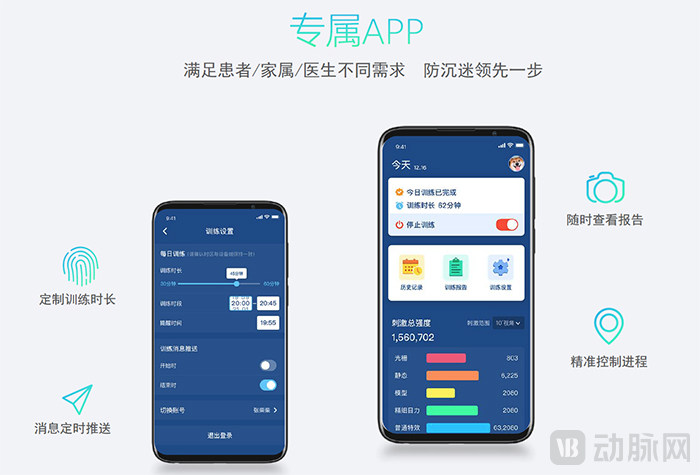
Strabismus and Amblyopia Treatment System Offers Comprehensive Parental Management Features
In addition, the therapy includes a dedicated parent-facing mobile app. Detailed statistical reports are pushed to the parent app throughout the treatment process, covering not only training intensity but also statistics on anomalies such as attention monitoring deviations in pediatric patients. With this intelligent assistant, parents can facilitate precise and personalized training progress. Meanwhile, for pediatric patients demonstrating favorable training outcomes, parents can appropriately reduce their level of involvement, thereby alleviating their burden.
“Training with an eye that has very poor vision is actually quite painful for children. During traditional training, children often take off their eye patches and sneak a peek when their parents are not looking. Moreover, amblyopia rehabilitation training takes a long time, possibly 3-6 months. Parents and doctors may not know how well the child is actually doing with the training, and only discover at the follow-up visit that the amblyopia has not improved or shown signs of recovery. This can be very troubling for doctors: Is there a problem with the treatment plan? Or is the child’s compliance with the training poor? Or is the training method incorrect? With our therapy’s statistical analysis, we can provide detailed reports to support further treatment by doctors, such as determining whether there are neurological factors contributing to the condition beyond just amblyopia,” explained Chen Hang regarding the advantages of Poker City’s digital therapy.
He stated that Boke City’s game-based digital therapeutics can significantly improve treatment adherence in pediatric patients and alleviate the burden on parents. Meanwhile, its statistical advantages provide a basis for physicians to deliver personalized and precise treatments. As awareness of these features grew, doctors and parents who were initially skeptical readily changed their attitudes.
Of course, everything has its pros and cons. Gamified digital therapeutics can indeed significantly improve treatment adherence in pediatric patients, but parents have other concerns. “In principle, I believe the efficacy should be fine. However, I have two main concerns: one is whether my child will become addicted to the game, and the other is whether prolonged close-range screen time on tablets and smartphones will lead to myopia,” said a parent of a child with amblyopia, expressing their concerns to VCBeat.
Chen Hang stated that parents’ concerns are understandable and shared by all parents. In response to these concerns, the therapy has been optimized during development: “As Poki is a gaming company, we have integrated its minor anti-addiction system into the therapy. Parents can control training duration, set up push notifications for the start and end of training sessions, and utilize a one-click control feature via the parent portal. Even if children wish to continue playing after the training session ends, parents can forcibly exit the application with a single click from the parent portal, thereby maintaining complete oversight of their children’s training.”
Tan Yaxing stated that user stickiness can be precisely managed through a series of measures, particularly the interactive feedback mechanisms represented by numerical values, an area where game companies excel. “Frankly speaking, creating a game that players want to play at all times is the dream of every game developer. However, this is actually easier said than done. This is especially true for children, who tend to tire of old things and seek out new ones; their interest may wane significantly once the novelty wears off.”
Regarding the side effect of myopia induced by the use of electronic devices, Chen Hang believes that all pharmaceuticals and medical devices have corresponding side effects; however, they are worth implementing if these side effects are minor compared to the benefits they deliver. For children with strabismus and amblyopia, normal visual acuity cannot be restored even with the most optimal treatment. Through digital therapeutics, the improvement in visual acuity resulting from enhanced adherence and optimized training posture is significantly more pronounced than the decline in visual acuity caused by their side effects.
“Let me provide another example. Suppose a patient with age-related cognitive impairment becomes addicted to a gamified digital therapeutic intervention during treatment, but their symptoms are significantly alleviated or at least cease to progress. In that case, we would undoubtedly prefer such ‘addiction’ to the therapy. In essence, this is no different from our acceptance of older adults engaging excessively in hobbies such as mahjong, square dancing, and fishing, as long as these activities promote their physical and mental well-being.”
Of course, in addition to digital therapeutic pipelines for conditions such as strabismus and amblyopia—where the treatment principles and pathways are well-defined and the primary goal is to improve patient adherence—Poker City is also exploring gamified approaches to optimize offline clinical workflows and enhance the patient experience. Furthermore, for diseases with unclear underlying mechanisms, such as cognitive impairment and attention-deficit/hyperactivity disorder (ADHD), Poker City has been engaged in long-term exploration.
“If we can effectively combine the strengths of the gaming industry with the pain points in healthcare, I believe it will certainly bring about some groundbreaking innovations,” Chen Hang concluded.
In fact, a deep understanding of gaming reveals that certain inherent qualities of games can significantly impact our physiological and psychological states. Take the widely popular “Elden Ring” and its series as an example; while seemingly unrelated to healthcare, their stringent difficulty levels greatly enhance players’ reaction speed, observational skills, patience, and courage. Moreover, players experience a profound sense of achievement after overcoming enemies through repeated efforts.
To some extent, this shares common principles with psychotherapy in treating patients. Perhaps precisely for these reasons, many patients with depression have experienced symptom relief or even achieved recovery through such games.
Of course, from the perspective of serious medicine, further efforts are still needed for games to integrate more deeply with healthcare, achieving a profound convergence of the two industries. The recent approval of Poker City’s game-based therapy not only represents a beneficial attempt by China’s gaming industry but also serves as an excellent reference for both the gaming and healthcare sectors. It is likely that more research on the therapeutic applications of games will be conducted, and more games or gamified approaches will be incorporated into medical processes. For the healthcare industry, offering engaging and widely accepted methods alongside conventional serious medical treatments constitutes a promising approach.
References:
Newzoo: “2021 Global Games Market Report”
Yue Ting, Dr. X: “Why Can Dark Souls, Which Makes You Die Hundreds of Times, Treat Depression?”