

Meibio Achieves Global Breakthrough with Human-Derived ECM, Pioneering a New Era in Craniofacial Regenerative Repair

MAYBIO
Medical Aesthetic Product Developer, Manufacturer, and Distributor
In 2013, the rise of vertical internet platforms brought the concept of medical aesthetics into the public eye, with a compound annual growth rate (CAGR) of 34.7% over the subsequent five years, leading to the widespread pursuit of aesthetic enhancement among the general population.
As public aesthetic perceptions continue to evolve, people are no longer pursuing standardized beauty; instead, they are focusing on individual characteristics and needs, emphasizing proactive anti-aging measures and the correction of aesthetic flaws. This shift is further corroborated by the “2021 White Paper on the Medical Aesthetics Industry” released by Yanjiuyuan (Aesthetic Research Institute). Anti-aging and wrinkle-reduction treatments have become consumers’ top choices, driving the largest growth in the market.
This shift in consumer demand for aesthetic treatments has also drawn the attention of capital markets, with numerous publicly listed companies positioning themselves in the anti-aging injectables sector. Top-tier investors—including SoftBank, IDG Capital, Northern Light Venture Capital, Goldman Sachs, Hillhouse Capital, ZhenFund, and Yunfeng Capital—are vying to establish their presence in this space.
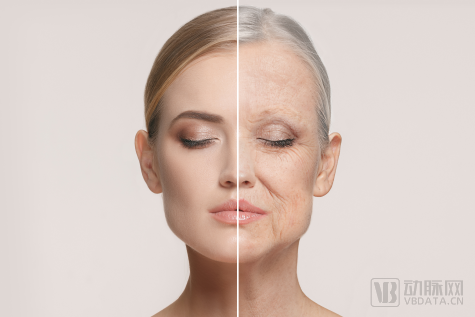
Market Demand for Aesthetic Enhancement Shifts from Physical Fillers to Natural Regenerative Anti-Aging Solutions
Meanwhile, anti-aging solutions dominated by physical fillers are no longer sufficient to meet the demands of aesthetic seekers, who increasingly expect safe and natural regenerative anti-aging approaches grounded in science that substantially delay aging, rather than relying solely on physical volume restoration. Similarly, the field of maxillofacial defect repair, primarily focused on soft tissue and bone reconstruction, is undergoing a parallel transformation, shifting from simple morphological restoration toward biological functional regeneration. Driven by these two multi-billion-dollar markets, the demand for maxillofacial tissue repair and regeneration continues to expand. From an upstream perspective, these regenerative filler products are mainly categorized into two types: one comprises relatively traditional materials that stimulate regeneration, while the other consists of induction-based regenerative materials, represented by ECM (extracellular matrix) collagen.
Extracellular matrix (ECM), often conceptualized as the “soil” for cell growth, provides distinct microenvironments that support the formation of various tissues, such as bone, cartilage, adipose tissue, and connective tissue. By fundamentally remodeling the cellular growth environment, ECM has been extensively incorporated into medical products for tissue repair both domestically and internationally (see table below). However, its application in the repair of maxillofacial tissue defects remains insufficient, with all current products derived from animal sources.
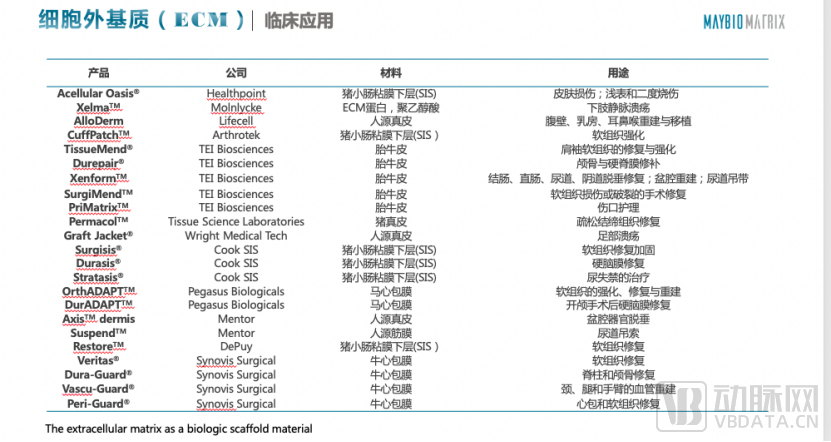 Applications of ECM in the Medical Field
MAYBIO has built an expression platform for tissue-specific extracellular matrix (ECM) based on its decade-long accumulation in the field of regenerative repair. In 2021, it achieved large-scale in vitro production of human-derived ECM, becoming a pioneer in the industrialization of new human-derived ECM regenerative materials globally. The company applies this technological raw material to aesthetic regenerative repair of maxillofacial tissues, striving to become a leader in the aesthetic and functional restoration of maxillofacial tissues.
When top performers from diverse fields resonate and move forward in sync after a clash of ideas, they often generate a remarkable “chemical reaction.” The founding of MAYBIO resulted from such immediate alignment among three professionals from different domains, marking an exploration of industrialization following the breakthrough of technical barriers.
Dr. Xiao E was the founder of the Molecular Biology Platform for Oral and Maxillofacial Surgery at Peking University School of Stomatology. He began conducting research related to maxillofacial trauma during his doctoral studies and has published multiple papers on stem cells in journals such as Cell Host & Microbe, Stem Cells, and Theranostics. “From an evolutionary perspective, facial symmetry and a proportionate physique signify health. The human oral and maxillofacial region plays a critical role in functions such as phonation, mastication, aesthetics, respiration, and facial expression. However, its high frequency of use and significant exposure make it highly susceptible to defects or deficiencies. This not only diminishes patients’ quality of life and affects their social confidence but also increases the economic burden on both individuals and society. Providing solutions to these problems was the original motivation behind my founding of MAYBIO,” he stated.
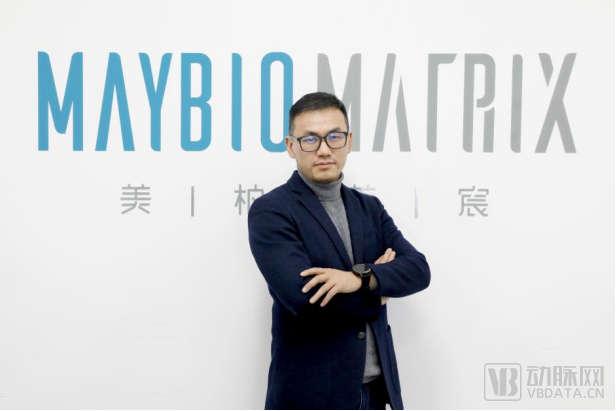 Dr. Xiao E, Co-founder, Chairman, and CTO of MAYBIO
In 2019, Dr. Xiao E resigned from the Department of Oral and Maxillofacial Surgery at Peking University School of Stomatology and met Professor Wei Qiang, an applied materials expert who had returned from Germany. Together, they explored the industrial applications of regenerative materials from a scientific research perspective. The subsequent addition of Ms. Mei Jinzhuo, who brought many years of cross-border pharmaceutical market and operational experience, propelled MAYBIO’s maxillofacial regeneration technology toward true commercialization and industrialization.
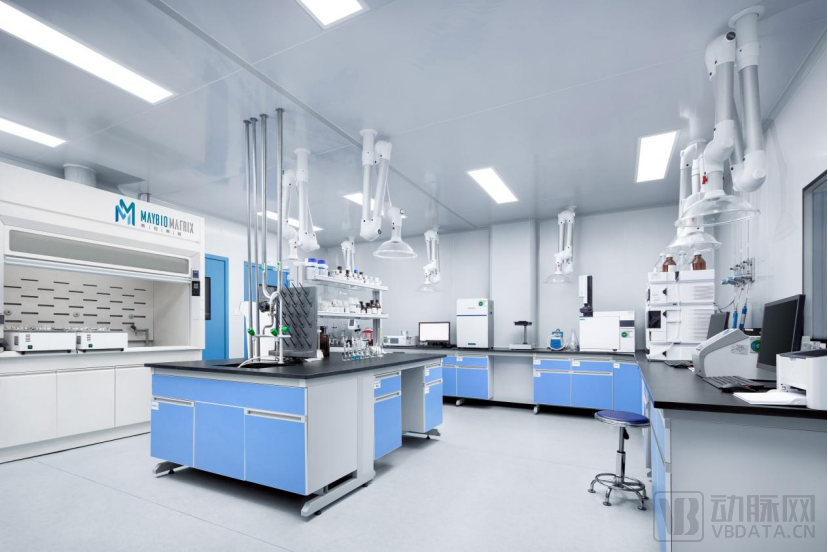 MAYBIO Laboratory
Leveraging its research expertise in regenerative filler materials, MAYBIO rapidly established a tissue-specific extracellular matrix expression platform following its first round of financing, utilizing in vitro tissue engineering techniques to maximize the restoration of the complex collagen composition of human extracellular matrix.
Dr. Xiao E revealed that this marks the first global breakthrough in human-derived ECM materials for in vitro tissue engineering, representing China’s voice to the world in the field of regenerative medicine materials.
The Core of ECM-Induced Regeneration Ultimately Lies in the Reconstruction of the Cellular Growth Environment.
In this regard, the expertise of Wei Qiang and Dr. Xiao E has been effectively combined. “Only 3D environmental stimulation can promote the secretion of collagen-producing cells and extracellular matrix,” stated Dr. Xiao E. By simulating mechanical and biological signals through scaffolds and culture media, they have independently developed all components, from human mesenchymal stem cell scaffolds to serum-free culture media.
“We aim to build a moat for our products and enterprise through end-to-end R&D innovation. Beyond R&D, process engineering is equally critical in the medical device sector, as quality control directly determines product quality,” he continued.
In 2020, after securing investment from Danlu Capital, Dr. Xiao E informed the investors that the funds would be used to build a manufacturing facility.
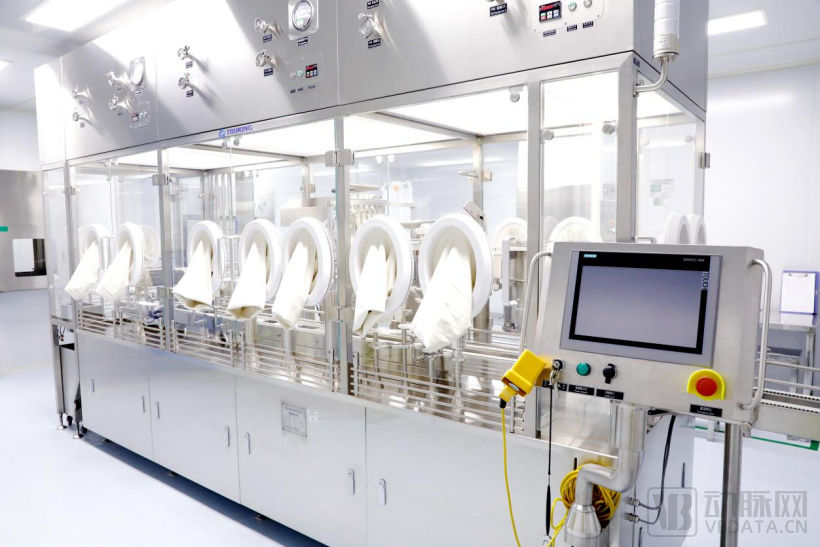 Fully Automated Aseptic Filling Workshop
“We have always held ourselves to the standards of major international pharmaceutical companies, so it was imperative to establish our own sterile production line,” he stated. In November 2020, MAYBIO completed the assembly of its core GMP factory team, and finished construction of its sterile filling facility in June 2021. In August of the same year, the company launched its Class I product and secured Series A financing led by Yahui Capital. Its independently developed human mesenchymal stem cell vector eliminates the need to introduce exogenous genes into its ECM materials using potentially risky methods such as viral vectors or plasmids. Combined with its proprietary 3D tissue engineering culture protocol, this innovation has reduced production costs and increased production capacity by approximately 15-fold.
It is reported that MAYBIO possesses a 1,500-square-meter GMP-certified sterile gel filling workshop, with sterile manufacturing capabilities for various dosage forms including liquids, gels, and lyophilized powders. The annual production value of its extracellular matrix-complexed collagen lyophilized powder approaches RMB 1 billion, while the annual output of pre-filled syringes and vials reaches 800,000 units.
As for why the company chose to develop products in the medical aesthetics sector, Dr. Xiao E’s answer was straightforward: “A company must first survive.” However, the applications of ECM materials are not limited to medical aesthetics; MAYBIO’s corporate mission goes “beyond beauty.”
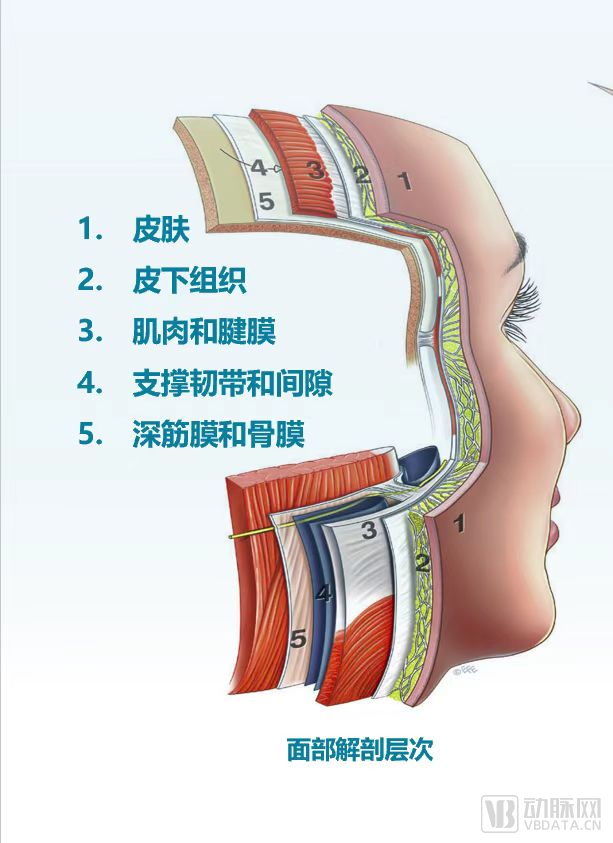 Maxillofacial Anatomical Layer Diagram
ECM is the mechanism underlying all cell growth. Therefore, in addition to skin, ECM materials can also be applied to the regeneration of periosteum, ligaments, nerve cells, and even cardiac tissue. Dr. Xiao E aims to fill the market gap for human-derived ECM regenerative fillers in the future. He also hopes that, leveraging MAYBIO’s capabilities, ECM will unlock its full potential across various application fields, evolve into mature medical-grade ECM products, and deliver greater value to society.
Dr. Xiao E expressed his hope that MAYBIO would become a premium supplier of human-derived ECM raw materials and an outstanding R&D enterprise for regenerative repair devices, enabling future breakthroughs in more medical scenarios such as oral repair membranes, implant bone-induction membranes, and extracellular matrix repair for muscles, ligaments, and nerves.
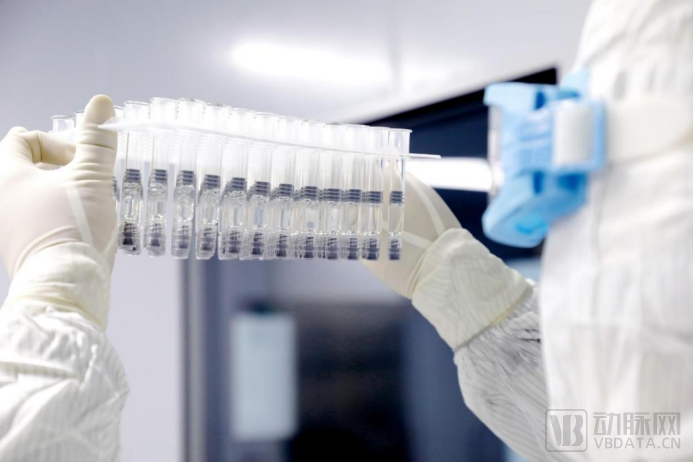
MAYBIO Laboratory
As an oral and maxillofacial surgeon, Dr. Xiao E aims to apply human-derived extracellular matrix (ECM) materials to the repair of maxillofacial soft tissues, helping patients with congenital cleft lip and palate, as well as those with secondary deformities resulting from maxillofacial tumor resection or trauma, restore their normal appearance. This has always been the primary driving force behind MAYBIO. Currently, the company’s corresponding pipeline products are under research and development and regulatory registration. MAYBIO will continue to expand the applicable fields of ECM materials, enhance its production capacity for tissue-specific ECM raw materials and formulations, and continually elevate the medical value of human-derived ECM through detailed strategic layout across various regenerative medicine application scenarios.