

Sinomed Advances into the Over-100-Million-Patient Blue Ocean Market with China's First Domestically Developed Endovenous Radiofrequency Ablation System

Acotec
Manufacturer of Endovascular Interventional Products
Recently, the peripheral intervention field has seen renewed momentum: acotec’s independently developed endovenous radiofrequency ablation system has received marketing approval. This is China’s firstNMPA-approved domestically produced venous radiofrequency ablation system with complete independent intellectual property rights. The launch of this product marks a breakthrough for Chinese innovative enterprises in the field of varicose veins, signaling a new era for varicose vein treatment in China.
It is reported that this product is another blockbuster launch from acotec, following its rollout of China’s first domestically produced peripheral drug-coated balloon, the world’s first peripheral drug-coated balloon specifically for below-the-knee arterial disease, and China’s first domestically produced peripheral thrombectomy aspiration system.
Previously, China’s varicose vein market was dominated by multinational medical device companies such as Medtronic. With the approval of acotec’s endovenous radiofrequency ablation system, this monopoly will be broken, benefiting more domestic patients. As a highly regarded innovative enterprise, acotec has entered the varicose vein market with a first-mover advantage, paving the way for numerous other Chinese innovators. This will help cultivate the market and bring greater benefits to more varicose vein patients in China.
Varicose veins refer to the tortuosity and dilation of veins caused by factors such as blood stasis and weakness of the venous wall.
For most people, varicose veins may be an unfamiliar term, but the condition is actually very common. The "2021 Internet Health Insight Report on Varicose Veins" shows that there are 120 million patients with lower extremity varicose veins in China, of which more than 80 million are women, and the trend is becoming younger.
From the perspective of market size, the cardiovascular interventional market associated with 11 million coronary heart disease patients once reached a scale of approximately RMB 10 billion; the neurointerventional market linked to 13 million stroke patients stands at around RMB 19.3 billion. In light of this, the venous interventional market associated with 120 million varicose vein patients is truly immeasurable. According to industry insiders:Venous Intervention: An Overlooked Blue-Ocean Market Worth Billions。
Not only is the patient base and market potential large, but the hazards of varicose veins are also significant. For patients with asymptomatic varicose veins, the primary focus is on lifestyle modifications to prevent disease progression. However,For patients with varicose veins in the acute phase, failure to receive timely treatment may lead to lower limb ulceration, infection, and even amputation in later stages.。
Clinical experts explain: The treatment methods for varicose veins are mainly divided into three categories: physical therapy, pharmacological therapy, and surgical therapy. Among them, both physical therapy and pharmacological therapyCan only delay disease progression and alleviate symptoms。
Surgical treatment options include great saphenous vein stripping, foam sclerotherapy, and energy-based endovenous ablation. The underlying principle of these treatments is to occlude the diseased venous segments, eliminate reflux in the affected superficial veins, and restore normal venous circulation.
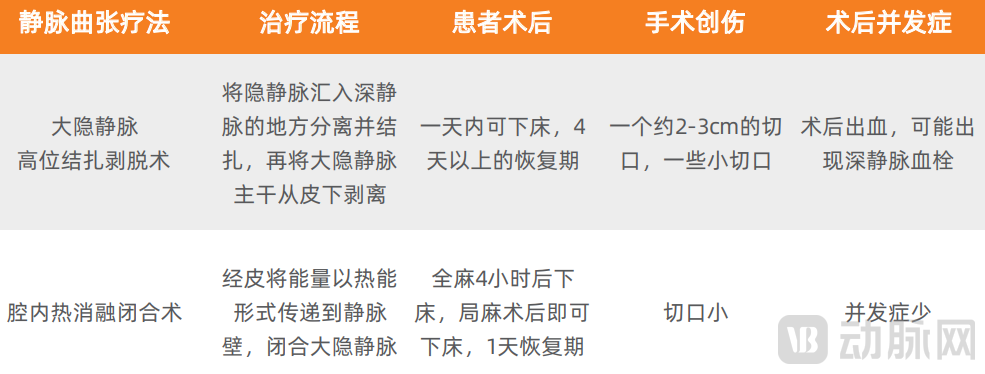
However, both great saphenous vein stripping and foam sclerotherapy have significant drawbacks and may cause various complications. In contrast, energy-based endovascular ablation therapy uses thermal energy from radiofrequency, microwave, or laser sources to destroy and occlude the vein, offeringAdvantages such as small surgical incisions, fewer complications, and a short recovery period. Based on this,Both the American Venous Forum and the National Institute for Health and Care Excellence recommend endovenous thermal ablation as the first-line treatment for varicose veins.
Among them,Due to its low temperature, minimal risk of skin burns, and mild postoperative pain, radiofrequency ablation accounted for over 70% of energy-based interventional ablation procedures in China in 2019.
(Source: VCBeat)
Meanwhile, varicose veins, a condition more prevalent in women, can lead to the so-called “bulging blue veins” after onset, significantly affecting aesthetic appearance. Radiofrequency ablation for varicose veins, as a minimally invasive procedure, is considered an aesthetic-enhancing treatment for many young and middle-aged female patients today, compared to traditional open surgery.
Notably, despite the numerous advantages of radiofrequency ablation for treating varicose veins, the limited availability of only a few imported products in China, coupled with their recent market entry and the nascent stage of market development, has resulted in most medical institutions in the country continuing to primarily rely on traditional high ligation and stripping of the great saphenous vein trunk as well as sclerotherapy injections.
On the other hand, as the advantages of radiofrequency ablation therapy have gradually become apparent, its adoption is rapidly expanding. Data show that in 2015, only 2,700 patients in China underwent radiofrequency ablation for varicose veins, whereas by 2019, this number had reached 26,300, representing a compound annual growth rate (CAGR) of 76.9%.
It is evident that with the market launch of China’s first radiofrequency ablation system, the rapid development of vascular surgery, and improved awareness of varicose veins among both physicians and patients, the number of patients undergoing radiofrequency ablation for varicose veins will surge rapidly, thereby expanding the related market.。
Previously, the domestic and international peripheral ablation product market was largely monopolized by multinational corporations such as Medtronic. Now, with the approval and market launch of acotec’s endovenous radiofrequency ablation system, Chinese innovative enterprises are set to enter the domestic market competition. However, given Medtronic’s substantial financial resources and century-long history, how can acotec break through in the market?
According to reports, acotec will leverage its product differentiation advantages to enter the market, while also promoting radiofrequency ablation for varicose veins by capitalizing on its localization strengths, thereby benefiting more patients with varicose veins in China.
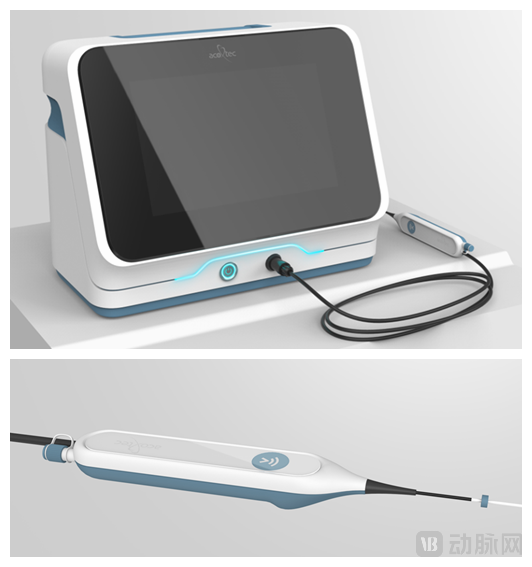
In terms of product differentiation advantages, acotec is one of the few companies in China that independently masters radiofrequency ablation generators. Its endovenous radiofrequency ablation system includes a radiofrequency ablation generator and a radiofrequency ablation catheter, and is equipped with intelligent algorithms such as adaptive PID temperature control, dual system monitoring, and heating curve monitoring.
In a nutshell: Faster heating, more precise and stable temperature control, and enhanced safety.
Meanwhile, acotec has already commercialized products such as peripheral drug-coated balloons and peripheral thrombectomy aspiration systems. Leveraging its mature commercialization experience and the strong brand image established by its high-quality products, acotec is well-positioned to rapidly facilitate hospital adoption of its offerings, break the monopoly held by imported products, and maintain a leading position among domestic manufacturers.
Why are there few companies in the varicose veins market? Why did acotec take the lead and launch the first domestically produced product?Endovenous Radiofrequency Ablation System?
VCBeat has learned that in China, the main companies with a footprint in venous radiofrequency ablation systems are acotec, JetMed, and Hengrui Medicine. The limited number of players in this space is attributable to two factors: first, the high R&D barriers in the field of venous interventions require cross-disciplinary R&D teams as well as strong innovation and execution capabilities; second, most companies have primarily focused on conditions that pose immediate threats to patient survival, such as deep vein thrombosis and pulmonary embolism, while neglecting varicose veins, a condition that severely impacts patients’ quality of life.
As a leading interventional medical device company, acotec was founded with the initial mission of addressing unmet clinical needs. From launching China’s first peripheral drug-coated balloon for the treatment of above-the-knee peripheral arterial disease, to developing the world’s first drug-coated balloon specifically for below-the-knee peripheral arterial disease, and further introducing China’s first peripheral thrombectomy system for deep vein thrombosis and pulmonary embolism, acotec has consistently upheld its commitment to “addressing unmet clinical needs.” The endovenous radiofrequency ablation system represents acotec’s response to varicose veins, a condition that has long lacked optimal therapeutic solutions in clinical practice.
It cannot be ignored that good intentions alone are insufficient for developing innovative medical devices; acotec’s innovation capabilities have provided a solid foundation for the launch of China’s first endovenous radiofrequency ablation system.
It is understood that the R&D team members of acotec come from all over the world, including the inventor of the world's first drug-coated balloon, former senior R&D head at Stryker, former R&D head at OrbusNeich, and former R&D head at GE Healthcare. Many of these R&D members have decades of rich experience in research and development.
It is worth noting that acotec’s R&D team demonstrates exceptional execution capabilities. For instance, the team completed project initiation and product design for the peripheral IVL system within just seven months, a pace of progress that is truly impressive.
In terms of R&D investment, acotec invested respectively from 2019 to 2021RMB 25.5 million, RMB 83.5 million, and RMB 140 million were allocated for product research and development.
Supported by a seasoned R&D team, strong execution capabilities, and substantial R&D investment,It is only fitting that acotec has taken the lead in securing approval for China’s first domestically produced endovenous radiofrequency ablation system.
However,Just as it did six years ago, when it launched China’s first domestically produced peripheral drug-coated balloon and faced a lower-extremity arterial market with extremely low penetration that urgently required market education, acotec now confronts a varicose vein market that is similarly characterized by very low penetration and remains largely untapped.
Today, after years of market cultivation and education, acotec’s peripheral drug-coated balloons have captured nearly the entire market share. Perhaps the endovenous radiofrequency ablation system will follow a similar trajectory, eventually dominating the vast majority of the varicose vein treatment market through sustained and persistent market development efforts.