

Revenue Secrets of China's Hyaluronic Acid Triad: How Leading Aesthetic Medicine Companies Are Pursuing Their Second Growth Curve

IMEIK
Developer of Biomedical Soft Tissue Repair Materials

Haohai Biological Technology
Medical Biomaterials R&D and Manufacturer
Bloomage Biotech
Developer of bioactive substance products, producer of hyaluronic acid raw materials
“I trust hyaluronic acid more than marriage, because it works every time.” This iconic line, spoken by the protagonist of the American TV series *Sex and the City*, has become a creed for many beauty enthusiasts.
As the "beauty economy" thrives, China's medical aesthetics market is experiencing explosive growth. Within this high-potential sector, the upstream segment—focused on the production of raw materials and consumables—commands exceptionally high net profit margins due to its oligopolistic market structure.
We reviewed the annual reports of the “big three” blockbuster hyaluronic acid players—Bloomage Biotech, Imeik, and Haohai Biological Technology—to examine their profitability. What narratives about the medical aesthetics industry do these reports reveal? And after reaping high profits, how are these industry leaders exploring their second growth curves?
First, let's take a look at the performance reports of the big three.
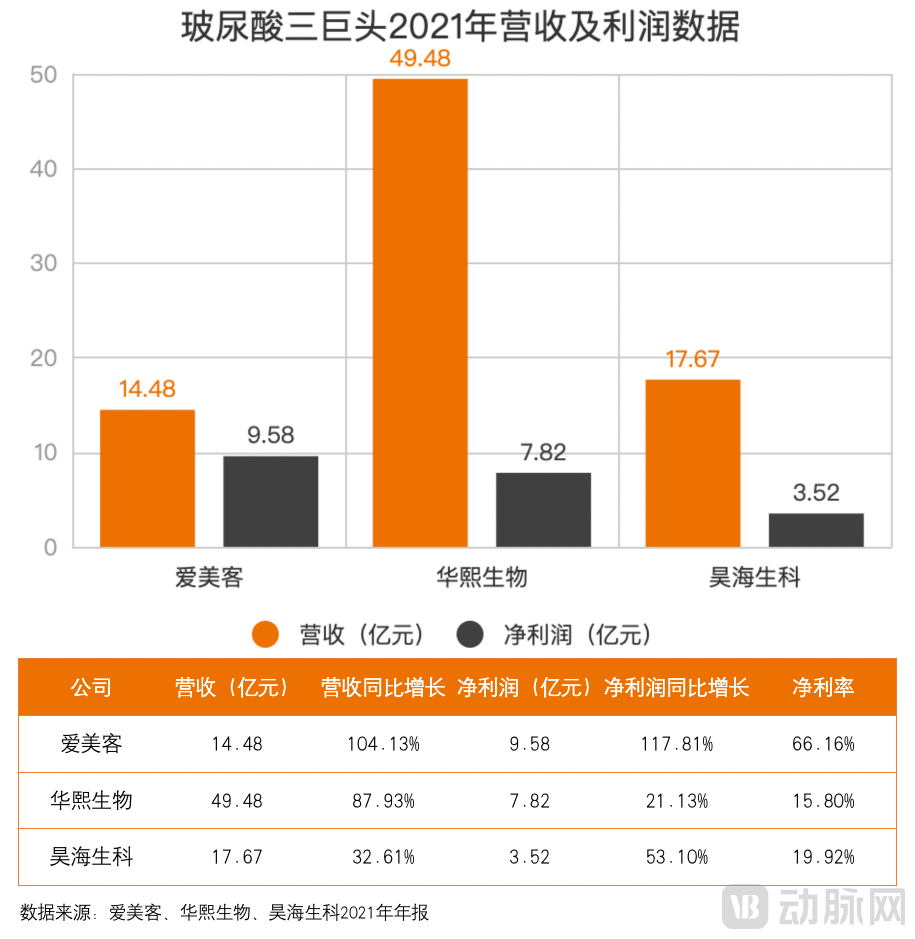
The revenue, profit, and net profit margin figures for the “Big Three” hyaluronic acid companies are encouraging, representing an impressive performance in the A-share market.
A closer look at each company’s data reveals the distinct development strategies of the three industry giants.
Bloomage Biotech achieved a revenue of RMB 4.95 billion in 2021, effectively stepping into the circle of companies with annual revenues approaching RMB 5 billion, representing an 88% year-on-year increase from RMB 2.63 billion in the previous year. Net profit reached RMB 782 million, a year-on-year increase of 21%. Its business segments are divided into functional skincare products (67%), raw material products (18%), medical terminals (114%), and other businesses (0.48%). Among these, functional skincare products accounted for as high as 67% of the revenue, making the company appear more like a consumer goods enterprise. The net profit decreased year-on-year; the reason for increased revenue without corresponding profit growth lies in the high marketing expenses associated with functional skincare products.
Another competitor, Imeik, reported even more impressive figures, with both revenue and profit doubling from the previous year. Despite generating only RMB 1.448 billion in revenue—less than one-third of Bloomage Biotech’s—Imeik achieved a net profit of RMB 957 million, surpassing Bloomage Biotech for the first time. Behind these strong results lies the fact that nearly all of Imeik’s revenue (98.86%) comes from hyaluronic acid injection products. Revenue from solution-based injectables reached RMB 1.046 billion, representing a year-on-year increase of 133%. Although specific product-level revenue was not disclosed, the annual report highlighted Hi-Ti as the primary driver of revenue growth.
Haohai Biological Technology reported revenue of RMB 1.767 billion, a year-on-year increase of 53%, with a net profit of RMB 352 million, up 32% year on year, resulting in a net profit margin of 19.92%. As a biopharmaceutical company led by ophthalmic drugs, Haohai Biological Technology has established a comprehensive strategic layout through mergers and acquisitions across four major sectors: ophthalmology, medical aesthetics, orthopedics, and anti-adhesion and hemostasis. In addition to further consolidating its leading position in ophthalmology, the company demonstrated remarkable performance in M&A and product deployment within its medical aesthetics business last year. Revenue from the medical aesthetics segment surged by 91%, significantly outpacing other business units.
As can be seen, the medical aesthetics sector experienced a recovery in 2021 following the pandemic in 2020. However, the underlying anxiety reflected in the financial reports is how to sustain the myth of high net profit margins in the medical aesthetics industry. What measures have the three companies taken? Based on their annual reports, we have summarized the following three pathways:
1. Embrace New Technologies to Boost Hyaluronic Acid Yield
Hyaluronic acid, scientifically known as hyaluronic acid (sodium), is a substance naturally present in the human body and animals.
Today, it is widely recognized as a cosmetic product. It is worth noting that the discovery of this substance dates back only about a century. In 1934, Karl Meyer, a professor of ophthalmology at Columbia University, isolated this polysaccharide from the vitreous humor of bovine eyes during an experiment and named it hyaluronic acid. Meyer discovered that this substance is distributed in the eyes, synovial fluid of the knees, and skin of humans and animals. Its ability to retain moisture and provide lubrication enables it to lubricate joints, regulate the permeability of blood vessel walls, modulate the diffusion and transport of proteins, water, and electrolytes, and promote wound healing.
In the subsequent decades, the medical-grade (ophthalmology, orthopedics), cosmetic-grade, and even edible applications of hyaluronic acid have been made possible by its industrialization. Having evolved from inefficient extraction from primitive animal tissues (bovine eyes and rooster combs) to microbial fermentation and finally to chemical synthesis, the mass production of hyaluronic acid has continuously driven down its price, enabling its application across broader fields and populations.
By 2021, according to a report by the research institution Frost & Sullivan, the global sales volume of hyaluronic acid raw materials had reached 700 metric tons. In that year, Bloomage Biotech’s sales volume of hyaluronic acid raw materials was 286.1 metric tons, indicating that its market share in global production exceeded 40%.
Cost reduction and efficiency enhancement are core objectives pursued in the development of industries and enterprises, and this holds true for Bloomage Biotech, already a global leader in the hyaluronic acid industry—How to Further Increase Yield: The Key to Sustaining the High-Profit Myth of Hyaluronic Acid。
Bloomage Biotech’s answer is “synthetic biology” technology., and emphasized in the annual report,Laboratory-grade hyaluronic acid yields have increased significantly, with synthetic biology providing the underlying technological support.。
Synthetic biology, defined as the integration of molecular biology and systems biology, is an interdisciplinary field that combines emerging technologies such as bioengineering, big data, and gene editing to enhance the production efficiency of bio-based substances and materials. Guo Xueping, Deputy General Manager and Chief Scientist of Bloomage Biotech, has publicly stated that the company’s research focuses on synthetic biology in a narrow sense. This approach employs genetic modification and gene editing to alter the original genetic composition of microorganisms, establishing novel metabolic synthesis pathways to produce desired substances, and ultimately utilizes fermentation techniques to achieve the synthesis, preparation, and production of target products.
How Much Can Synthetic Biology Boost Yield? Currently, Bloomage Biotech’s hyaluronic acid fermentation yield stands at 12–14 g/L, meaning that 12–14 grams of hyaluronic acid can be extracted per liter of broth, a level already leading globally. According to Zhao Yan, Chairwoman of Bloomage Biotech, the company began researching synthetic biology-based methods for hyaluronic acid production in 2018, with yields expected to reach 73 grams per liter of broth. Zhao Yan noted that alongside a substantial increase in efficiency, costs could be reduced by 400-fold.
As a recently popular investment track, the combination of synthetic biology and medical aesthetics is not an isolated case. Last year, the synthetic biology company “Weiming Shiguang” secured nearly 50 million yuan in financing, targeting upstream raw materials for medical aesthetics and skincare in the consumer health sector.
“Cutting-edge international biotechnology” and “one of the top ten technologies that will change the world in the future”—this is how Bloomage Biotech described synthetic biology in its annual report, regarding the strategic deployment of this technology as a key operational achievement for fiscal year 2021. “Synthetic biology,” this high-tech field, also became a frequently highlighted term in the annual report, mentioned as many as 62 times, far exceeding the 8 mentions in the 2020 annual report and the single mention in the 2019 annual report.
Over the past year, the “Shandong Provincial Key Laboratory of Synthetic Biology for Bioactive Substances” was officially recognized by the Shandong Provincial Department of Science and Technology in December. Meanwhile, the “International Innovation Industrial Base for Synthetic Biology Technology” has been established in Daxing, Beijing, and is poised to commence operations. The financial report indicates that the company has completed all essential components required for synthetic biology—namely platform infrastructure, talent acquisition, technological development, and translation capabilities—ranging from the establishment of the innovation base and R&D team, core platform construction, and industry-academia-research collaborative R&D, to the operational launch of the world’s largest pilot-scale translation platform.
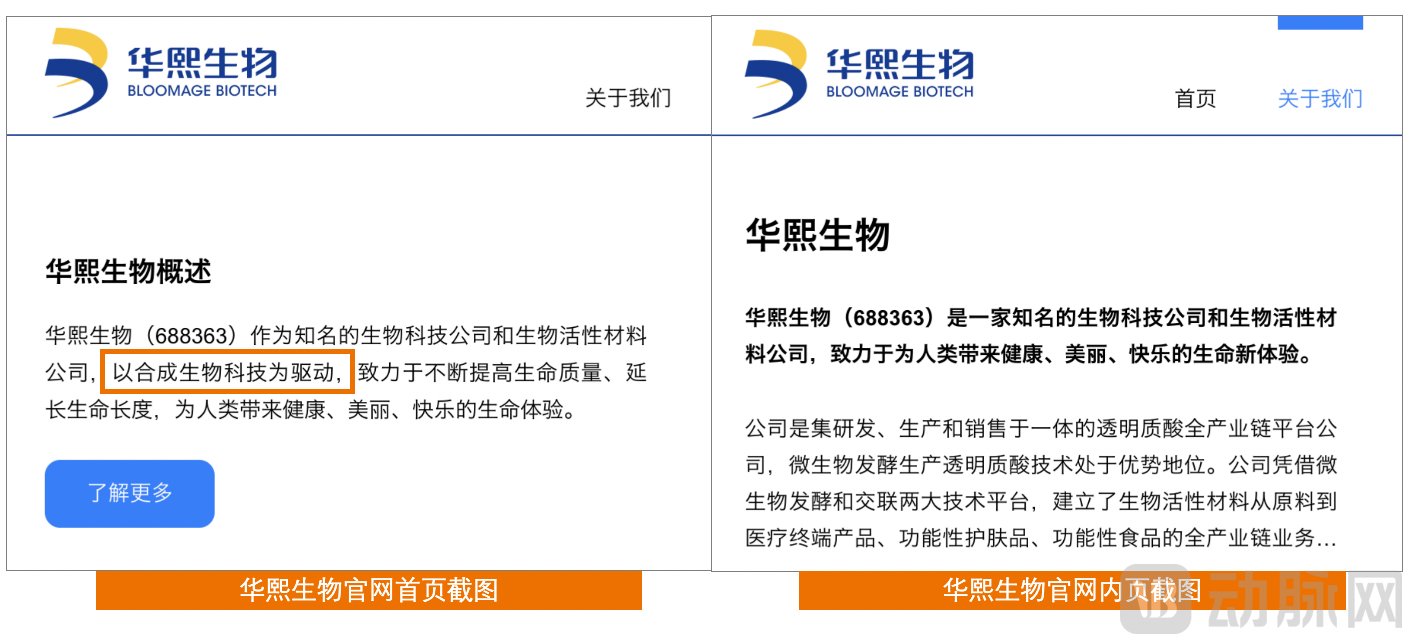
When we visit the official website of Bloomage Biotech, we can also sense its determination to lay out synthetic biology—the homepage introduction has quietly added the phrase “driven by synthetic biology technology,” even though the introductory copy on the inner pages has not yet been updated accordingly.
Zhao Yan emphasized during the financial report briefing, “The most important task for 2022 is to further solidify the foundation of our synthetic biology R&D platform, thereby enabling the development of a greater variety of bioactive substances through this platform.”
It can be said that if synthetic biology truly enables improvements in yield and manufacturing processes in the future, it will indeed represent a historic leap in production capacity driven by technological advancement.
2. Full Industry Chain Layout, Enriching the Aesthetic Medicine Business Ecosystem
If boosting production efficiency is a growth strategy that reduces costs and enables scaling, then identifying more application scenarios for a raw material, diversifying business models, and coordinating the upstream and downstream industry chain represent a proactive approach to market expansion.
Haohai Biological Technology’s solution is straightforward: acquire, acquire, acquire.
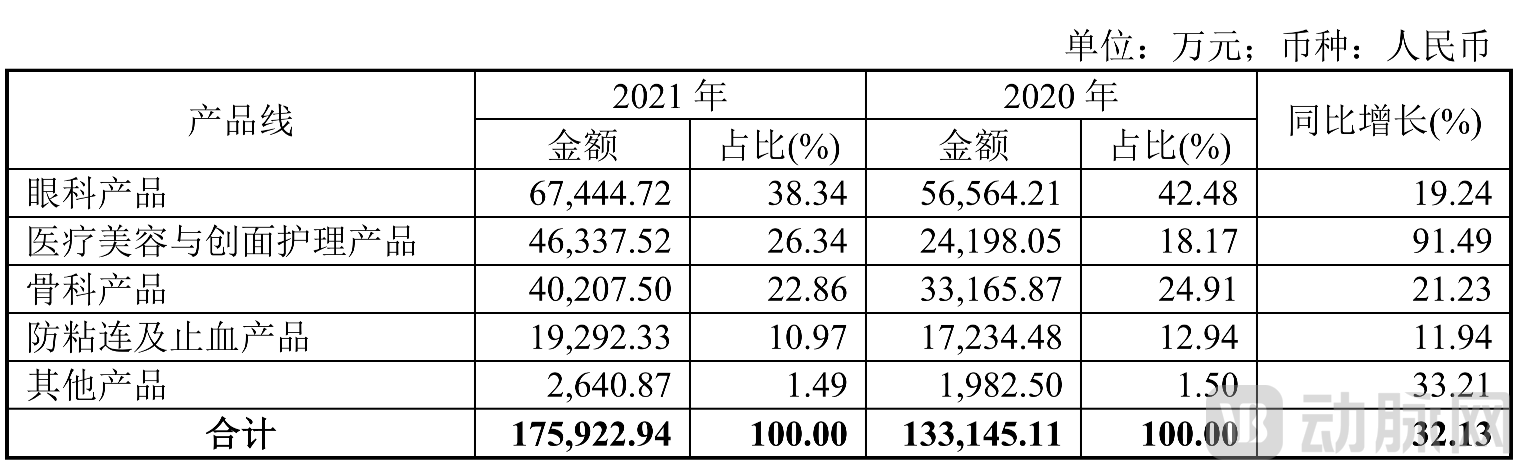
A review of Haohai Biological Technology’s business expansion since its establishment in 2007 can be summarized as a continuous spree of acquisitions. Through rapid mergers and acquisitions, the company has completed an industry consolidation centered on medical-grade sodium hyaluronate/hyaluronic acid and medical chitosan as core biomaterials. The latest annual report shows that the company has formed four major business segments: ophthalmology, medical aesthetics and wound care, orthopedics, and anti-adhesion and hemostasis. In 2021, the revenue contributions from these four segments were 38.34%, 26.34%, 33.86%, and 10.97%, respectively.
Source: Haohai Biological Technology 2021 Annual Report
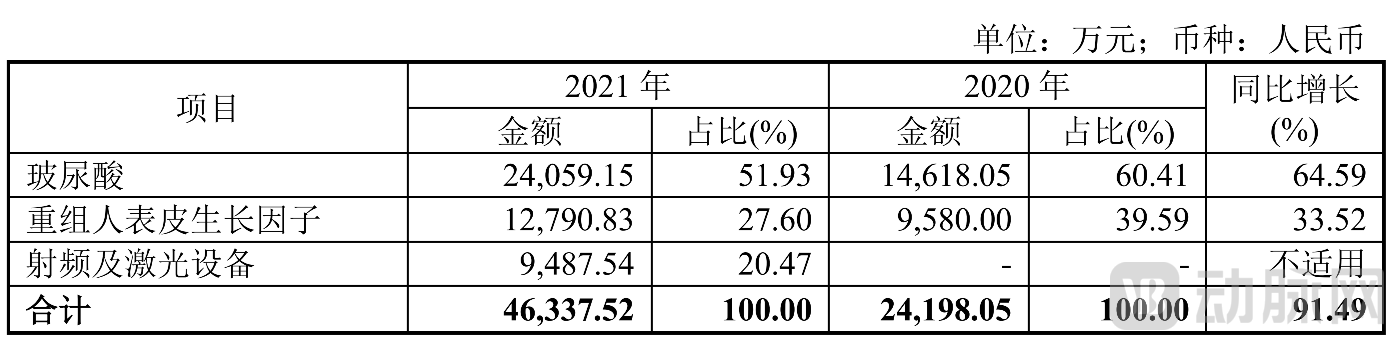
In terms of revenue growth, medical aesthetics was undoubtedly the most outstanding among Haohai Biological Technology’s four business segments, generating RMB 460 million in revenue, a year-on-year increase of 91%. Specifically, hyaluronic acid products achieved sales revenue of RMB 240 million, representing a year-on-year increase of 64.59%. Haohai Biological Technology attributed this performance to two main factors: the gradual recovery of the industry from the pandemic, and the growing clinical and consumer recognition of its third-generation hyaluronic acid product, “Hai Mei,” which was launched in the second half of 2020, leading to sustained sales growth.
Source: Haohai Biological Technology 2021 Annual Report
Notably, the revenue growth in the radiofrequency (RF) and laser equipment segment was driven by the consolidation of financial statements following the acquisition of Ouhua Meike. In February 2021, Haohai Biological Technology acquired Ouhua Meike, thereby incorporating the latter’s RF-based medical aesthetic devices, home-use instruments, and innovative dermal fillers into Haohai’s medical aesthetics portfolio. Ouhua Meike holds a controlling stake in EndyMed, an Israeli professional manufacturer of RF devices, whose high-frequency skin treatment systems have received certification from the National Medical Products Administration (NMPA). Additionally, Ouhua Meike owns a 52% equity interest in the French company Bioxis, which is currently advancing the regulatory approval process for Cytosial, a hyaluronic acid product independently developed by Bioxis, for market launch in China.
With the launch of more hyaluronic acid products and the market expansion of radiofrequency and laser devices, Haohai Biological Technology’s medical aesthetics business will be further upgraded and diversified.
Bloomage Biotech’s growth strategy is characterized by full industry chain coverage under the “hyaluronic acid for everything” paradigm.
“It is a misconception to view Bloomage Biotech merely as a cosmetics company, a hyaluronic acid raw material supplier, or a medical aesthetics company. Such perspectives mistake a single business segment for the company’s entirety. Bloomage Biotech is a biotechnology platform company that extends its bioactive materials downstream to deliver healthy, beautiful, and joyful life experiences.”
This is a statement made by Zhao Yan, Chairman and General Manager of Bloomage Biotech, at the company’s 2021 performance media briefing. Behind this public relations narrative lies Bloomage Biotech’s ambition: initially focusing on capacity ramp-up and industrialization as a raw material supplier specializing in hyaluronic acid, the company gradually expanded into B2B businesses for medical end-products starting in 2012, and since 2016 has further extended into the cosmetics sector to develop its B2C operations. While aiming to cover the entire hyaluronic acid industry chain, Bloomage Biotech also seeks to emphasize its biotechnology credentials.
This is indeed the case. With the dawn of the “Year One” for the application of sodium hyaluronate in general food products, Bloomage Biotech has officially upgraded its business structure to a “four-wheel drive” model comprising raw materials, medical terminal products, functional skincare, and functional foods. Since then, it can be said that Bloomage has entered an era of full industry chain integration where “everything can be infused with hyaluronic acid.”
Data Source: Bloomage Biotech, Wind
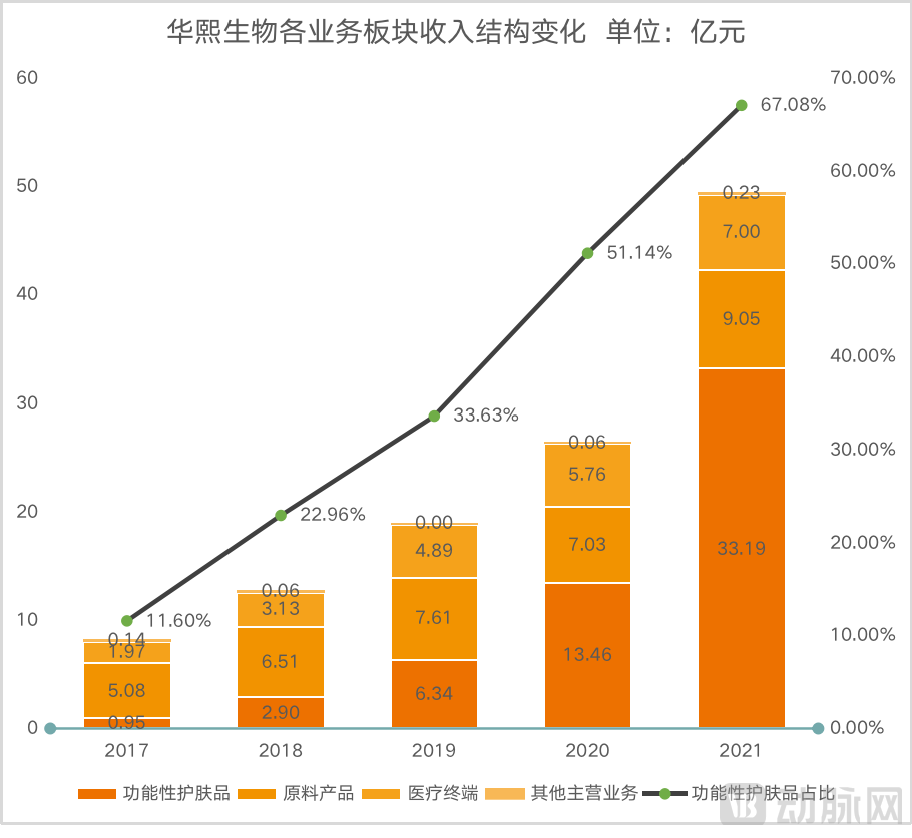
As the world’s largest supplier of hyaluronic acid raw materials, Bloomage Biotech’s rationale for seeking new growth drivers beyond raw material supply was already outlined in its earlier prospectus: from 2017 to 2019, the average selling price of hyaluronic acid raw materials declined from RMB 122.62 per gram to RMB 111.69 per gram, representing an average annual decrease of approximately 5%. In reality, the contribution of raw materials to Bloomage Biotech’s revenue has been continuously diminishing; revenue from this segment grew only by RMB 400 million over five years, rising from RMB 508 million in 2017 to RMB 905 million in 2021.
Following the stagnation of raw material revenue, Bloomage Biotech has successively launched multiple functional skincare brands since 2014: In 2014, Runbaiyan introduced the “Honeycomb Hyaluronic Acid Hydrating Disposable Essence,” marking Bloomage’s first functional skincare product; in 2018 and 2019, the company sequentially launched brands such as BioMESO, DermaRun, QuadHA, Yibao, and MedRepair, to cater to consumers across different age groups and with diverse needs.
The contribution of functional skincare products to revenue has been continuously increasing, reaching 67% by 2021, making the company appear more like a consumer goods enterprise. In 2021, the full-year revenue amounted to RMB 4.948 billion, representing a year-on-year increase of 87.93%. The primary growth driver was functional skincare products, which generated RMB 3.319 billion in revenue that year, an increase of RMB 1.973 billion from RMB 1.346 billion in the previous year, corresponding to a growth rate of 146.57%.
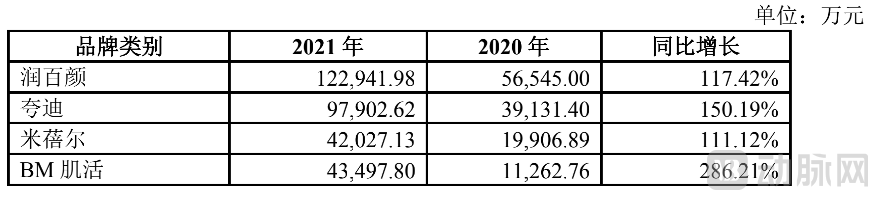
The annual report attributes this rapid growth to the fact that all four brands have moved past their initial start-up phase and entered a stage of scaled operations, with each brand achieving annual revenue exceeding RMB 1 billion for the first time.
Source: Bloomage Biotech 2021 Annual Report
The functional food sector is still in its nascent stages. On January 7, 2021, the National Health Commission of China officially approved food-grade sodium hyaluronate as a new food raw material for use in ordinary foods. In response, Bloomage Biotech launched China’s first hyaluronic acid food brand, “Hei Ling”; a hyaluronic acid water brand, “Shui Ji Quan”; and a hyaluronic acid fruit beverage brand, “Xiu Xiang Jiao Luo.” In 2021, the company introduced a total of 23 new products, spanning categories such as bottled water, gummies, compressed candies, GABA beverages, chocolate bars, and formulated alcoholic drinks. The annual report revealed that Bloomage Biotech’s move was well-prepared, as it had already initiated the application process for the approval of hyaluronic acid as a food additive in China as early as 2004.
According to Bloomage Biotech's annual report, the focus of its functional food business in 2022 was on expanding the application scenarios of existing mainstream products, concentrating on the development and launch of new products, and further refining its product portfolio.
3. Differentiated Product Matrix
Whether the focus is on continuing to reduce costs and improve efficiency or extending the industry chain upstream and downstream, after optimizing a single product to its fullest potential, the next logical step is to identify the next replicable product following the same path.
Multiple similar single products can form a product matrix to cover a larger market.
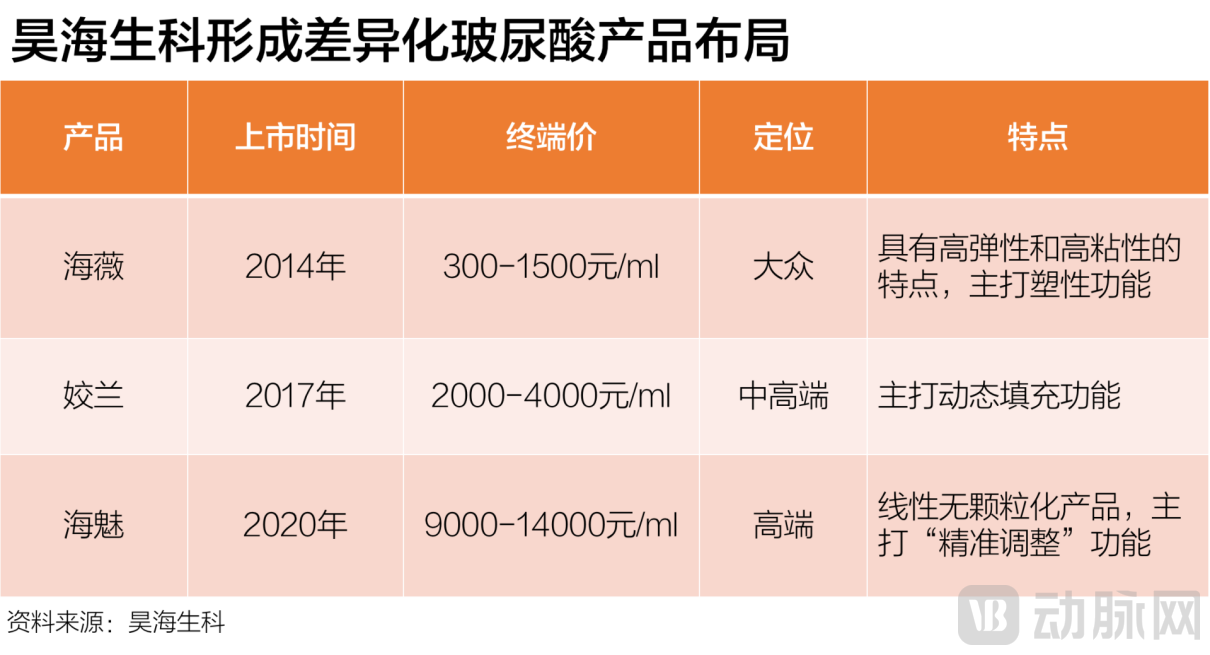
Last year, Haohai Biological Technology reduced the sales price of its first-generation product, “Haiwei,” described by the company as creating a “national hyaluronic acid” brand. The actual purpose was to clarify the product’s positioning in order to capture a larger market share and to differentiate it from the company’s newly launched products.
“Hai Mei,” a third-generation hyaluronic acid product launched in August 2020, is a linear, non-particulate hyaluronic acid formulation primarily marketed for “precise contouring.” Priced at RMB 9,000–14,000 per milliliter, it is positioned as a premium-market offering. Following price adjustments to its first-generation product, Haohai Biological Technology now has three marketed products targeting the mass, mid-to-high-end, and high-end segments, respectively, thereby establishing a differentiated product portfolio.
In the competitive landscape of hyaluronic acid products, a significant trend is that differentiated injection sites will be a key factor in gaining a competitive edge. Imeik’s Hearty, a hyaluronic acid product designed for treating neck lines, has benefited from this trend.
HiTi, approved in December 2016, is currently the only Class III medical device product approved by the NMPA for the improvement of neck wrinkles, filling a gap in the field of neck wrinkle repair.
HiTi generated revenues of RMB 34.12 million, RMB 74.97 million, and RMB 240 million for Imeik in 2017, 2018, and 2019, respectively. Although Imeik did not disclose specific sales figures for HiTi in its annual reports for 2020 and 2021, the solution-based injectable products to which HiTi belongs contributed RMB 1.046 billion in operating revenue in 2021, representing a year-on-year increase of 133.84%. The company attributed this growth to the rising consumer demand for anti-aging and skin rejuvenation in recent years, which drove even stronger growth in its core solution-based injectable products, including HiTi.
Since the first Swedish-imported hyaluronic acid product was approved in China in 2008, more than 50 hyaluronic acid filler products from 10 domestic manufacturers and 8 foreign manufacturers had received certification from the National Medical Products Administration (NMPA) as of April 2021. The product portfolios of these companies will continue to expand as more products gain approval.
Who Will Be the Next Hyaluronic Acid?
Judging from the annual reports of hyaluronic acid giants, their answer is—botulinum toxin.
In March last year, Haohai Biological Technology invested $31 million to subscribe for Series A preferred shares newly issued by the U.S. biopharmaceutical company Eirion, securing exclusive rights in Greater China for the research and development, sales, and commercialization of Eirion’s innovative topical Type A botulinum toxin and classic injectable botulinum toxin products, thereby entering the fields of botulinum toxin and small-molecule drugs.
According to Imeik's annual report, the company's R&D expenditure reached RMB 102 million in 2021, with investments directed toward projects such as second-generation implantable threads and injectable botulinum toxin type A. Notably, the injectable botulinum toxin type A indicated for moderate to severe glabellar lines is in Phase III clinical trials. This botulinum toxin product was co-developed by Imeik and South Korea’s Huons BioPharma Co., Ltd.
VCBeat has previously analyzed this in its annual review of the medical aesthetics industry: as one of the sectors with the highest upstream barriers, botulinum toxin officially entered a “Big Four” competitive landscape in 2021. The National Medical Products Administration (NMPA) had approved four botulinum toxin products: Allergan’s Botox, Ipsen’s Dysport, Hugel Inc.’s Letybo, and Lanzhou Institute of Biological Products’ Hengli, three of which are imported products.
Investors have also analyzed to VCBeat that, due to the special status of botulinum toxin as a controlled narcotic and psychotropic substance, domestic companies generally opt for agency models to accelerate market entry. This has turned competition in the botulinum toxin sector into a race against time. “The trends observed last year will continue in 2022, and botulinum toxin brands with precise positioning, unique advantages, or outstanding marketing capabilities are poised to capture larger market shares.”
Hyaluronic Acid Giants Are Entering the Botulinum Toxin Market; The Battle for Botulinum Toxin Has Begun.