

Baiyang Medicine Launches Ecological Strategic Upgrade Focused on Scientific Research Commercialization

Baheal Medical
Health Brand Commercialization Platform
The establishment of innovation parks has gained significant momentum.
From the long-established Shanghai Zhangjiang Hi-Tech Park and Suzhou BioBAY, which focuses on the biopharmaceutical industry, to the International Life Science Innovation Park recently co-created by AstraZeneca and local governments, these initiatives not only explore innovative park models but also demonstrate the strong support of local governments for technological innovation in medicine and health.
Recently, Baheal Medical Group and the People's Government of Mentougou District, Beijing, signed a strategic cooperation framework agreement, and the “Baheal Medical Scientific and Technological Achievement Transformation Base” was officially unveiled. Both parties stated that they would jointly promote the implementation of scientific and technological achievement transformation, aiming to build a new demonstration zone for pharmaceutical and health research innovation with global influence.
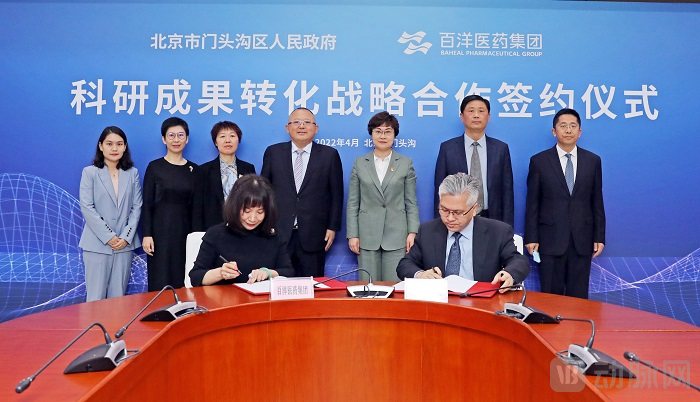
For Baheal Medical, the significance extends far beyond merely establishing a base for the commercialization of scientific achievements in line with the development trends of innovation parks. Its landmark significance lies in the fact that Baheal Medical has initiated an ecological strategic upgrade, taking a critical step forward in its evolution from a health brand commercialization platform to an ecosystem-driven Big Pharma.
Highly Collaborative Research Resources: The “Base” Established in Mentougou District
Let us examine the considerations multinational pharmaceutical companies take into account when collaborating with local governments to build innovative life science parks.
In recent years, AstraZeneca has established International Life Science Innovation Parks in partnership with the Wuxi Municipal Government and the Chengdu Municipal Government. These location choices undoubtedly reflect strategic considerations of regional advantages. As a core city in the Yangtze River Delta region, Wuxi serves as a gateway to overseas markets, attracting innovative enterprises from around the world. Meanwhile, the rise of the western China’s greater health ecosystem, exemplified by Chengdu, has made the city highly attractive to the pharmaceutical industry.
It is not difficult to see that factors such as locational advantages and local policy support will be among the key considerations for enterprises collaborating with the government to establish innovative industrial parks. The decision to partner with the Mentougou District Government of Beijing may stem precisely from Baheal Medical’s recognition of the district’s locational development advantages:
On one hand, the development prospects of the pharmaceutical and health industry in Mentougou District, Beijing, are promising. In recent years, Mentougou District has leveraged its strategic positioning as a key functional zone, including the Beijing Jingxi Industrial Transformation and Upgrading Demonstration Zone and the New Shougang High-End Industry Comprehensive Service Zone, to focus on cultivating the pharmaceutical and health industry. Following the establishment of their strategic partnership, the Mentougou District Government will provide support and create favorable conditions for innovative enterprises in areas such as project implementation, talent acquisition, and applications for science and technology projects.
On the other hand, there are significant synergistic advantages in pharmaceutical research and development resources. The Baheal Medical Research Achievement Transformation Base is located here, allowing for effective utilization of abundant pharmaceutical R&D resources. For instance, Baizhi Xin, the first project launched at the “Base,” is a company that collaborates with the National Center for Cardiovascular Diseases to conduct research based on “human primary cardiomyocytes” and pursue subsequent industrialization and commercialization. Baizhi Xin is situated in close proximity to the National Center for Cardiovascular Diseases and the Xishan Campus of Fuwai Hospital, facilitating convenient communication and collaboration.
Furthermore, prestigious universities in Beijing’s Haidian District, such as Tsinghua University and Peking University, are expected to further contribute high-quality, early-stage translatable scientific research projects and research talent.
In reality, building an innovation park is one thing; attracting innovative enterprises to settle in is another. When selecting a location, innovation projects evaluate not only factors such as the policy environment and industrial support infrastructure but also whether their ultimate goal—commercial success—can be achieved. So, what is the “appeal” of Baheal Medical in building a “base for the translation of scientific and technological achievements”?
Drive Ecosystem-Oriented Innovation, with a Strategic Focus on Innovative Drugs and Medical Devices, as well as Translational Platforms
Scientists holding scientific research achievements often face multiple obstacles in translating these results into practical applications. For instance, many scientists lack experience in enterprise incubation and commercial operations. Achieving the transformation of scientific research outcomes undoubtedly requires the allocation of various resources. Furthermore, for capital investors, facing the endless stream of so-called "innovations" in the medical field, how to effectively screen and nurture those with genuine clinical application value—true innovations—is also a significant challenge.
Baheal Medical, leveraging its core capabilities in fostering and incubating technological innovation, has developed a unique methodology:
For project screening, the most critical factor is professional evaluation capability. By leveraging such expertise—assessing druggability feasibility, target competitiveness, and technological leadership—to evaluate a product’s technical barriers, one can select products that truly optimize healthcare scenarios and avoid the pitfall of low-level, redundant development. Baheal Medical’s prior experience and resources in the successful commercial operation of third-party brands enable it to conduct professional project evaluations.
During the project incubation phase, there is a long road ahead for scientific achievements to transition from the laboratory to clinical application scenarios; only with comprehensive allocation of essential resources can they grow and thrive. With years of industry experience, Baheal Medical possesses highly advantageous innovation incubation capabilities, providing innovative enterprises with pharmaceutical support, clinical and industry resources, as well as management expertise.
For enterprises, the ultimate goal is to enter the market and achieve commercialization, thereby realizing their business value. Baheal Medical can help products rapidly enter the market through its mature commercialization system, while also enabling innovative enterprises to realize value at the levels of capitalization and industrialization.
Baheal Medical has achieved partial success, building on its early development foundation and ecosystem-driven innovation capabilities. Currently, Baheal Medical is focusing on incubating innovations across three high-value sectors: innovative drugs, high-end medical devices, and technology transfer platforms.
In the field of innovative drugs, Baheal Medical’s current investment portfolio includes companies such as Laiborichen (innovative drugs for bone and joint regeneration) and Enruini (innovative anti-tumor drugs). In the area of high-end medical devices, its investments cover Tongxin Medical (artificial heart), Baheal Intelligent Technology (medical AI device services), and Huake Xianfeng (full-circle spherical linear accelerator). Regarding technology transfer platforms, the portfolio includes Putaike (protein degradation technology) and Baheal Zhixin, the first project signed and implemented under this initiative.
Perhaps using Baheal Smart Heart as an example can better illustrate Baheal Medical’s acumen in project discovery and the value of its innovation incubation—
Cardiac toxicity safety assessment is one of the most critical steps in drug development. Although some drugs may pass screening using pluripotent stem cells and animal cardiomyocytes, the results can still differ significantly from those obtained with human primary cardiomyocytes. However, human cardiomyocytes are extremely scarce and cannot be cultured or proliferated like stem cells, creating a substantial unmet need in the field of cardiac toxicity evaluation for innovative drug development. Leveraging its collaboration with the National Center for Cardiovascular Diseases and Fuwai Hospital, Baheal Zhixin has established an innovative technology translation platform based on human primary cardiomyocytes. In the future, it will facilitate the translation and commercialization of scientific achievements in areas such as cardiac toxicity safety assessment for drugs, early warning and diagnostic reagents for heart diseases, and innovative pharmaceuticals.
Platform Strategy Upgrade: Advancing Toward an Ecosystem-Driven Big Pharma
Why does the establishment of Baheal Medical’s research achievement transformation base, particularly the launch of the Baheal Zhixin project, mark its transition and upgrade from a third-party health brand commercialization platform to an ecosystem-driven Big Pharma? The answer may lie in Baheal Medical’s development history.
Based on its historical development, Baheal Medical has long positioned itself as a commercialization platform for health brands.
From its establishment in 2005 through the first decade thereafter, Baheal Medical focused on brand building. Amidst transformations in the healthcare industry, Baheal Medical has transitioned from a brand-oriented enterprise to a platform-based one, establishing a health brand commercialization platform centered on three core capabilities: category insights and brand operations, full-data platform customer management, and mechanisms supporting long-term operations.
Leveraging its commercialization capabilities, Baheal Medical has built a “Brand Expressway” to provide upstream industrial enterprises with omnichannel solutions, enhance brand operational efficiency, and promote standardized development of the industry. Over the course of its development, Baheal Medical has incubated multiple category-leading brands, including DioCal (the leading imported calcium brand), Beite (the leading brand for indigestion), and Fuzheng Huayu (the leading brand for anti-hepatic fibrosis). It has established stable cooperative relationships with hundreds of upstream enterprises. Currently, it has formed a three-tier product matrix comprising OTC and general health products, OTX and other prescription drugs, and medications for severe conditions such as oncology.
Leveraging its professional commercialization capabilities, Baheal Medical is advancing toward a strategy of “ecosystem-driven innovation.” Guided by the optimization of healthcare scenarios and centered on scientists, the company focuses on early-stage research outcomes from national-level research institutes, continuously identifying and incubating scientific achievements that are original, capable of genuinely optimizing healthcare delivery, and possess strong market prospects. Furthermore, by leveraging its status as a listed company and its strengths in commercialization and resource allocation, Baheal Medical helps innovative enterprises avoid common pitfalls, enhance research efficiency and focus, and realize their commercial value.
# Final Thoughts
From an overall perspective, China’s pharmaceutical research sector has long been plagued by persistent pain points: a scarcity of genuine innovation, difficulties in translating scientific achievements into practical applications, and a lack of outcomes that can be effectively implemented in clinical practice. Overcoming these challenges will determine whether China’s pharmaceutical industry can truly achieve a breakthrough.
Currently, Baheal Medical’s strategic approach is as follows: leveraging its commercialization platform as a foundation and guided by the optimization of healthcare scenarios, it strengthens collaboration with national-level teams to accelerate the translation of scientific research outcomes. The company cultivates pharmaceutical technology products and solutions with independent Chinese intellectual property rights, and builds industrial clusters through diverse forms of inter-enterprise cooperation. This aims to construct an ecosystem-driven “Big Pharma” characterized by “individual specialization and overall synergy,” a model that will undoubtedly offer valuable insights for the future development of the pharmaceutical industry.