

Rapid Growth of Public Internet Hospitals: Are They Undermining Third-Party Online Healthcare Platforms?

Weimai
Digital Health Service Platform Provider
According to the 49th Statistical Report on China’s Internet Development, released in 2022, the number of online medical service users in China reached 298 million by the end of 2021, accounting for 28.9% of the total internet user base; since the report first published data on online medical service users in 2020, this figure has hit a new high.
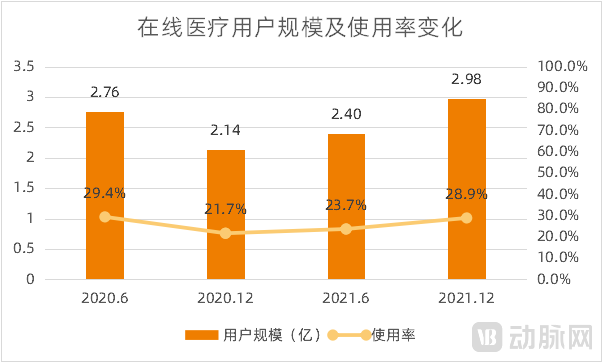
Changes in the Number of Online Medical Users Over the Past Two Years, Data Source: Statistical Report on China’s Internet Development
The growth in user scale has witnessed the rapid development of internet healthcare and has also given rise to two major service forces.
Currently, the two main pillars of internet healthcare services are: enterprise-led platforms that attract physicians from various hospitals to provide services to users (hereinafter referred to as “third-party platforms”); and public hospital-led platforms, primarily utilizing their own medical staff to offer consultation, follow-up visits, and related services to their patients (hereinafter referred to as “public internet hospitals”), although enterprises may still participate in the technical or operational aspects of some public internet hospitals.
The pandemic has accelerated the development of internet healthcare, further promoting the construction and upgrading of public internet hospitals. According to statistics from VCBeat’s Eggshell Research Institute, public internet hospitals currently account for approximately 70% of all internet hospitals in China, holding an absolute advantage in terms of quantity; the operations of public internet hospitals, represented by large Grade A tertiary hospitals, are also beginning to thrive.
Public hospitals control core elements of medical services, such as physicians, equipment, and facilities, and possess robust offline service capabilities, thereby serving as a critical foundation for online services. As public internet hospitals grow, will the survival space for third-party platforms be squeezed? Is the relationship between the two necessarily a “zero-sum game”? Where lie the pathways for collaboration between these parties? These are questions worthy of consideration.
Public Internet Hospitals Have Been in a Boom Since 2020 and Continue to Grow
Prior to 2018, internet hospitals were primarily driven by corporate exploration, with limited participation from public hospitals. However, since 2018, the sector has gradually entered a stage dominated by hospitals, and the disparity in proportion between the two has widened further since the onset of the pandemic. According to data on internet hospitals compiled by VCBeat Research Institute from publicly available sources, public internet hospitals now account for 70% of the total.
Meanwhile, compared with the focus on technical platform construction during the 2020 pandemic period, public internet hospitals have undergone another round of upgrades, with increasingly diverse service types and gradually growing service volumes, currently playing a significant role in the healthcare delivery system. VCBeat previously in “Internet Hospitals Become Standard: The Top 10 Keys to Driving Online Consultation Traffic for Public Hospitals》 has already compiled a set of impressive operational data and experience.
Overall, public internet hospitals at the current stage exhibit the following characteristics:
First, it can better help patients resolve reimbursement issues.
This is mainly reflected in the integration of medical insurance payment.
Public internet hospitals, on the whole, are shifting a portion of offline patients to online platforms, with medical insurance expenditures essentially being reallocated internally. As public hospitals that are already designated medical insurance providers, they have more streamlined channels for offering internet-based diagnosis and treatment services, whether by signing supplementary agreements or integrating the necessary interfaces. During the urgent phase of the pandemic, some hospitals in cities such as Beijing and Shanghai even launched medical insurance payment capabilities simultaneously with the rollout of their internet hospital services.
According to a survey conducted by VCBeat, 53% of hospital-led internet hospitals already support medical insurance payments. Medical insurance coverage has become a major advantage for public internet hospitals in attracting patients. In the future, as public internet hospitals expand the range of diseases covered by medical insurance and broaden the scope of card-free payments, this advantage will become even more pronounced.
Secondly, the formation of a closed-loop patient journey within individual hospitals enables effective integration of online and offline services.
Public internet hospitals are supported by comprehensive offline services, including laboratory tests, diagnostic examinations, treatments, and hospitalization, the advantages of which have been integrated into their online services.
For example, online self-service ordering of laboratory and imaging tests has become one of the most heavily utilized services in public internet hospitals. In 2021, Tongji Hospital, affiliated with Tongji Medical College of Huazhong University of Science and Technology, served over one million patient visits through its online platforms.The volume of self-service orders reached 567,000 person-times.. In 2021, Hunan Children's Hospital recorded 11,000 online follow-up visits, while pre-consultation self-service laboratory tests reached 176,000. Regardless of whether patients seek care online or offline, physicians can access these laboratory and diagnostic reports.
Based on various service offerings, public hospitals can establish an integrated online-to-offline (O2O) care loop for individual hospital entities. Within this closed-loop system, online consultations and follow-up visits are seamlessly connected with offline laboratory tests, diagnostic examinations, in-person consultations, and treatments. As all these components belong to the same hospital system, data interoperability is maximized, delivering a seamless patient experience. This approach not only reduces the number of hospital visits required by patients but also facilitates comprehensive doctor-patient communication grounded in complete, authentic, and readily accessible data.
Finally, benchmark public internet hospitals represented by large Grade-A tertiary hospitals have emerged.
In addition to earlier pioneers such as Guangdong Provincial Network Hospital, the Internet Hospital of The First Affiliated Hospital, Zhejiang University School of Medicine, and Shandong Provincial Third Hospital, a new cohort of benchmark public hospitals has emerged under the impetus of new policies on internet-based healthcare and the catalytic effect of the pandemic. Notable examples include West China Hospital of Sichuan University, Tongji Hospital Affiliated to Tongji Medical College of Huazhong University of Science and Technology, and Peking University Cancer Hospital.
The new cohort of benchmark institutions consists largely of China’s top-tier Grade 3A hospitals, which already boast high levels of diagnostic and therapeutic expertise, attract numerous renowned specialists, and serve patients from across the country, making the convenience of their online services even more pronounced. Among their patient populations, there is a high proportion of cases involving complex and critical conditions, resulting in strong demand for follow-up consultations. Meanwhile, these large hospitals also have more substantial financial resources to invest in the construction and operation of internet hospitals.
These benchmark hospitals provide integrated online and offline diagnostic and treatment services, effectively addressing the difficulties patients face in traveling long distances for medical care and reducing their expenses. The effectiveness of these services is also reflected in operational data. For example, the Internet Hospital Management Office of West China Hospital coordinates the work of the Medical Quality and Safety Management Department, the Clinical Pharmacy Department, the Information Technology Service Department, the External Expansion Department, and the Financial Performance Management Department to provide integrated online and offline services for patients. Currently, the average daily number of online consultations has reached approximately 2,500, with more than 3,000 laboratory and imaging test orders issued per day, accounting for a significant proportion of the total outpatient service volume.
However, alongside this positive momentum, public internet hospitals also reveal certain shortcomings. Due to restrictions imposed by medical insurance policies, consultation fees are charged at the standard rate regardless of physicians’ seniority or expertise, thereby limiting the enthusiasm of both doctors and hospitals. While these platforms have established a closed-loop system for online and offline consultations within the hospital itself, convenience for patients outside this loop remains limited. In most cases, follow-up online consultations are only available to patients who have previously visited the corresponding department in person, meaning the full value of internet healthcare has yet to be realized. Although large tertiary Grade-A hospitals have taken the lead, many internet hospitals affiliated with other medical institutions remain underutilized despite being established.
To address the shortcomings of public internet hospitals, third-party platforms have established positive interactions with public hospitals: physicians from public hospitals join these third-party platforms, serving as the foundation for service delivery and receiving corresponding compensation; leveraging years of accumulation and broad patient coverage, these third-party platforms refer patients to public internet hospitals outside their existing closed-loop care systems, and even participate directly in the operation of public internet hospitals.
Experts Show High Enthusiasm, Driving Young Doctors to Join Third-Party Platforms
In the past, when discussing physicians' enthusiasm for going online, it was theoretically assumed that renowned specialists had low motivation, as their offline workloads were already saturated, leaving them no time to provide online services. Is this really the case?
A recent data-driven study has challenged this perception. In 2022, researchers from Peking University, Imperial College London, and Harvard University published a cover article in Health Policy and Planning, a prestigious international journal in health policy, titled “Understanding online dual practice of public hospital doctors in China: a mixed-methods study.” The paper examined the practice of multi-site employment by physicians in Chinese public hospitals on third-party platforms.

Registration of Public Hospital Physicians on Internet Healthcare Platforms, Source: Health Policy and Planning
The study selected four established platforms with large physician bases—Haodf Online, Chunyu Doctors, WeDoctor, and Ping An Health—and used their registered physicians as the research sample. The paper notes that at least 16.51% of physicians in China have registered on internet platforms to provide services.
From the perspective of physician seniority, approximately 33.49% of chief physicians in public hospitals across China are registered on internet platforms to provide services, while the participation rate for associate chief physicians is around 21.5%; the proportions for attending physicians and resident physicians are slightly lower.
From a regional perspective, in areas with concentrated medical resources such as Beijing, Shanghai, and Guangzhou, the online participation rate of chief physicians in public hospitals is approximately 70%, while that of associate chief physicians ranges between 40% and 50%. A significant proportion of attending physicians and resident physicians have also gone online. Online multi-site practice is more prevalent among physicians working in public hospitals in major cities.
VCBeat believes that these data at least illustrate two issues:
First, in terms of absolute numbers, the higher the physician’s rank, the smaller their total population; therefore, when comparing across ranks, the number of senior physicians coming online is naturally lower than that of general practitioners. However, when examining the online participation rate by physician rank, the aforementioned data offers a new perspective that challenges our prior assumptions: even though expert-level physicians are busy with clinical duties and have already attained a certain level of social status and income, they still demonstrate a high level of enthusiasm for coming online.
Chief physicians and associate chief physicians represent high-quality medical resources to a certain extent. An increasing number of them are embracing internet healthcare platforms, thereby driving the participation of younger physicians. In fact, the team-based consultation model adopted by many platforms involves senior experts leading junior doctors in service delivery. Securing access to a growing pool of physician resources is the foundation for the development of third-party platforms.
Second, the aforementioned research data were collected in the post-pandemic period, namely after public hospitals began to vigorously develop internet hospitals. Among these regions, Guangzhou had an earlier start in internet healthcare development, while Beijing and Shanghai witnessed rapid growth in public internet hospitals due to the impact of the pandemic, with a large number of top-tier hospitals joining the platform. Against this backdrop, physicians in Beijing, Shanghai, and Guangzhou, especially specialists, have maintained high online availability rates, indicating that public internet hospitals have not “drawn away” physicians from their traditional roles.
Furthermore, physicians of varying seniority levels who consult patients on third-party platforms can not only meet the diverse needs of patients but also earn incomes commensurate with their qualifications and clinical expertise.
Third-party platforms enable public hospitals to precisely onboard patients from outside the closed-loop system.
What Can Doctors Gain by Joining Internet Healthcare Platforms?
In terms of direct revenue, it enables access to precisely targeted patients and drives growth in offline income.
In 2021, the School of Public Health at Capital Medical University conducted an analysis on the impact of physicians offering online medical services through third-party platforms. The results showed that physicians who established personal profiles on these platforms experienced an annual increase of 748 outpatient visits and a 27.55% rise in annual diagnostic and treatment revenue compared to those who did not.
Another case is that Shanghai Children’s Medical Center, despite having its own self-built internet hospital, still has 80% of its attending physicians and above offering services on third-party platforms. Zhang Hao, the president of the hospital, once mentioned that while doctors consult patients on third-party platforms, the hospital has also integrated its appointment registration system with these platforms to achieve precise patient referral. For example, after consulting a doctor via a third-party platform, patients can directly click on an appointment link to make a precise booking if needed. In 2021, the number of precisely referred patients at the hospital reached a record high. Zhang Hao believes that a major reason for this achievement was the integration of the hospital’s appointment system with third-party platforms, allowing doctors to refer patients through their online consultations.
Wang Hang, founder and CEO of Haodf Online, believes that public internet hospitals primarily serve as a reserve of emergency capacity, ensuring the continuity of basic medical services during special periods. For tertiary hospitals, routine online follow-up consultations should focus on ensuring continuous treatment for complex and critical cases, rather than handling ordinary follow-ups for common or chronic diseases. The primary positioning of third-party platforms is to function as online primary care institutions: first, leveraging their expertise in internet technology to expand patient coverage; second, reaching as many physicians as possible and precisely triaging patients through AI-based triage, live streaming, and free clinics, thereby enabling physicians to refer patients to their affiliated hospitals; and third, providing low-risk online follow-up consultations for common and chronic diseases.
“The collaborative relationship between the two parties mirrors that between primary care hospitals and specialized or general hospitals, akin to an upstream-downstream partnership within an industrial chain,” said Wang Hang. He noted that the focus of this collaboration is on screening and referral, which may form the basis of a future online tiered diagnosis and treatment system in the digital society.
In terms of indirect benefits, hands-on experience with third-party platforms will serve as valuable expertise for building proprietary internet healthcare services. Zhang Hao, President of Shanghai Children’s Medical Center and a pediatric cardiac surgeon, as well as Gong Daxin, Director of the Smart Hospital Management Department and Deputy Director of the Urology Department at the First Affiliated Hospital of China Medical University, have both been long-term physician users of third-party platforms. Following the surge in public hospital-led internet hospitals, they transitioned into managerial roles for their institutions’ self-built internet hospitals. It is reported that when these seasoned internet physicians developed their own hospitals’ online medical services, they drew on practices from third-party platforms in areas such as physician profile pages, utilization of fragmented time, and patient consultation workflows.
Co-Developed Operations: Third-Party Platforms and Public Hospitals Complement Each Other’s Strengths
The operation of internet hospitals involves market expansion and patient acquisition, which presents various challenges if undertaken by hospitals alone. Currently, most large-scale internet healthcare platforms are engaging in the joint operation of internet hospitals with public hospitals, exploring collaborative business models.
One such approach involves the online and offline restructuring of resources between third-party platforms and medical institutions at all levels within a region.
“During the extraordinary period of the pandemic, platform-based internet hospitals fully demonstrated their advantages in resource allocation and precision services. It was also at this juncture that the National Healthcare Security Administration introduced policies to enable bulk purchasing of digital medical services from internet hospitals through the national healthcare security fund,” summarized Liao Jieyuan, Founder, Chairman, and CEO of WeDoctor.
In Liao Jieyuan’s view, as we enter a new period of development opportunities, the key value “focus” of internet hospitals in the present and near future lies in the Internet-based Medical Consortium. This consortium is jointly established by third-party platforms and medical institutions at all levels. It alleviates pressure on large hospitals, enhances the capabilities of primary care institutions, improves the efficiency of payments from both basic medical insurance and commercial health insurance, and boosts supply chain efficiency. Furthermore, it explores the establishment of Chinese-style Health Maintenance Organizations (HMOs), demonstrating significant commercial value and pioneering potential with vast room for imagination.
To address the insufficient operational capabilities of public internet hospitals, third-party platforms can also provide supplementary operational manpower, integrate out-of-hospital resources, and help hospitals improve pre- and post-diagnosis services.
Qiu Jialin, founder of Weimai, stated that the state has set high standards for the high-quality development of public hospitals: to strengthen refined management, improve the quality and efficiency of medical services, and shift from scale expansion to quality improvement and efficiency enhancement. Thus, how to effectively “utilize” existing internet hospitals, building upon their mere “existence,” has become the most critical focus for future development.
“Third-party platforms and hospitals jointly leverage the ‘Internet + Full-Course Disease Management’ model to establish continuous connections between patients, hospitals, and medical staff. This enables efficient operation of limited medical resources, provides physicians with technical support and management pathways, and transforms single, random medical visits into periodic, customized proactive management,” stated Qiu Jialin. He noted that this model facilitates tracking and management of patients after diagnosis, testing, surgery, and hospital discharge, thereby improving patient adherence while also helping hospitals increase the proportion of revenue derived from medical services.
“Public hospitals face high costs in building their own internet hospitals. Relying on or collaborating with third-party providers may help distribute these construction costs; however, the tension between the public welfare orientation pursued by public hospitals and the profit-driven motives of third parties may impose certain constraints on the development of internet hospitals.” Wu Yongkang, Director of the Internet Hospital Management Office at West China Hospital, stated, “How should they be built specifically? Different hospitals need to comprehensively consider their specific needs and circumstances to adopt a construction and operational model that suits them. It may be worthwhile to explore the development of data models for internet hospital construction, tailored to each hospital’s unique requirements, positioning, objectives, and offline operational status, thereby determining the most appropriate construction model through parameter-based calculations.”
Wu Yongkang stated that, regardless of the circumstances, all stakeholders were essentially “guinea pigs” in the early stages of internet hospital development. While some projects might fail, successful ones would serve as pioneers and leaders. Therefore, collective efforts in exploration and active communication are needed to reduce trial-and-error costs and promote the rapid and healthy development of internet hospitals across China.
Overall, public hospitals provide the foundational service capacity for third-party platforms, while these platforms reciprocate with patient traffic and operational expertise. Rather than engaging in a zero-sum game, the two parties are mutually reinforcing in a synergistic partnership. In the foreseeable future, the most critical task will be to jointly accelerate the penetration rate of internet-based healthcare services.
Of course, it is undeniable that many public hospitals still maintain a wait-and-see or resistant attitude toward third-party platforms. VCBeat has learned from communications with public hospitals that their concerns mainly stem from several aspects: the professionalism of the platforms, whether excessive profit-seeking might compromise the public welfare nature of public hospitals, and whether these platforms can truly deliver value in medical services.
Currently, the collaboration mechanisms between public internet hospitals and third-party platforms remain immature, and these concerns have become obstacles to establishing such partnerships. In response to these concerns, how should third-party platforms react? VCBeat believes that the following points are key.
Enhance the professionalism and standardization of third-party platforms.
The healthcare sector has exceptionally high entry barriers, and the establishment and operation of internet hospitals are already subject to a series of regulatory policies. However, from the perspective of public hospitals, third-party platforms—aside from registered physicians—comprise practitioners with diverse backgrounds, insufficient professional expertise, and non-standardized medical procedures. Even if public hospitals are inclined to collaborate with third-party platforms, they hesitate to engage in such partnerships due to concerns over safety risks arising from irregular practices.
The “Detailed Rules for the Supervision of Internet-based Diagnosis and Treatment (Draft for Comment)” issued by the National Health Commission in 2021 stipulates that internet-based diagnosis and treatment shall be subject to integrated online-offline quality control conducted by the affiliated physical medical institutions. Although the new regulations have not yet been formally promulgated and implemented, they impose higher standards on the standardization of online diagnosis and treatment. If a third party jointly builds and operates an internet hospital with a public hospital, it must implement integrated quality control with said hospital.
Furthermore, prior to the issuance of the Detailed Rules for the Supervision of Internet-Based Diagnosis and Treatment (Draft for Comments), existing policies on internet-based healthcare did not impose specific requirements for the retention of medical records. In practice, some internet healthcare platforms overlooked the importance of this aspect. Public hospitals, however, adhered to regulations governing offline outpatient services to standardize the retention of medical records for online services. From the perspective of public hospital administrators, internet-based healthcare is fundamentally a medical activity; in the absence of specific provisions, it should logically comply with existing regulations, which serves as one of the key indicators of professionalism and standardization.
Overall, under the existing mature regulatory framework, public hospitals consistently maintain a high level of vigilance regarding medical safety, whereas some third-party platforms still fall short. Therefore, whether driven by the inherent requirements of industry standards or by the needs of collaboration with public hospitals, third-party platforms should adhere to higher standards in their operational practices.
Since 2021, companies such as Medlinker and JD Health have begun collaborating with medical experts to establish expert consensus on specific diseases, setting standards for online diagnosis and treatment and disease management, which is expected to become one of the approaches toward industry standardization.
Exploring the Balance Between Public Welfare and Profitability to Achieve Complementarity.
Third-party platforms aim to achieve profitability and generate profits in the long run, which is understandable, while public hospitals must uphold their public welfare nature. In the process of collaboration between the two parties, it is particularly important to find a balance point.
Zhejiang Taizhou Enze Medical Center has collaborated with third-party platforms to provide internet-based medical services for the past five years. At the end of 2021, Enze Medical Center conducted a special survey on its internet hospital initiatives, identifying the commercialization of innovative service products as one of the issues uncovered during the survey.
How to Break the Impasse? Chen Haixiao, Director of Taizhou Enze Medical Center, suggests making full use of existing laws and regulations to build an organizational structure conducive to long-term cooperation and sustainable development. A contract-based mechanism for sharing benefits and risks should be standardized. A socialized and standardized audit system should be established to promptly identify and jointly resolve issues in internet healthcare operations, thereby enhancing the risk prevention and compliance capabilities of both cooperating parties. Furthermore, service providers—namely, medical personnel—should independently establish service companies to become key stakeholders. This approach provides clear guidance on the operational direction and service offerings of hospitals and third-party internet platforms, facilitating the full realization of the pivotal role played by medical professionals.
Finally, establish an "emergency channel" for special periods.
This is primarily based on considerations for emergencies such as the pandemic. In fact, during the pandemic, both public internet hospitals and third-party platforms did their best to address issues such as follow-up consultations and medication delivery for patients—although these efforts could not cover every aspect, as they were unable to meet all demands from a results-oriented perspective.
Policy regulations stipulate that internet-based medical consultations are limited to follow-up visits. Internet hospitals also include a notice in their pre-consultation guidelines, advising patients with urgent conditions to seek immediate care at offline medical facilities. Driven by the policy framework and the frequency of patient needs, the internet healthcare industry has consistently prioritized follow-up care for chronic diseases and chronic disease management as its core business activities.
However, in the face of urgent demands, can internet healthcare do more? Recently, at the Expert Seminar on Scientific Prevention and Control of the COVID-19 Pandemic (held online), hosted by the Internet Healthcare Branch of the China International Exchange and Promotion Association for Medical and Health Care, Yu Guangjun, President of Shanghai Children’s Hospital, stated that the biggest challenge faced by internet hospitals in 2022 was not medical care, but pharmaceutical supply. “Logistics issues were the most prominent, placing unprecedented pressure on internet hospitals; we had to mobilize volunteers from the hospital’s Pharmacy Department to handle deliveries.”
Currently, Shanghai Children's Hospital is collaborating with more pharmaceutical distribution companies and internet platform enterprises to address the problems and challenges associated with drug delivery. Meanwhile, Yu Guangjun suggested accelerating the establishment of a platform for electronic prescription circulation to resolve bottlenecks in the pharmaceutical supply chain; setting up an online medical consultation hotline to meet emergency and first-aid needs, guiding patients and their families in making necessary preparations, improving direct patient access, and instructing them on how to utilize internet hospitals.
In response to urgent healthcare support needs, third-party platforms can leverage their extensive coverage of medical resources to connect patients with the necessary services, particularly when hospitals face shortages of clinical staff and personnel.
Currently, industries across the board are joining the wave of digital transformation, and internet healthcare is essentially the digital transformation of medical services. However, healthcare delivery is not purely a technical issue; it involves numerous people, matters, and resources, along with complex processes and interactions. Digital transformation cannot be achieved overnight or by relying on a single force. It is believed that the development path of public internet hospitals will certainly provide a platform for third-party platforms to exert their influence.
References:
Duo Xu, Jiajia Zhan, Terence Cheng, Hongqiao Fu*, Winnie Yip. (2022). Understanding online dual practice of public hospital doctors in China: a mixed-methods study, Health Policy and Planning, czac017, https://doi.org/10.1093/heapol/czac017
Jiu Jiu, Chen Haixiao, Quan Yu, et al. How Can Hospitals Efficiently Utilize Third-Party Internet Platforms?[J]. China Health Human Resources, 2022(02): 27-33.
Ma Chengyu. Does the Launch of Online Medical Services Affect Physicians’ Offline Service Volume and Clinical Income? —An Empirical Study Based on the PSM-DID Model[J]. Chinese Journal of Health Policy, 2021, 14(9): 47-53.