

WeGene Factory Files IPO Prospectus: A Tsinghua-Origin Synthetic Biology Pioneer Driving PHA Innovations in Healthcare and Beyond
Over the eight years since VCBeat’s founding, Lan Yuxuan may well be the youngest entrepreneur we have ever interviewed. Born in 1997, he completed his undergraduate studies at the School of Life Sciences, Tsinghua University, before pursuing further education at the University of California, Berkeley. Upon graduating and returning to China, he participated in the founding of Beijing Weigou Workshop Biotechnology Co., Ltd. (Weigou Workshop). Since elementary school, he has had a strong interest in the science of engineering bacteria to produce diverse compounds; accordingly, he consistently chose to specialize in synthetic biology throughout his academic and entrepreneurial journey. His undergraduate thesis advisor was Professor Chen Guoqiang, Director of the Center for Synthetic and Systems Biology at Tsinghua University. At UC Berkeley, he majored in bioengineering, with a curriculum evenly split between bioengineering courses and joint offerings from the Haas School of Business.

Similarly, Weigou Workshop, a company he helped co-found, is also a young enterprise. Its founder and Chief Scientist is Professor Chen Guoqiang, Lan Yuxuan’s academic advisor. Established in February 2021, the company secured cumulative financing of RMB 300 million within less than a year, with continued additional investment from Sequoia China. Other investors include the China State-Owned Enterprise Mixed-Ownership Reform Fund, Guozhong Capital, Fuhua Capital, Zhonghai Investment, Linkong Xingrong (the state-owned investment platform of Shunyi District), and SEE FUND. Currently, Weigou Workshop has established partnerships with companies such as Meituan, Novozymes, and Engibay to jointly promote the industrial implementation of green manufacturing.
The establishment of Weigou Workshop represents a perfect convergence of three decades of technological accumulation and “green industry.” Professor Chen Guoqiang, the company’s founder and chief scientist, ranked first in China’s biotechnology sector in the “World’s Top 2% Scientists 2020 – China (Top 200 by Annual Impact)” list, published by Professor John P.A. Ioannidis’s team at Stanford University and Elsevier’s Mendeley Data. Throughout his research career, Professor Chen has amassed extensive expertise in synthetic biology technologies and PHA production processes, and has filed a series of patents that constitute the core assets of the company.
On the other hand, in 2021, the strictest “plastic ban” in history was officially implemented nationwide, leading to unprecedented demand for biodegradable materials. Huayan Securities predicts that by 2030, the market size of biodegradable plastics in China could reach 85.5 billion yuan.
In February of that year, driven by the opportunities presented by the industrialization of technology and the plastic restriction order, Weigou Workshop was established. Leveraging the low-carbon, environmentally friendly “Next-Generation Industrial Biotechnology” system developed by Professor Chen Guoqiang’s team, Weigou Workshop can synthesize more than 30 types of polyhydroxyalkanoates (PHA) materials with diverse properties to meet the needs of various applications.
Beijing Weigou Workshop Biotechnology Co., Ltd., a young enterprise, achieved industrialization of its research outcomes and gained capital market recognition within less than a year of its establishment. However, these successes were underpinned by years of accumulated technological R&D.
The industrialization of synthetic biology technology mainly comprises three stages: the first stage involves the selection and engineering of bacterial strains to enable the synthesis of target products; the second stage focuses on product purification, i.e., the recovery and purification of target products from fermentation broth; and the third stage entails process scale-up to enhance production capacity.
Lan Yuxuan told VCBeat that the selection of engineered bacteria primarily considers their ability to utilize various carbon sources and their tolerance to different environments, as both factors are critical to synthesis efficiency. Professor Chen Guoqiang has long sought to identify a new chassis bacterium capable of surviving in extreme environments. Such a strain would enable contaminant elimination through the use of extreme conditions while simultaneously achieving high-yield production of target products. In 2010, his team discovered a strain capable of surviving in extreme environments at Ayding Lake in Xinjiang. Subsequently, the team developed a series of gene-editing and synthetic biology tools to engineer the strain. Five years later, the strain achieved PHA synthesis, with simultaneous improvements in both conversion rate and production efficiency.
“Overall, this strain is currently one of the most ideal PHA-producing strains worldwide,” Lan Yuxuan told VCBeat.
Concurrently, research on downstream purification systems is being conducted. The fermentation broth obtained via biosynthesis contains a substantial amount of impurities, which may include by-products from the synthesis process, unreacted raw materials, cell debris from engineered strains, and other contaminants. Therefore, purification and extraction of the synthesized product are essential.
PHA itself is a solid-phase constituent, making its extraction more straightforward compared to water-soluble molecules. However, due to its solid-phase nature, cell wall disruption is required to release it. “Typically, organic solvents are used to dissolve the cell membrane during this process, but the introduction of such solvents inherently contaminates both the product and the environment,” he explained. The research team persisted in adopting a biological approach, modifying the thickness of the cell membrane and incorporating an enzymatic treatment system, ultimately achieving extraction without the use of organic solvents.
The final hurdle is breaking through the barriers to scaled-up production. One of the challenges in industrial manufacturing lies in controlling temperature and reaction extent after process scale-up. In this regard, Weigou Workshop has introduced innovations in both process design and production strategy. The company first increased fermentation volume to a relatively reasonable range, and further expanded production capacity by operating multiple tanks in parallel. Lan Yuxuan revealed that as early as 2021, when the company was founded, it had already achieved a technological breakthrough in production technology for the smallest fermentation unit of a 10,000-ton plant—a 200-cubic-meter fermenter. In contrast, most startups established during the same period were still conducting small-scale trials with capacities measured in just a few liters.
Behind the overnight sensation lies the team’s years of exploration in engineering. Evidently, no success is ever accidental.
PHA is the flagship product of Beijing Weigou Workshop Biotechnology Co., Ltd.’s entire product pipeline to achieve industrialization. According to Lan Yuxuan, PHA has application scenarios in the field of high-end medical devices due to its excellent biodegradability and biocompatibility. Beijing Weigou Workshop can synthesize polyhydroxyalkanoates (PHA) materials with diverse properties to meet the needs of different applications.
The core properties of medical materials are safety and biocompatibility. After the removal of bacterial debris, toxic solutes, and pyrogenic components (such as endotoxins), medical-grade PHA materials are not only harmless to the human body but also possess the functions of conducting, promoting, stimulating, and inducing autologous tissue growth. Furthermore, due to the match between their strength, hardness, and toughness and those of many human tissues, as well as the alignment of their degradation timeline with the tissue regeneration period, PHA is regarded as an ideal material for medical tissue engineering, with applications in orthopedics, cardiac surgery, dermatology, neurosurgery, and other fields.
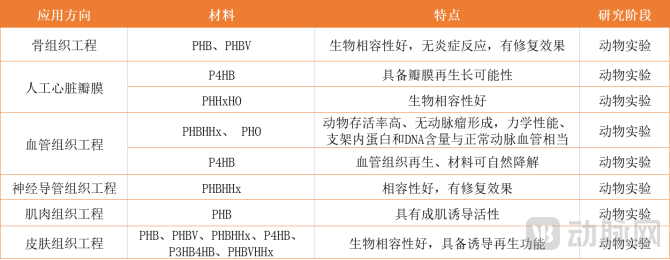
Applications of PHA Materials in the Medical Field
1. Rigid PHA: Orthopedics and Regenerative Medicine
PHA materials are diverse, with PHB and PHBV representing rigid materials. These materials are largely suitable for bone tissue engineering, such as the repair of articular cartilage and fibrocartilage. Since most PHA materials possess regenerative induction capabilities, they can promote new bone formation to a certain extent after implantation. For instance, PHBV scaffolds demonstrate superior efficacy in promoting osteoblast proliferation and mineralization; PHBV foam materials can increase alkaline phosphatase activity in bone marrow stem cells, leading to enhanced secretion of factors such as osteocalcin. Furthermore, an animal study involving PHB scaffold implantation indicated that PHB exhibits good biocompatibility, with no severe inflammatory responses observed during long-term in vivo repair processes.
Moreover, certain toughened PHA materials have also found applications in bone tissue engineering. Among them, PHBHHx has been utilized in research on articular cartilage repair and fibrocartilage repair, as it can promote chondrocytes to secrete increased amounts of collagen and extracellular matrix that facilitate cell growth.
2. Tough PHA: Heart Valves, Nerve Repair, Skin Regeneration
PHA materials also include a subset of tough materials, such as PHBHHx, P4HB, and PHO. These materials are more suitable for applications in cardiac surgery, cardiovascular medicine, and neurosurgery. Tricuspid valve scaffolds based on P4HB and poly(3-hydroxyhexanoate-co-3-hydroxyoctanoate) (i.e., PHHxHO) have demonstrated favorable outcomes in animal studies. Notably, P4HB-based tricuspid valve scaffolds exhibited the potential for autologous valve “regeneration” after being implanted in animals for 20 weeks. Meanwhile, PHHxHO scaffolds shaped like tricuspid valves showed no signs of vascular embolism 120 days after implantation into the pulmonary vasculature of lambs.
These materials have also demonstrated similar reparative effects in autologous nerve grafting research. An animal study indicated that after seeding supportive cells of peripheral nerves onto the inner surface of PHB conduit scaffolds and implanting them at the site of nerve defects, neurons with neurites gradually filled the interior of the PHB conduits and established connections with the cells pre-seeded on the scaffolds. In another animal experiment, PHBHHx nerve conduit scaffolds exhibited significant reparative efficacy in rats with sciatic nerve defects.
On the other hand, due to the excellent biocompatibility of various PHA materials (including PHB, PHBV, PHBHHx, P4HB, P3HB4HB, and PHBVHHx) with keratinocytes, PHA materials have also been applied in the field of skin regeneration, such as in physical dermal fillers for medical aesthetics, drug-eluting microspheres, and anti-wrinkle injections.
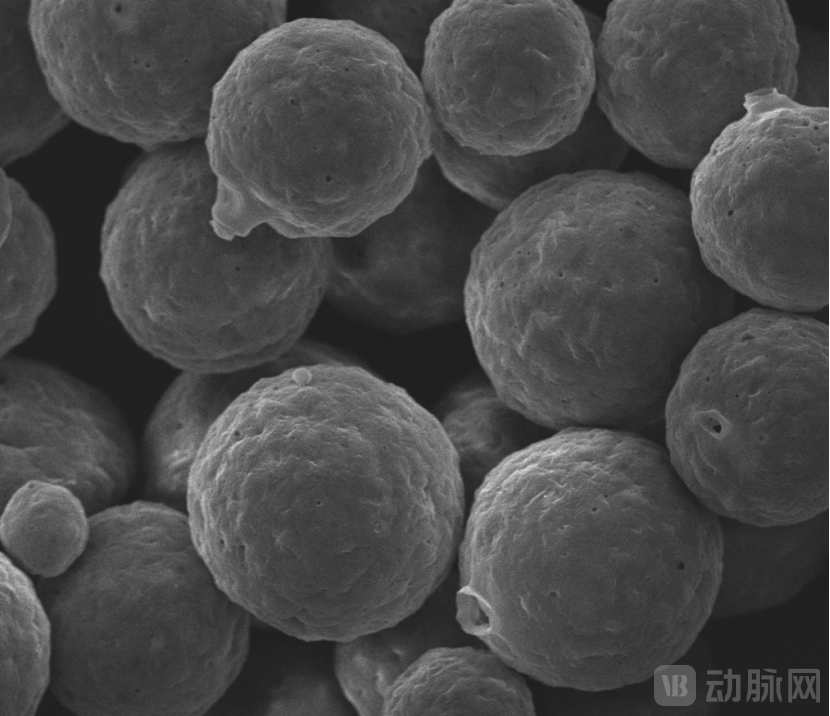
PHA Microspheres
In summary, due to their material diversity, well-matched hardness and toughness, excellent biocompatibility, and regenerative induction capabilities, PHA materials are widely used in medical tissue engineering and regeneration research. It is reported that Beijing Weigou Workshop Biotechnology Co., Ltd. has achieved the synthesis of more than 30 different types of PHA materials, which can be applied in various fields including healthcare, food, and fast-moving consumer goods.
However, PHA represents only a portion of Weigou Workshop’s product pipeline. Leveraging its technological accumulation in synthetic biology and its newly generated bio-intelligent creation engine, Weigou Workshop has delivered carbon-neutral solutions across the fast-moving consumer goods, clinical medical, cosmetics, and textile sectors through a diversified product portfolio that includes PHA, ectoine, 3-hydroxypropionic acid, carotenoids, lysine, pentamethylenediamine, and threonine.
After achieving large-scale production, synthetic biology companies often face commercialization choices, such as continuing to serve purely as raw material suppliers, collaborating with downstream partners, or establishing their own downstream brands. Weigou Workshop has its own plans in this regard.
PHA is currently the first product to achieve mass production. The company has signed cooperation agreements with numerous enterprises to jointly develop greener and more sustainable solutions. In this product line, Weigou Workshop aims to position itself as a raw material supplier with deep product expertise, providing downstream users with high-quality, cost-effective raw materials to facilitate their product line expansion. Meanwhile, the company plans to gradually penetrate domestic and international markets by establishing downstream application scenarios, laying the foundation for large-scale production and sales in the future. In the future, it will invite more enterprises to collaboratively explore application scenarios for biomaterials.
On the other hand, business school training has also allowed Lan Yuxuan to witness the rise of the consumer market, with next-generation synthetic biology companies such as Ginkgo deliberately strengthening their efforts in end-user branding. Particularly in sectors like daily chemicals, the emergence of “ingredient-conscious consumers” has enabled former raw material suppliers to detect new market opportunities.
These explorations provide valuable business model references for startups. Lan Yuxuan stated that Weigou Workshop does not rule out the possibility of establishing its own brand, but he emphasized, “First, we need to consider whether the end users of this product are consumers.” For Weigou Workshop, both collaborating with downstream enterprises and self-building production capabilities are effective channels to promote the industrialization of its products. Regardless of the approach chosen, the prerequisite is that Weigou Workshop establishes itself in the market as a technology company.
“In the United States, emerging technology companies inherently possess brand added value, and a similar trend is gradually taking shape in China,” said Lan Yuxuan. He believes that technology and aesthetics are naturally aligned, and technology companies with innovative value inherently wield market influence over certain high-value-added end products. In the future, Beijing Weigou Workshop Biotechnology Co., Ltd. will continue to promote the integration of advanced synthetic biology technologies with intelligent automation, positioning itself as a technology-driven enterprise to explore green innovations and product commercialization across multiple sectors, including life sciences, ecological conservation, and fast-moving consumer goods.