

BMK Biotech Launches China's First Subcellular-Resolution Micro-well Spatial Transcriptomics Chip, Breaking Foreign Monopoly
April 20, 2022Beijing BioMarker Biotechnology Co., Ltd.(hereinafter referred to as: BioMarker) held a new product launch event in Beijing, officially releasing its independently developedChina's First Subcellular-Level Microwell Spatial Transcriptomics Chip: Baichuang S1000。

The launch event brought together numerous academic experts and industry investors, who jointly witnessed the unveiling of the BioMarker S1000 and discussed its broad application prospects in future scientific research and clinical practice.
The launch of BioMarker’s S1000 Spatial Chip marks the company’s breakthrough in breaking the foreign monopoly on spatial transcriptomics technology, ushering in an era of domestic manufacturing and advancing spatial transcriptomics research in China.The launch of Baichuang S1000 marks a perfect culmination of BioMarker’s years of dedicated research and development, serving as a solid milestone that ushers in a new journey for the company.
Breaking the Technological Monopoly: China's First Subcellular-Level Micropore Spatial Transcriptomics Chip
In 2016, researchers from institutions such as the Karolinska Institutet and the KTH Royal Institute of Technology in Sweden published a paper in *Science*, describing a novel transcriptomic technique and introducing the concept of “spatial transcriptomics” for the first time. Since then, spatial omics has emerged as another major hotspot in biotechnological research, following single-cell sequencing technology.
As single-cell technologies have consistently topped the list of revolutionary biomedical research techniques for several consecutive years, and with the continuous expansion of analytical tools, spatial analysis has gradually emerged as a new scientific research field over the past two years. Spatial transcriptomics technologies were further recognized as “Technology of the Year” by Nature in 2020 and by Nature Methods in 2022.
According to Research And Markets, the spatial biology market is projected to expand at a compound annual growth rate (CAGR) of 16.5% over the next seven years. From transcriptome sequencing to single-cell transcriptome sequencing, and now to spatial transcriptomics technologies, continuous scientific advancements are ushering spatial omics into a new phase in biological research.
Currently, spatial transcriptomics not only provides gene expression data but also offers spatial location information, enabling researchers to understand the relative positional relationships of genes within tissue samples and thereby revealing how the spatial distribution of gene expression influences disease. Meanwhile, as spatial resolution continues to improve, the technology is gradually evolving from the multicellular level to the single-cell and subcellular levels, further enhancing scientists’ understanding and interpretation of the fundamental nature of life.
Since its commercialization, spatial transcriptomics sequencing technology has been under the complete control of foreign companies. To break the technological monopoly held by foreign enterprises in this field and to respond to national support for independent scientific research platforms, BioMarker has been dedicated to the research and development of spatial transcriptomics sequencing technology since 2020, successfully overcoming key technical bottlenecks.
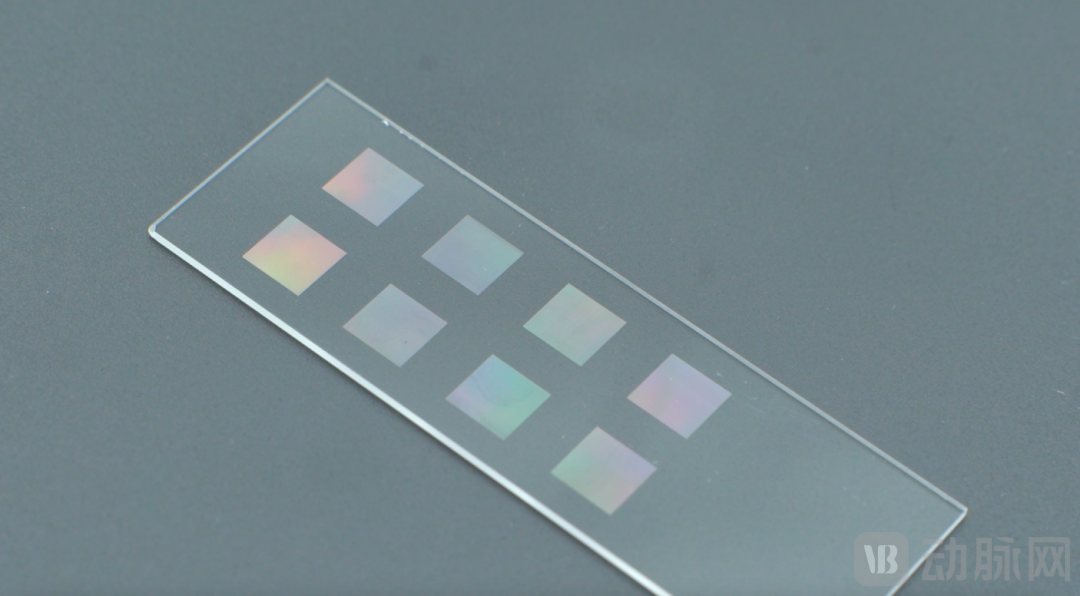
Baichuang S1000 Spatial Chip
After years of research and development, China’s first subcellular-resolution microwell spatial transcriptomics chip, the Baichuang S1000, has been officially launched. The Baichuang S1000 enables researchers to integrate multi-stage atlas data to obtain comprehensive subcellular-resolution spatiotemporal dynamic expression profiles, thereby providing stronger decision-making support for disease diagnosis and treatment as well as drug development.Compared to current overseas spatial transcriptomics sequencing chips, the resolution has been improved by nearly 400-fold, while also enabling high-definition HE staining image acquisition.
Spatial Resolution Reduced to 5 μm, with Broad Prospects for Future Applications
At the press conference,Mr. Zheng Hongkun, President of BioMarkerAn introduction was provided to the newly developed chip. Mr. Zheng stated that traditional spatial transcriptomics sequencing technologies, due to their low resolution, have not been well applied in fields such as embryonic growth and development, delineation of fine brain tissue structures, and the tumor immune microenvironment. With the continuous exploration of life sciences, there is an urgent need to map spatiotemporal gene atlases with higher precision, which requires spatial transcriptomics sequencing chips of greater accuracy to conduct the experiments.
The most significant breakthrough of the newly released “Baichuang S1000 Spatial Chip” is its ability to reduce spatial resolution to 5 μm, whereas traditional chip manufacturing still operates at a resolution of 100 μm.

Zheng Hongkun, President of BioMarker
Academician Chen Runsheng, Chinese Academy of SciencesHe stated that, from a technical perspective, the Baichuang S1000 chip’s reduction of spatial resolution to 5 μm represents a significant technological breakthrough. By refining the scope of biological research from the level of cell clusters to that of single cells and even subcellular structures, it provides a highly sensitive tool for addressing scientific questions.
From the perspective of basic research, the growth process of any organism is essentially a continuous process of cellular differentiation. With advanced tools, we can gain a better understanding of the entire process of tumorigenesis and development. Therefore, the BioMarker S1000 chip will provide superior solutions for elucidating disease etiologies in clinical practice. I believe this technology should be applied at the subcellular level as soon as possible to help pioneer new developments in the field.
Furthermore, the Baichuang S1000 spatial chip will accelerate the construction of spatiotemporal dynamic graphs, particularly in the field of high-resolution graph research, thereby helping to break industry monopolies and expedite the accumulation of spatial data.

Academician of the Chinese Academy of SciencesChen Runsheng
Researcher Yu Jun, Beijing Institute of Genomics, Chinese Academy of SciencesSpatial transcriptomics has been recognized by multiple journals as the Technology of the Year or one of the most significant technologies. Its widespread acclaim stems from its ability to elevate genomic research from one- and two-dimensional analyses to three-dimensional contexts, enabling the precise localization of genes within 3D space. This advancement facilitates deeper insights into developmental biology, oncology, and other areas of research.

Beijing Institute of Genomics, Chinese Academy of SciencesResearcherYu Jun
Researcher Wang Xiaowu, Chinese Academy of Agricultural SciencesRegarding the current application of spatial transcriptomics sequencing technology in plant research, there are two main obstacles. First, many plant leaves are very thin; the high resolution of the BioMarker S1000 chip holds significant value for studying such leaves with few cell layers. Second, plants have cell walls, whereas existing spatial transcriptomics permeabilization reagents are developed specifically for animal tissues. Consequently, these reagents often fail to effectively release mRNA from plant cells, resulting in insufficient gene capture. The BioMarker S1000 spatial chip can address this issue.

Chinese Academy of Agricultural SciencesResearcherWang Xiaowu
Researcher Chen Lu, State Key Laboratory of Biotherapy, West China HospitalIt was stated that the BioMarker S1000 chip offers two key advantages. First, it provides higher resolution, facilitating scientific research at the cellular level. Second, it enables H&E staining on tissue sections, allowing for the identification of corresponding cellular and tissue structures. This capability better integrates tissue-level information with molecular-level gene expression data, thereby more effectively addressing pain points in both basic and clinical research.

State Key Laboratory of Biotherapy, West China HospitalResearcherChen Lu
Chen Hongwu, General Manager of Guoke Jiahe Investment Management Co., Ltd.It was stated that every technological breakthrough drives rapid industrial development, while industrial demand, in turn, spurs technological advancement; the two are mutually reinforcing processes.
Currently, the enthusiasm of international capital markets for spatial transcriptomics technology demonstrates its scientific research value and the numerous market opportunities within this industry. At present, there is still a significant gap between China’s biotechnology sector and the international community; however, this disparity also signifies substantial market potential. The global market value of single-cell and spatial transcriptomics technologies remains to be further unlocked in the future.
The launch of the Baichuang S1000 Spatial Omics Chip marks a significant step for BioMarker in transitioning from a research service provider to an integrated research solutions provider. This chip lays a solid foundation, and it is expected to soon enter a phase of explosive growth, driving the rapid advancement of China’s overall industry.

Chen Hongwu, General Manager of Guoke Jiahe Investment Management Co., Ltd.
About BioMarker
BioMarker was established in May 2009. Over the past 13 years, BioMarker has been committed to building a center for biotechnological innovation and establishing itself as a benchmark enterprise in the bio-industry. Leveraging the development and application of high-throughput sequencing and bioinformatics technologies, the company has expanded into four core business segments: high-throughput sequencing, bio-cloud platforms, mass spectrometry testing, and intelligent manufacturing. Its primary clients include domestic and international academic institutions, research institutes, independent laboratories, pharmaceutical companies, agricultural breeding companies, healthcare institutions, corporate clients, and individual consumers. Currently, its business coverage extends across more than 30 provinces, municipalities, and autonomous regions in China, as well as numerous countries overseas.
Adhering to a people-oriented philosophy that prioritizes innovative development, the company has assembled a talented team with outstanding R&D capabilities. The technical and R&D staff numbers nearly 500, with over 60% holding master’s degrees or higher. The team includes more than 20 experts with senior engineer titles or above, and over 10 professionals with overseas study and entrepreneurial experience. Their professional research spans multiple disciplines, including bioinformatics, biotechnology, agronomy, medicine, computer science, and mathematics. The company has achieved a continuous stream of scientific breakthroughs, publishing nearly 1,000 high-quality collaborative articles in prestigious international journals such as Nature, Cell, and Nature Genetics, with a cumulative impact factor exceeding 4,500. It holds more than 60 national invention patents and nearly 200 software copyrights.
Although China started later in single-cell sequencing and spatial transcriptomics technologies, the industry’s technological development is accelerating rapidly, driven by increasing R&D investment and breakthroughs from domestic enterprises, as well as continuous capital inflows and strategic layouts. We look forward to BioMarker continuously innovating, accelerating the translational application of spatial omics technologies in basic research, drug development, and clinical diagnosis and treatment, thereby promoting industrial growth.