

Lab Mice Business Generates Nearly RMB 400 Million Annual Revenue, Backing a Successful IPO

GemPharmatech
R&D, Production, and Non-Clinical Research Service Provider for Laboratory Mouse Models
Back when you were conducting animal experiments, did you ever imagine that the lab mice in their cages—chirping away and looking around curiously—might just help you realize your dream of an IPO?
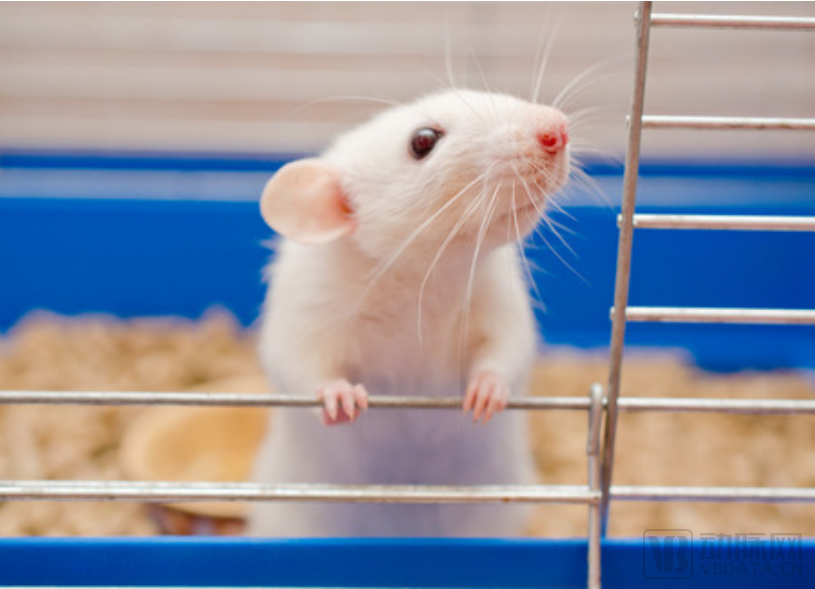
This nimble, adorable little creature clings to the edge of its cage, blinking its dewy eyes as it gazes intently at you and says, “Trust me, anything is possible.”
GemPharmatech Turns This Dream into Reality.
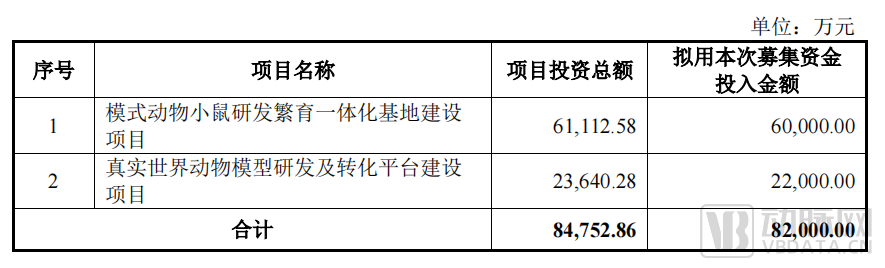
Relying on the “laboratory mouse” business, “Mouse King” Gao Xiang has secured his first IPO two decades after returning to China. According to public information, GemPharmatech listed on the STAR Market today, issuing a total of 50 million shares at an offering price of RMB 22.53 per share. Through this IPO, GemPharmatech raised a total of RMB 1.127 billion, which the company plans to primarily use for the construction of an integrated base for the research, development, and breeding of model mice, as well as for the development of a real-world animal model research and translation platform.
Since its establishment and registration in late 2017, GemPharmatech has leveraged its “laboratory mouse” business to reach an initial public offering (IPO) in less than four and a half years, becoming the second listed company in China’s model organism sector (following Shanghai Model Organisms Center, which listed on the STAR Market on December 28, 2021) and currently the “youngest” publicly traded company in this field. What is the secret behind this “rising star” in China’s model organism industry achieving such a rapid IPO?
Although GemPharmatech is a relatively young company, its core team brings over two decades of technical expertise.
The entire team at GemPharmatech consists almost entirely of the original members from Professor Gao Xiang’s team at the Model Animal Research Institute of Nanjing University.
Who is Gao Xiang? As mentioned at the beginning, he is known in the industry as the “Rat King” and is also a pioneer in model organism research in China. Under his team’s leadership, China’s first high-difficulty conditional gene-knockout mouse, the world’s first gene-edited dog, and the world’s first gene-edited monkey were developed. These achievements have secured a place for China’s model organism industry on the international stage.
In 2000, Gao Xiang returned to China, coinciding with the national launch of the “National Resource Center for Mutant Mice” project. Despite having less advantageous financial support, the Nanjing University team led by Gao Xiang defeated competitors from three other municipalities directly under the central government and provincial capital cities with a high-quality proposal, ultimately securing the project for Nanjing. In 2003, Gao Xiang founded the Model Animal Research Institute at Nanjing University and served as its director.
Gao Xiang has received numerous honors, including the National Science Fund for Distinguished Young Scholars, the Second Prize of the National Science and Technology Progress Award, and the Grand Prize of the Ministry of Education’s Science and Technology Progress Award. He has been a professor at Nanjing University since 2000 and has served as Director of the National Resource Center for Mutant Mice since 2002. From 2009 to 2018, he was Dean of the Institute of Biology and concurrently Director of the State Key Laboratory of Pharmaceutical Biotechnology. Since December 2017, Gao Xiang has been serving as Chairman of GemPharmatech Co., Ltd.
Other core members, besides Gao Xiang, are equally formidable. Dr. Zhao Jing, the CEO, has over 16 years of experience in model editing and analysis, as well as in developing key accounts. Dr. Ju Cunxiang, the R&D Director, has successfully developed hundreds of humanized animal models.
With over two decades of technical expertise, this team has set the benchmark in the field of mouse models. Under the leadership of Gao Xiang, GemPharmatech has established a distinct technological advantage that clearly differentiates it from its competitors.
In addition, leveraging the various tangible and intangible assets previously established by the Nanjing University Institute of Biology, GemPharmatech successfully entered the industrial sector and achieved discreet yet rapid growth. After the Nanjing University Institute of Biology ceased operations at the end of 2018, GemPharmatech acquired 2,612 mouse strains and related intellectual property rights owned by the Institute at market prices, laying a solid foundation for its subsequent rapid development.
From a technical perspective,GemPharmatech has establishedGenetically Engineered Mouse Model Construction Platform, Innovative Drug Screening and Phenotypic Analysis Platform, Mouse Breeding and Germplasm Preservation Platform, and Germ-Free Mouse and Microbiota Colonization Platform,Having mastered key core technologies, the company demonstrates outstanding capabilities in technological innovation and the commercialization of research achievements. Its primary technical outcomes are fully integrated into its core business operations. As a member enterprise of the Asian Mouse Mutant and Resource Consortium (AMMRC) and a co-constructor of the National Genetic Engineering Mouse Resource Center accredited by the Ministry of Science and Technology, the company holds a leading market share. With its strain resources consistently ranking among the top in the industry, it commands a prominent industry position and significant market influence.
From the perspectives of company revenue and R&D investment,GemPharmatech has also demonstrated exceptional performance. Although its primary revenue still stems from mouse supply, the company’s profitability has already achieved scale. From 2018 to 2021, GemPharmatech reported operating revenues of RMB 53.2906 million, RMB 193 million, RMB 262 million, and RMB 394 million, respectively (the full-year 2021 revenue figure is sourced from the textual section of the latest updated prospectus, while the charts still reflect data for the first half of 2021), representing a compound annual growth rate (CAGR) of nearly 95%.
The key factor limiting GemPharmatech’s further revenue expansion lies in production capacity. GemPharmatech’s capacity utilization rate and usage-to-production ratio (the ratio of total mouse consumption to total production within a given period) have consistently remained at a high level of around 80%, with the capacity utilization rate in the first half of 2021, the lowest period, still exceeding 70%.If production capacity were sufficient, GemPharmatech's revenue growth could be even more rapid.
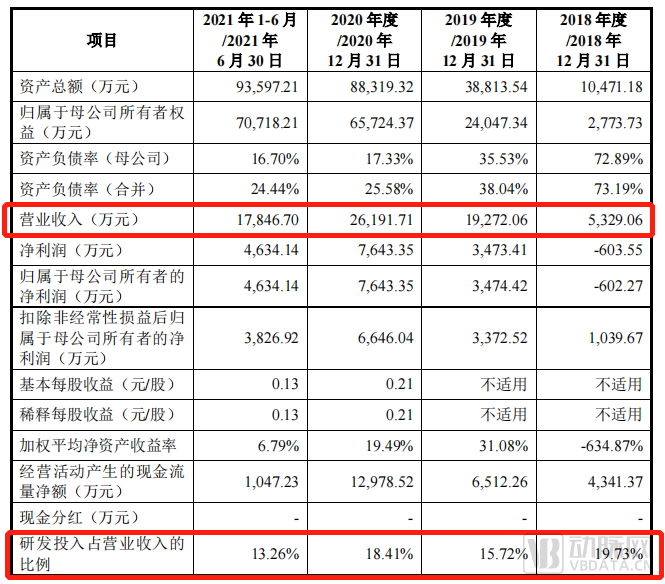
In terms of R&D investment, GemPharmatech's R&D expenditures from 2018 to 2020 were RMB 10.5159 million, RMB 30.305 million, and RMB 48.2164 million, respectively, accounting for 19.73%, 15.72%, and 18.41% of its operating revenue.
According to the breakdown of main business revenue disclosed in GemPharmatech’s prospectus, mouse supply is clearly the core of its business, consistently accounting for approximately 60% of total revenue.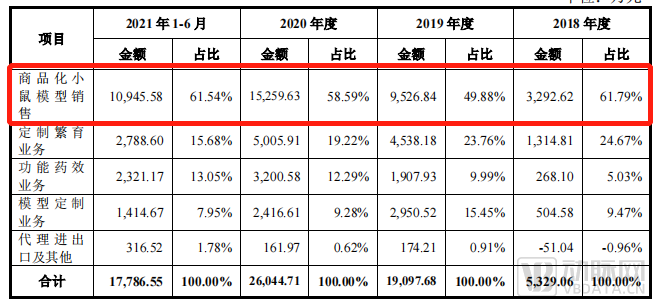
How Can a Group of “Lab Rats” Generate Such High Operating Revenue?
Mouse models have been utilized for over a century. Their physiological, biochemical, and growth and developmental regulatory mechanisms are fundamentally consistent with those of humans. Coupled with prominent advantages such as strong reproductive capacity, short generational cycles, and low housing costs, mouse models play an irreplaceable role in elucidating the principles of life processes, diagnosing and treating diseases, and developing novel therapeutics. Consequently, they are currently the most widely used experimental animals.
According to data calculated from the “Survey of Laboratory Animal Resources and Development Trends in China” released by the National Science and Technology Infrastructure Center in 2017, laboratory mice account for approximately 70.56% of the total production volume of all laboratory animals, with rats ranking second at 13.66%, and other animals collectively accounting for 15.77%. Developed countries in Europe and America all vigorously support mutant mouse models as strategic resources for national scientific and technological development.
Nevertheless, the substantial revenue generated solely from the sales of commercialized mouse models is attributable to GemPharmatech’s exceptional specialization and excellence in the research, development, and production of laboratory mouse models.
Regarding the matter of “specialization,”Over the past two decades,The core members of the GemPharmatech team have long been focused on the field of mouse models.GemPharmatech has remained focused on since its establishment,Murine Model of Experimental Animalsthe research and development, production, sales, and related technical services; its main business remained unchanged during the reporting period.
On the Matter of “Good”From the perspective of three key indicators for assessing a company's technical strength in the laboratory mouse model industry:
In terms of preparation efficiency,The prospectus shows that GemPharmatech has shortened the project cycle to 4–7 months, with a project success rate of 99.78% and a non-fixed-site injection positive rate of 2.60%.
In terms of building a germ-free mouse production system,GemPharmatech is one of the few domestic model organism enterprises that have independently established comprehensive germ-free mouse production and experimental facilities, and developed standardized systems for germ-free mouse breeding and testing.
In terms of the number of mouse strains,GemPharmatech’s mouse strain resources consistently rank among the industry leaders, establishing dual barriers through core technologies and resource endowments. As of June 30, 2021, the company had cumulatively developed approximately 20,000 commercially available mouse models with independent intellectual property rights.
In addition, to provide customers across various regions with more timely and high-quality supplies of mouse models, in addition to establishingNanjing HeadquartersIn addition, GemPharmatech alsoChangzhou, Jiangsu; Chengdu, Sichuan; Foshan, Guangdong; and Daxing, BeijingEstablished subsidiaries or branch offices to cover major domestic markets and rapidly respond to regional customer needs. To actively expand into overseas markets, GemPharmatech hasUnited States, Europehave also established subsidiaries or offices.
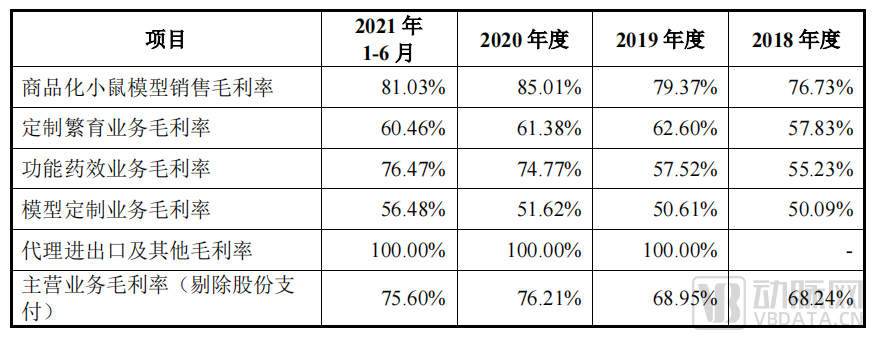
As disclosed in the prospectus, during each period of the reporting period,The gross profit margins of Pharmaron Biologics' core business (excluding share-based payments) were 68.24%, 68.95%, 76.21%, and 75.60%, respectively, significantly higher than the average of comparable companies in the same industry.
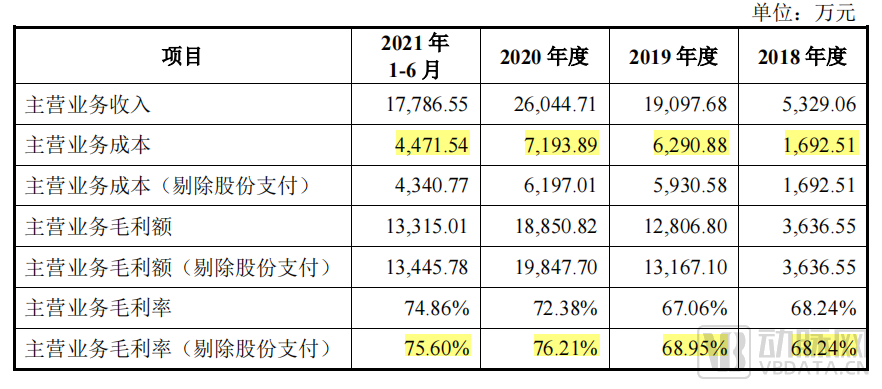
GK Pharmaceuticals stated that the gross profit margin of its main business (excluding share-based payments) continued to rise from 2018 to 2020, mainly due to the company's primary source of profit—Attributable to the continuous increase in the gross profit margin from sales of commercialized mouse models.The reason for the continuous increase in the gross profit margin of commercialized mouse model sales lies inHigh-Gross-Margin "Spot Mouse"Revenue share is rising rapidly.
Why does the "Spotted Mouse" business segment have such a significant impact on GemPharmatech's gross profit margin?
Spotted Mouseis a gene knockout mouse model,By using gene editing and homologous recombination techniques, the target gene is made to lose all or part of its function in mice.They are mainly divided into knockout (KO) mice with systemic gene deletion and conditional knockout (CKO) mice, which hold significant value in the study of specific genes or drug targets.
Leveraging its proprietary technological expertise in response to market demand for gene-knockout mice within the life sciences research sector, GemPharmatech initiated a large-scale project in 2019 to generate whole-body knockouts of all mouse protein-coding genes, namely the “"Spotted Mouse Project", aiming to pre-construct all mouseOver 20,000The KO and CKO mouse strain library for protein-coding genes proactively provides novel tool options and potential pathways for life science research. As of June 30, 2021, the GemPharmatech “Spotted Mouse Project” repository comprised approximately 19,000 strains, covering genes relevant to research areas such as oncology, metabolism, immunology, development, and DNA and protein modifications.
By commercializing the supply of KO/CKO mouse models from the “Spotted Mouse Project” strain library, the delivery timeline for custom orders has been reduced from 4–7 months to as little as 7 days. This not only lowers costs but also greatly facilitates researchers’ studies on gene function.
Compared to the model customization business, due to"SpotMouse" significantly shortens delivery times and lowers customer costs. Additionally, as some of its products are industry firsts with a degree of market scarcity, they enjoy a pricing advantage.During the reporting period, the unit selling prices of Spot Mouse were RMB 9,433.96, RMB 12,565.93, and RMB 11,723.99, respectively.
Additionally,Spotted mice, as high-value-added products,Its primary investment is concentrated in the creation and development during the early R&D stage. Once the strain development is completed, it is typically preserved as live colonies or cryopreserved genetic material. The associated breeding and husbandry costs are not significantly different from those of other common mouse strains; therefore, given the high selling price of Spot Mice, their gross profit margin remains relatively high.
As disclosed in the prospectus, GemPharmatechThe gross profit margins for the Spot Mouse business in 2018, 2019, and 2020 were 94.88%, 94.18%, and 95.65%, respectively.During the reporting period, the gross profit margin of the Spotted Mouse business remained stable and was significantly higher than that of other types of mouse businesses.
Objectively speaking, GemPharmatech’s ability to “pole vault” into a successful IPO in a short period of time is attributable not only to its team’s robust capabilities and profound technological accumulation but also to the era-defining opportunities presented by the booming domestic biopharmaceutical industry.
In recent years, with the Chinese government intensively rolling out numerous policies and implementing an innovation-driven strategy for the pharmaceutical industry, China’s domestic pharmaceutical sector has ushered in a significant historical opportunity and a new era of innovative development. Particularly against the backdrop of the COVID-19 outbreak in 2020, companies engaged in innovative drug development, diagnostics, and vaccine R&D in both the primary and secondary markets have received substantial capital investment and support—The rapid development of innovative drug R&D, with drug discovery and preclinical studies primarily conducted in experimental animal models, has driven the expansion of the upstream market for such models.
According to Frost & Sullivan data, the number of global clinical trials across all phases increased from 2,137 in 2015 to 6,939 in 2019, representing a compound annual growth rate (CAGR) of 34.24%. During the same period, the number of clinical trials in China rose from 339 to 1,031, with a CAGR of 32.03%, thereby further driving the increased demand for preclinical research and its experimental mouse models.
The Chinese animal model market is relatively in its early stages of development,The Market for Mouse Model Products and Services Is Experiencing Rapid Growth:From 2015 to 2019, the compound annual growth rate (CAGR) of the mouse model products and services market was 35.3%. The market size for mouse models reached RMB 2.8 billion in 2019.
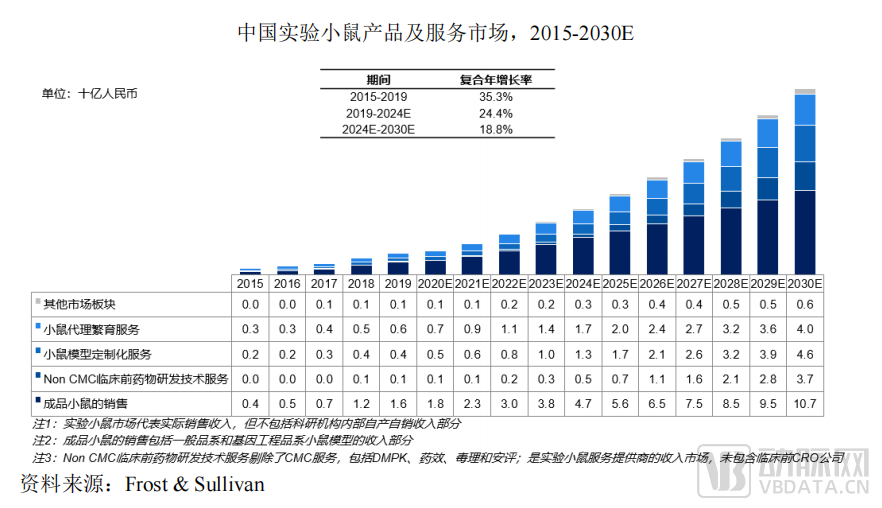
With the booming development of life sciences research and new drug development, Frost & SullivanThe market size of mouse models is expected to reach RMB 8.4 billion by 2024, with a compound annual growth rate (CAGR) of approximately 24.4%, and is projected to reach RMB 23.6 billion by 2030.
However, in the face of rapidly growing market demand lies the predicament of resource scarcity.
Even in overseas markets with well-established systems, there are only approximately 6,000 strains of precisely conditionally knockout mice, and most of them suffer from issues such as unclear strain ownership and difficulties in commercial use.
In the domestic market, there is a shortage of supply for high-end mouse strains.The reason is that these mice, fromR&D, cultivation, testing, and delivery require a longer timeframe——Taking the Alzheimer’s disease mouse model developed by GemPharmatech as an example, its development cycle spanned three years due to its high level of innovation.In addition to the animals' own breeding cycles, technological limitations and the complexity of training animals manually,This is also a contributing factor to the current shortage of high-end experimental mouse strains.
Overall, the experimental mouse model industry is characterized by a high degree of multidisciplinary technological integration, demanding robust R&D capabilities and advanced production techniques, thereby establishing significant technical and talent barriers. This landscape presents substantial market opportunities for companies like GemPharmatech. Leveraging high gross margins from the sales of commercialized mouse models, GemPharmatech has firmly established its foothold in the field of model organisms.
Just as a coin has two sides, every matter comes with both advantages and disadvantages.
The laboratory mouse model industry is influenced by multiple factors, including national funding for basic scientific research, the market vitality of innovative drug development, and advancements in gene engineering technologies. Consequently, its future development faces a degree of uncertainty. If GemPharmatech fails to fully capitalize on commercial demands related to laboratory mice and expand their application scenarios, the company risks constrained growth potential due to the relatively small market size of this niche sector and slower-than-expected industry development. In other words, GemPharmatech may face a revenue ceiling in the future.
Is this truly the case? GemPharmatech believes that China’s mouse model market is still in its early stages of development. As the most widely used laboratory animals, mouse models play an irreplaceable role in elucidating the mechanisms and principles of life, diagnosing and treating diseases, and developing new drugs.The booming life sciences industry will undoubtedly further drive growth in the market for mouse model products and services.
Furthermore, in August 2021, the Ministry of Science and Technology released the “Regulations on the Management of Laboratory Animals (Draft for Comments),” which imposed stricter requirements on licensing for the production and use of laboratory animals, quality management, and transportation quarantine.Market concentration in China’s mouse model sector is poised to rise further.
In particular, regarding the current status of experimental mouse models, the inbred strains widely used today have a homogeneous genetic background, making it difficult to meet the research needs for complex diseases induced by the combined effects of multiple genes and environmental factors. There is an urgent need in the life sciences for wild-type mouse models that can simulate the genetic diversity of real human populations. Research on the global human commensal microbiome is burgeoning.Germ-free animalsIt is a key platform for the research and development of symbiotic microorganisms, butCurrently, the development of related strains and supporting facilities still lags behind market demand.Whether in life sciences research or new drug development, this area still faces ““No Mice Available”situation. Therefore, in the futureReal-world animal models centered on wild-type and germ-free mice can create and lead new market demands, further expanding the market space for laboratory mice.Expected to become a new driving force for the rapid development of the industry.
Dr. Liu Dan, Senior Partner at CDH Investments, one of the earliest investors in GemPharmatech, stated: “Our initial investment in GemPharmatech was driven by my long-standing focus on ‘smart tools’ within niche segments of the CXO industry. Throughout our partnership, we have been delighted to witness GemPharmatech’s evolution into the undisputed leader in the field of genetically engineered mouse models, both domestically and internationally, with a business model that has long transcended the traditional role of merely selling mice. Looking ahead, we see GemPharmatech expanding globally, steadily emerging as a creator and leader in real-world animal models worldwide.”
Overall, in this 21st century of biomedicine, GemPharmatech still has tremendous room for growth before reaching its ceiling.
Meanwhile, GemPharmatech is also seeking new breakthroughs along both horizontal and vertical dimensions.
In terms of horizontal expansion, GemPharmatech has set its sights on the more enticing global market, leveraging its technical expertise and high-quality products and services to further develop its overseas presence.As one of the few domestic model organism companies to license mouse strains overseas, conduct overseas breeding services, or directly export strains to countries such as the United States, Israel, and Germany, GemPharmatech has also established subsidiaries or offices in the United States and Europe. Meanwhile, through collaborations with distributors, GemPharmatech is gradually expanding into the South Korean and European markets to raise the ceiling for its future growth potential.
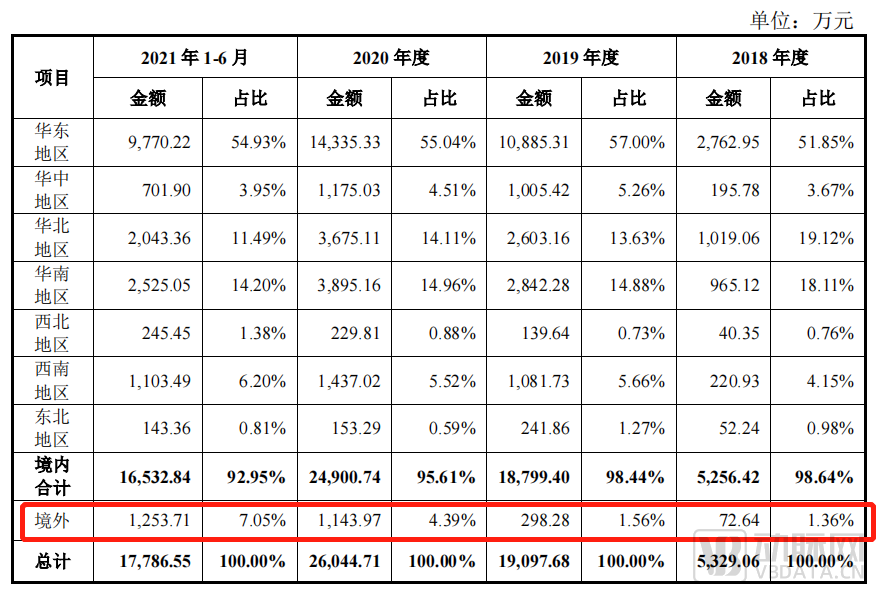
Based on the financial performance of main business revenue in different regions disclosed by GemPharmatech in its prospectus, the company in each period during the reporting periodMain Business Revenue from OverseasRMB 726,400, RMB 2,982,800, RMB 11,439,700, and RMB 12,537,100, respectively,Although the proportion is low, it is rising year by year.GemPharmatech stated that this was primarily due to the rapid growth in sales of commercialized mouse models and functional efficacy services to overseas customers.
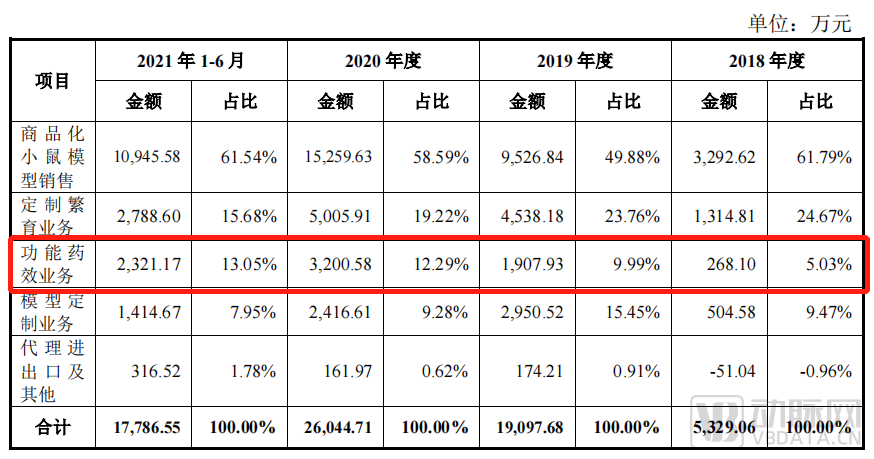
In terms of vertical expansion, GemPharmatech’s services are gradually extending downstream, providing not only mouse models but also supporting functional efficacy services.It is evident that the growth potential of value-added services in functional pharmacodynamics significantly exceeds that of GemPharmatech’s current core business. While the sale of mouse models generates one-time revenue, the accompanying pharmacodynamic studies can deliver long-term value creation.
According to the prospectus, in the functional pharmacodynamics service segment, GemPharmatech is already capable of conducting in vivo efficacy studies using a range of mouse models, including LAG3-humanized, PD1-humanized, TIGIT-humanized, and GITR-humanized models. The revenue generated from this segment has been increasing as a proportion of total revenue, rising from 5.03% in 2018 to 12.29% in 2020. It is the fastest-growing business segment and is likely to become a key revenue pillar for GemPharmatech in the future.
In its IPO use of proceeds, GemPharmatech also explicitly stated that it would invest over RMB 200 million to build a research and development and translational platform for real-world animal models.
Expanding Horizontally, Extending Vertically. While transitioning into the secondary market, GemPharmatech is also striving to break through the ceilings it may have previously faced in order to seek new breakthroughs. Therefore, its move into the secondary market is not an endpoint for GemPharmatech, but rather a new starting point for development. There is still much that this “mouse stock” aims to accomplish in the future.
So, are you curious about the narrative this “mouse stock” is set to unfold in the secondary market?