Driving Regulatory Breakthroughs and Mindset Shifts, Strengthening Scientific Foundations: Preparing for a New Era of FSMP Industry Growth — An Exclusive Interview with Professor Luo Yunbo
As a blue-ocean market yet to be fully explored, the FSMP (Food for Special Medical Purposes) industry is increasingly drawing attention from stakeholders across the sector.
In recent years, companies specializing in foods for special medical purposes (FSMP), including Dongze Special Medical, Ningbo Teyi, Jingzhun Special Medical, Languo Medical, Licheng Nutrition, and Mairuisheng, have successively secured financing. Meanwhile, internet healthcare platforms such as JD Health are placing increasing emphasis on FSMP. In October last year, JD Health initiated the establishment of the “JD Health FSMP Alliance,” joining forces with industry stakeholders to promote the development of FSMP.
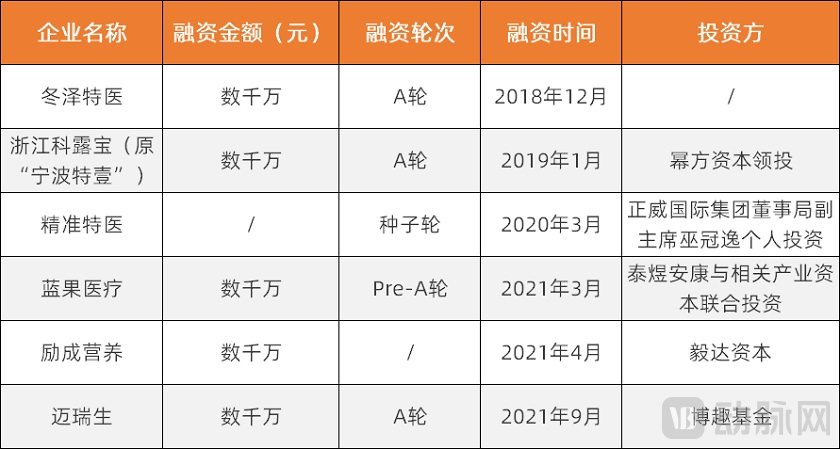
Data Source: Artery Orange; Chart by VCBeat
However, we also observe that current financing in the field of foods for special medical purposes (FSMP) is largely concentrated in early-stage seed and Series A rounds. The development of the FSMP industry still faces a series of challenges.
What are the critical pain points and challenges that urgently need to be addressed in the development of the FSMP (Food for Special Medical Purpose) industry? What are the driving forces behind its growth? VCBeat has been engaging in continuous dialogue with industry practitioners to seek answers to these questions.

Director Luo Yunbo, Special Foods Research Center, China Agricultural University
Dean, Beijing Dadao Liwei Food Science Research Institute
In this issue, we interviewed Luo Yunbo, Director of the Special Food Research Center at China Agricultural University and Dean of the Beijing Dadao Liwei Food Science Research Institute. To facilitate reader comprehension, the following content has been partially edited and condensed without altering its original meaning.
“Regulation”: One of the Key Guiding Factors in the FSMP Industry
VCBeat:How do you view the policy developments in the field of foods for special medical purposes (FSMP) since the implementation of the Administrative Measures for the Registration of Foods for Special Medical Purposes in 2016?
Luo Yunbo:Following the issuance of the Administrative Measures for Registration in 2016, China defined a new industry: the FSMP (Food for Special Medical Purposes) industry. Over the years of development, most products that have undergone R&D and registration in the FSMP industry are infant FSMPs and complete nutritional formula FSMPs. Currently, no clear consensus or breakthrough has been achieved in the registration and management of specific complete nutritional formula foods.Lack of Matching Registration Standards and Specifications for New Products, to date, no specific complete nutritional formula foods have been approved. Furthermore, the Administrative Measures for Registration serve merely as market access regulations for foods for special medical purposes (FSMPs). Beyond market access, supporting measures and regulations—such as those governing market circulation—require further refinement; otherwise, the development of the FSMP market will continue to face significant obstacles.
VCBeat:From a regulatory perspective, how do you think the approval process for foods for special medical purposes (FSMP) can be accelerated?
Luo Yunbo:First, regulatory frameworks require new breakthroughs and revisions to better align with practical realities. Second, following their promulgation, these regulations must be effectively disseminated and implemented; in particular, regulatory interpretations and policy briefings should be provided to reviewers and relevant experts in the foods for special medical purposes (FSMP) industry to foster consensus., thereby preventing delays in approval times caused by buck-passing due to inadequate understanding of the standards. For enterprises, research and development as well as production must also comply with relevant laws and regulations.
Overall, regulatory thinking needs to shift: FSMPs should be regulated as “food” rather than “drugs,” requiring only scientific evidence and compliance with applicable standards. In the future, it is not inconceivable that management of FSMPs may evolve to a notification-only filing system in line with societal developments. In fact, many clinicians currently hope for breakthroughs in relevant regulations to better support patients’ post-treatment recovery, and these voices deserve to be heard.
VCBeat:Relevant standards may currently be lagging behind. We previously learned that you participated in external presentations and discussions on the “Progress in the Revision of GB 29922, General Rules for Formula Foods for Special Medical Purposes.” What are the current trends in the revision of these general rules?
Luo Yunbo:The primary reason for its revision is that the “General Provisions” do not align with the actual needs of product development, including the fact that products currently in clinical demand are not covered by the standard.
For instance, the aforementioned “13 specific types of foods for special medical purposes (FSMPs) for complete nutritional support, among others” ultimately refers to only these 13 specific FSMPs. The National Food Safety Standard for Formula Foods for Special Medical Purposes for Infants (GB 25596) targets infants aged 0–12 months with cow’s milk protein allergy. However, there is also a relevant need among children over one year of age. Due to the absence of corresponding standards in the General Rules for Formula Foods for Special Medical Purposes (GB 29922), related FSMPs cannot be registered in accordance with applicable laws and regulations.
Furthermore, “GB29922” only classifies the components of foods for special medical purposes (FSMPs) but does not specify concrete indicator requirements. For instance, there are currently no clear specifications regarding the required protein content in protein components, which may lead to certain issues concerning raw materials. This also creates confusion for reviewers at the National Center for Food Safety Risk Assessment; due to the lack of relevant standards, reviewers may have divergent opinions, resulting in delayed approval or failure to pass the review.The revision of “GB29922” is being carried out on the basis of the original version to better meet the needs of practical implementation, and the specific revision details are still under discussion.
"Concept": Demand Upgrades Accelerate Industry Growth
VCBeat:Currently, the hospital sector dominates the market for foods for special medical purposes (FSMP). However, we are also observing a continuous increase in the number of FSMP products available on online platforms. How do you view this trend?
Luo Yunbo:The in-hospital market is dominant because physicians, when prescribing medications for patients—particularly those requiring surgery—may recommend or even prescribe specific medical foods based on the patients’ clinical conditions."For a long time, hospitals are likely to remain the primary market for foods for special medical purposes (FSMP)."
I do not oppose online marketing activities; in fact, I believe they should be strengthened.On one hand, it is not only patients requiring surgery or hospitalization who need foods for special medical purposes (FSMPs); some patients with chronic diseases and the elderly also require FSMPs for nutritional support. For instance, my father is in his nineties and has significant difficulty eating, consuming very little food, so the nutrients derived from his diet are insufficient to meet his bodily needs. In such cases, complete nutritional FSMPs are necessary to provide adequate nutritional support. However, it is often inconvenient for individuals in their nineties to visit hospitals, and online sales can effectively address the pain points of out-of-hospital users.
In this process, a shift in perspective is also necessary. Regardless of the various prefixes attached to foods for special medical purposes (FSMPs), their fundamental nature remains that of “food,” and they should not be regarded as overly mysterious. The target population ultimately includes both patients and individuals in a sub-health state who require nutritional support. At a time when prescription drugs can be purchased with a doctor’s prescription, the online sale of FSMPs should likewise be supported and encouraged. This approach not only meets consumer demand in the market but also further promotes industry development.
VCBeat:Currently, only over 80 FSMP products have been approved on the market. How do you view the current trend in the variety of FSMP products?
Luo Yunbo:Currently, the primary target population for foods for special medical purposes (FSMP) is infants. However, this does not imply that infant needs have been fully met; efforts to promote the registration and production of related products for this demographic should continue in the future. Furthermore, the development of FSMPs for general adults or patients with various diseases remains relatively lagging. Compared with foreign markets, there is a significant gap in both consumer demand and industry scale. In the future, it is necessary to intensify efforts in the registration and production of FSMPs targeted at specific diseases.The future development of foods for special medical purposes (FSMP) should focus on covering specific diseases, such as cancer, kidney disease, and liver disease. Development will prioritize meeting patient needs, with more targeted formulations. The range of products is likely to expand gradually from common and frequently occurring diseases to general conditions, leading to an overall increase in product variety.
VCBeat:You just mentioned the gap between us and foreign countries. What lessons can we learn from the development of the overseas market for foods for special medical purposes?
Luo Yunbo:Overseas enterprises place particular emphasis on innovative R&D and the application of science and technology in their products.From product R&D and manufacturing to sales and even consumer experience, they have designed a comprehensive process, continuously refining and improving their products based on consumer feedback. While generating revenue from the market, this virtuous cycle further promotes their development and investment. This serves as an excellent reference for us: we must prioritize scientific technology and product quality above all else.
The market potential for foods for special medical purposes (FSMP) in China is immense, and it currently remains a blue ocean market.As long as firms are determined to solidify their technological foundations and strengthen internal organizational structures for growth, a cohort of outstanding enterprises can emerge. Driven by robust market demand, the entire industry can achieve sound development, provided it strictly adheres to scientific principles and complies with laws and regulations.
VCBeat:You mentioned corporate development. Under the current strict market access regulations, many industry practitioners believe that pharmaceutical companies transitioning into the FSMP (Food for Special Medical Purpose) sector will dominate the industry's future development. What is your view on this?
Luo Yunbo:The greatest advantage for pharmaceutical companies in producing foods for special medical purposes lies in their regulatory compliance and corporate culture.Pharmaceutical professionals possess a heightened awareness of safety production standards, making them well-suited for the manufacturing of foods for special medical purposes (FSMP) under strictly regulated and standardized conditions. Pharmaceutical companies transitioning into FSMP production hold inherent advantages, although this is not an absolute guarantee.Because foods for special medical purposes (FSMPs) are fundamentally different from pharmaceutical drugs, their production requirements—including production line investment and facility design—are distinct. It is not the case that machinery used for drug manufacturing can be directly employed to produce FSMPs; instead, dedicated planning and procurement of new equipment are required.
andAt this point,The advantages of ordinary food manufacturing enterprises may be stronger than those of pharmaceutical companies.For example, a company that originally produces regular infant formula may find that much of its existing equipment is also suitable for the production of certain foods for special medical purposes (FSMP). The challenges it faces may lie in establishing regulations and standards, as well as cultivating and enhancing safety awareness embedded within these regulatory frameworks. Therefore,Both pharmaceutical companies and food production enterprises possess their own respective advantages.
Pharmaceutical companies are choosing to pivot toward the production of foods for special medical purposes (FSMP) because drug approval is increasingly challenging, with most currently approved drugs being innovative anticancer agents. Ordinary pharmaceutical manufacturers invest heavily in drug research and development, yet still face potential hurdles in obtaining final approval, a process that often involves clinical trials. Currently, there is no strict requirement for FSMP to undergo clinical trials; however, many companies, aiming for rapid approval, especiallyPharmaceutical companies tend to conduct clinical trials to gain approval advantages, and leveraging their accumulated strengths to transition into the production of foods for special medical purposes (FSMP) is undoubtedly an excellent entry point.
VCBeat:You mentioned that the market for foods for special medical purposes (FSMP) is still a blue ocean. What favorable factors do you believe are driving its development?
Luo Yunbo:The primary drivers are economic development, improved living standards, and heightened public awareness, which have generated substantial demand for foods for special medical purposes.In the past, patients often had to find their own ways to supplement nutrition. Today, the demand for nutritional health serves as the primary market driver, propelling industry growth. Patients’ desire for rapid recovery and their need for Foods for Special Medical Purposes (FSMP) are undoubtedly significant contributing factors. Furthermore, there is a genuine unmet need among many elderly individuals and other users with nutritional requirements who do not seek hospital care. In an aging society, these growing demands are further driving the development of the FSMP industry.
VCBeat:Currently, you also serve as the Dean of the Dadao Liwei Food Science Academy. What is its positioning? How does it contribute to the development of the FSMP (Food for Special Medical Purpose) industry?
Luo Yunbo:Our positioning is primarily to design various formulas for foods for special medical purposes (FSMP) based on consumer needs and scientific evidence. The core emphasis lies in “science,” namely, providing scientific evidence to support the development of FSMP. As previously discussed regarding FSMP research and development, the goal is to address different diseases and health conditions by offering scientifically grounded FSMP solutions, thereby meeting the needs of specific populations. This all originates from the research, development, and supply of FSMP formulations.Our primary focus is currently on the research and development of formulas for foods for special medical purposes (FSMPs), ensuring they are both scientifically grounded and effective in addressing consumers' actual needs.
VCBeat:As the Dean of the Dadao Liwei Food Science Research Institute, from an R&D perspective, in what direction do you think the research and development of the FSMP (Foods for Special Medical Purposes) industry will evolve in the future?
Luo Yunbo:I believe it is essential to first reach a consensus by conducting thorough research and analysis of market demands. Consideration must be given to all categories, including infant formula for special medical purposes (0–12 months) and various types of foods for special medical purposes (FSMPs), such as nutritionally complete formulas, disease-specific nutritionally complete formulas, and non-nutritionally complete formulas. To venture into this blue ocean market,Research on foods for special medical purposes requires investigating consumer needs and continuously meeting their personalized demands.
To achieve this goal, we currentlyOn one hand, the Research Institute is developing formulas for foods for special medical purposes (FSMP) tailored to meet the diverse needs of users; on the other hand, it is intensifying basic research efforts to scientifically elucidate the relationship between nutrition and disease, thereby facilitating the more effective translation of scientific achievements into product development.Better meet the industry's demands by adopting a two-pronged approach.
VCBeat:Final question: What message or advice would you like to offer to current practitioners in the industry?
Luo Yunbo:I hope everyone remains confident and does not become discouraged by temporary difficulties, but instead strives to move forward. I firmly believe that the FSMP (Food for Special Medical Purposes) industry has strong development prospects, and we will surely break through current bottlenecks in regulation, production, and consumption. As the industry advances, enterprises should avoid short-sighted pursuit of quick gains and instead focus on solidifying their foundations.Opportunity always favors the prepared. What we need to do now is to prepare in advance and await the day when the FSMP (Food for Special Medical Purposes) industry experiences explosive growth.