Beijing Hospitals' Patent Analysis Report (2019–2021): 13,661 Authorized Patents, with Medical Devices Accounting for Over Half
In June 2021, the General Office of the State Council issued the Opinions on Promoting High-Quality Development of Public Hospitals (Guo Ban Fa [2021] No. 18), proposing to strengthen innovation in systems, technologies, models, and management.
On February 9, 2022, the Secretariat of the State Council’s Leading Group for Medical Reform issued the Notice on Effectively Implementing the Opinions on Promoting High-Quality Development of Public Hospitals (Guo Yi Gai Mi Han [2022] No. 6), and concurrently distributed the Evaluation Indicators for Promoting High-Quality Development of Public Hospitals in Various Provinces (Autonomous Regions, and Municipalities) (Trial). Among these, Indicator 12 is“Revenue from the transformation of scientific and technological achievements per 100 health technical personnel in tertiary public hospitals,” with a requirement for “gradual increase,” reflects the hospital’s capacity for scientific research and the translation of such achievements into practical applications.。
In recent years, an increasing number of healthcare professionals have joined the ranks of medical innovators. Drawing inspiration from clinical practice and centering on patient health, they have developed a series of medical innovations aimed at alleviating patient suffering, enhancing work efficiency, and reducing operational complexity.
Search criteria: For patent applications, the applicant is “hospital,” the applicant’s address is “Beijing,” and the filing date ranges from January 1, 2019 to December 31, 2021; for granted patents, the grant date ranges from January 1, 2019 to December 31, 2021. The search was conducted on April 22, 2022, to analyze the patent application and grant status of hospitals in Beijing over the past three years.
Key Figures:
1. The compound annual growth rate (CAGR) of invention patent applications is 24%;
2. Utility models account for over 70% of patent applications;
3. Medical devices accounted for 43% of invention patent applications, biologics for 29%, and chemical drugs and traditional Chinese medicines for 9% and 7%, respectively;
4. Utility models account for as high as 76% of expired patents;
5. The patent applications filed by the top 12 hospitals accounted for approximately 57% of the total;
6. Compound annual growth rate of granted patents near 60%;
7. 40% of the invention patents were filed in the past three years;
8. Utility model patents accounted for as high as 93% of authorized patents that lapsed in the past three years;
9. The proportion of invention patents among hospital-authorized patents is generally below 10%.
Several Key Findings:
1. The innovative outcomes of patent applications are characterized by a predominance of utility models and medical devices, primarily because healthcare professionals constitute the main innovators within hospitals, with innovations focused on clinical applications;
2. The growth rate of granted patents has increased significantly, but the proportion of invention patents remains low, indicating that the quality of patent innovation needs to be strengthened;
3. The patent grant cycle has shortened, and the number of inventions granted each year has increased progressively, indirectly demonstrating the results of the national efforts to improve quality and efficiency over the past two years;
4. The maintenance rate and duration of utility model patent rights are relatively low, requiring improvement;
5. The proportion of biologic drug inventions and grants among invention patents has increased significantly, far exceeding that of chemical drugs and traditional Chinese medicines.
Patent Application Trends in Beijing Hospitals Over the Past Three Years
· Overview and Data Analysis of Patent Applications:
Patent applications have shown significant growth. Over the past three years, hospitals in Beijing have filed a total of 16,282 Chinese patents, including 11,487 utility model patents, 4,539 invention patents, and 256 design patents.
· Data Analysis:
1. Inventions: Patent applications for inventions showed steady growth, with a compound annual growth rate (CAGR) of 24%;
2. Utility Models: Although the number of utility models decreased in 2021 compared to 2020, considering that only granted utility models are included in the database and the grant cycle for utility models is approximately 6–10 months, the actual number of applications filed in 2021 is expected to be higher than that in 2020, with annual filings exceeding 5,000, maintaining high growth.
3. Design Patents: Corporate entities have consistently been the primary applicants for design patents, and the relatively low number of applications filed by hospitals aligns with practical realities.
4. Total Patent Application Volume: Due to the delayed disclosure of utility model data, there is a significant deviation between the total patent application volume and the actual figures. It is projected that the actual number of patent applications filed by hospitals in Beijing over the past three years has shown a year-on-year increasing trend.
5. Proportion of Patent Types: Utility model patents account for over 70%, remaining the primary type of current hospital innovation achievements.

· Patent Application Classification and Data Analysis:
Hospital patent innovations are predominantly focused on medical devices. An analysis of the International Patent Classification (IPC) codes reveals that these innovations mainly involve surgical instruments, diagnostic and measurement devices, medical suction equipment, injection devices, catheters, and related apparatus. In contrast, patents for biological drugs, chemical pharmaceuticals, and traditional Chinese medicines account for a relatively small proportion.
· Data Analysis:
1. Utility model innovations in hospitals primarily protect improvements to the shape and structure of medical devices. As can be seen from the data in Part I, over 70% of innovations originate from utility models, a finding further corroborated by the classification of patent applications.
2. A further analysis of 4,539 invention patents revealed that medical devices accounted for 43%, biologics for 29%, and chemical drugs and traditional Chinese medicines for 9% and 7%, respectively.

· Analysis of the Legal Status of Patent Applications:
Of the patents applied for in the past three years, 12,219 (75% of total applications) are currently valid, 3,539 (22%) are under substantive examination, and 527 (3%) have lapsed. Among the lapsed patents, 402 were due to non-payment of annual fees (including 376 utility models, 23 design patents, and 3 invention patents), 82 were rejected (all invention patents), 41 were withdrawn (all invention patents), and 2 were abandoned (all invention patents).
· Data Analysis:
1. Only 876 invention patents applied for in the past three years have been granted, accounting for merely 7% of valid patents.
2. Utility model patents account for as high as 76% of lapsed patents, having expired due to non-payment of annual fees, meaning they were maintained for less than three years after grant.
3. Approximately 78% of the invention patents applied for in the past three years are under examination, with only about 22% having been concluded.

· Applicant Ranking:
The Chinese PLA General Hospital ranks first, with as many as 81 patent applications filed in the past three years. The top 12 hospitals account for approximately 57% of the total patent applications, with an average annual filing volume exceeding 100 each. Peking Union Medical College Hospital and the Eighth Medical Center of the Chinese PLA General Hospital rank second and third, respectively, with 1,353 and 941 patent applications.
Data Analysis:
1. The overall proportion of invention patents among hospital patent applications is relatively low. Among the top 12 applicants, the National Cancer Center/Cancer Hospital, Chinese Academy of Medical Sciences has the highest share of invention patents (40.91%), followed by Peking University Third Hospital (Peking University Third Clinical Medical College) (36.04%), and then Peking Union Medical College Hospital (32.37%). The share of invention patents at other hospitals is all below 30%, with some even falling below 10%.
2. Among the top 12 applicants, five are hospitals affiliated with the military healthcare system (Chinese PLA General Hospital, Eighth Medical Center, First Medical Center, Fourth Medical Center, and Second Medical Center), and three are hospitals affiliated with Capital Medical University (Tiantan Hospital, Xuanwu Hospital, and Luhe Hospital).

(Note: Data excludes applicants)
· Agency Rankings:
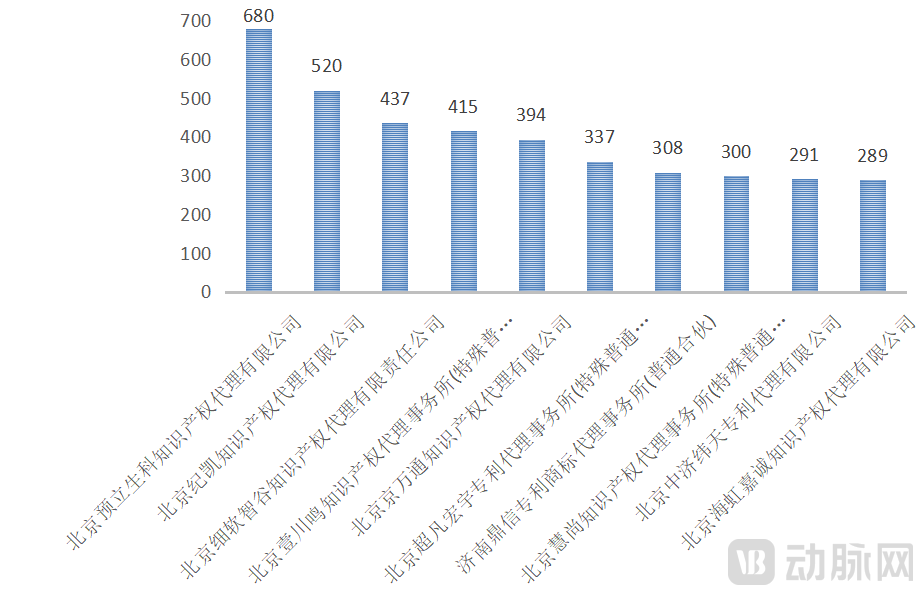
Beijing Yuli Shengke Intellectual Property Agency Co., Ltd. ranked first with 680 patent applications handled, while the top eight agencies each handled more than 100 applications over the past eight years. In terms of the number of hospital patent applications in Beijing handled by agencies over the past three years, Beijing Yuli Shengke Intellectual Property Agency Co., Ltd. led with 680 cases, followed by Beijing Jikai Intellectual Property Agency Co., Ltd. and Beijing Xiruan Zhigu Intellectual Property Agency Co., Ltd. in second and third places, with 520 and 437 cases, respectively.
Data Analysis:
1. The A61B field (diagnosis, surgery, identification) is primarily represented by Beijing Yuli Shengke, Beijing Chaofan Hongyu, and Beijing Zhongji Weitian;
2. The A61M field (devices for introducing media into or onto the human body) is primarily represented by Beijing Yuli Shengke, Beijing Xiruan Zhigu, and Beijing Jingwantong.
3. The A61F field (filters implantable into blood vessels; prostheses; devices for providing an opening to or preventing the collapse of tubular structures of the human body) is mainly represented by Beijing Jikai, Beijing Yuli Shengke, and Beijing Jingwantong.
4. The A61G field (transportation devices, specialized transportation vehicles, or living facilities specifically designed for patients or individuals with disabilities) is primarily represented by Beijing Yuli Shengke, Beijing Yichuanming, and Beijing Xiruan Zhigu;
5. The A61K field (preparations for medical, dental or toilet purposes) is mainly represented by Beijing Jikai, Beijing Huishang, and Beijing Zhiwei Shidai;
6. The G01N field (testing or analyzing materials by measuring their chemical or physical properties) is primarily represented by Beijing Jikai, Beijing Huishang, and Beijing Zhiwei Shidai.
7·C12Q Field (including measurement or testing methods involving enzymes, nucleic acids, or microorganisms) is primarily represented by Beijing Jikai, Beijing Yuli Shengke, and Beijing Meizhi Nianhua.

Patent Grants to Hospitals in Beijing Over the Past Three Years
· Number of Granted Patents:
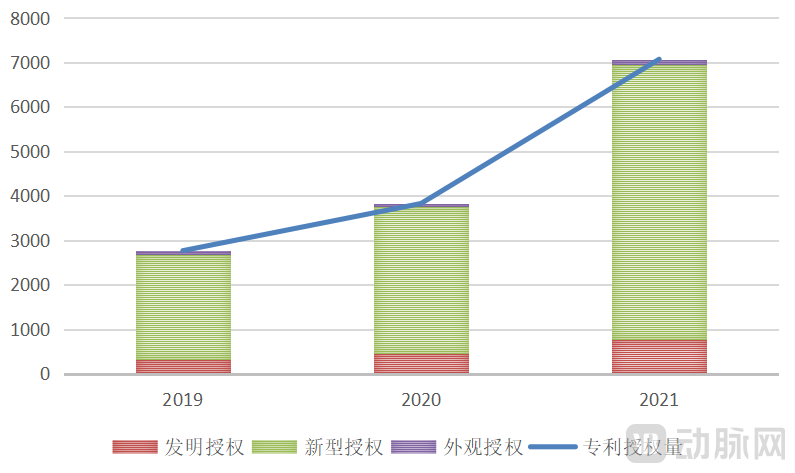
Significant Growth in Patent Grants. Over the past three years, hospitals in Beijing have been granted a total of 13,661 patents, including 1,528 invention patents, 11,876 utility model patents, and 257 design patents.
Data Analysis:
1. Patent Grant Trends: The overall number of granted patents has shown a rapid year-on-year increase, with a compound annual growth rate (CAGR) of nearly 60%.
2. Types of Patents Granted: Utility model patents account for a large proportion of granted patents, approximately 87% of the total, while invention patents account for a smaller proportion, only about 11%.
3. Approximately 40% of Granted Inventions Were Filed in the Past Three Years: Among the 1,528 granted invention patents, 40% were filed within the last three years.
4. Year-on-Year Increase in Patents Granted in the Same Year: A total of 123 inventions were granted patents in the same year they were filed, with 2 in 2019, 38 in 2020, and 83 in 2021, showing a year-on-year upward trend. This also indirectly demonstrates the achievements of national efforts to improve quality and efficiency in the past two years.
· Classification and Data Analysis of Authorized Patents:
Hospital-granted patents are predominantly for medical devices, consistent with the patent applications. Analysis of the International Patent Classification (IPC) codes reveals that these patents mainly cover surgical instruments, injection devices, medical suction apparatus, catheters, and diagnostic measurement equipment, while biologics, chemical drugs, and traditional Chinese medicines account for a relatively small proportion.
Data Analysis:
1. Utility models account for nearly 90% of patents granted to hospitals. As utility models primarily protect application-oriented improvements to medical devices on the hospital side, granted patents are predominantly related to medical devices. However, among granted invention patents, biological measurement or testing methods, surgical instruments, and pharmaceutical compositions rank as the top three categories.
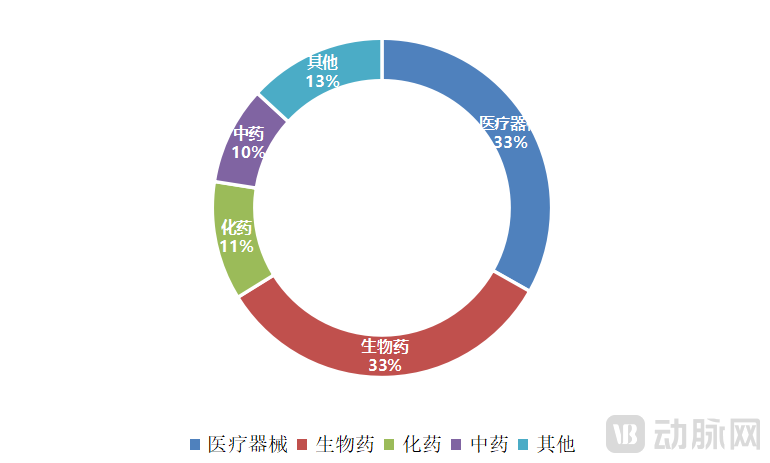
2. Among authorized invention patents, medical devices and biologics are evenly matched, each accounting for 33%, while chemical drugs and biologics account for 11% and 10%, respectively.
·Legal Status of Granted Patents:
Among the patents applied for in the past three years, 12,480 (accounting for 91% of total applications) are currently valid, while 1,181 (8%) have lapsed. Of the lapsed patents, 1,178 were due to non-payment of annual fees, comprising 1,093 utility models, 32 design patents, and 53 invention patents.
Data Analysis:
1. Utility model patents account for as high as 93% of lapsed patents, with the primary reason for lapse being non-payment of annual fees. This indicates that these patents were maintained for less than three years after grant. Notably, 78 utility model patents filed in 2020 have already lapsed. Given that the minimum annual fee for hospital-held utility model patents during the first three years is only RMB 90 per year after fee reductions, the maintenance cost is very low. The fact that a significant number of patents are still not maintained for even three years suggests that hospitals need to strengthen their patent rights maintenance practices.
2. After the grant of invention patents, only 3% lapse due to non-payment of annual fees, while 97% remain in force. The annual maintenance fees for hospital-held invention patents during the first three years after grant, following fee reductions, range from RMB 135 to RMB 180 per year, indicating that applicants and inventors place greater emphasis on inventions with higher intrinsic value.
·Ranking of applicants for authorized patents:
The Chinese People's Liberation Army General Hospital ranks first, with a total of 1,956 authorized patent applications in the past three years. The average annual number of authorized patents for the top 10 hospitals exceeds 100. Peking Union Medical College Hospital and the Eighth Medical Center of the Chinese People's Liberation Army General Hospital rank second and third, respectively, with 1,453 and 762 authorized patents.
Data Analysis:
1. The overall proportion of invention patents among hospital-authorized patents is low. Among the top 10 applicants, the Chinese PLA General Hospital has the highest share of invention patents (approximately 13%). The invention patent shares for other hospitals are all below 10%, indicating that the overall quality of innovation in hospitals needs to be strengthened.
2. Among the top 10 applicants, three are hospitals within the military medical system (the Chinese PLA General Hospital, the Eighth Medical Center, and the First Medical Center), and four are affiliated with Capital Medical University (Tiantan Hospital, Xuanwu Hospital, Luhe Hospital, and Beijing Children’s Hospital).
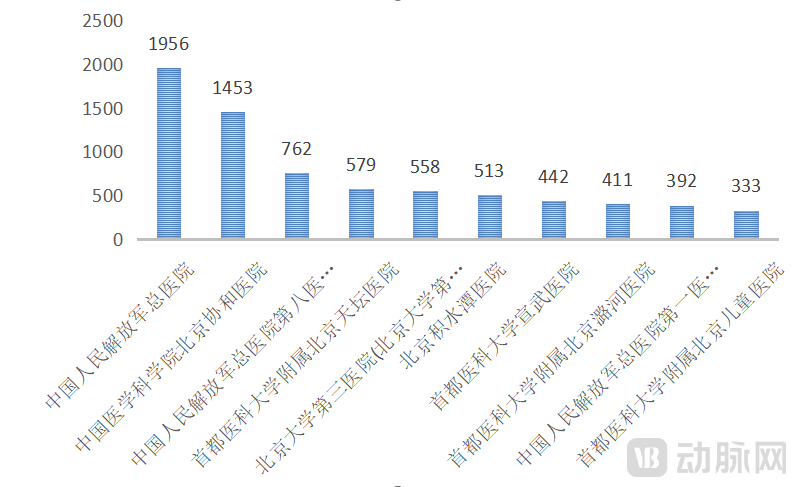
(Note: Data excludes applicants)
· Ranking of Authorized Patent Agencies:
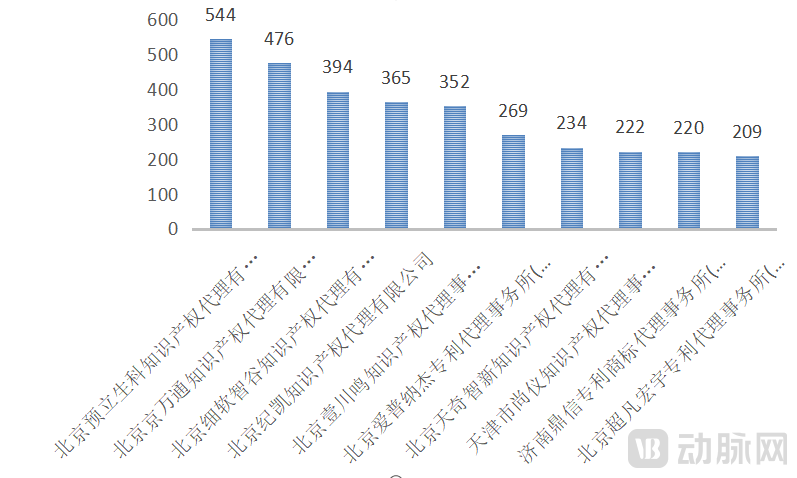
Beijing Yuli Shengke Intellectual Property Agency Co., Ltd. ranked first, with 544 patented inventions granted through its representation. The total number of patents granted through the top 10 agencies over the past three years exceeded 200 each. In terms of the number of patent grants handled by agencies for hospitals in Beijing over the past three years, Beijing Yuli Shengke Intellectual Property Agency Co., Ltd. led with 544 cases. Ranking second and third were Beijing Jingwantong Intellectual Property Agency Co., Ltd. and Beijing Xiruan Zhigu Intellectual Property Agency Co., Ltd., with 476 and 394 granted cases, respectively.
· Data Analysis:
1. The A61M field (devices for introducing media into or onto the human body) is primarily represented by Beijing Jingwantong, Beijing Yuli Shengke, and Beijing Xiruan Zhigu;
2. The A61B field (diagnosis, surgery, identification) is mainly represented by Beijing Jingwantong, Beijing Yuli Shengke, and Beijing Jikai;
3. The A61F field (filters implantable into blood vessels; prostheses; devices for providing an opening to or preventing the collapse of tubular structures of the human body) is mainly represented by Beijing Jingwantong, Beijing Yuli Shengke, and Beijing Xiruan Zhigu;
4. The A61G field (transportation devices, specialized transportation devices, or living facilities specifically adapted for patients or persons with disabilities) is primarily represented by Beijing Yichuanming, Beijing Yulishengke, and Beijing Jingwantong;
5. The C12Q field (including methods for measuring or testing enzymes, nucleic acids, or microorganisms) is primarily represented by Beijing Jikai, Beijing Yuli Shengke, and Beijing Lingke;
6. The field of A61K (preparations for medical, dental or toilet purposes) is mainly represented by Beijing Jikai, Beijing Sanju Yangguang, and Beijing Zhengli;
7. The G01N field (testing or analyzing materials by measuring their chemical or physical properties) is primarily represented by Beijing Jikai, Beijing Yuli Shengke, and Beijing Huishang.