

Kunyuan Fangqing: Pioneering Smart Pathology with Pathologist-Led Innovation
In the field of medicine, pathological diagnosis serves as the definitive diagnosis of disease. It plays a crucial role in clarifying the nature of the disease, interpreting clinical symptoms, determining treatment principles, assessing prognosis, and identifying the cause of death, thereby constituting the gold standard for disease diagnosis.
Pathologists, often referred to as “doctors’ doctors,” have long faced a substantial shortage in China due to their lengthy training period. According to 2019 survey data from the Medical Administration and Hospital Management Bureau of the National Health Commission, there were approximately 12,000 registered pathologists in China. Based on the National Health Commission’s requirement of staffing one to two pathologists per 100 hospital beds, the current shortfall of pathologists exceeds 100,000.
With the rapid advancement of modern technology, pathology has made significant progress. However, due to uneven regional development, some pathology departments suffer from outdated equipment, and there is a lack of uniformity in the diagnostic proficiency and standards among pathologists, which severely compromises the efficiency and accuracy of clinical pathological diagnosis. Therefore, the implementation of artificial intelligence–assisted diagnosis, along with digitalization and intelligent transformation, has become an inevitable trend in the modernization of pathology.
Since 2017, a “healthcare + AI” boom has emerged in China, giving rise to nearly one hundred pathology AI companies. However, the high professional threshold of pathology does not provide fertile ground for the “short, flat, and fast” development model typical of consumer internet industries. Five years on, the domestic pathology AI sector has undergone significant consolidation; according to incomplete statistics, only about ten companies currently remain focused on pathology AI.
Guangzhou Kunyuan Fangqing Medical Technology Co., Ltd. (hereinafter referred to as “Kunyuan Fangqing”), a technology company that is “deeply rooted in pathology and embracing intelligence.”As the only smart pathology R&D team in China founded by pathology experts, its strategic goal is to promote the comprehensive intelligent upgrade of the pathology industry across “industry, academia, research, and application,” possessing sustainable innovation, R&D, and professional service capabilities within the pathology sector.Therefore, Kunyuan Fangqing’s product portfolio extends beyond multi-disease AI-assisted diagnosis to include AI-assisted quality control and departmental management, as well as an AI-assisted pathological research platform. The company has accumulated 16 patents and 19 software copyrights, demonstrating rapid growth within the industry.
As one of the early entrants into the field of AI-driven pathology, Kunyuan Fangqing’s steady growth is attributable to its “pathologist-led” team.
In 2018, Professor Ding Yanqing, known as the “Southern Ding” in China’s pathology community, founded Kunyuan Fangqing and serves as the company’s Chief Scientist.

Professor Yanqing Ding
Professor Ding Yanqing is a renowned pathologist in China, serving as the President of the Third Chinese Association of Pathologists and recognized as a National Master Teacher. He receives the State Council Special Allowance. As the pathologist who performed the autopsy on the world’s first SARS patient, he provided the first confirmation that SARS is caused by a viral infection. In 2020–2021, Academician Bian Xiuwu and Professor Ding Yanqing were both included in the “Elsevier China Highly Cited Researchers” list, making them the only two Chinese pathology experts to appear on the list for two consecutive years.
With over 50 years of experience in clinical practice and academia, Professor Ding Yanqing has cultivated and supplied a large number of talents to China’s pathology sector, including recipients of the National Science Fund for Distinguished Young Scholars. He has demonstrated remarkable strategic foresight and boldness in integrating pathology with emerging technologies. As early as 2010, he spearheaded a remote pathological diagnosis project in collaboration with Huayinkang Group, pioneering a co-developed model for the digitalization and remotization of pathology services featuring scalable growth-oriented support, which has achieved smooth commercial progress.
In 2016, Professor Ding Yanqing once again identified the emerging trend toward intelligent development in the pathology industry and subsequently founded “Kunyuan Fangqing,” an AI R&D company led by pathology experts, to advance the intelligent transformation of pathological diagnosis in China.
“Kunyuan Fangqing” core research team is led by pathology experts, while also incorporating technical development talents from universities and research institutions both domestically and internationally.According to Mr. Shang Bin, CEO of Kunyuan Fangqing, the current R&D team hasOver 30 pathology experts, including 5 full-time pathology specialistsAs the only pathology AI R&D team in China led by pathology experts, Kunyuan Fangqing has thereby built its strong competitiveness.
From scientist-founders to pathology experts and algorithm engineers, the wide age range is another characteristic of the Kunyuan Fangqing team. Commenting on this feature, Shang Bin stated that, judging by actual outcomes, the complementary mix of senior, mid-career, and young professionals, along with multidisciplinary integration, demonstrates strong development potential.
Intelligent AI-Assisted Pathological Diagnosis Research as a Hotspot in the Field of Pathology. How Can AI Address the Pain Points in Pathological Diagnosis? How Can Advanced Theories Be Translated into Practical Applications to Drive Industry Development? Understanding the Problems and Needs Is Paramount.
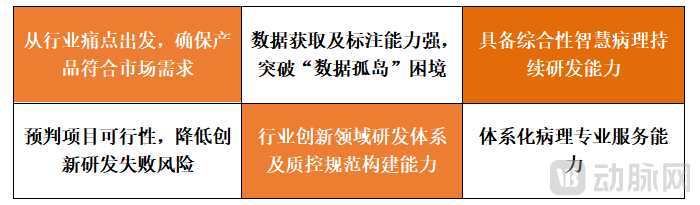
“A Brief Analysis of the Advantages of ‘Pathologist-Led’ Models”
Shang Bin stated, “The industry barrier for pathological AI lies in its high level of specialization, with data being the biggest bottleneck. The accuracy of AI depends on the availability of large volumes of accurately annotated pathological data, the extraction of which still relies heavily on the in-depth involvement of senior pathologists.”
The industry bottlenecks constraining the industrialization and implementation of AI in pathology have instead become Kunyuan Fangqing’s natural advantage. Kunyuan Fangqing has fully leveraged this unique core strength by engaging pathology experts throughout the entire product development process—including site and case selection, data annotation, algorithm development, and ongoing quality control—thereby ensuring timely error correction and risk mitigation during innovative R&D.
In 2021, Kunyuan Fangqing’s AI-assisted diagnostic product for cervical cytology received market approval from the National Medical Products Administration (NMPA). According to reports, the system was validated using over 1.06 million clinical samples, achieving a sensitivity of 99.9% and a specificity of >80% for AI-based diagnosis of intraepithelial lesions (excluding atypical cases). It has currently been deployed in more than 70 medical institutions, becoming the first pathology AI-assisted diagnostic platform in China to be truly applied on a large scale in clinical practice.
Extensive validation has demonstrated that the system achieves high diagnostic accuracy and is capable of identifying clinically challenging and rare lesion categories, thereby realizing multiple innovations. The research findings have been published in the Chinese Journal of Pathology and Nature Communications, attracting widespread attention from both the Chinese and global academic communities.
As part of the “Two-Cancer Screening” initiative, cervical cancer is a common gynecological malignancy. In recent years, its incidence and mortality rates have gradually risen, with a trend toward affecting younger populations. The “Healthy China Action (2019–2030)” explicitly proposes the introduction of artificial intelligence-assisted diagnostic technologies, aiming to expand coverage of screening for the two cancers. With support from national policies, Kunyuan Fangqing’s innovative products have effectively capitalized on this favorable momentum for industry implementation.
To date, Kunyuan Fangqing’s AI system for cervical cytology pathology has successfully received regulatory approval and has been deployed in over 70 medical institutions, including large Grade A tertiary hospitals and smart pathology diagnostic laboratory platforms with a peak daily throughput of 5,000 cases.
It is reported that, in addition to improving the accuracy of interpretation, the systemSignificantly Enhance the Work Efficiency of Pathologists:The First, the system operates continuously, with a minimum configuration capable of completing the analysis of 1,000 samples per day;II, the system automatically annotates suspected pathological cells, assists pathologists in locating these cells, and enables rapid review, reducing the diagnostic time from 3 minutes to approximately 15 seconds;III., the system generates reports with a single click after physician review and signature, in accordance with the international TBS standards, thereby achieving automated, intelligent, and digital pathology diagnosis.
Kunyuan Fangqing’s product strategy closely aligns with the emerging trends in the industry’s “next-generation diagnostic pathology.” Based on pathological morphology and clinical information, it integrates technologies such as molecular testing, bioinformatics analysis, and artificial intelligence to deliver comprehensive, multi-omics, cross-scale diagnostics.
How to free pathologists from repetitive tasks and enable them to devote more energy to the identification of complex lesions; how to comprehensively build an intelligent pathology department in alignment with clinical needs, while accelerating departmental development and talent cultivation—these are the key considerations guiding Kunyuan Fangqing’s research and development efforts.
Its product R&D philosophy is: in the AI-assisted pathological diagnosis project, prioritize projects with high diagnostic quality, strong reproducibility, and feasibility, before advancing to those with higher complexity and greater diagnostic challenges;In AI-Assisted Department DevelopmentIn accordance with clinical professional standards, we are developing AI-assisted quality control and management systems, as well as an AI-assisted pathology research platform. This approach establishes a product portfolio that progresses from easy to difficult and from simple to complex.
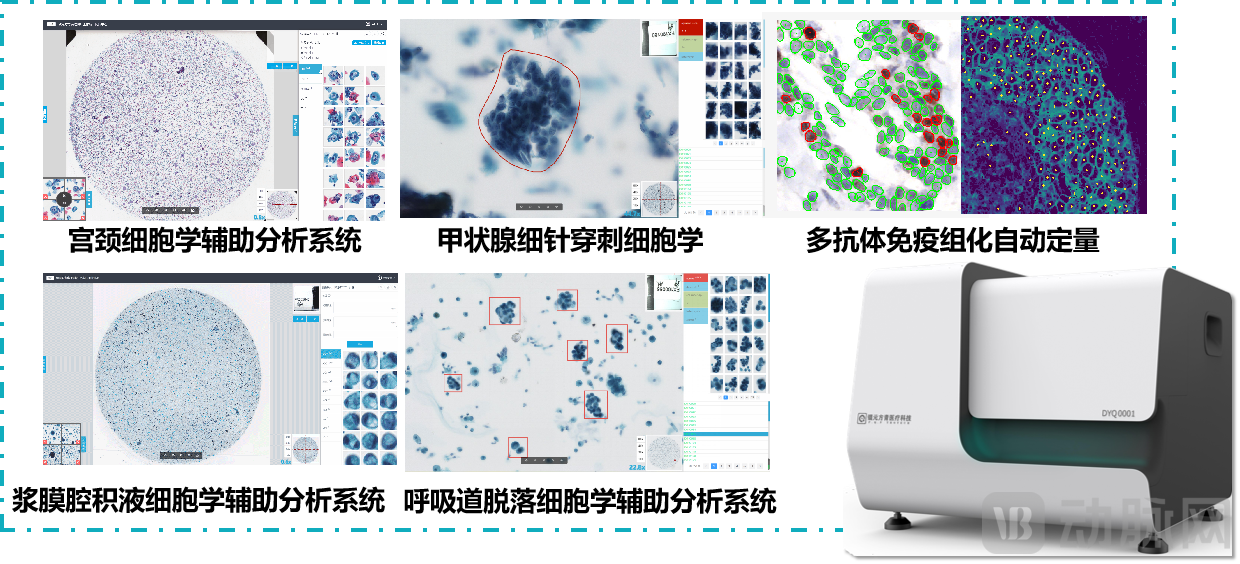
Source: Kunyuan Fangqing
Kunyuan Fangqing has completed the product development of AI-assisted diagnostic solutions for cervical liquid-based cytology, serous cavity effusion cytology, thyroid fine-needle aspiration cytology, and exfoliative cytology from pulmonary fiberoptic bronchoscopy. The company has established an AI-assisted diagnostic system for cytopathology and a precision assessment system for immunohistochemistry across multiple cancer types. A multimodal fusion, multi-disease pathological AI-assisted diagnostic platform is currently under development. New projects are expected to sequentially obtain medical device registration certificates by the end of 2022.
In addition, AI projects such as gene variation prediction and prognostic analysis models for prostate cancer phenotypes, customized segmentation of lesions across multiple cancer types, and detection of specific structural abnormalities (e.g., tumor thrombus detection and vascular invasion detection) are also being progressively advanced.
According to reports, Kunyuan Fangqing has established collaborations with dozens of institutions, including research and medical entities such as the Institute of Automation of the Chinese Academy of Sciences, Nanfang Hospital of Southern Medical University, Xinqiao Hospital of Army Medical University, and relevant hospitals in Shenzhen, as well as Huayinkang Laboratory Group. The company has also completed two rounds of financing, securing a total of RMB 80 million.The company is currently undergoing its third round of financing, primarily to expand production capacity for new AI projects and related equipment, as well as to build its sales team and distribution channels.
Meanwhile, Kunyuan Fangqing is building a comprehensive smart pathology solution., it is strategically positioning itself in the upstream segment of the industry chain by developing digital pathology slide scanners and related consumables, while also operating professional smart pathology laboratories that provide downstream services. The company plans to establish AI-assisted pathological diagnosis centers in various provinces and municipalities across China. Currently, the company has obtained medical device registrations for certain software, equipment, reagents, and consumables.
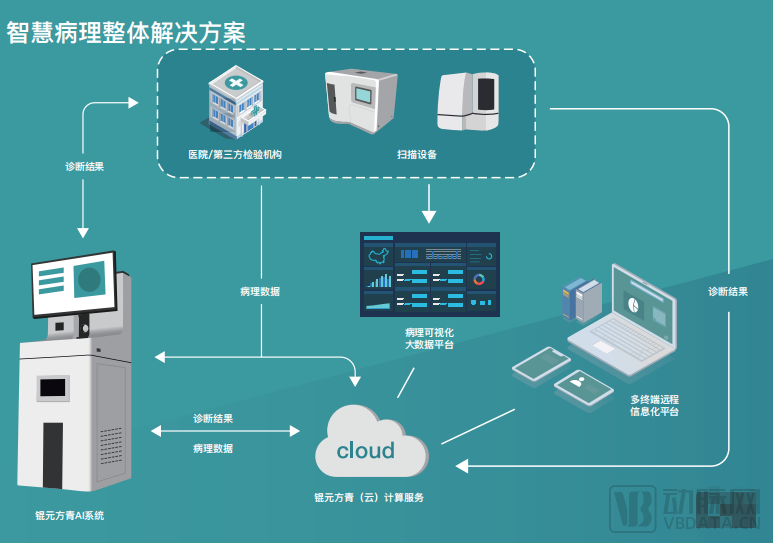
Source: Kunyuan Fangqing
In the interview, Shang Bin stated, “As the National Medical Products Administration gradually relaxes its approval requirements for artificial intelligence products, pathology AI is poised to enter a period of explosive growth in the foreseeable future.”
“Focus Limited Energy on Ventures with Infinite Possibilities”This is a testament to Kunyuan Fangqing’s dedicated efforts in the pathology AI industry. In the future, Kunyuan Fangqing will seize industry development opportunities, rapidly bring mature products to market, and integrate them into the daily workflows of more pathologists. Meanwhile, the company will continue to advance its new product development initiatives, collaborating with partner institutions, clients, and investors to propel China’s pathology AI to the forefront globally, and jointly pioneer a new era for artificial intelligence in Chinese pathology.