

Shukun Technology Secures Two Class III AI Certifications Within Two Weeks, Pioneering High-Modality Medical Imaging AI

SHUKUN
Provider of Intelligent Products and Innovative Solutions
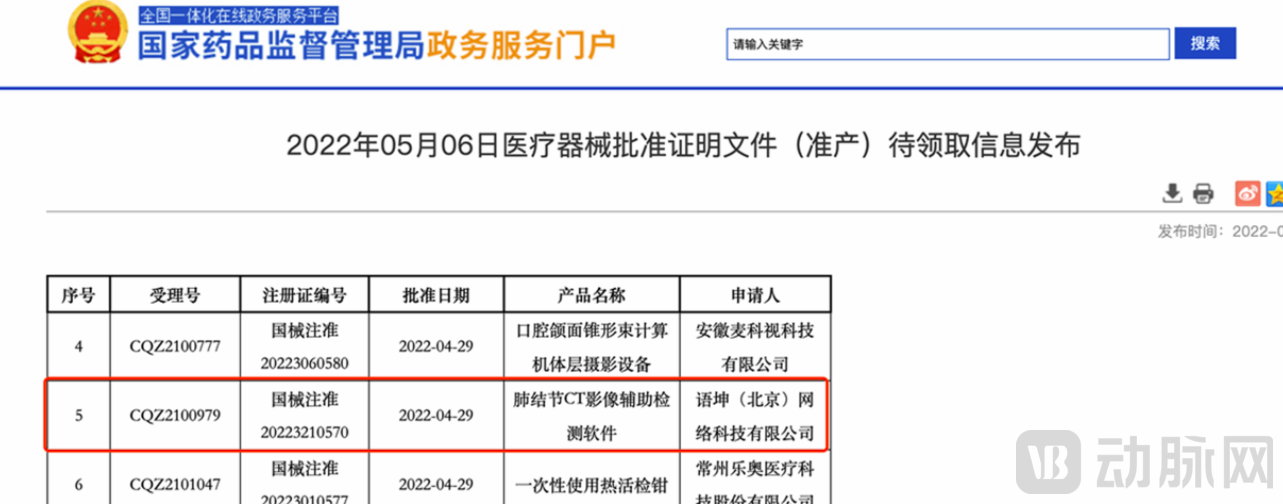
In just half a month, AI healthcare company SHUKUN Technology has successively obtained two Class III medical device certificates for AI-assisted diagnosis.
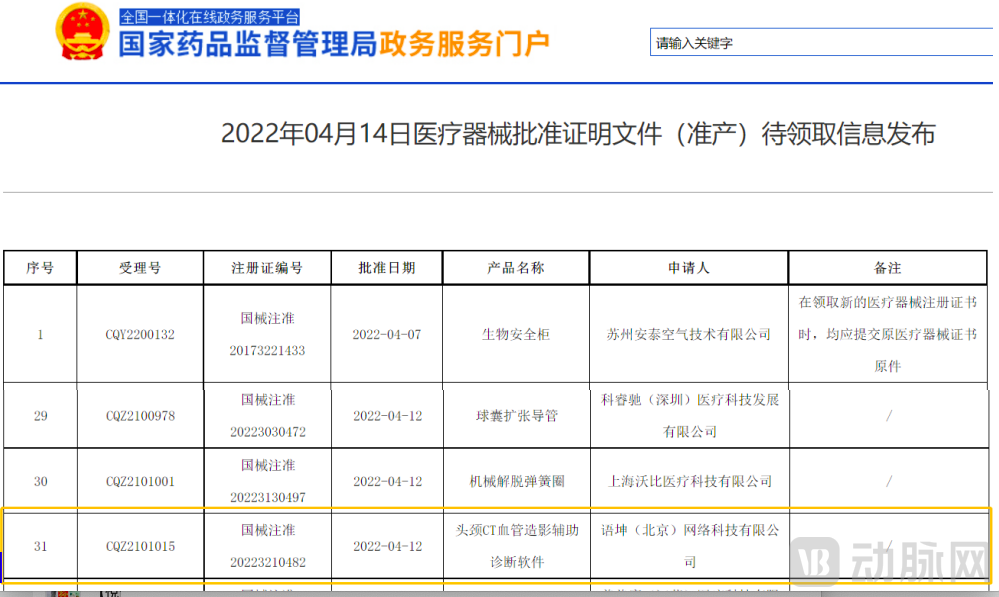
CerebralDoc, an AI-assisted software for evaluating head and neck CT angiography (CTA) images, approved in mid-April, is the world’s first Class III medical device certification for head and neck CTA AI. A research paper on head and neck CTA, jointly conducted by Xuanwu Hospital and SHUKUN Technology, was previously published online in Nature Communications, a subsidiary journal of Nature (IF=12.121).
The paper shows that after the system was implemented at Xuanwu Hospital, the average post-processing time for imaging decreased from 14.22 ± 3.64 minutes to 4.94 ± 0.36 minutes, reducing the time to one-third of the original duration; furthermore, the number of clicks required by technicians dropped rapidly due to AI integration, decreasing from 115.87 ± 25.9 clicks to 4 clicks.
Another set of more direct data can better measure the value of AI in post-processing of head and neck CTA: After five months of use, the number of technicians performing CTA post-processing at Xuanwu Hospital has been reduced from three to one.
The pulmonary nodule AI system approved in late April is a relatively conventional product. To date, several artificial intelligence and internet companies have obtained Class III medical device certifications for pulmonary nodule AI systems, with SHUKUN being the sixth.
Securing Two Class III AI Medical Device Certifications in About Two Weeks: What Did SHUKUN Do Right?
Within SHUKUN’s product portfolio, both head and neck CTA and pulmonary nodule AI are classified as CT-based computer-aided diagnosis software, each serving its distinct clinical purpose.
Head and neck CTA falls under SHUKUN’s “Digital Brain” portfolio, which also includes collaborative products such as CerebralDoc, SK-LVO, SK-StrokeDoc, SK-ASPECTS, CTPDoc, AneurysmDoc, and Aneurysm SurDoc. Starting from triage of stroke patients, these solutions support all necessary imaging examinations for both hemorrhagic and ischemic stroke patients presenting within different time windows, thereby providing a one-stop stroke imaging assessment solution.
LungDoc, together with modules such as PneumonicDoc and CaScoreGO V2.0, constitutes the “Digital Chest” solution, designed to assist physicians in the auxiliary diagnosis of major cardiopulmonary conditions—including early lung cancer screening, pneumonia, emphysema, and non-gated calcium scoring—based on a single CT scan.
The emergence of concepts such as “Digital Chest,” “Digital Brain,” “Digital Abdomen,” “Digital Heart,” and the under-construction “Digital Musculoskeletal System” aims to break through the current limitations of AI-assisted diagnostic technologies in healthcare. In clinical practice, when a patient undergoes a chest CT scan for a fracture, physicians are obligated not only to identify the fracture but also to screen for other potential abnormalities within the imaging data. However, from the perspective of medical AI development, algorithm designers are more adept at addressing single-point issues rather than holistic ones, whereas the latter is precisely what clinical practice demands.
In this context, for next-generation AI products to achieve a breakthrough, they must transcend the limitations of single departments and single modalities. By focusing on patients’ physiological functions and adopting a holistic perspective, these products can deliver more precise and convenient smart healthcare services. Within SHUKUN’s ecosystem, head and neck CTA and pulmonary nodule AI are integral components of its comprehensive solutions, serving as indispensable pieces of the puzzle.
To date, SHUKUN has spent nearly five years building its Digital Human AI technology platform, launching more than 30 products including Digital Heart, Digital Brain, Digital Chest, Digital Abdomen, and Digital Musculoskeletal. The independent regulatory approval of each product enhances the overall value of SHUKUN’s comprehensive solutions. Only by advancing along this path toward the ultimate goal of detecting a wide range of conditions from a single scan can hospitals effectively reduce diagnostic and screening costs, thereby enabling AI to truly fulfill the principle of “superior physicians preventing disease before it arises.”
Although SHUKUN’s blueprint has charted a viable course for the medical AI industry, most companies still need to achieve breakthroughs in key single-point technologies before they can develop comprehensive solutions.
The newly approved head and neck CTA represents the world’s first Class III medical device certification for an AI-powered head and neck CTA solution, marking another flagship product in the competitive AI landscape. As of April 26, 2022, a total of 36 AI-assisted diagnostic medical products had received Class III certification from China’s National Medical Products Administration (NMPA). However, an analysis of these registered AI products reveals that most software applications target scenarios such as fundus imaging, pneumonia, and pulmonary nodules, aiming to assist with fundus photography or non-contrast CT scans. Few products address more advanced modalities and complex data analyses, such as contrast-enhanced CT and perfusion imaging.
Performance assessment indicators for tertiary public hospitals explicitly require these institutions to undertake more demanding medical tasks, including performing as many Level 4 surgeries as possible. Meanwhile, the “Thousand Counties Project” aims to ensure that at least 1,000 county-level hospitals across China reach the service capacity standards of tertiary hospitals within five years, laying a solid foundation for managing common diseases at the city and county levels. Against this backdrop, basic diagnostic services, primarily simple non-contrast CT scans, will be shifted to lower-tier hospitals, while tertiary public hospitals will increasingly adopt a patient- and disease-centered approach, focusing on the diagnosis and treatment of more complex conditions.
To meet such demands, medical AI companies need to deploy more comprehensive and integrated solutions on one hand, while strategically positioning themselves for more complex diseases and examination scenarios on the other.
SHUKUN’s two Class III medical device registrations represent a proactive strategic layout in response to these two trends.
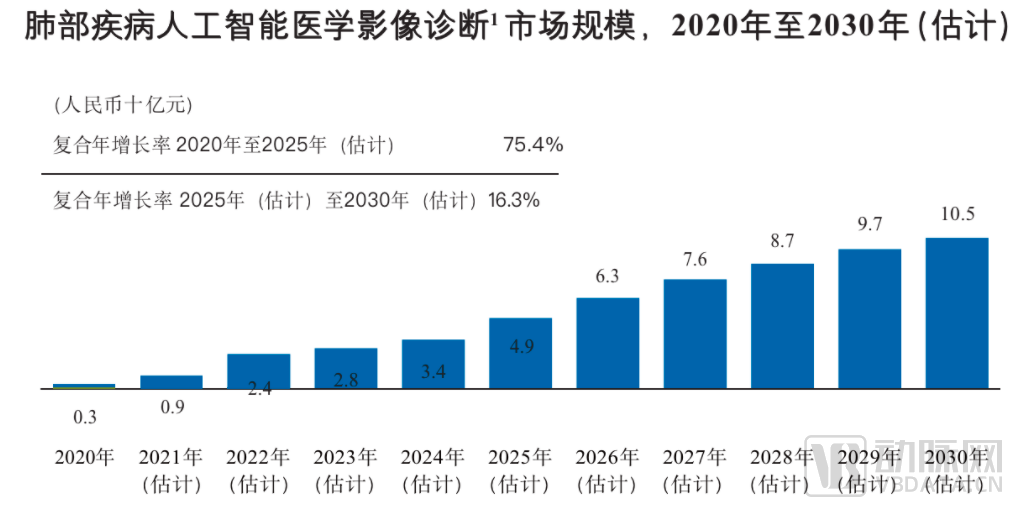
There is substantial demand for chest CT examinations at the primary care level. In particular, for non-contrast lung CT scans, data from Zhuoshi Consulting indicates that the market size for AI-based medical imaging diagnosis of pulmonary diseases in China is projected to grow from less than RMB 1 billion in 2020 to RMB 4.9 billion in 2025, representing a compound annual growth rate (CAGR) of 75.4%, and further increase to RMB 10.5 billion by 2030, with a CAGR of 16.3% from 2025 to 2030. SHUKUN’s newly acquired AI solution for pulmonary nodules, combined with its existing AI for pneumonia, is well-positioned to meet this market demand.
Stroke, particularly acute stroke, presents a more complex clinical scenario for diagnosis and treatment. Following the establishment of the Stroke Engineering initiative in 2019, national regulations mandated that stroke centers become standard components of secondary and tertiary hospitals. In the current context of scarce medical resources, the emergence of one-stop AI solutions for stroke can help stroke centers effectively enhance their diagnostic capabilities and, to some extent, reduce labor costs. Head and neck CT imaging is a critical component of one-stop AI solutions for stroke.
Revisiting the Business Model. Currently, medical AI tends to explore two directions: the health checkup sector and the serious medical diagnosis and treatment sector. The main entities in the health model are primarily checkup institutions and hospital checkup departments, charging per case, which is a relatively ideal revenue model for the medical artificial intelligence industry. In this regard, SHUKUN mainly focuses on its "Digital Chest" solution, generating reports for six major chest diseases from a single plain CT scan.
In early 2022, SHUKUN signed a strategic cooperation agreement with Meinian Onehealth Healthcare Group. The two parties will engage in in-depth collaboration focused on early screening for chronic diseases and health management, promoting the comprehensive implementation of “intelligent health management” application scenarios. Patients undergoing specific check-up items at Meinian can receive two reports—“pulmonary nodules” and “calcium scoring”—from a single non-contrast CT scan, enabling a one-time assessment of risks for both lung cancer and coronary heart disease.
Serious medical diagnosis and treatment, primarily conducted in tertiary hospitals, require extending from imaging to clinical services. Providing comprehensive, one-stop solutions for disease diagnosis, treatment, and follow-up care, rather than isolated services, is key to demonstrating the innovative value of medical AI in the future. Currently, SHUKUN offers hospitals one-stop CT examination services covering NCCT, CTA, and CTP, serving multiple critical scenarios such as radiology departments and stroke centers.
Recently, after AI-assisted diagnostic technology was removed from the “National Catalogue of Restricted Medical Technologies,” the National Health Commission has eliminated various AI deployment requirements, such as “physicians in clinical departments must have more than five years of experience in relevant clinical diagnosis and treatment” and “physicians in the medical imaging department must have more than five years of experience in clinical imaging work.” With lower entry barriers, departments such as radiology and stroke centers will become key application scenarios for high-modality AI-assisted diagnostics, including coronary CTA and head-and-neck CTA.
In summary, following the approval of its coronary CTA certification, SHUKUN’s subsequent acquisition of a Class III medical device certificate for another CTA AI product marks a significant step in its strategic expansion into higher-modal imaging and more complex technologies, thereby paving the way for accelerated commercialization.
From the macro-level “Thousand County Project” and “High-Quality Development of Public Hospitals,” to the micro-level Guiding Principles for Registration Review of Artificial Intelligence Medical Devices, and the removal of AI-assisted diagnosis from the National Catalogue of Restricted Technologies (2022 Edition), the sequential advancement of policies has fostered a robust R&D, regulatory approval, and market environment for the development of medical AI.
Under the new regulations, both primary healthcare institutions and tertiary hospitals are experiencing rising demand for medical AI procurement. A simple statistical analysis of the number of auxiliary diagnosis-related procurement projects on the China Government Procurement Network reveals that hospitals’ demand for artificial intelligence continues to rise.
However, as the regulatory review and approval system and the development of medical AI models are still evolving and being refined, medical artificial intelligence products that have obtained Class III medical device certification primarily focus on addressing single tasks. With the exception of a few leading enterprises such as SHUKUN, the field has not yet achieved an ideal, end-to-end, one-stop AI-assisted diagnostic solution.
In other words, while the current form of medical AI can meet certain needs of physicians, it still falls short of the final product state. In this context, obtaining regulatory approval is a viable strategy for medical AI companies, but more importantly, they should build comprehensive solutions that overcome the limitations of individual AI models and align with clinical needs.
In this direction, SHUKUN has already written a relatively complete solution in medical artificial intelligence, and whether this solution can ultimately break through the limitations of medical AI still needs time to prove.