

Real Raises $37M Series B, Scaling Group-Based Mental Health Platform Amid Surging Demand

Real
Mental Health System Development and Provider
In 2022, as the pandemic entered its third year, the term “collateral damage” was increasingly cited by the media. People gradually came to realize that alongside the COVID-19 pandemic, there was also a “pandemic” of mental health issues.
Recently, The Lancet published a report stating that in the absence of the pandemic, 193 million people worldwide would have suffered from depression in 2020; however, the actual number rose to 246 million post-pandemic, representing a 27.6% increase. Meanwhile, the number of individuals with anxiety disorders also increased from an estimated 193 million to an actual 246 million.
As global demand for mental health services rises, the mental health sector is experiencing significant growth. According to data from China Business Industry Research Institute, the global digital mental health industry secured a total of $3.54 billion in financing across 113 deals in 2021, with three companies leading the way by going public.
Traditional one-on-one psychological counseling is characterized by high costs, high barriers to entry, and lengthy processes; Real emphasizes accessibility.
Real is a mental health company founded six months before the outbreak of the pandemic, headquartered in New York, USA, with its core product being a mental health software named Real.
Like many mental health companies, Real was founded and is led by a woman, Ariela Safira. Ariela Safira graduated from Stanford University in the United States with degrees in mathematics and computer science. She subsequently enrolled in the clinical psychology program at Columbia University. In 2019, she left the program to found Real.
Dr. Nina Vasan, Chief Medical Officer of Real, is also a woman. A graduate of Harvard Medical School, she teaches psychiatry at Stanford University in addition to her role at Real.
The imbalance between the supply of healthcare providers and patient demand is a pervasive issue across all medical sectors, particularly in mental health. According to a Deloitte report, the global median number of mental health workers per 100,000 people is nine, with 70 in high-income countries and fewer than two in low-income countries.
Andrew Solomon, a writer who has suffered from depression, once made the frequently quoted remark, “The opposite of depression is not happiness, but vitality.” In the same speech, he also stated, “The currently common treatments for depression are terrifying to me; they are not only ineffective but also extremely expensive.”
This statement actually highlights the dilemma faced by many patients with depression: If one notices symptoms of depression, is it short-term depressive mood or a mental illness? If diagnosed with a mental illness, should one opt for medication or psychological counseling? If choosing medication, can the treatment model of “five-minute consultation and five-minute prescription” truly provide targeted therapy? If opting for psychological counseling, is it worth paying several hundred yuan per session?
According to data from Yi Xinli’s “2021 Annual Report on the Mental Health Industry,” 25% of patients spent between RMB 1,000 and RMB 5,000 on psychological counseling, while 11% spent more than RMB 50,000.
In terms of cost and accessibility, psychological counseling is naturally well-suited to online platforms. Coupled with the catalytic effect of the pandemic in the past two years, there are now over 10,000 mental health-related apps available across Apple’s App Store and Google Play.
The Real website features a striking statement: “People think psychological counseling is for those with more money, more time, more severe problems, and better insurance, but they exclude themselves.”
Ariela Safira, founder and CEO of Real, stated that previously, scheduling a psychological counseling session typically required booking a fixed time and location a week in advance. Patients would attend the appointment as scheduled, only to spend a significant amount of money for ambiguous answers. This model is clearly unsuitable for most people.
Overall, Ariela Safira believes that traditional psychological counseling is characterized by high costs, high barriers to entry, and lengthy processes. She aims for Real, as a next-generation counseling platform, to reach a broader user base not limited to individuals with mental health disorders. With the sole eligibility requirement being that users must be at least 18 years old, Real explicitly states in its Terms of Service that it is not a diagnostic or therapeutic software and cannot replace professional medical care.
Real positions itself as “providing help before a crisis strikes,” advocating for mental health awareness as a lifestyle and self-awareness as a life skill.
Centered on Mental Health Courses, with a Focus on Group Therapy
The Real software is broadly divided into four sections: Pathways, Real Talks, Real Pulse, and Events, with Pathways being the core section.
Pathways are essentially an online course-like format, with different Pathways representing different themes. Currently available topics include depression management, appearance anxiety, burnout, and adult friendships.
Users who select the same topic are grouped together, with each group assigned a certain number of therapists. According to Real, all of their therapists are licensed.
Different Pathways can be understood as distinct mental health courses, offered in text, video, and audio formats. Therapists guide users through each course, which concludes with “after-class exercises.”
Pathways’ video and audio content is pre-recorded, allowing users to listen at their convenience. Each course is divided into multiple stages, with one stage released every two days. Prior to the new version, Real adhered to a seven-day release schedule for each stage. Ariela Safira stated, “In response to user demand for shorter intervals between lessons, we have reduced the interval to two days while still ensuring users have adequate time to reinforce their learning.”
In addition to the fixed curriculum, therapists also organize group roundtable discussions for group communication via online video.
Real Talks is personalized audio content tailored by therapists to address users’ individual inquiries. Unlike traditional in-person counseling sessions that typically last two hours, each Real Talks episode is only five minutes long, allowing users to listen without setting aside dedicated time, making it better suited for fast-paced lifestyles.
Real’s official website lists some previously answered questions, such as “How to care for a loved one with mental illness?” and “Why do I suffer from insomnia?”
Real Pulse is a tracking tool that records monthly psychological changes. Users are reminded by the software each month to log various psychological metrics, including anxiety, vitality, confidence, mood, and work efficiency, based on which the software generates charts depicting psychological trends.
Events are irregularly scheduled online group interaction sessions, held approximately two to five times per month. Each session features a distinct theme proposed by the therapist, such as cultivating meaningful friendships or addressing social comparison triggered by social media, around which patients engage in discussion.

Events Interface | Image Source: Real Official Website
Patients with mental health conditions often experience stigma, fearing social interaction like characters trapped in a shell, with “fragility” being a common label attached to them. However, at Real events, everyone shares similar challenges, making it easy to find resonance and a sense of belonging, and no one is judged for their psychological issues.
Subscription-based membership, starting at $13 per month
Accessibility is a key focus for Real. In addition to 24/7 online services accessible anytime and anywhere, subscription pricing is also an integral part of accessibility.
Users can download the Real app from software stores on their own. Real offers two paid services—Subscription and Membership—with Membership priced 1.5 times higher than Subscription. All users who purchase either paid service can unlock all Pathways, but the Events module is exclusively available to Members.
Real offers three auto-renewing subscription options on the Apple App Store: $23.99 per month, $104.99 per six months, and $164.99 per year. A three-month membership can also be purchased separately for $71. In comparison, the cost of psychological counseling in the United States is approximately $90–$130 per hour.
Real claims to have data demonstrating that its care methods can effectively reduce user anxiety and depression, but specific data were not found on its official website.
Recently, Real completed a $37 million Series B financing round. The round was led by Owl Ventures, with participation from Iyah Romm, former CEO and Chief Health Officer of Cityblock, Dr. Slyvia Romm, Lightspeed Venture Partners, Female Founders Fund, Forerunner Ventures, and BBG Ventures.
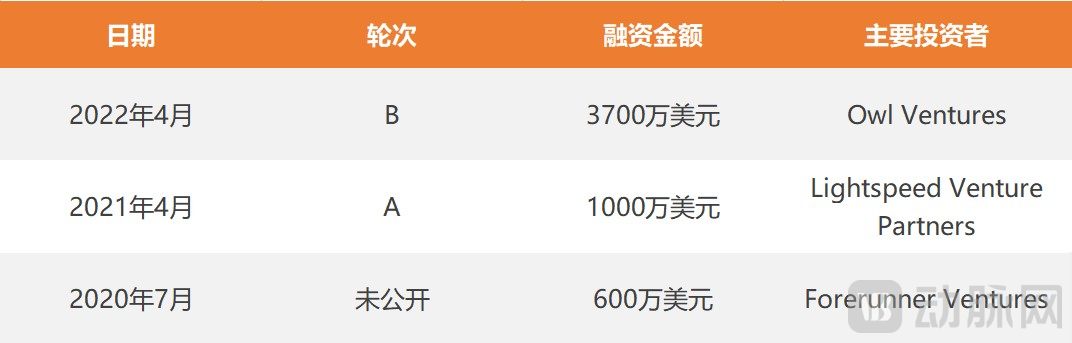
Real’s Historical Financing Rounds | Data Source: VBInsight Database
Real will use the funds to expand its business, hire more therapists, and establish its first offline studio in New York.
The Pandemic Has Fueled a Boom in China’s Mental Health Sector, but Most Companies Remain in Their Early Stages
In late 2020, the National Health Commission of China released data showing that the prevalence of depression in China was 2.1%, and the prevalence of anxiety disorders was 4.98%. Among these cases, fewer than 10% received treatment.
Online mental health treatment, characterized by its simplicity, speed, and affordability, has become an important complement to traditional mental healthcare. The pandemic, in particular, has catalyzed the rapid development of the digital mental health industry. According to data from China Business Industry Research Institute, global investment and financing in the digital mental health sector peaked in 2021.
In line with global trends, total financing for digital mental health in China reached $168 million in 2021, across approximately 20 funding rounds.
In terms of business segmentation, overseas B2B enterprises have developed rapidly, with examples including Quartet and Talkspace, the latter of which went public last year. In the domestic market, however, a B2B model with enterprises as the service purchasers may be difficult to realize in the short term.
Moreover, the development of meditation services, which have gained significant popularity abroad, has been relatively slow in China. Currently, the domestic meditation market includes companies such as KnowYourself, Tide, and Now; however, constrained by the local meditation culture and public awareness, no unicorn company akin to Calm has yet emerged.
Compared with other medical sectors, the broader mental health field has a lower barrier to entry. In recent years, a number of companies focusing on broad-spectrum mental health have emerged in the market, each adopting different market entry strategies. These include Sumian Technology, Sleepace, Woniu Sleep, and Xinchao Technology, which specialize in sleep-related solutions, as well as The Depression Lab, which has built online communities for individuals with depression. Different players are deeply cultivating their respective vertical niches, offering tailored solutions for diverse population groups. Such applications typically also incorporate social features.