

Dynamic Biosystems Launches China's First Novel RNA In Situ Sequencing Technology, Pioneering Single-Cell and Spatial Omics with Significant Clinical Potential

Dynamic Biosystems
Single-cell technology and product development, production, sales, and service provider
In 2022, spatial omics technology was named by Nature journal as one of the seven most noteworthy technologies, holding significant potential and value for clinical translation. In Situ Sequencing (ISS), as a spatial omics technology, can directly present gene expression patterns at their original locations within tissues,It is a cutting-edge technology that perfectly integrates histopathology and molecular pathology, enabling intuitive and precise visualization of results. It holds significant promise for delivering substantial value in areas such as companion diagnostics for tumor immunotherapy and tumor microenvironment analysis.On April 21, Dynamic Biosystems’ subsidiary, Xianneng Biology, took the lead in China by launching a novel RNA in situ sequencing technology, marking a breakthrough in domestically developed spatial transcriptomics. Livestream link: http://navo.top/vumiqq
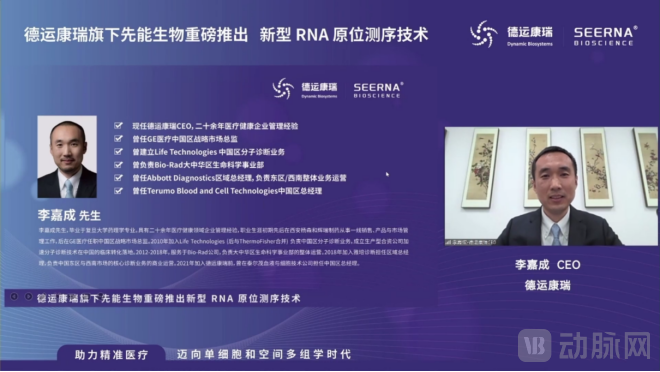
Li Jiacheng, CEO of Dynamic Biosystems, presided over the press conference and stated in his opening remarks that, as one of the few companies in China dedicated to full-chain single-cell and spatial multi-omics technologies, Dynamic Biosystems is committed to building a competitively international product pipeline in single-cell and spatial multi-omics through continuous innovation in foundational technologies.This marks the first launch in China of a novel RNA in situ sequencing technology with independent intellectual property rights, providing domestic users with a spatial omics tool featuring subcellular resolution, high sensitivity, and high specificity.
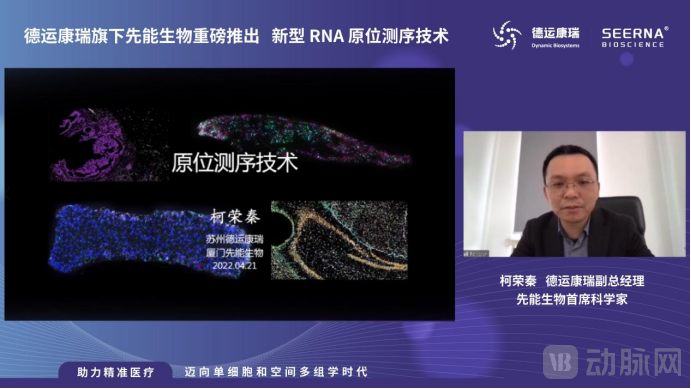
In situ sequencing technology was first published in the journal Nature Methods in 2013, with Professor Rongqin Ke as the first author. After years of technological development and breakthrough innovations, it has been successfully commercialized in China. At this launch event, Professor Rongqin Ke, the inventor of in situ sequencing technology and Deputy General Manager of Dynamic Biosystems, provided a detailed explanation of the technology’s development history, principles, characteristics, and application cases.
In situ sequencing technology relies on padlock probes and rolling circle amplification technology,It is a technology that employs gap-targeting or barcode-targeting as its sequencing strategy, incorporates the chemical principles of sequencing-by-ligation and sequencing-by-synthesis, uses rolling circle amplification products as the sequencing medium, and thereby achieves short-read sequencing of RNA in situ within tissues or cells.. Up to 256 target mRNA molecules can be detected in a single run through four rounds of sequential sequencing imaging.
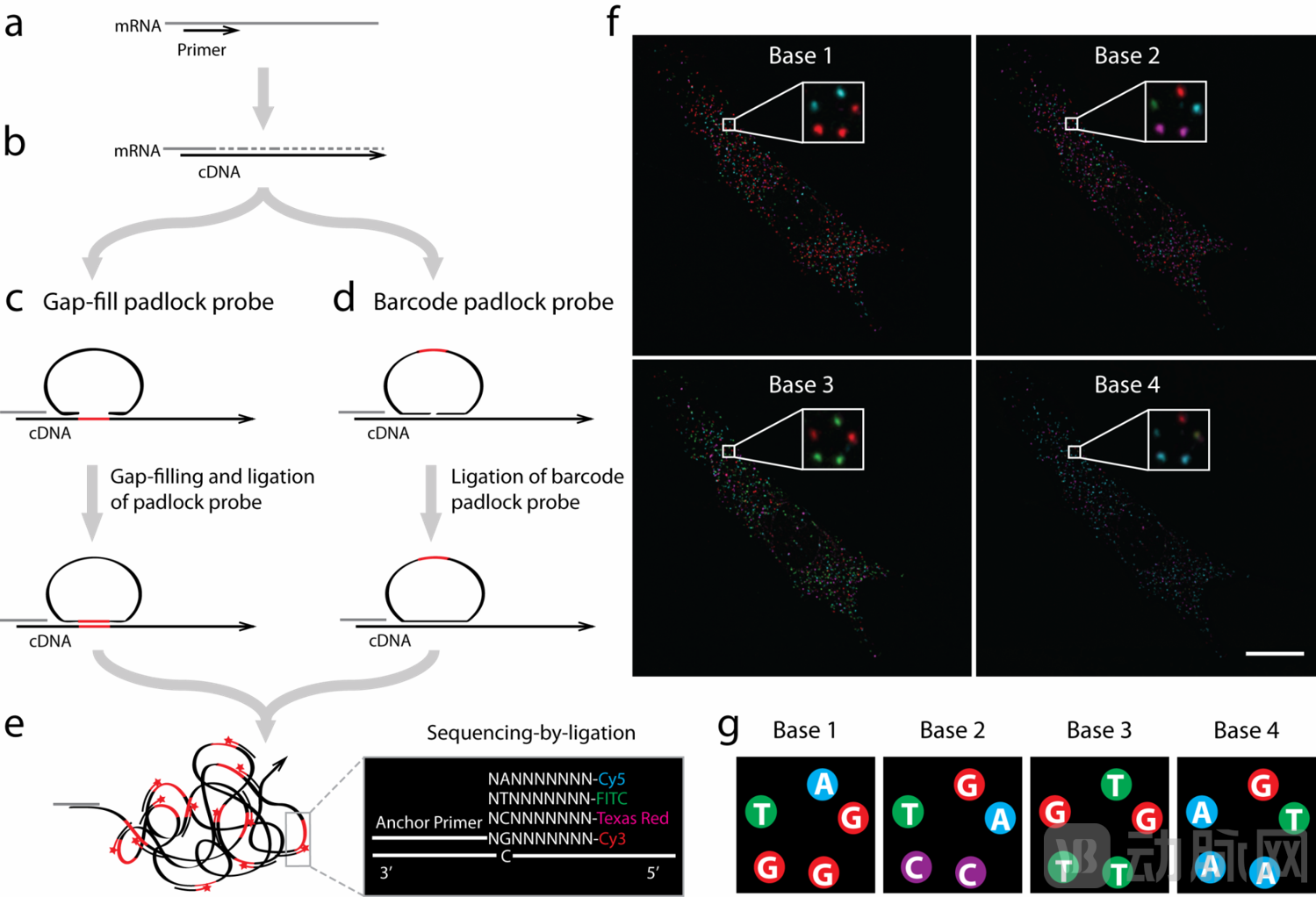
Professor Ke Rongqin stated that, upon returning to China, they achieved comprehensive innovation and breakthroughs in multiple aspects of in situ sequencing technology. By eliminating the need for cDNA reverse transcription and enabling probes to directly and specifically target mRNA, gene detection efficiency has been significantly enhanced, with substantial improvements in the detection capability for low-abundance expressed genes. Furthermore, both probe design and the sequencing imaging process have been re-engineered; each gene is targeted by 3–5 pairs of specific binding probes, which further enhances the specificity and sensitivity of detection. This advancement also broadens the scope of applications and the range of compatible sample types. In light of these technological innovations and breakthroughs, we term this approach “Novel RNA In Situ Sequencing” technology.
Novel RNA in situ sequencing technology directly “lights up” gene expression signals within the native context of tissues and cells, enabling analysis of gene expression distribution patterns at single-cell or even subcellular resolution—a challenge that remains difficult for currently commercialized spatial transcriptomics technologies to overcome. Many tissue-specific structures are extremely fine, with exceptionally complex or elongated spatial distributions, sometimes consisting of only a single cell layer or a few cells, thereby particularly requiring the ultra-high-resolution spatial mapping capabilities of in situ sequencing. A second advantage is that in situ sequencing can decode expression information for up to 256 genes with 100% coverage across a 10 mm × 10 mm tissue area.Compared with existing foreign spatial transcriptomics technologies, such a “panoramic view” ensures that no tissue structural features or important histopathological regions are missed, which is crucial from the perspective of clinical diagnostic applications.
The most common application of in situ sequencing technology is its complementary integration with single-cell sequencing. Based on cell marker genes or functional genes identified through single-cell sequencing analysis, specific probes are designed to focus on analyzing the expression patterns and distribution rules of these genes within their spatial context in tissues. In a collaborative study on neurodevelopment published in Nature Neuroscience (impact factor: 24.884) in 2021, Professor Rongqin Ke and colleagues employed single-cell sequencing combined with novel RNA in situ sequencing technologies to comprehensively characterize the spatial heterogeneity of genes associated with neurodevelopment.This demonstrates the application value of this technology in research fields such as neurodevelopment and neurological diseases.
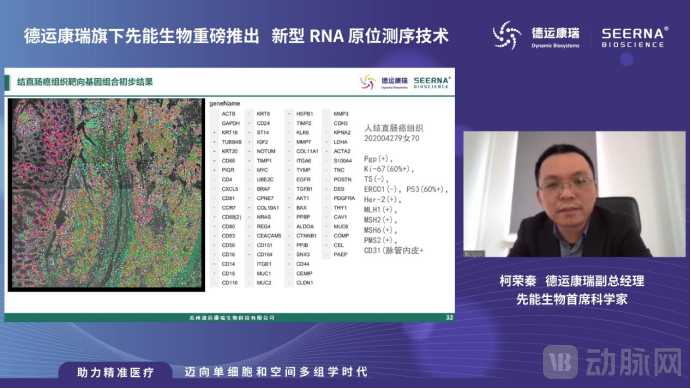
More promisingly, in situ sequencing technology possesses powerful capabilities to decipher the tumor immune microenvironment and spatial heterogeneity. Professor Rongqin Ke has successfullyBreast Cancer Samplesand colorectal cancer tissues were mapped"Molecular Atlas" of Immune Microenvironment-Related Genes, based on this molecular atlas, gene expression regulatory networks can be constructed within specific tumor microenvironment regions, and even cell boundaries can be identified through algorithms to assign gene expression signals to individual cells,This indicates that in situ sequencing technology holds promise for future applications in scenarios such as tumor marker discovery, companion diagnostics during drug therapy, and clinical pathological diagnosis.
This release is full of surprises. Based on the probe design and experimental principles of novel in situ sequencing, we have launched single-molecule RNA fluorescence in situ hybridization (asmFISH). This technology can simultaneously verify the expression locations of 1–4 target molecules in a single assay, while offering high specificity and high sensitivity. It is an excellent choice for downstream validation following single-cell sequencing and spatial omics studies. The experimental procedure is simple and easy to master. The company has also successfully developedSEERNA®Commercial ISH RNA Fluorescence In Situ Hybridization Kits: Custom Probe Design for Diverse Research Needs, Offering Cost-Effective Validation Tools for Researchers and Enabling Translation into Personalized Clinical Molecular Pathology Applications
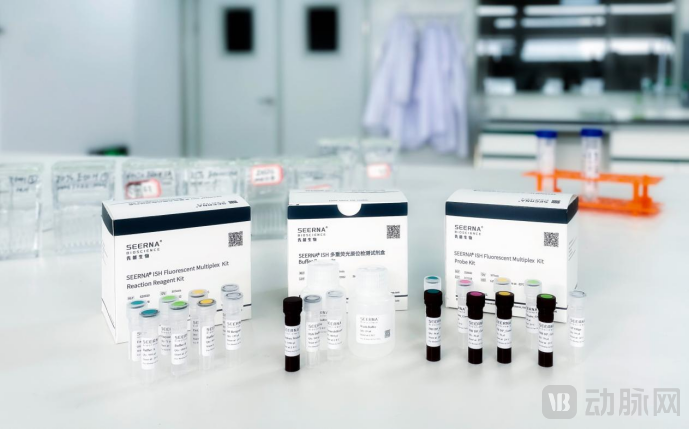
SEERNA®ISH RNA Fluorescence In Situ Hybridization Detection Kit
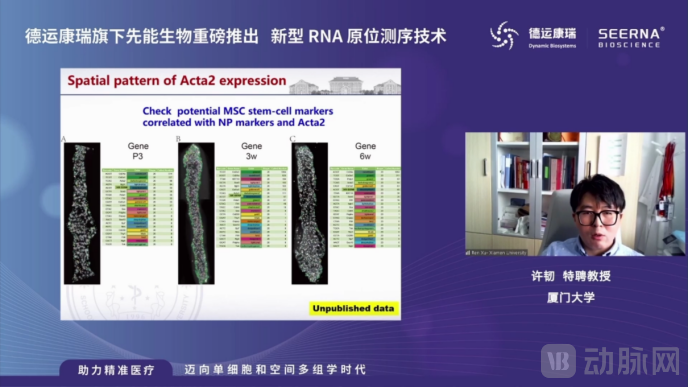
Professor Xu Ren from the Medical College of Xiamen University is the [key figure/expert] behind the technology we are launching.As one of the first users, and as an invited guest, shared insights on using novel RNA in situ sequencing technology to validate marker genes for nucleus pulposus cell subtypes and stem cell discoveries in bone marrow tissue.Further confirming that spatial omics technologies play an indispensable role in stem cell discovery.Notably, the study also employed Dynamic Biosystems’ proprietary Paired-seq single-cell sequencing technology, fully demonstrating the platform’s advantage in efficient cell capture. In a related development, a collaborative research team led by Zhou Dawang and Chen Lanfen from the School of Life Sciences at Xiamen University published a paper in Cell, using asmFISH technology from Sino Biological to validate two genes, Ctgf and Cyr61, and revealing that excessive glycogen accumulation is prevalent in early hepatic tumor lesions and small tumors.
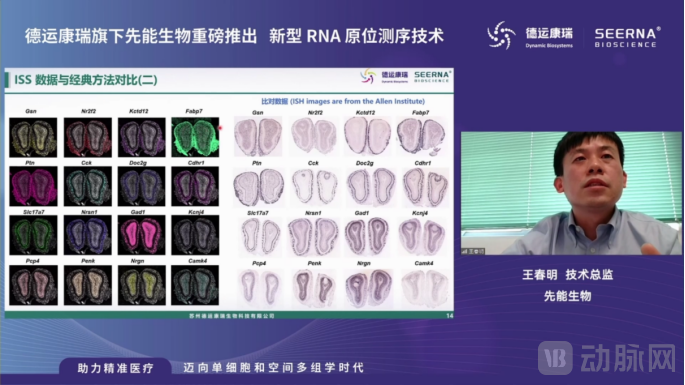
At the press conference, Dr. Wang Chunming, Technical Director of Xianneng Biotechnology under Dynamic Biosystems, presented demo data from in situ sequencing of 16 genes in the mouse olfactory bulb. The results showed strong concordance when compared with in situ hybridization (ISH) data from the Allen Brain Atlas. Furthermore, Dr. Wang provided a detailed overview of the company’s one-stop spatial transcriptomics technical service workflow, which is initially being offered to customers in China.
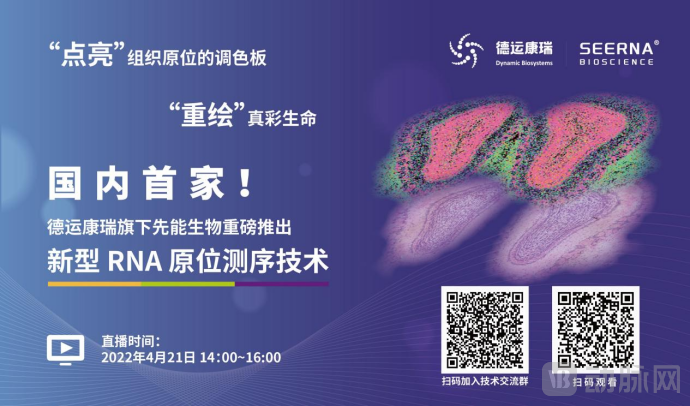
Finally, the keynote speakers provided insightful on-site answers to numerous questions from the online audience. For further inquiries regarding novel RNA in situ sequencing and single-molecule RNA fluorescence in situ hybridization (smFISH) technologies,Please scan the QR code below to join the group.Flow, or send an email to support@dynamic-biosystems.com;We provide timely answers and responses online.
About Dynamic Biosystems
Dynamic Biosystems is a technology platform company specializing in single-cell and spatial multi-omics. By leveraging technologies in single-cell enrichment and detection, single-cell sequencing, and spatial multi-omics, the company meets analytical needs across diverse application scenarios. Dynamic Biosystems focuses on unlocking significant potential in precision oncology, eugenics and healthy reproduction, and drug discovery. Committed to advancing precision medicine into the era of single-cell and spatial omics, the company supports life sciences and clinical medicine, contributing Chinese expertise to the global cause of human health.
About Xianneng Bio
Xiamen Xianneng Biotechnology Co., Ltd. is currently one of the few emerging technology-platform companies in China dedicated to single-molecule RNA in situ detection and analysis. Adhering to frontier technology-driven development, the company strives to apply its significant technological achievements and breakthroughs to the fields of basic biology, translational medicine, and clinical diagnostics, thereby establishing a comprehensive scientific platform that integrates product development with testing services. Committed to integrity, focus, innovation, and progress, we diligently provide customers with high-quality and reliable products and services.