

ZeKang ZhiGu Files IPO Prospectus: Pioneering Intelligent Orthopedic Implants and Digital Healthcare Platform
“Orthopedic implants have transitioned from the era of ‘cold weapons’ to the age of intelligence.”
Chengdu Zekang Smart Bone Technology Co., Ltd.(hereinafter referred to as“ZeKang Smart Bone”) The founder told VCBeat that ever since humans in primitive societies began running for hunting purposes, fractures have been a constant companion throughout the development of human civilization. In ancient times, fractures were immobilized using tree branches and vines. Over thousands of years, Traditional Chinese Medicine (TCM) orthopedics has continuously inherited and innovated, employing small splints, bandages, herbal plasters, and plaster casts for the treatment of traumatic injuries and fractures. With over a century of development in Western orthopedics, fracture management entered the “cold weapon” era, where orthopedic implants made of stainless steel, titanium alloys, and PEEK began to be used in surgical patients, significantly improving therapeutic outcomes. However, after more than a hundred years of evolution, the traditional “plate-and-screw” systems are in urgent need of upgrading. In this highly competitive “cold weapon era,” such technologies are poised to become history amid the ongoing volume-based procurement reforms.
Orthopedic Surgeons Commercializing Research Achievements Through Entrepreneurship,
Filling the Domestic Gap in Smart Orthopedic Implantable Sensors
In 2017, the founder of Zekang Zhigu proposed “"Smart Orthopedic Implants" Concept, and co-founded an interdisciplinary research team in medicine and engineering with several other co-founders to conduct research on intelligent orthopedic implants, subsequently securingNational Natural Science Foundation of China, China Postdoctoral Science Foundationfunded by multiple research grants. The founders believe that their competitive advantage and core mission lie in better resource integration and the cross-pollination of multidisciplinary ideas to provide more comprehensive and effective solutions to the long-standing challenges in orthopedic treatment. Against the backdrop of China’s large population, accelerating aging demographic, and growing and evolving demands from both patients and healthcare providers, there is a critical need for orthopedic implant devices that match international leading standards while offering greater cost-effectiveness.
Zekang Smart Bone, established in 2021, is aA high-tech enterprise dedicated to the development of intelligent consumables for integrated systems of smart medical implantable sensor chips and the construction of digital healthcare platforms.The company initially focused on the intelligent consumables and digital medical platform construction for orthopedic smart implantable sensor chip integration systems, with the long-term goal of becoming a comprehensive provider of medical implantable sensor system integration and digital medical platforms. The corporate vision is to become the builder and leader of AI-enabled devices for China’s smart orthopedic implantable sensor chip integration systems and digital medical platforms, promoting the standardization, digitization, precision, minimally invasive techniques, and intelligent development in orthopedics.
Although the company was established only one year ago, the core founding team of ZeKang ZhiGu had already been assembled in 2019. The core founding team includesA professor of orthopedics at a renowned Grade A tertiary teaching hospital in Chengdu, along with multiple experts in interdisciplinary medical-engineering R&D from Sichuan University, the University of Electronic Science and Technology of China, and the Suzhou Institute of Nano-Tech and Nano-Bionics, Chinese Academy of Sciences.ZeKang ZhiGu has established collaborative channels with numerous leading domestic orthopedic companies, and is supported by a team of experts including several vice general managers and R&D directors from the orthopedic industry, as well as specialists in active implantable medical devices with experience in cardiac pacemaker development.
“In July 2020, while communicating with an investor who had long focused on digital and smart implantable chip sensors, she mentioned that a major overseas orthopedic company was also working in this area. We learned that this orthopedic giant received U.S. FDA approval for its smart knee prosthesis in September 2021. However, at the inception of the Zeekang team, this foreign orthopedic giant’s product had not yet been approved, and its patents at the time did not include terms such as ‘knee joint,’ but rather used the broader term ‘implantable medical devices.’ As a result, we did not identify their patents during our initial searches,” said the founder of Zeekang Smart Bone, speaking with some excitement to VCBeat. He had never anticipated that his original concept for an intelligent orthopedic implant system would align so closely with that of a major international orthopedic player. This coincidence has further strengthened his resolve to advance the development of smart orthopedics in China. It is reported that this foreign enterprise is already preparing to initiate the medical device registration process for its smart knee products in the Chinese market.
As aOrthopedic Surgeon, Postdoctoral Fellow in Medicine, Associate Researcher, and Master’s Thesis Supervisor, the founder of ZeKang ZhiGu possesses up to8 years of experience in R&D of innovative orthopedic medical products at the intersection of medicine and engineering.When asked about the motivation behind starting the company, the founder of ZeKang Smart Bone stated that while a single surgery can save only one patient, intelligent orthopedic implants and digital healthcare can benefit a larger number of patients and drive innovation in orthopedic diagnosis and treatment.
The professional talent lineup of ZeKang ZhiGu’s founding team has not only endowed the company with an international perspective but also introduced advanced R&D technologies and concepts comparable to those of foreign medical device giants, filling the domestic gap in the integration of intelligent orthopedic implantable sensors with digital healthcare. The team’s original theoretical framework for intelligent orthopedic implants and its strategic planning have laid a solid foundation for ZeKang ZhiGu’s future development.
Currently, the products developed by the company includeSmart knee prostheses, smart intramedullary nails, smart knee spacers, and mobile terminal devices for non-destructive testing in orthopedicsand other related product lines. According to the founder of ZeKang ZhiGu, the company plans to file applications for more than 10 innovative Class III medical device products over the next decade. Currently, however, its primary focus is on: preclinical testing and animal studies for one Class III medical device (the intelligent knee prosthesis and its accompanying system); obtaining registration certificates for two Class II devices; advancing R&D optimization and finalization for two innovative Class III medical devices (intelligent intramedullary nails and intelligent knee inserts); and conducting preliminary research on smart implantable products such as neurostimulators and intelligent non-destructive testing mobile equipment.
The ZeKang ZhiGu team has currently applied for relevant national patents.Nearly 40 items, in addition50+ itemsThe patent technology disclosure is being drafted and prepared for submission. Meanwhile, ZeKang ZhiGu is alsoAccelerate preparations for filing international patents in the European Union and North America., to prepare for the future internationalization of its products. The company plans to submit applications for five Class III medical device registration certificates and obtain four Class II registration certificates within five years.
The volume of knee replacement surgeries in China is set to experience explosive growth,
Precision Medicine During Surgery and Intelligent Remote Rehabilitation After Surgery Will Become Trends
What is the current state of the market and industry in which ZeKang ZhiGu operates?
According to Frost & Sullivan statistics, in 2016, the number of hip replacement surgeries in China was 285,000, and the number of knee replacement surgeries was 171,000; by 2020, the number of hip replacement surgeries in China had risen to 715,000, and the number of knee replacement surgeries to 465,000; it is projected that in 2021, the number of hip replacement surgeries will reach 887,000, and the number of knee replacement surgeries will reach 577,000, with a compound annual growth rate (CAGR) of 24%.
Industry analysts have stated that the significant price reduction of artificial joint consumables following centralized procurement will directly ignite the surgical market for orthopedic joints. Coupled with the aging population in China, the volume of artificial joint replacement surgeries is poised for substantial growth.
However, traditional knee arthroplasty procedures rely excessively on surgical equipment and the surgeon’s clinical experience, lacking simple and effective tools for precise quantitative assistance. Although some companies offer knee trial components, these solutions predominantly focus on static measurements. Stress distribution varies across different degrees of flexion during knee movement; therefore, dynamic measurement would yield greater precision. Furthermore, existing products suffer from several limitations, including the absence of long-term postoperative follow-up data on stress distribution for comparison, a lack of big data-driven optimization of measurement metrics through longitudinal follow-up, and an insufficient number of measurement points.
A review of existing knee arthroplasty prostheses and other orthopedic implants reveals that they serve merely as replacements, lacking effective monitoring capabilities for postoperative patients’ range of motion, gait, posture, rehabilitation progress, implant loosening, and osseointegration. This deficiency hinders the implementation of the principle of “early detection, early intervention, early treatment, and early benefit.” However, these valuable data can not only guide physicians in tailoring rehabilitation strategies and protocols for patients but also provide feedback to manufacturers for optimizing prosthesis design, while simultaneously offering instructive insights for orthopedic surgeons in future procedures.
“This is akin to a tire: traditional rubber tires, lacking sensors, cannot monitor or provide early warnings for tire pressure, whereas tires equipped with sensors and tire pressure monitoring systems offer early warning capabilities that better protect the safety of drivers and passengers. Currently, this technology has become an industry standard for vehicles leaving the factory. Similarly, ZeKang Smart Bone is committed to establishing new industry standards for orthopedic implants through technological innovation, thereby benefiting a broad population of orthopedic patients by preventing and reducing complications such as screw and rod breakage and nonunion of fractures.” The founder of ZeKang Smart Bone told VCBeat that, through technological innovations including the Internet of Things (IoT), non-destructive testing, intelligent sensing, artificial intelligence, digital health technologies, sensors, and chips, the ZeKang Smart Bone team is dedicated to transforming the existing orthopedic diagnosis and treatment system with their lifelong commitment and conviction, promoting the standardization, digitization, precision, minimally invasive approaches, and intelligent development of orthopedics.
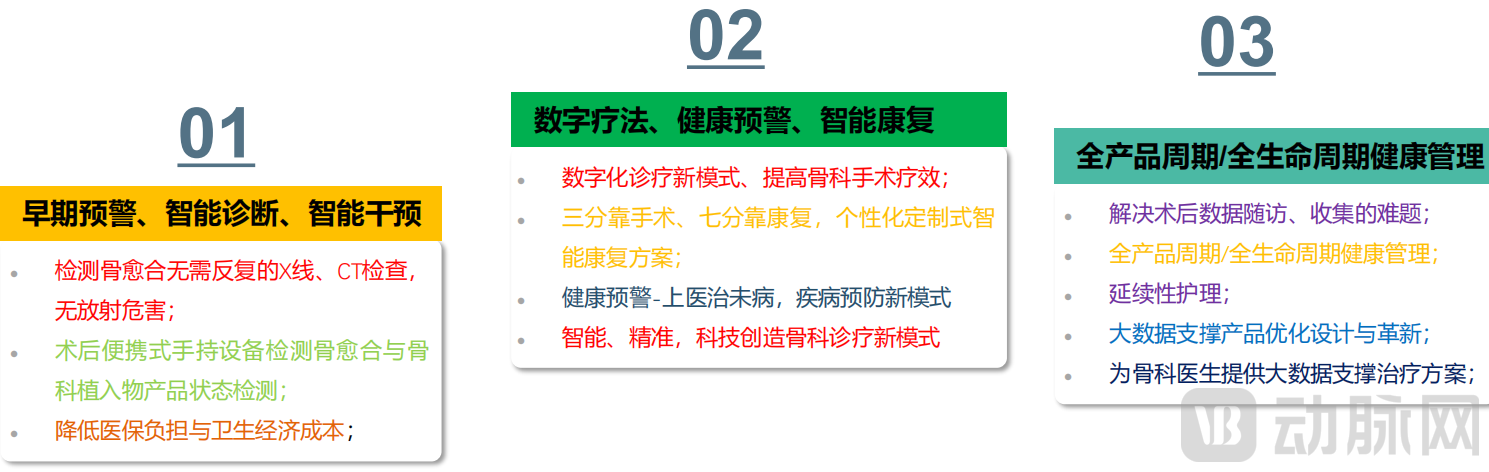
To address the aforementioned unmet pain points, ZeKang ZhiGu has launched the ZeKang ZhiGu Solution—Generation IIntelligent Knee Prosthesis and Its Companion Digital Healthcare System.This protocol is developed byImplants, Sensors, Patient-Side App, Physician-Side AppandCloud Platform for Engineering ManufacturersForming a complete digital health ecosystem.
Smart Knee ProsthesisThe built-in chip, sensor extension rod, and digital medical platform are independently developed and manufactured by ZeKang ZhiGu. The product has currently resolved core key technologies such as low power consumption, stability, safety, packaging, signal acquisition, and power management. It is medically packaged and sterilized in accordance with standards for permanent implants. The post-packaging dimensions are 8 mm × 50 mm. Future advancements will include 3D stacking to achieve further miniaturization. Next-generation smart knee prostheses will undergo iterative upgrades to incorporate features such as early infection warning diagnostics, precise identification of wear particles, alerts for joint loosening, fracture, and stress concentration, as well as sensing and self-repair capabilities for material defects in the joint prosthesis.
Relevant supporting systems have completed AP.Development of the Abbreviated Version of P.This app is primarily used by physicians and patients. Data generated from postoperative patients’ exercises will be integrated into the cloud. Based on the joint conditions of postoperative patients, physicians can provide corresponding rehabilitation guidance and recommendations. The system does not disturb physicians in daily operations; however, it alerts them when risk events are detected, such as joint loosening in patients. Patients can also monitor the recovery status of the affected area through real-time data changes and conduct online consultations with their attending physicians, thereby eliminating the need for frequent hospital follow-up visits. This enables comprehensive management throughout the entire product lifecycle and patient lifespan. Through this ecosystem, the ZeKang ZhiGu team is committed to improving patient outcomes, reducing work absenteeism and the number of hospital visits, alleviating the burden on medical insurance, and enhancing the overall quality of diagnosis and treatment.
According to the founder of ZeKang ZhiGu, the company plans to purchase joint simulators to optimize its digital algorithms and develop more detailed monitoring metrics. By acquiring more real-world disease data, the company aims to enhance service efficiency and production standards for hospital physicians and orthopedic manufacturers, thereby delivering a better patient experience.
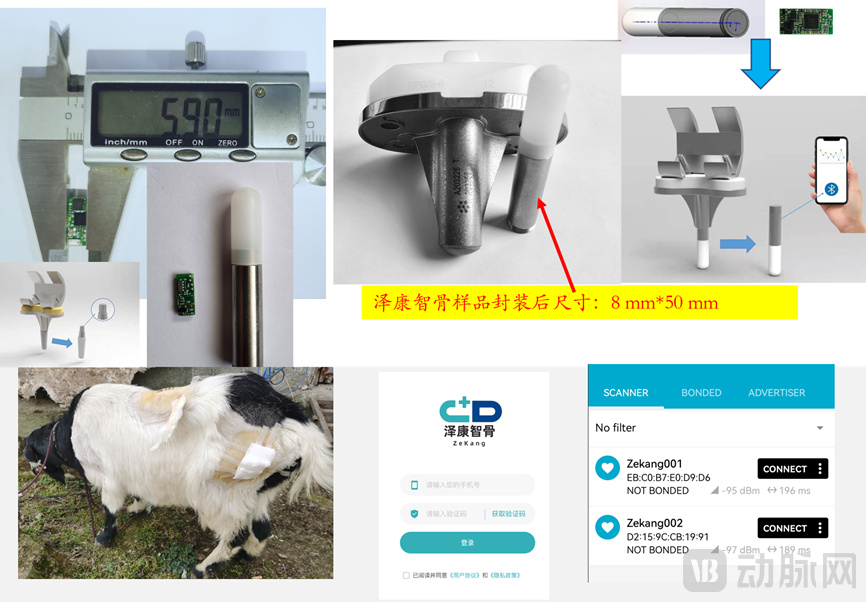
The product has currently completed animal studies.According to the founder, a clear iteration roadmap has been established for this product. “Taking batteries as an example, current sensors rely on battery power and are designed to last more than 10 years. Currently, the ZeKang Smart Bone team is developing technologies that harness knee joint friction, flexion, or external wireless charging, thereby eliminating the need for patients to undergo additional surgeries.”
In terms of business model, ZeKang ZhiGu’s primary payers in the early stage are hospitals, with revenue generated from consumables and service fees.Once product volumes increase and the technological moat widens in the later stages, we will seek collaborations with orthopedic manufacturers., providing intelligent orthopedic implant consumables and accessories services to all orthopedic manufacturers. Currently, competing smart knee prostheses from abroad have received FDA approval, with a selling price in the United States of approximately RMB 150,000. In contrast, the patient-end price for products developed by ZeKang ZhiGu can be kept within RMB 50,000. As sales volume increases, the price can gradually decrease to approach the level of centrally procured knee implants, thereby better serving Chinese patients.
It is reported that, in addition to the first-generation smart knee joint prosthesis and its accompanying digital healthcare products, ZeKang ZhiGu’s team will also submit its independently developed intelligent intramedullary nails (Class III medical device certification) and intelligent knee joint inserts (Class III medical device certification) for registration testing within 2023.
Currently, ZeKang ZhiGu has two main areas of demand. The first isTeam Recruitment, seeking R&D experience related to active implants such as cardiac pacemakers, deep brain stimulators, and neurostimulatorsEngineerWith experience in orthopedic product registration applicationsTechnical DirectorJoin; on the other hand, it isSeeking tens of millions in financingfor completing the preclinical testing and animal studies required for the registration of one Class III medical device (first-generation smart knee joint), obtaining two Class II certifications (trial mold tools), finalizing the product development and design freeze for two Class III devices (smart intramedullary nail + smart knee joint insert), and conducting preliminary research on intelligent implantable products such as nerve stimulators.