

Aimisen Completes Over RMB 100 Million Series C Financing to Accelerate Commercialization of Early-Stage Cancer Detection Products

Ammunition
Early Non-Invasive Testing Product Developer
Wuhan Ammunition Life-tech Co., Ltd. (hereinafter referred to as “Ammunition” or the “Company”) has recently completed a Series C financing round exceeding RMB 100 million. The round was led by CCB International, with participation from renowned institutions including Wuhan High-Tech Group and Sanya Xuanpan. The proceeds will be utilized for market expansion, new product development, clinical trials, and regulatory filings. Previous investors include CCB Medical Growth Fund, Jinhe Capital, Hybribio, and Changjiang Securities.
Ammunition is a high-tech enterprise dedicated to the research and development, registration, production, and sales of non-invasive early detection products for globally prevalent malignant tumors. By integrating epigenetics, bioinformatics, materials science, and clinical big data, the company has established a world-leading technology platform for early cancer screening and diagnosis. Adhering to the product philosophy of “early, precise, convenient, and accessible,” Ammunition has launched a portfolio of non-invasive early detection products covering various high-incidence cancers, including digestive system tumors, gynecological tumors, urological tumors, and pan-cancer types.
The Company has filed more than 60 patent applications, obtained 25 granted patents, secured multiple PCT patents, and published over 10 papers on cutting-edge research findings. It has been honored with numerous accolades, including “Hubei Province Specialized, Refined, Differential, and Innovative ‘Little Giant’ Enterprise,” “Top Ten Technological Innovation Leading Enterprises in Wuhan,” “Wuhan IPO Silver Seed Enterprise,” “Optics Valley Gazelle Enterprise,” and “High-Tech Enterprise.”
Currently, the company’s colorectal cancer detection product “Ai Changkang”®”Has obtained NMPA registration certification, isChina’s first dual-target fecal DNA methylation test for colorectal cancer, which has obtained the Certificate of Registration of Scientific and Technological Achievements from the Ministry of Industry and Information Technology and has been assessed by numerous experts as reaching an internationally advanced level.. In addition, the company has multiple products for cervical cancer, endometrial cancer, and other conditionsAll early cancer detection products have obtained CE certification.
A growing body of research indicates thatLeft-sided and right-sided colon cancers exhibit significant differences in epidemiology, pathology, cytogenetics, and molecular characteristics., to a certain extent, they should be regarded as two distinct diseases. Gene methylation levels vary across different segments of the intestine, and enhancing the detection performance for colorectal cancer through complementary biomarkers specific to the left and right colon holds significant clinical importance.
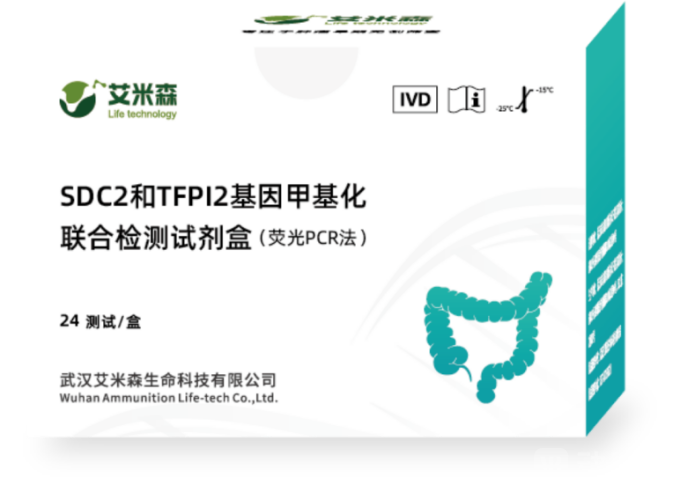
SDC2 and TFPI2 Gene Methylation Combined Detection Kit (Fluorescent PCR Method) — Aichangkang®
Professor Bai Yu from Changhai Hospital provided a vivid analogy for single-gene methylation testing, dual-gene combined methylation testing, and multi-gene testing: “Single-gene methylation testing is like a loosely woven fishing net, while multi-gene testing is like a tightly woven one. The loosely woven net tends to let large fish slip through, whereas the tightly woven net catches both large and small fish alike. Neither type of net is quite suitable. AndThe dual-gene methylation combined test, with its optimally calibrated sensitivity, functions as a finely woven net that enables precise detection.”
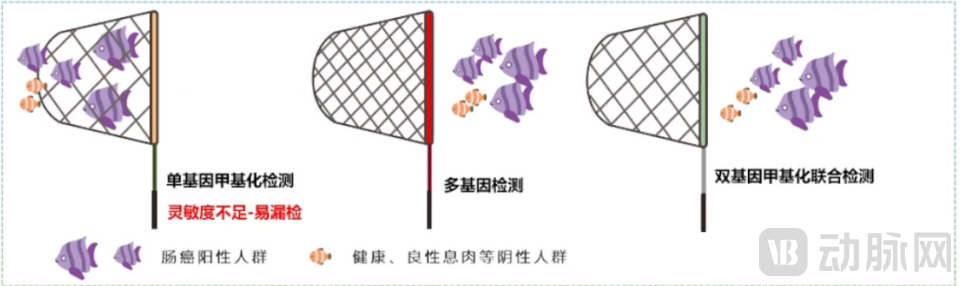
Therefore, identifying an optimal combination of targets to balance sensitivity and specificity would minimize the risk of missing colorectal cancer-related lesions while avoiding the inclusion of irrelevant minor abnormalities, thereby constituting a superior screening strategy.
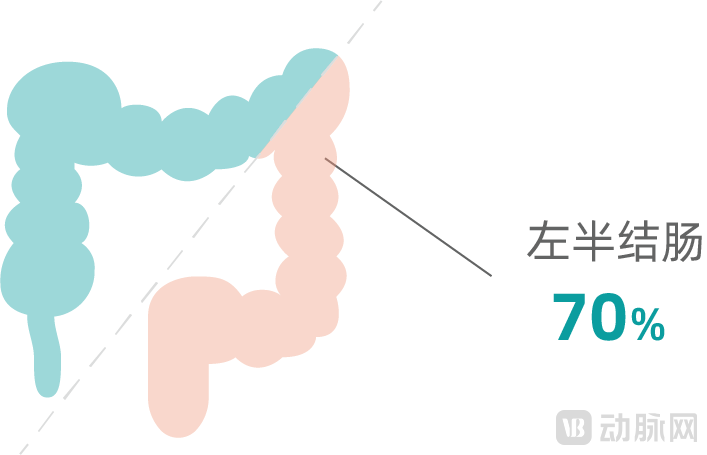
Diagram of the Left and Right Hemicolon
Ai Changkang®The product design addresses the differences between the left and right colon. SDC2 methylation exhibits higher sensitivity for right-sided colon tumors, while TFPI2 gene methylation demonstrates higher sensitivity for left-sided colon tumors. The combined detection of both targets canComprehensive Improvement in Detection Sensitivity for Left- and Right-Sided Colon Cancer.Ai Changkang®The registered clinical study was conducted at prestigious institutions including Peking Union Medical College Hospital, the First Affiliated Hospital of Anhui Medical University, and Zhongnan Hospital of Wuhan University. It has been validated through a prospective, multicenter, large-sample case-control study.Ai Changkang®It demonstrates excellent detection capabilities for colorectal cancer (CRC) at all stages and advanced adenomas, with an overall sensitivity of 95.3% for CRC across all stages and a sensitivity of 63.4% for advanced adenomas.
Ai Changkang®Technical optimization was performed in multiple key steps and processes, including sample pretreatment, nucleic acid extraction, nucleic acid conversion, PCR detection, and process automation.A single sample test can be completed in 4.5 hours, with a maximum throughput of 96 samples per run.Ai Changkang®By leveraging the patented AS-CAP (Affinity Selection-based Capture and Amplification Protocol) micro-signal enrichment technology and methylation PCR sensitization technology, the system imposes lower requirements on laboratory equipment, making it more suitable for rapidly completing high-throughput testing tasks in clinical settings. Combined detection of SDC2 and TFPI2 gene methylation (Ai Changkang®) The registered clinical studies have yielded fruitful results, with five research-related articles published in authoritative journals such as Frontiers in Molecular Biosciences and The Journal of Molecular Diagnostics. A total of 26 national patents have been applied for and granted for the product, and the registered clinical study has officially obtained a Class III medical device registration certificate. With Ai Changkang®Successfully obtained NMPA approval, enabling effective early diagnosis and treatment of colorectal cancer, significantly reducing and avoiding the socioeconomic burden and pressure on public health resources caused by late-stage tumor detection.