

BoTong Medical Files IPO Prospectus: A Digital Therapeutics-Enabled Platform Revolutionizing Pain Management for Hundreds of Millions
“Some are determined to burn brightly throughout their lives.”
Professor Wang Jiejun, former Director of the Department of Medical Oncology at Changzheng Hospital affiliated with the Second Military Medical University, has been engaged in oncology treatment for over 30 years. Meanwhile, he has continuously promoted the standardized management of cancer pain in China, making significant contributions particularly in the fields of supportive care and palliative care for cancer patients.
It is reported that Professor Wang Jiejun has helped promote the establishment of over 1,000 demonstration wards for standardized diagnosis and treatment of cancer pain across China, as well as nearly 100 demonstration bases for the standardized management of refractory cancer pain. He has also participated in the development of various standards and guidelines, including the Chinese Expert Consensus on Refractory Cancer Pain, the Chinese Expert Consensus on Cancer Breakthrough Pain, the Guidelines for Rational Drug Use in Cancer Pain Management in China issued by the National Health Commission’s Expert Committee on Rational Drug Use, and the Standards for Diagnosis and Treatment of Cancer Pain issued by the National Health Commission.
“Cancer pain” is one of the most common symptoms in cancer patients and a significant factor affecting their quality of life. Since 1986, the World Health Organization (WHO) has promoted the Three-Step Analgesic Ladder for cancer pain management globally to alleviate pain and help improve patients’ quality of life. China officially began implementing the Three-Step Analgesic Ladder for cancer pain treatment in 1990.
However, whether in China or worldwide, the standardization of cancer pain management still has a long way to go.
According to the latest 2020 global cancer burden data released by the International Agency for Research on Cancer (IARC) of the World Health Organization, China had 4.57 million new cancer cases in 2020, accounting for 23.7% of the global total. Over the past decade, the overall cancer incidence rate in China has shown an upward trend. With the rising incidence of cancer, cancer pain has become an increasingly significant clinical issue that cannot be overlooked.
However, according to the 2018 National Survey Report on Rational Use of Medications for Cancer Pain in 100 Hospitals, the proportion of patients receiving analgesic treatment in China is very low, ranging from 10.8% to 11.8%. There are disparities in the stockpiling and application of analgesics among hospitals of different tiers, with primary-care hospitals often facing drug shortages. Furthermore, there is still a long way to go in improving clinicians’ awareness and practical skills in the management and treatment of cancer pain.
Professor Wang Jiejun is the lead expert for this survey. In an interview with VCBeat, he stated, “Pain management is not only inadequate for cancer patients; it is similarly lacking and insufficiently prioritized for non-cancer patients.”
This highlights the critical pain points in China’s current pain management landscape. In addition, pain treatment in China faces challenges such as insufficient allocation of resources—including personnel and hospital beds in pain departments—as well as outdated concepts among healthcare providers regarding pain diagnosis and treatment, along with delays in updating their professional knowledge and skills.
Epidemiological surveys in Western countries indicate that the prevalence of chronic pain accounts for approximately 30% of the general population. According to the Blue Book on China’s Strategy for Pain Prevention, Control, and Health Promotion: Report on the Development of Pain Medicine in China (2020), there are over 300 million patients with chronic pain in China, with an annual rapid increase of 10 to 20 million cases.
According to a research report by the UK-based market consulting firm Brisk Insights, the global market for pain management pharmaceuticals and medical devices reached $37.8 billion in 2015, with a projected compound annual growth rate (CAGR) of 4.3% from 2015 to 2022, reaching $50.8 billion by 2022. This underscores the substantial size of the pain management market.
Against this backdrop, BOTONG HEALTH was founded with the vision of “pain-free” care.
“Faced with so many patients, one sometimes feels that doctors are too insignificant.” After retiring, Professor Wang Jiejun founded BOTONG HEALTH in 2019. He aimed to integrate his years of accumulated clinical experience, insights into medicine, and various medical resources into a digital platform, thereby realizing his vision of serving more people through this platform.
BOTONG HEALTH is a digital therapeutics-enabled pain diagnosis and treatment service platform: driven by intelligent technology, built on a data interaction platform, and focused on pain diagnosis and treatment services.The BOTONG HEALTH medical team believes that internet healthcare is playing an increasingly important role in the management of chronic diseases, while digital therapeutics, as an emerging approach, can integrate home and community settings into the overall management of chronic conditions.
Amidst the wave of digital transformation in healthcare, China’s digital health sector is moving from the periphery—where “connectivity” serves as the primary function, exemplified by internet hospitals—toward more core domains. Taking digital therapeutics (DTx) as an example, these interventions provide disease treatment and management based on evidence-based medicine. In November 2020, China issued its first National Medical Products Administration (NMPA) registration certificate for a digital therapeutic, officially ushering in the era of digital therapeutics in the country.
According to VCBeat’s “White Paper on China’s Digital Therapeutics Industry,” digital therapeutics are categorized into four major disciplines: psychology, neuroscience, rehabilitation medicine, and pharmacology. Indications covered include anxiety disorders, irritable bowel syndrome, Parkinson’s disease, diabetes, Alzheimer’s disease, obesity, sleep apnea, attention-deficit/hyperactivity disorder (ADHD), asthma, arrhythmia, and more.
In the field of pain management, there are also digital therapeutics specifically designed for different subcategories of pain, such as migraine and musculoskeletal pain. BOTONG HEALTH is the first digital therapeutic-enabled pain management service platform in China’s pain management sector.
Professor Wang Jiejun also noted that digital health encompasses a broad spectrum, and public acceptance of digital products is increasing. Digital therapeutics represent an approach aligned with the evolving needs of modern disease management. Internationally, the digitization of pain management is gaining significant momentum and becoming increasingly specialized.
BOTONG HEALTH’s digital therapeutics platform has deployed multiple products targeting both cancer-related and non-cancer pain, including multidimensional pain assessment, prediction of pain-related complications, and cognitive behavioral training. According to reports, BOTONG HEALTH has prepared over a dozen products in its development pipeline, four of which have already been launched. Additionally, the company has established three offline clinical centers.
How to Understand BOTONG HEALTH’s Business Layout: Professor Wang Jiejun Vividly Uses the “Dumbbell” as an Analogy, with the Two Ends of the Dumbbell Representing BOTONG HEALTH’s Two Major Business Segments.One end is the medical services sector; the other end is the training and clinical research sector targeted at physicians.; meanwhile, the two ends are connected through a data interaction management platform, whereby data from both ends are aggregated on the platform, leveraged to enrich and upgrade products, and then fed back to support operations at both ends.
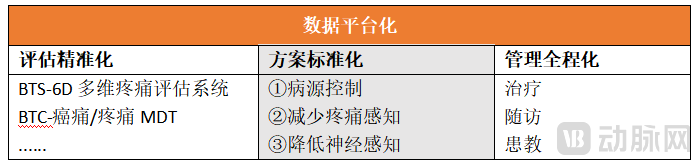
On the healthcare service sideBOTONG HEALTH first utilizes products on its digital therapeutics platform to conduct patient assessments, then directs patients to offline medical service points for corresponding treatments based on the assessment results. Following treatment, long-term management is carried out through its digital therapeutics products. Should new issues arise during disease management, the cycle of reassessment, diagnosis and treatment, and management is repeated, thereby forming a closed-loop service model for whole-course disease management.
Source: BOTONG HEALTH
Professor Wang Jiejun stated, “Healthcare is a serious endeavor, but it can be delivered in diverse formats. Digital therapeutics must also be grounded in rigorous, scientific medical logic, while adopting engaging and accessible modes of delivery.” In this regard, BOTONG HEALTH has established collaborations with medical experts from West China Hospital, Fudan University, Tongji University, and Zhejiang University to design the underlying medical logic for related solutions.
BOTONG HEALTH’s core clinical medical team (the BOTONG Physician Group) already comprises nearly 300 expert consultants from renowned medical institutions in China.
Clinical assessment of pain primarily relies on rating scales. However, patient treatment requires a comprehensive approach that extends beyond pain itself, incorporating multiple factors such as emotional state, sleep quality, and limb function. Taking BOTONG HEALTH’s 6D Pain Assessment System as an example, the system was developed through collaborative product design involving experts from various departments, including pain management, orthopedics, interventional medicine, surgical oncology, medical oncology, nutrition, and psychology.
Specifically, the 6D Pain Assessment System integrates multiple clinical tests into a unified evaluation across six dimensions—sleep disorders, mood disorders, limb dysfunction, breakthrough pain, and neuropathic pain—thereby enabling a systematic, multidimensional comprehensive assessment while simplifying the evaluation process.
Furthermore, BOTONG HEALTH has deeply cultivated the industry and actively participated in the formulation of standards. For instance, commissioned by the Expert Committee on Supportive Care and Rehabilitation of the Chinese Society of Clinical Oncology (CSCO) and the Professional Committee on Cancer Rehabilitation and Palliative Care of the China Anti-Cancer Association (CACA), it provides professional committees with services including platform resources and technical support, cancer pain screening and assessment, patient education, discharge follow-up, and data reporting.
In the training and research sector targeting physicians, BOTONG HEALTH stated that it is actively building the Comprehensive Pain Management Monitoring Network (CPain).According to reports, this network is essentially a medical consortium platform, jointly supported by experts from the National Health Commission’s Pain Diagnosis and Treatment Quality Control Center and the China Medical and Health Development Foundation. In the future, the platform is expected to collaborate with over 1,000 hospitals to provide services such as physician training and education, pain quality control, and real-world studies.
Although the prospects for digital therapeutics are very promising, the industry as a whole currently faces challenges related to unclear business models. BOTONG HEALTH is also in the process of exploration. The company states that it relies on medical services as its foundation; in addition to providing services to individual consumers (B2C), it also serves business clients (B2B), encompassing various stakeholders and scenarios such as healthcare institutions, pharmaceutical companies, medical device manufacturers, and insurance enterprises, thereby covering the entire value chain of pain management.
The future is already within sight. BOTONG HEALTH has stated that its immediate goal is to continuously advance the research, development, and launch of new products, as well as to facilitate the establishment of offline clinical centers. It is reported that the company has successfully established three pain management clinics in Shanghai and plans to expand to 200 locations within the next two to three years.