

Zhengzhong Spine Medical Files IPO Prospectus: Delivering Intelligent Digital Non-Surgical Solutions for Adolescent Scoliosis
Scoliosis has become the third major “killer” of children’s and adolescents’ health, following obesity and myopia.
The burden of preventing scoliosis in China is becoming increasingly heavy. On this challenging yet mission-driven path, Zhengzhongji Medical has begun to exert its efforts, providing intelligent, digital, non-surgical diagnosis and treatment solutions for adolescent scoliosis patients.
Currently, Zhengzhongji Medical, as a specialized chain of spinal care institutions, has expanded to eight cross-regional locations in first-tier and provincial capital cities including Shanghai, Shenzhen, Hangzhou, Hefei, and Ningbo, formingAn intelligent digital system integrating screening education, offline diagnosis and treatment, teaching and research training, and home-based online rehabilitation, providing adolescent scoliosis patients with a clear and comprehensive one-stop solution.
With medical services as the foundation and product R&D as the backbone, Zhengzhongji has proactively established the “Huadun Brace R&D, Production, and Sales Center,” developing a diverse range of brace products to provide comprehensive brace product solutions for its nationwide chain clinics and partners.
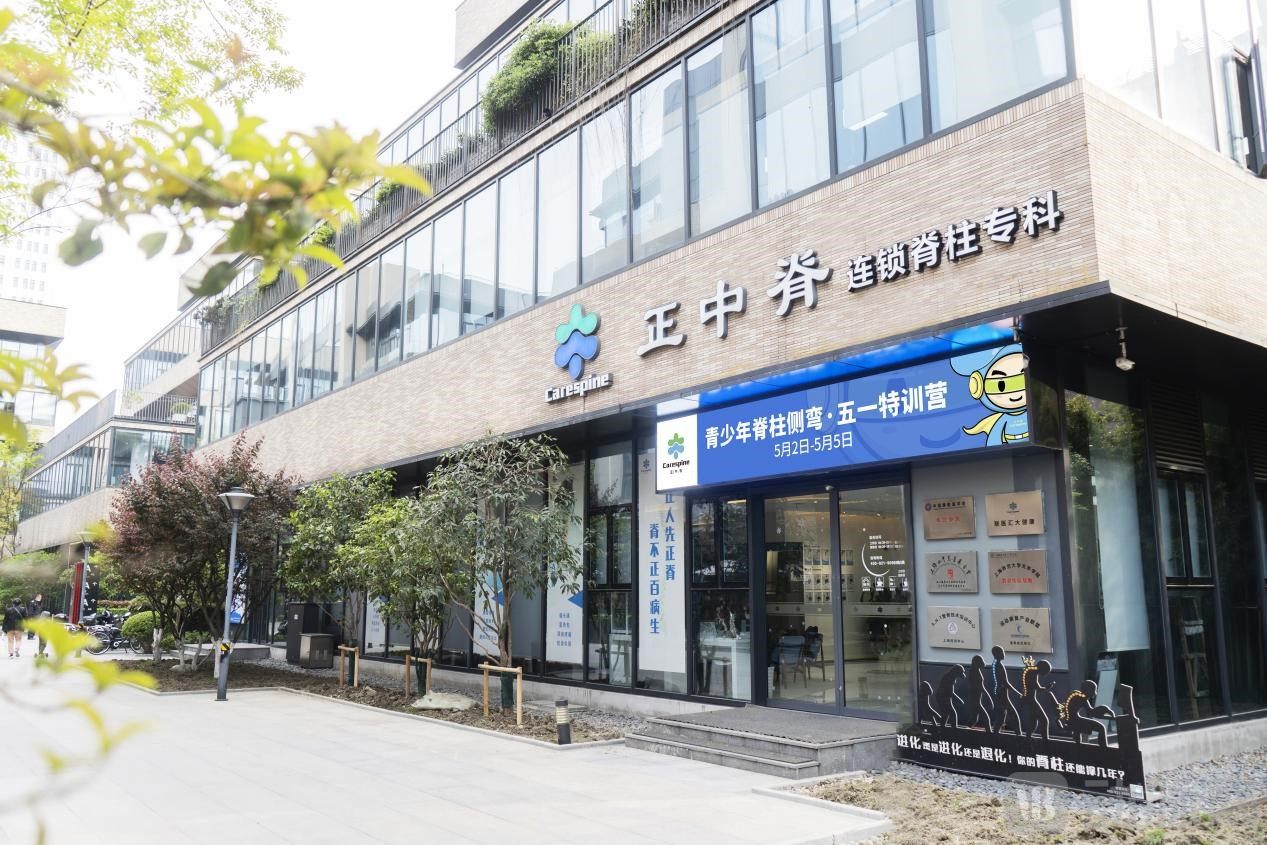
Midline Spine Outpatient Clinic
Hou Weilin, Founder of Zhongzheng Spine MedicalIt was stated that the visible abnormalities caused by adolescent scoliosis in its early stages are not obvious. The condition is often only detected when it has become relatively severe, already affecting the child’s daily life, development, and learning, and leading to various complications. By this time, the optimal window for physical therapy has usually passed, necessitating high-cost, highly invasive surgical interventions.
“Witnessing the immense suffering endured by many adolescents during surgical treatments for scoliosis, as well as the toll it takes on their families, has strengthened my resolve to dedicate myself to the non-surgical correction of adolescent scoliosis. I hope to leverage the expertise of my team and myself to enable earlier detection, earlier intervention, and faster recovery for more children, providing them with more treatment options and sparing them from regret and pain,” said Hou Weilin.
With over a decade of experience in the healthcare industry and an EMBA from Fudan University, the founder has gained deeper insights into adolescent spinal rehabilitation.InnovationRethinking Scoliosis Care: Moving Beyond Single-Modality Treatments to Establish an Effective Long-Term Management SystemBy leveraging medical services as the foundation and integrating intelligent digital innovations, we bring joyful rehabilitation into the home. This approach enables patients and physicians to monitor treatment efficacy through real-time, actionable data, thereby optimizing comprehensive diagnostic and therapeutic strategies.
Customer-Centric, Nurturing Adolescent Growth
“Safeguarding the growth of adolescents and addressing spinal health issues for the entire population. It was my original intention to undertake such a meaningful mission,” said Hou Weilin.
With over a decade of deep engagement in the healthcare industry, the founder believes that medicine is both a serious and compassionate field. It demands resilience in solitude, resistance to temptation, a calm dedication to delivering high-quality medical services, and stringent quality control of related products. Driven by this original intention and a profound passion for the industry, and informed by inspections conducted in the United States, Australia, Japan, and South Korea, the founder was determined to establish a spine specialty medical service institution that is truly customer-centric and tailored to China’s specific conditions. This vision resonated strongly with Dr. Zhou Feng, who brings extensive experience in medical management. Through repeated discussions and practical collaborations with domestic and international experts, the founding team ultimately defined its guiding philosophy as “integrating Traditional Chinese and Western medicine, and combining medical treatment with physical therapy,” thereby developing and establishing a comprehensive diagnosis and treatment protocol featuring multi-dimensional diagnostic assessments.
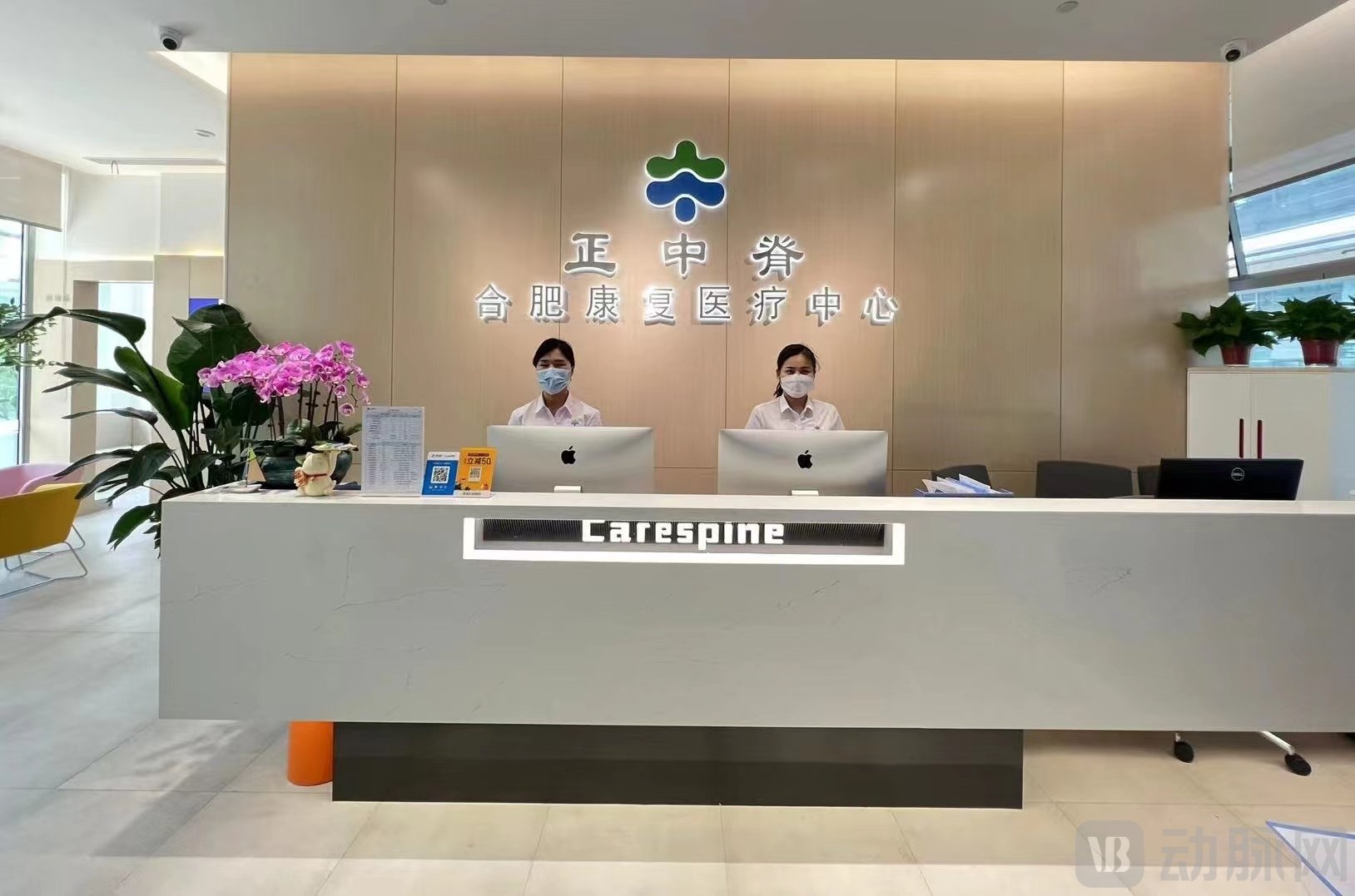
Midline Spine Outpatient Clinic
According to statistics, there are currently over 5 million patients with scoliosis in China, with an annual increase of 300,000 cases. More than half of these patients are adolescents, presenting a severe challenge for prevention and control. Clinical evidence has shown that early-stage mild scoliosis can be promptly detected through visual inspection and palpation. Scoliosis with a Cobb angle of less than 20 degrees can be basically controlled and partially reversed through physical therapy measures such as postural correction, therapeutic exercises, and bracing. However, domestic medical institutions generally recommend regular follow-up examinations for patients with inconspicuous early symptoms, delaying surgical intervention until the condition progresses to a Cobb angle exceeding 45 degrees, which meets the indications for surgery. This approach causes the vast majority of patients to miss the golden window for rehabilitation. Although cities such as Beijing and Shanghai have attempted clinical treatment and intervention for scoliosis, their actual impact has been extremely limited due to narrow population coverage, limited diagnostic and treatment capabilities, and a lack of epidemiological surveys and supporting funding.
To this end, the founding team of Zhengzhongji aims to establish a replicable operational model as a robust complement to public hospitals, integrating resources from various stakeholders to assist relevant institutions in promoting the establishment of a prevention and control system for adolescent idiopathic scoliosis, along with comprehensive non-surgical intervention and treatment protocols.
Starting a business is no easy feat, and innovation is even more challenging. After the first “Zhongzheng Spine” flagship medical clinic achieved mature operations, the original plan was to expand on this momentum. However, the nationwide COVID-19 epidemic in China broke out. “Whether to continue developing or remain stagnant posed a significant test for the company,” recalled Hou Weilin. Driven by their deep understanding of the spinal care field and unwavering commitment to their vision, the team decided in 2020 to press forward against the odds. They took their first step beyond Shanghai by opening a second Zhongzheng Spine medical outpatient clinic in Hangzhou, marking a milestone in Zhongzheng Spine’s cross-regional expansion.
At that time, considering that children with scoliosis were confined to their homes and unable to receive professional rehabilitation interventions, the company rapidly collaborated with a team of experts from top-tier (Grade 3A) hospitals in Shanghai in February 2020 to establish China’s first online rehabilitation platform for scoliosis. This platform integrated “online education on scoliosis,” “remote rehabilitation guidance,” and “medical consultation services.” To date, the platform has provided home-based spinal rehabilitation training guidance to 2,000 adolescents, ensuring effective treatment outcomes. Over the past two years, the online rehabilitation platform has also delivered remote rehabilitation guidance to overseas Chinese children in countries such as the United States, Japan, and Thailand. It was precisely through experiencing this pandemic that Hou Weilin began to reflect on innovative models for traditional medical services and gradually started to deploy an online diagnosis, treatment, and rehabilitation system, with the aim of bringing digital healthcare into households across the country in the future. This strategic move enabled Zhengzhongji Medical to remain customer-centric throughout the recurring waves of the pandemic, ensuring uninterrupted rehabilitation for children while providing more frequent free online clinical consultations to address patients’ questions.
The team consistently prioritizes public welfare and humanitarian aid,During the development process of over three years,In collaboration with the Shanghai Shuangping Charity Foundation, funds were raised and donations provided to dozens of families in financial hardship affected by scoliosis. We have actively carried out science popularization education on adolescent scoliosis, public welfare screenings, on-site free clinics, multiple public awareness campaigns, and school-based screening programs, as well as over one hundred live-streamed educational sessions. These initiatives aim to enhance parents’ understanding of the importance of scoliosis treatment, raise awareness about the condition, and safeguard spinal health among adolescents.
Integration of Medical Practice, Education, and Research
Since its inception, Zhengzhongji has never ceased its efforts to deepen its expertise. To better address challenges such as long patient travel distances, low operational efficiency, and inconsistent product quality, the team has actively recruited top industry talent. It has continuously enhanced its chain medical services, as well as the R&D, production, and academic training of corrective products. By advancing these three business lines in parallel, Zhengzhongji has achieved an integrated model of medical care, education, and research, laying a solid foundation in the field of scoliosis.
Medicine—Zhengzhongji as an offline chain of outpatient clinics, with a team of chief-level and specialized physicians who are outstanding professionals in the field of spinal rehabilitation. The team possesses nearly 30 years of clinical experience, continuously develops and optimizes the Zhongzhengji medical technology system, maintains ongoing exchanges with experts both domestically and internationally, and has established in-depth cooperative relationships with multiple renowned experts for regular outpatient services.
Teach—Education and training are the foundation for the continuous improvement of talent.As of now, its affiliated Lianyi Hui Training Academy has conducted 30 training sessions, completed Version 1.0 of the technical video training materials, and optimized the technical training process. In 2021, through technical assistance, the company successfully helped establish a spinal specialty department at the Luannan Maternal and Child Health Hospital in Tangshan, Hebei Province, within just two months. Over the following six months, more than 5,000 individuals were screened for scoliosis, and a three-tier management and control system was implemented. Solely in the areas of spinal correction and operational management, 500–600 personnel received training.
Meanwhile, the College has collaborated with renowned domestic experts in musculoskeletal and spinal health to train nearly 1,000 participants. This initiative provides a systematic platform for learning diagnostic and therapeutic techniques, serving both the company’s strategic talent reserve and rehabilitation therapists as well as personnel from third-party medical institutions who are interested in the field of scoliosis.
In addition, the company has entered into a cooperation agreement with Tianhua College of Shanghai Normal University to establish a clinical teaching and practice base, helping to cultivate more talent.
Research—The development of corrective products is an indispensable adjunctive therapy for scoliosis rehabilitation.To help patients achieve better treatment outcomes, the company has recruited a team of senior industry experts from both China and abroad, led by Xie Lewei, an expert with 20 years of experience formerly at Xinhua Hospital, focusing on the research and development and production of corrective products. By integrating data from tens of thousands of cases, clinical knowledge, and accumulated experience, the system can generate case reports and treatment plans in a one-stop manner after aggregating case information, match them with scoliosis correction products, and lower the threshold for doctors and therapists.
Empowered by a Digital Intelligent Platform, Providing One-Stop Services for Families
In recent years, the Chinese government has placed increasing emphasis on adolescent spinal health, introducing a series of policy measures to support and encourage privately operated medical institutions. On February 1, 2021, the official website of the Ministry of Education published two proposals submitted by members of the National Committee of the Chinese People’s Political Consultative Conference: “Proposal on Promptly Launching Prevention and Control Efforts for Scoliosis in Children and Adolescents” and “Proposal on Paying Attention to Adolescent Spinal Health to Improve the Overall Health Status of Adolescents in China,” aiming to accelerate interventions addressing spinal health issues among children and adolescents.
“We have clearly observed a shift among parents, from previously seeking medical care only reactively to now proactively approaching us for intervention and treatment,” said Hou Weilin.
As parental and societal attention continues to grow, there is an increasing demand for long-term spinal health management. Intelligent digitalization not only complements traditional medical services but also provides efficient management and guidance for patient diagnosis and treatment.
Adolescent scoliosis requires long-term intervention and treatment. The rehabilitation management cycle for scoliosis is lengthy, with no immediate results, and patient compliance with home-based self-rehabilitation exercises is often poor and difficult to monitor, inevitably leading to variations in treatment outcomes. The company’s subsequently developed smart wearable devices enable patients to receive precise rehabilitative therapy in a home setting. Leveraging the company’s accumulation of tens of thousands of data points, the system can rapidly match patients with appropriate wearable devices, provide remote guidance, assist both patients and physicians in effectively tracking treatment outcomes, and improve overall efficiency.
The founder outlined a comprehensive scenario for an intelligent, digital integrated diagnosis and treatment solution: Upon visiting the clinic, patients receive personalized treatment plans for medical and corrective products, tailored by physicians based on X-rays and clinical examinations. Subsequent corrective procedures and rehabilitation training are conducted by physicians and physical therapists. After leaving the clinic, patients use smart wearable devices, with data feedback provided via a mobile app. Based on this feedback, treatment plans are adjusted in a timely manner to support home-based rehabilitation therapy.
The “Healthy China 2030” Planning Outline proposes that the trend in medical development, centered on health promotion, is to establish a holistic health perspective, aiming for a state free from disease and frailty, with physical and mental integrity, social adaptability, and environmental harmony. In this context, the role of rehabilitation medicine in promoting functional recovery and fostering physical and mental well-being has become increasingly prominent, necessitating a reevaluation of its value.
Looking to the future, the founder stated, “We will continue to strengthen our efforts in intelligent digital healthcare services and product R&D, while expanding the Zhengzhongji medical chain service system across China. In terms of product development, we will focus on acquiring technical patents and advancing the research, development, and application of intelligent digital technologies. Our ultimate goal is to become a digital health technology enterprise that uses spinal disease rehabilitation as a key entry point, linking services to safeguard the health of millions of families. We aim to support the ‘Healthy China 2030’ initiative, highlight the value of rehabilitative medicine, protect the growth of adolescents, and address spinal health issues for the entire population.”