

Navigating the Two Major Hurdles for Startups: Entrepreneurial Decision-Making and Human Capital Management
In this era of global entrepreneurial boom,"The Lean Startup"Has become the bible for many entrepreneurs.
It provides entrepreneurs with new perspectives on business establishment, advocating that enterprises"Confirmatory Learning", i.e., first launching a minimalist prototype product to the market, and then continuously testing and learning to verify whether the product meets user needs in a cost-effective and efficient manner, while rapidly iterating and optimizing the product.
However, entrepreneurship is not mere “armchair strategizing,” but rather hands-on execution with real stakes. Merely possessing the theoretical framework of “the Lean Startup Method” is insufficient; what is needed even more is a practical guide to action—the “Scientific Method.”
There are countless paths to success, but only a few causes of failure. Countless startups inevitably meet a dismal end, all because they stumbled over pseudo-demand and the pitfall of prioritizing capital accumulation at the expense of team cohesion.
How to Address These Two Challenges with Scientific Methods? At the Series of Lectures by the School of Management Celebrating the 100th Anniversary of Shanghai University, a Professor of Management from Bocconi University, One of the World’s Top Business SchoolsArnaldo CamuffoUsing the “scientific method” to“Entrepreneurial Decision-Making and Human Capital”An in-depth sharing session was held on this topic.
The following is a transcript of Professor Arnaldo Camuffo’s speech, provided for the convenience of readers.VCBeat Orange BureauEditorial changes were made to the text without altering its original meaning.
In the common understanding, entrepreneurial decision-making and human capital are two distinct topics. Even in academia, researchers often study corporate strategy or marketing decisions separately from market-related human capital. However, every startup is an integrated entity, and for entrepreneurs, matters are not always so neatly divided.
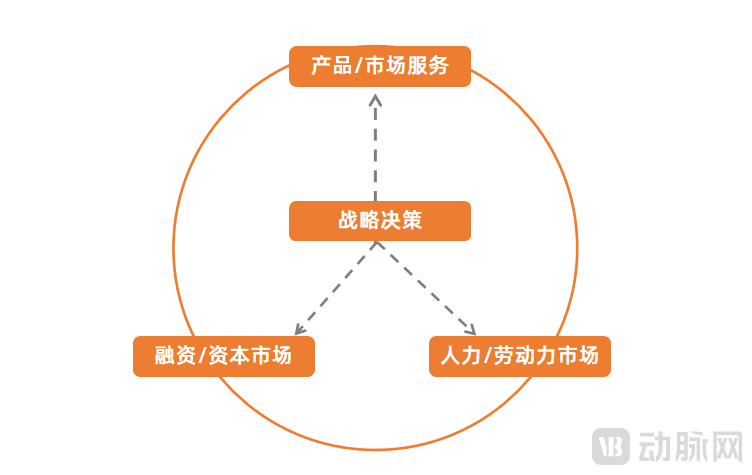
Specifically, a startup or founding team must make three fundamental strategic decisions. In reality, these three categories are more akin to different facets of a single, complex decision.
Category I: Related to Products and ServicesDecisions must be made for every market-related factor, including market positioning, target customer segments, competitive landscape, technological status, and business model.
The second category is related to capital.. It is necessary to consider issues such as when a company needs to raise capital, how to secure it, and to what extent it should accept capital injection. In many cases, changes in the business model will simultaneously trigger changes in the company’s capital requirements.
The third category is human capitalHuman capital serves as the engine and fuel for corporate development, with its core lying in the founding team and the company’s actual management. However, this does not operate independently of market and capital dynamics. In the financing process, enterprises often not only resolve funding issues but also gain a partner and a board member, which is frequently more valuable than the capital itself.
Before making the above three types of decisions, founders need to first clarify the key factors influencing these decisions—Uncertainty and Budget Constraints。
Let’s start with uncertainty.:1. Risk. In a mature market, factors such as the existing competitive landscape, market profitability, and the company’s own profit-generating capacity are all risks that cannot be overlooked.Second is probability. Even if founders understand the risks, they cannot accurately gauge the probabilities. For instance, while a company may have a 70% chance of success during the minimum viable product (MVP) validation phase, the actual success rate might be only 60% or even lower.Third, Knightian uncertainty.For instance, a company may completely pioneer a market segment that has never existed before, thereby exposing itself to risks that are immeasurable and whose probabilities cannot be calculated.
Regarding Budget Constraints:On one hand, there are financial constraints; on the other, time limitations. Each individual’s work capacity and available hours are finite, and entrepreneurs often must make rapid decisions under high pressure.
However, people often rely on instinct and intuition when making decisions, which frequently leads to poor outcomes. Therefore, it is crucial to master structured, scientific decision-making methods, such as the “Lean Startup” methodology and the “Effectuation” theory.
When we discuss human capital, the first things that usually come to mind are personal characteristics or individual differences. Individual differences have a subset“KSAOs”——Knowledge, Skills, Abilities, and Other Characteristics.
Individuals possess vastly diverse and extensive “KSAOs”; some can program, while others excel at dancing. Each competitive advantage represents a form of capital, and those that generate economic benefits for enterprises are termed human capital.
The aggregation of individual business components within human capital constitutes human capital resources, which further converge into strategic human resources with a high degree of competitive advantage. A team represents the complementarity and combination of various human capital resources, and these resources can be acquired throughPartnership, Recruitment, Outsourcing, M&Aand other methods.
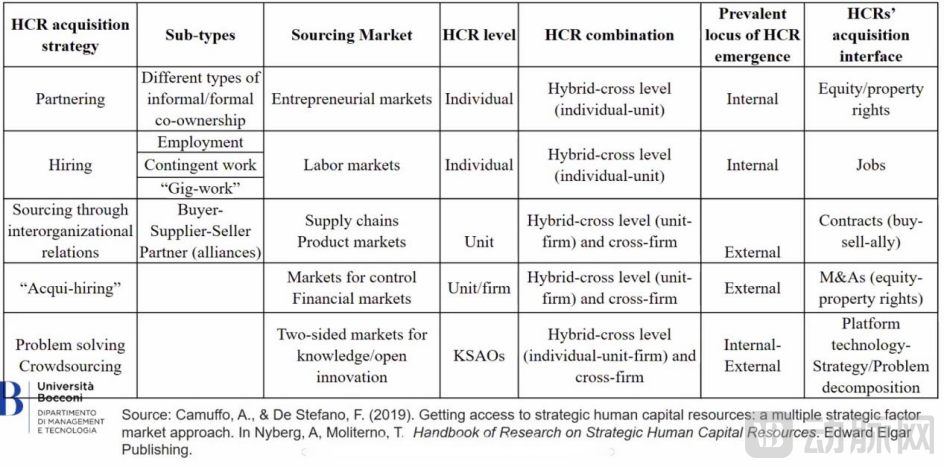
Methods of Human Capital Resource Acquisition
A high-quality team should be a complementary combination of various human capital resources. Founders should not insist on seeking human capital whose KSAOs (Knowledge, Skills, Abilities, and Other characteristics) are highly aligned with their own, especially when selecting co-founders. Many entrepreneurs prefer to partner with friends at the outset; while this may facilitate smooth initial progress, CB Insights statistics indicate that partnering with friends is the second leading cause of startup failure, often resulting in the loss of both friendships and business ventures.
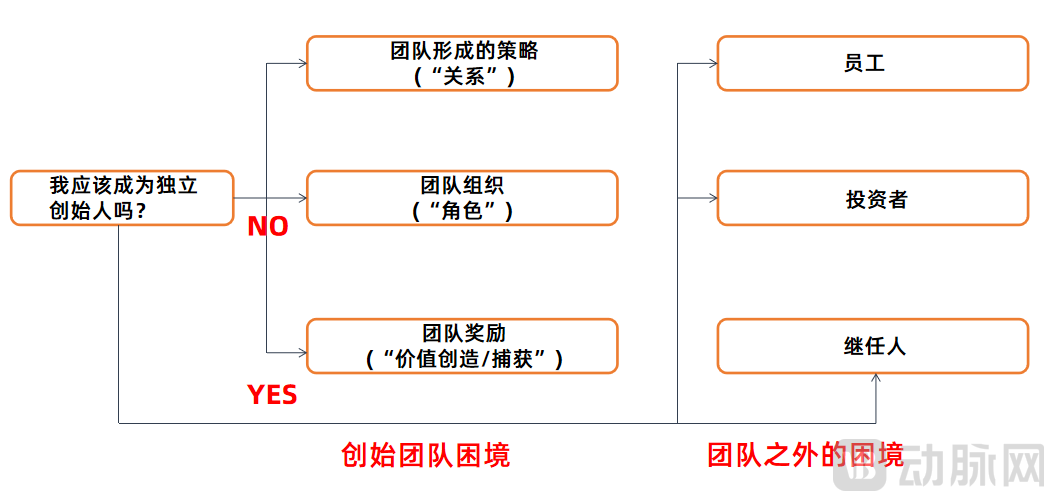
In fact, entrepreneurs often encounter core issues when building their teams.(Founding Team)andExternal (beyond-the-team)Two-tiered issues. If you aspire to become the sole founder of a company, you must address matters such as employee recruitment, investors, and succession planning.
If a co-founder needs to be sought, the above-mentioned basis should be expanded byPathways, Roles and Responsibilities, Equity Allocationfactors, among others. Generally speaking, a high-quality co-founder may be a college classmate, a fellow lab member, or a specialist in a niche field.
However, founding teams are not always static. Core team turnover is highly likely to occur when a company encounters critical junctures (such as the pre-launch preparation phase or fundraising period), faces major crises, undergoes business adjustments, or responds to external demands from stakeholders such as shareholders, investors, and mentors. Correspondingly, the composition of the corporate team tends to stabilize when the company establishes an initial management team and board of directors, completes its seed financing round, or achieves profitability for the first time.
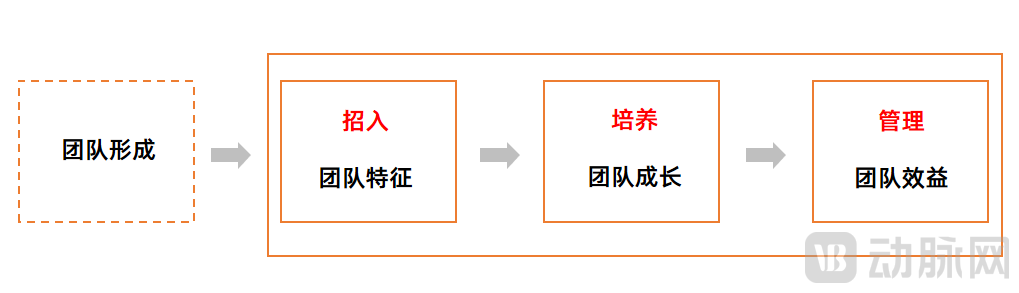
However, certain issues warrant attention during the decision-making process of team formation. First, ownership is the key and foundation of enterprise development, representing the ultimate goal pursued by all entrepreneurs. Therefore, before forming or restructuring the founding team, it is essential to clarify the purpose of adding or replacing partners. Second, as greater uncertainties arise, more emphasis should be placed on partners’ attitudes rather than merely their capabilities, skills, or knowledge, ensuring alignment among all members in terms of values, vision, and mission.
Finally, you might ask yourself a soul-searching question:"Optimization is beneficial, but are adjustments to team members truly more advantageous for the company's development?"