

China's First NMPA-Cleared Digital Therapeutic for Oncology Targets a Billion-Dollar Market

LinkDoc
Provider of Artificial Intelligence and Medical Big Data Solutions
Regarding the recent frenzy among investors and industry players chasing “digital therapeutics,” VCBeat conducted a comprehensive survey of the domestic industry’s development in its report, *White Paper on Digital Therapeutics in China 2.0: Leveraging the Wind to Soar High*.
As of September 2021, a total of 73 companies in China were involved in digital therapeutics. The most competitive sector was mental health disorders and behavioral and cognitive impairments, followed by endocrine, nutritional, and metabolic disorders (including diabetes), while oncology was the least crowded field.
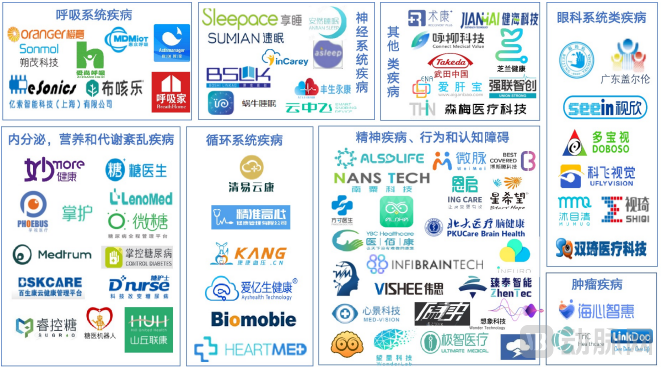
Digital Therapeutics Industry Chart (Icon source: VCBeat)
Digital Therapeutics for Oncology: An Underserved Field Hiding Vast Unmet Clinical NeedsWith over 4 million new cases of malignant tumors diagnosed annually, factors such as complex treatment regimens, continuously evolving clinical knowledge, scarce patient education resources on oncology, and weak outpatient infrastructure are all driving the digital transformation of oncology diagnosis and treatment processes.
LinkDoc’s subsidiary, Zhongxi Medical Technology (formerly “Shuyu Medical Technology”), has affirmed the significance and importance of digital healthcare in the field of oncology.
Founded in 2021 and headquartered in the iCampus park in Wuxi, Zhongxi leverages government industrial policies and the medical technology ecosystem to center on patient benefits and evidence-based medicine, striving to create a full-lifecycle management solution for cancer patients through digital therapeutics. Recently, the company’s first digital therapeutic product, TH-002, received approval from the National Medical Products Administration (NMPA), becoming the first specific digital therapeutic product for early-stage lung cancer patients in China and globally.
Upon receiving this news, VCBeat immediately interviewed Chen Kaishen, Founder and CEO of Zhongxi Medical Technology, in an effort to address the following questions:
1. What new solutions do digital therapeutics bring to oncology management?
2. What business model should digital therapeutics adopt?
3. Where Is the Digital Therapeutics Wave Heading?
Empowering Postoperative Accelerated Recovery Management for Cancer Patients Through Digital Therapeutics, Addressing Two Core Challenges in Out-of-Hospital Care After Discharge
First, the issue of standardization in follow-up systems. In China’s healthcare system, there is a prevalent mismatch between the large number of patients with chronic diseases and the relatively scarce professional medical resources. To address this, hospitals often outsource approximately two-thirds of their follow-up work to third-party companies capable of handling such tasks, aiming to cover as many patients’ post-discharge follow-ups as possible. However, due to the varying capabilities and standards among these third-party institutions, differences often exist in the models and objectives of follow-up implemented by different entities, making it difficult to ensure the consistency and completeness of follow-up results.
Second, there is a visitation gap between follow-up procedures and patients’ needs for out-of-hospital interventions. Follow-ups conducted primarily by departmental graduate students and attending physicians are often research-oriented, featuring fixed visit frequencies and relying mainly on assessment scales. In contrast, follow-ups managed by the hospital’s internal follow-up center primarily involve reminder services or basic disease-related inquiries.
However, from the patient’s perspective, adverse events—whether early postoperative complications or medication-related adverse reactions—do not wait to occur until scheduled follow-up visits. On the contrary, patients always hope to receive high-quality feedback and recommendations as soon as issues are identified, and they consistently seek tangible evidence of therapeutic benefit in their daily treatment routines. Under the current mechanism, these two needs are difficult to meet, leading to a gradual decline in patient adherence over time, which may directly and negatively impact patients’ quality of life and even survival.
The advent of the internet was once regarded by pioneers in chronic disease management as a breakthrough solution to the challenges facing the field. Theoretically, chronic diseases are characterized by a large patient population, prolonged disease duration, complex etiologies, high cumulative treatment costs, and the need for frequent doctor-patient communication. Conventional offline healthcare systems struggle to accommodate the massive volume of management demands. While the internet is indeed a viable approach to addressing chronic disease management, it is not the complete solution.
During the peak of the 2015 “Hundred Glucose Apps War,” more than 700 apps focused on diabetes management, yet only a handful ultimately survived. Upon closer examination, this innovation in communication methods failed to address the issue of adherence in diabetes management and did not fundamentally benefit patients. After all, patients are unwilling to pay for the process; they are only willing to pay for results.
How to Improve Adherence and Truly Benefit Patients? Enhancing Patient Engagement in Management and Self-Management Under Digital Therapeutics May Be the Key.
The essence of Zhongxi Digital Therapeutics is a comprehensive treatment regimen built upon technologies such as artificial intelligence, big data, and the Internet of Things (IoT). Delivered via an out-of-hospital patient management software platform, it provides integrated out-of-hospital treatment and rehabilitation management for cancer patients, covering symptom monitoring and intervention, medication management, rehabilitation training, as well as psychological and nutritional support within the broader scope of "holistic medicine." On one hand, it improves cancer patients’ understanding of and adherence to standard treatments in the context of precision medicine; on the other hand, it enhances the efficiency of out-of-hospital interventions and management compared to traditional internet-based healthcare. As noted by VCBeat, while the essence of internet healthcare lies in connectivity, the essence of digital therapeutics lies in treatment, ultimately maximizing therapeutic benefits for patients.
Chen Kaishen cited the following example in an interview: “Patients often experience symptoms such as chest tightness and shortness of breath due to a reduction in respiratory units following lung tumor surgery, which subsequently affects their daily functioning and quality of life. Personalized guidance on pulmonary function training, tailored to each patient’s specific condition, can help facilitate rapid recovery of lung function. Under routine circumstances, patients adhere to medical advice to perform a certain level of training; however, without precise instructional feedback, they are unable to adjust their exercise regimens. As their motivation for exercise gradually wanes, their rehabilitation outcomes and prognosis are unlikely to meet expectations.”
“Within Zhongxi’s digital therapeutic product TH-002, there is an adaptive module powered by an artificial intelligence model trained on vast amounts of data. This model conducts daily assessments of patients’ physical status based on their baseline conditions, symptom feedback, and goal attainment, and generates the next day’s tasks according to this information and the assessment results. The advantage of this approach lies in establishing a precise and rapid feedback mechanism, allowing patients to see the tangible results of their efforts and observe their health improving day by day through their own dedication. In other words, patients transition from passive participants to active managers of their health, which I believe is the key to truly achieving success in chronic disease management.”
As a medical device, digital therapeutics must also meet efficacy requirements to truly address clinical challenges. “Through personalized task settings for patients and their high level of adherence, postoperative indicators at the one-month follow-up often reach levels that would otherwise take 6–12 months to achieve without software intervention. This achievement has been recognized by the state. Last year, we jointly applied with Peking University Cancer Hospital for the Ministry of Industry and Information Technology’s (MIIT) AI+5G Whole-Course Lung Cancer Patient Management Project, which became an MIIT pilot project in this field. Moving forward, we will continue to leverage real-world applications of our product to implement tiered and stratified management of patient issues, thereby significantly enhancing the management efficiency of clinical teams. This capability is particularly valuable in today’s context of scarce professional medical resources.”
As the birthplace of digital therapeutics, the United States has advanced more rapidly than China in promoting their commercialization. Specifically, many digital therapeutics companies have partnered with commercial health insurers to encourage physicians to prescribe digital therapeutics to patients during follow-up visits. If patients fail to adhere to the prescribed exercise or medication regimens, commercial insurers may deny coverage based on such non-compliance.
From the perspective of program rationality alone, collaborating with insurance companies can both ensure patients’ mandatory participation in chronic disease management and leverage policy terms to incentivize patients to adhere to digital therapeutics. However, this model is difficult to replicate in China at present.
One of the key factors is that commercial health insurance in China is still in its developmental stage. To establish such a model, insurance companies must collaborate with hospitals and digital therapeutics (DTx) companies and require patients to adhere to DTx prescriptions issued by hospitals. Given that the concept of digital therapeutics has not yet gained widespread acceptance, this poses a significant challenge, necessitating substantial investment from insurers to facilitate partnerships and promote their products.
Incomplete product access frameworks constitute the second key factor. Due to the inherent innovativeness of digital therapeutics, after securing initial market access, companies must still apply for pricing approval in each province and municipality; only upon inclusion in hospital formularies do they gain the capacity for “prescription-based” adoption. Furthermore, achieving inclusion in the national medical insurance reimbursement list—the optimal pathway to exchange price concessions for volume growth—requires an even longer timeframe.
For Zhongxi, obtaining NMPA certification for its digital therapeutic for lung cancer can accelerate commercialization. As LinkDoc already provides LinkCare services for oncology management, the lung cancer digital therapeutic can be directly integrated into the LinkCare system, thereby completing LinkDoc’s digital full-lifecycle patient care platform. This integration establishes a closed-loop service covering the entire disease diagnosis and treatment cycle—from lesion detection, in-hospital diagnosis/consultation, and treatment, to out-of-hospital consultations, medication purchases/prescription renewals, drug infusion/delivery, patient management/education, follow-up visits, and even reimbursement through basic medical insurance or commercial insurance. Additionally, LinkDoc can collaborate with pharmaceutical companies; for example, by signing a strategic cooperation framework agreement with AstraZeneca, both parties can jointly explore applications of digital therapeutics in various scenarios such as disease treatment and out-of-hospital management, thereby identifying new entry points for digital therapeutics.
Nevertheless, the core scenario for digital therapeutics should remain within hospitals.
From Chen Kaishen’s perspective, U.S. commercial insurance restrictions and incentive mechanisms are merely tools; for digital therapeutics to gain acceptance among physicians and patients, the key still lies in their clinical value. Only when digital therapeutics themselves demonstrate tangible value can their commercialization succeed within hospitals.
In May 2021, Zhongxi Digital Therapeutics completed the largest-scale multicenter real-world study to date globally, involving 11,958 postoperative patients with stage I–IIIA non-small cell lung cancer (NSCLC). This clinical evidence-based study validated the value of digital therapeutics, demonstrating improved patient survival rates through enhanced patient management and follow-up. The findings were presented at the 2021 World Conference on Lung Cancer.
From a commercialization perspective, the market launch of Zhongxi’s digital therapeutic product for lung cancer may be just a matter of time. According to Chen Kaishen, Zhongxi has already initiated the process of applying for pricing approval and reimbursement inclusion for its digital therapeutic products in multiple provinces and municipalities.
The out-of-hospital segment has long remained a gap in the care continuum; even in the guidelines of the National Comprehensive Cancer Network (NCCN) in the United States, only a small portion addresses patient care or follow-up.
Today, the emergence of digital therapeutics can effectively fill this gap. By leveraging this digital tool, physicians’ previously non-mandatory recommendations are transformed into proactive engagement between doctors and patients, enabling both parties to jointly take a critical step from in-hospital treatment to continuous care and management.
It took Zhongxi nearly two years to develop TH-002, a digital therapeutic product designed to address the comprehensive treatment challenges associated with lung cancer. Leveraging LinkDoc’s oncology big data platform and the clinical and regulatory approval experience gained from TH-002, the expansion from lung cancer to other cancer types will be faster and more efficient. According to Chen Kaishen, Zhongxi plans to fill treatment gaps in additional cancer indications with digital therapeutics in the future, thereby benefiting more oncology patients.
Meanwhile, the success of Zhongxi TH-002 in the realm of serious medical care has paved the way for digital therapeutics. With the advancement of policies such as the performance evaluation of tertiary public hospitals and the “Thousand Counties Plan,” China’s healthcare system will be better equipped to provide a more ample supply of surgical services. At that time, whether it involves Level 1 and 2 surgeries conducted in ambulatory surgery centers or the sharp increase in Level 3 and 4 surgeries at tertiary hospitals, ensuring the efficient operation of the entire system will require strengthening postoperative patient follow-up to minimize avoidable readmissions.
Amid this trend, both Zhongxi Medical Technology, which focuses on oncology, and other enterprises have the opportunity to write a new chapter in postoperative follow-up and out-of-hospital patient management through digital therapeutics.