

Puritan Medical's 'Intelligent Medical Ventilator' Recognized as a Scientific and Technological Achievement with Breakthrough Rhythm Information Model Detection Method
The application of artificial intelligence in ventilators has been one of the hot topics in recent years. According to the report “KPMG: Outlook for the Medical Device Industry in 2030,” by 2030, integrating intelligence into product portfolios and services, actively influencing the treatment process, and engaging with customers, patients, and consumers will reshape traditional business and operational models, with intelligence becoming a key component of the value proposition for new devices.
Currently, several technology companies worldwide are developing connected ventilators that send medication reminders to patients and transmit data to clinicians to provide personalized medical care.
In China, the application of artificial intelligence in ventilators is primarily manifested in the identification of patient-ventilator asynchrony. By recognizing ventilator waveforms, AI systems automatically adjust parameters to improve patient-ventilator synchrony. Diverging from the technical breakthroughs in AI achieved by most domestic and international ventilator brands, Shenzhen Prunus Medical, an emerging innovator, has taken a unique approach. In collaboration with R&D experts from Germany and Sweden, the company developed the Padus series, which features a novel rhythm information model detection method. This new triggering detection technique offers triggering synchrony accuracy far superior to conventional international methods. Additionally, the algorithm for non-invasive ventilation leak volume has been optimized to ensure precise calculation of leakage.
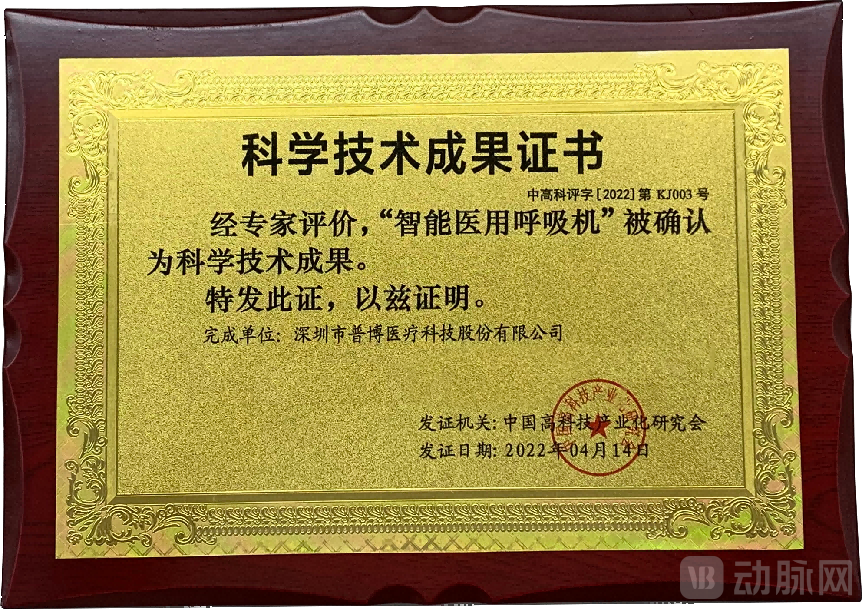
Recently, following expert evaluation by the China High-Tech Industrialization Research Association, Prunus Medical’s Padus series has been recognized as an “Intelligent Medical Ventilator” and confirmed as a scientific and technological achievement. This recognition is attributed to two innovative technologies/methods: the rhythm information model detection method and the optimization algorithm for non-invasive ventilation leak volume. The China High-Tech Industrialization Research Association is a technology-oriented legal entity registered with the Ministry of Civil Affairs of China, supervised by the China Association for Science and Technology, and wields extensive social influence.
AI-Enabled: Detection Methods for Rhythm Information Models
As respiratory therapy scenarios diversify and demands become more refined, the user experience and humanistic care of ventilators are being continuously enhanced.
Prunus Padus Series Ventilators: A novel trigger detection method based on a rhythmic information model that tracks and learns patient-specific change characteristics achieves significantly higher trigger synchrony accuracy than current international conventional methods, filling a domestic gap in China.
This model, based on deep learning algorithms, learns patient variations and continuously self-corrects to accurately predict patient triggering points, reduce patient-ventilator asynchrony, enhance patient comfort, improve oxygenation, and optimize therapeutic outcomes.
The Padus series ventilators integrate invasive ventilation, non-invasive ventilation, and high-flow nasal cannula (HFNC) therapy into a single device. They meet the needs for invasive ventilatory support in critically ill patients, as well as non-invasive ventilation or HFNC oxygen therapy in mildly ill patients, thereby fulfilling clinicians’ requirements for “sequential ventilation” therapy.
Non-invasive ventilation is currently a commonly used and effective method for treating or rescuing patients with respiratory failure, with the primary design challenge lying in the estimation of leakage volume.
Padus Series Ventilators: The leak volume is processed in segments, and the algorithm is optimized by incorporating pressure-related factors, resulting in more accurate leak calculation and ensuring precise delivery of ventilation.
Furthermore, artificial intelligence is embodied in this series of ventilators through the Flow Support function. During volume-controlled ventilation, it automatically adjusts flow rate and duration based on patient demand, thereby reducing patient-ventilator asynchrony and lowering mortality rates. In VSV mode, the ventilator delivers the target tidal volume on demand in response to patient-triggered breaths, helping to improve long-term patient outcomes.
Acute Respiratory Distress Syndrome (ARDS) has drawn significant attention due to its high mortality rate and is a common complication in severe COVID-19 cases. Mechanical ventilation is a critical intervention in the management of ARDS. The Padus series of ventilators supports advanced monitoring of esophageal and gastric pressures, enabling the measurement of transpulmonary and transdiaphragmatic pressures, thereby providing more precise therapeutic guidance for critically ill ARDS patients. Furthermore, PEEP titration is widely recognized as the most effective tool for lung-protective ventilation. This ventilator series supports the four most critical respiratory mechanics methods for PEEP titration—namely, lung compliance, pressure-volume (P-V) curves, transpulmonary pressure, and the Stress Index (SI)—facilitating precise treatment of ARDS.
Notably, in response to current COVID-19 prevention, control, and treatment needs, the Padus series adopts an advanced modular design concept, featuring detachable inspiratory and expiratory valves for convenient disinfection.
The Padus series has broken the import monopoly on high-end ventilators and filled the domestic gap in this segment. Currently, Padus high-end ventilators have been deployed in hundreds of Grade 3A hospitals across China, including the National Center for Infectious Diseases at Huashan Hospital in Shanghai, Beijing Chaoyang Hospital, Beijing Fuxing Hospital, and Xijing Hospital.
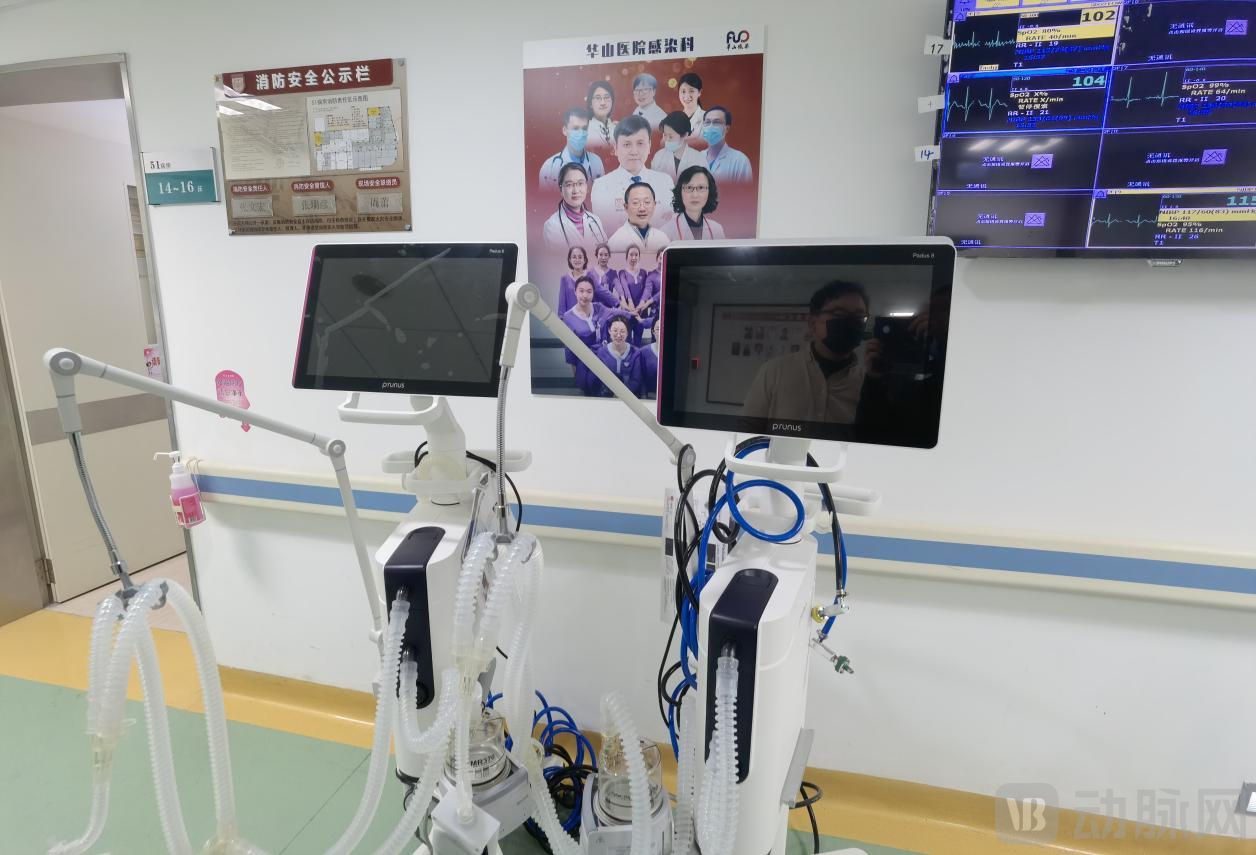
Prunus Medical is a leading domestic supplier of medical devices and supporting solutions for emergency and critical care. It has built a comprehensive health ecosystem encompassing clinical healthcare, home healthcare, and internet-based healthcare. The company’s product portfolio spans emergency and critical care equipment, consumables, information technology platforms, and home rehabilitation and nursing care. Its offerings are organized into four major product lines—life support, medical imaging, medical consumables, and integrated solutions—comprising more than 30 product categories and nearly 200 specifications. These include ventilators, anesthesia machines, handheld color Doppler ultrasound systems, infusion pumps, critical care and anesthesia consumables, and internet healthcare services. As one of the domestic manufacturers with the most diverse product range, Prunus Medical exports its products to over 100 countries worldwide.
Prunus is a national “Little Giant” enterprise specializing in sophisticated, niche, and innovative fields. It has been recognized with honors such as the Ministry of Industry and Information Technology’s 2021 Excellent Pilot Scenario for Intelligent Manufacturing and the Guangdong Provincial Engineering Technology Research Center for Intelligent Anesthesia. As one of only eight companies in China qualified to export invasive ventilators, Prunus is an officially designated global partner brand of the World Health Organization for pandemic response supply assurance.