

Early Orthodontic Treatment for Children Emerges as the Next Growth Driver in Clear Aligner Market: How Eplis Leverages Personalized Customization to Capture Opportunity
Where Do Market Opportunities Lie for Other Players When the Majority of China’s Clear Aligner Market Is Dominated by Industry Leaders?
Some argue that Tier-1 and Tier-2 cities account for approximately 70% of the clear aligner market, while lower-tier markets in Tier-3 and Tier-4 cities hold significant untapped potential. Others contend that focusing on the industry’s foundational drivers—research and development of new technologies and materials—is a key pathway to differentiated competition. Still others suggest that transforming business models, particularly by adopting online consultation services directly targeting consumers (B2C), may also represent an emerging trend.
Amidst the clash of diverse perspectives and practices in a “hundred schools of thought” landscape, various niche segments within invisible orthodontics are quietly emerging, with early childhood orthodontic correction being one of them.
Early orthodontic treatment for children in China is still in its nascent stage, but VCBeat has found that,One company has been firmly anchored in the pediatric early orthodontic correction market since its inception in 2014, dedicated to addressing children's oral health issues. This company is named Beijing Aipulisi Health Technology Co., Ltd. (hereinafter referred to as "Aipulisi").
Founded in 2014, iPrecision was co-established primarily by Tsinghua University alumni and overseas-educated Chinese professionals returning to China. The company has independently developed the ETA appliance, specifically designed to address dental misalignment in children aged 5–12. Additionally, it has built a database of 100,000 pediatric malocclusion cases and a digital repository of pediatric cephalometric X-rays, and has developed China’s first “Pediatric Cephalometric Analysis Software.” To date, iPrecision has partnered with 8,000 dental clinics and 11,000 dentists.
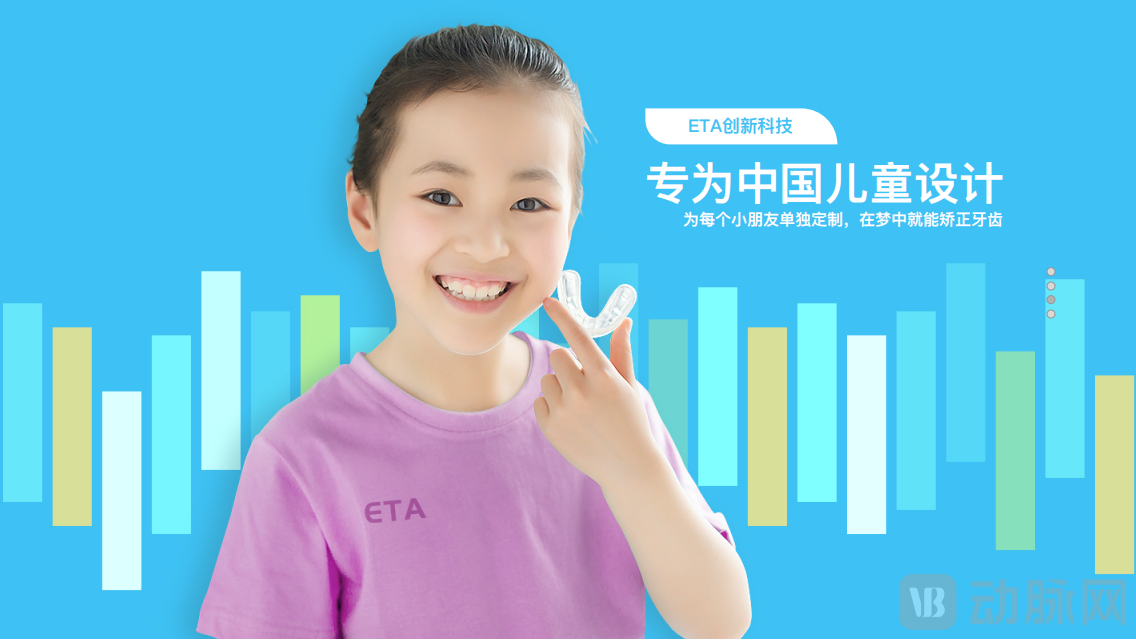
In the early childhood orthodontic market, which remains a blue ocean, what sets iForce apart most significantly from companies primarily focused on adult orthodontics? What is its core differentiated competitive strategy? And how has iForce strategically positioned itself around this approach? With these questions in mind, VCBeat conducted an exclusive interview with Hou Yafei, Founder of iForce, and Wang Qingyu, its Chief Marketing Officer, to seek answers.
How Great Is the Development Potential of the Early Orthodontic Market for Children?
The rapid development of adult invisible orthodontics will inevitably drive the growth of the early orthodontic treatment market for children. In recent years, the swift expansion of the adult invisible orthodontics market has been widely recognized.
In terms of market size, according to Frost & Sullivan, China’s clear aligner market became the second-largest globally in 2019, with its size increasing from USD 200 million in 2015 to USD 1.5 billion in 2020, corresponding to a CAGR of 44%. From 2020 to 2030, China’s clear aligner market is projected to grow at a compound annual growth rate (CAGR) of 23.1%, reaching an estimated market size of RMB 11.9 billion by 2030.
From the perspective of the capital market, according to incomplete statistics from VCBeat, between January 2021 and July 2021, a total of six companies in China’s clear aligner sector secured nine rounds of primary market financing, with individual funding rounds generally reaching the hundred-million-yuan level.
From the perspective of the secondary market, Angelalign, China’s leading clear aligner company, had already attracted widespread attention from the capital market prior to its listing on the Hong Kong Stock Exchange. During the IPO subscription period, it was oversubscribed by more than 2,000 times. Upon its successful debut on the Hong Kong Stock Exchange, its stock price surged by 132% on the first day, providing a significant boost of confidence to both the capital market and the clear aligner industry.
Secondly, from the perspective of market penetration for early orthodontic treatment in children using clear aligners.
According to a survey conducted by Fu Minkui of the Department of Orthodontics, Peking University School and Hospital of Stomatology, in 2002, the overall prevalence of malocclusion among children and adolescents in China was 67.8%, with rates of 51.8% during the primary dentition stage, 71.2% during the mixed dentition stage, and 72.9% during the early permanent dentition stage. It is important to note that malocclusion in children not only affects appearance but may also lead to functional or skeletal malocclusions, causing significant harm to oral health.
Unfortunately,According to Frost & Sullivan, in 2020, the proportion of children and adolescents in China who chose clear aligner therapy was 4.5%, while the figure in the United States during the same period was 16%. This comparison highlights the substantial growth potential of China’s early orthodontic treatment market for children.
Finally, driven by the immense growth potential of the early orthodontic treatment market for children, some leading companies in the adult clear aligner sector have also begun to extend their business layouts into this niche market.
For example, in 2019, Invisalign launched the Invisalign First series of pediatric aligners, designing clear aligner products and some supporting tools for children aged 6-10, which can effectively treat symptoms such as crowding of primary teeth and crossbite in children;
In the same year, Angelalign launched the Angelalign Pediatric Edition, offering a comprehensive clear aligner treatment solution for children and adolescents aged 6–12. This product adapts to the developmental progress of children’s teeth, muscles, and jaws. By alternately combining clear aligners, labiobuccal muscle barriers, and myofunctional exercises, it creates a more favorable oral environment to promote the growth and development of permanent teeth, facial muscles, and jaws.
Against this backdrop, as a company founded with the initial mission of addressing pediatric oral health issues, what is the most significant difference between iPrevent’s early orthodontic products for children and the adult clear aligner offerings from companies that have expanded into such adjacent business areas?
In this regard, Hou Yafei stated,“Adult clear aligner products have a history of over 20 years, and the ability to move permanent teeth is the core competency of these companies. Therefore, enterprises expanding from adult clear aligners into early childhood orthodontics may find their advantage in treating patients during the late mixed dentition and early permanent dentition stages. In contrast, iPrevent’s product strengths lie primarily in correction during the early mixed dentition stage.”
As for the specific advantages of Aipulisi products in early orthodontic intervention during the mixed dentition stage, Hou Yafei and Wang Qingyu elaborated on them one by one to VCBeat in subsequent interviews.
“No two leaves in the world are exactly alike.” This statement, made by the renowned 17th-century German philosopher Leibniz, remains equally applicable in the 21st century and serves as a profound articulation of the personalized philosophy underlying clear aligner therapy.
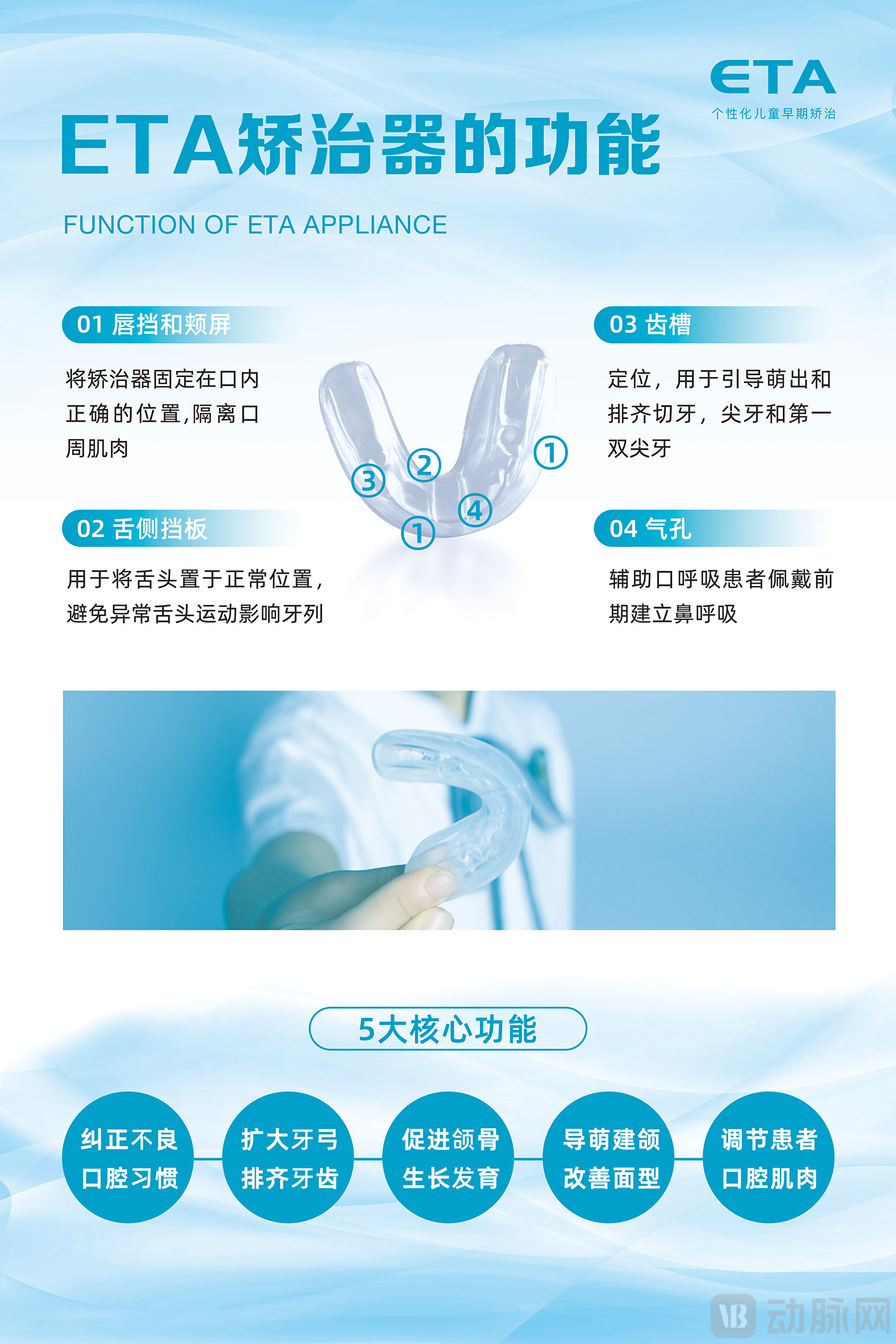
Guided by the principle that “no two malocclusions in the world are exactly alike,” the ETA pediatric orthodontic appliance has adopted a personalized customization strategy from the outset of its design. Appliance’s emphasis on personalized customization is directly reflected in its eight core development philosophies.
Conducting multicenter clinical studies on pediatric orthodontic appliances, establishing a database of malocclusion in Chinese children, creating a library of pediatric lateral cephalometric radiographs, providing personalized custom-made silicone pediatric orthodontic appliances, offering free ETA diagnostic analysis reports to dentists, and participating in the development of X-ray cephalometric analysis software specifically for children are among iPrecess’s eight core development principles.
From this, three key insights can be drawn: First, to ensure treatment efficacy and obtain timely clinical feedback, Aipulisi conducted multi-center clinical studies on early orthodontic appliances for children. Second, to enable dentists to conveniently monitor treatment progress and help reduce clinic operational costs to some extent, Aipulisi provides diagnostic analysis reports for its ETA pediatric orthodontic products free of charge. Third, Aipulisi remains committed to personalized customization of early pediatric orthodontic products and has strategically aligned its operations around this principle.
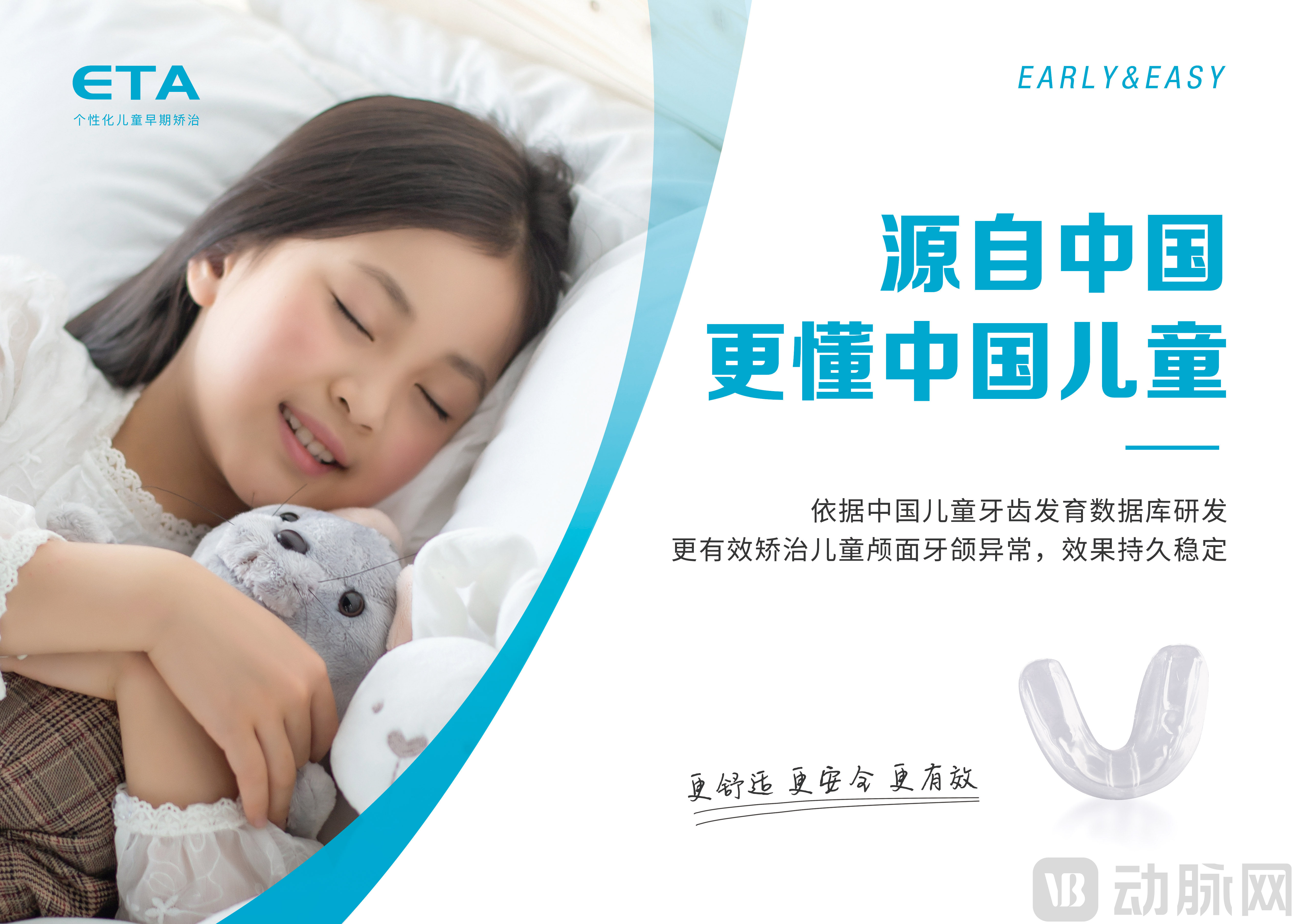
On the official website of iPrecision, a commitment is prominently displayed on the homepage. “As each child with malocclusion presents unique characteristics in terms of dental development, arch form, and specific malocclusion conditions, and to ensure optimal orthodontic outcomes along with enhanced wearing comfort for patients, we solemnly commit, in strict accordance with relevant national regulations and requirements, to provide personalized custom manufacturing of ETA orthodontic appliances.”
andDigital diagnostic technologies and equipment, a database of pediatric malocclusion, and a library of pediatric lateral cephalometric radiographs are the cornerstones enabling the personalized customization of ETA pediatric orthodontic appliances.
It is reported that iPrecision has been committed to the digitalization of pediatric dental measurement and diagnosis,Jointly launched China’s first “Pediatric X-ray Cephalometric Analysis Software” with the School of Stomatology, Guangxi Medical University.
The primary function of this software is to intelligently generate measurement results and provide clinical interpretations after identifying anatomical landmarks of hard tissues, soft tissues, cervical vertebrae, adenoids, and the upper airway on lateral cephalometric radiographs in children. It serves as a reference for diagnosing malocclusion in pediatric patients, thereby enhancing the accuracy and efficiency of clinical diagnosis and facilitating related clinical practices for physicians.
On this basis, Aipulisi established China’s first cephalometric radiograph database for children and, over an eight-year corporate development journey, gradually built a domestic database of 100,000 clinical cases of pediatric malocclusion, laying a solid foundation for the personalized customization of its products.
However, without a scientifically sound and rational design philosophy as its foundation, even the most abundant data will ultimately amount to empty rhetoric.
How does Eprosin perform in this regard?
VCBeat has learned that during early orthodontic treatment in children, the patterns of growth and development hold significant reference value for the design of treatment plans and the customization of appliances. Therefore, within the design philosophy of the ETA pediatric orthodontic appliance,Aipulisi designs personalized treatment plans and appliances in the sagittal, vertical, and transverse dimensions for growing individuals, based on the growth and development patterns of the pediatric oral cavity and integrated with occlusal guidance and orthodontic theories, to maximize the potential of growth and achieve optimal orthodontic outcomes.
Furthermore, by fully accounting for spatial factors, the ETA pediatric appliance incorporates the dimension of time into its design. Appropriate space is reserved during the appliance’s design, fabrication, and treatment planning to align the dental arches and guide tooth eruption and growth.
Furthermore, in addition to its design philosophy, Aipulisi’s ability to offer personalized customization is also underpinned by the support of a professional medical team.
Aipulisi boasts a specialized medical team for early childhood orthodontic treatment, composed of professional orthodontists and pediatric dentists. The company is dedicated to ongoing product development and clinical technology research, consistently delivering technologically advanced products and professional technical services for early childhood orthodontic care.
Among them, Dr. Wang Qingyu, the leader of the Eplus medical team and Chief Medical Officer (CMO) of Eplus, boasts particularly profound professional expertise.
Ph.D. in Orthodontics from the Fourth Military Medical University, Master’s degree in Pediatric Dentistry, and Young Committee Member of the Orthodontics Professional Committee of the Shanghai Stomatological Association—these credentials offer a glimpse into Wang Qingyu’s medical expertise in orthodontics.
Moreover, in 2019, Wang Qingyu, as the first associate editor-in-chief, published China’s first systematic monograph on clear aligner therapy. In 2021, as the corresponding author, he led his research team to publish “Changes in Mechanical Properties of Clear Aligner Membranes After Immersion in Artificial Saliva” in Scientific Reports, a Nature portfolio journal, demonstrating his notable research capabilities in orthodontics.
andUnder the leadership of Wang Qingyu, Aipulisi’s medical team places equal emphasis on internal training and external collaboration.
Internally, the medical team at iProsth conducts regular internal training sessions to study cutting-edge international theories in orthodontic treatment. “We hope that our medical design team will continuously integrate the latest global insights while absorbing classic orthodontic theories, thereby enabling continuous optimization of treatment plans.”
Externally, iPrex has also established scientific research partnerships with leading domestic dental hospitals and higher education institutions, such as the West China School of Stomatology at Sichuan University. Through close industry-academia-research collaboration, the parties cooperate on foundational theories, materials, artificial intelligence, and big data applications in early orthodontic treatment for children, jointly driving the advancement of the pediatric orthodontics industry.
Furthermore, iPrexis has collaborated with leading domestic experts to launch a series of training courses tailored for orthodontists, addressing their professional development needs in pediatric orthodontics.
Why Was an Early Orthodontic Treatment Training Course Launched for Orthodontists? Wang Qingyu stated that this is due to a contradictory phenomenon within the industry.
From the perspective of disciplinary distribution, Pediatric Dentistry and Orthodontics are two independent secondary disciplines. This has led to a phenomenon in the industry where pediatric dentists have not systematically studied orthodontic knowledge, while orthodontists have not systematically studied pediatric dentistry. Consequently, early childhood orthodontic treatment has fallen into an awkward situation of mutual “shirking of responsibility” within the industry.
“Physician education and training have always been a key focus for Align Technology. On one hand, there is a strong willingness and demand among dentists to acquire specialized knowledge in pediatric orthodontics; on the other hand, from the perspective of career development, orthodontists need to adopt a more comprehensive and macroscopic view of growth and development to fully consider the onset and progression of malocclusions, thereby optimizing treatment plans,” stated Wang Qingyu.
It is precisely based on this industry assessment that Hou Yafei and Wang Qingyu both stated to VCBeat at the end of the interview:“The future development trend of early orthodontic correction for children will undoubtedly be characterized by a comprehensive, full-sequence and full-cycle approach, and based on this concept, Aipulisi is currently making corresponding strategic arrangements.”