

DeepCare Files for IPO: Building AI-Powered Infrastructure to Transform Global Oral Healthcare

DeepCare
Developer of AI-Powered Dental Imaging Analysis Systems
Due to their high prevalence, oral diseases have been listed by the World Health Organization as one of the three major non-communicable diseases. Modern medicine has demonstrated that oral conditions such as periodontitis are closely associated with cardiovascular disease, diabetes, and Alzheimer’s disease. In China, the overall prevalence of oral diseases exceeds 90%, while the treatment rate remains below 10%. In other words, nearly everyone suffers from oral health issues to varying degrees, yet only a small fraction of these problems are adequately addressed. Statistics show that over the past decade, China’s oral healthcare services market has expanded at a compound annual growth rate of 15%. Meanwhile, much like most other industries, the oral care sector is experiencing intense “involution.”
Can we enable everyone to regularly monitor their oral health status, ensuring that diseases are detected and addressed at an early stage, thereby achieving the optimal healthcare pathway characterized by “lower costs and less suffering”? Even when facing complex or long-term treatment plans (such as multiple dental implants or orthodontics), can individuals still minimize their expenses while maximizing the protection of their oral health? In the current landscape marked by “traffic-first” mentalities, “capital overriding medical ethics,” and intense involution, how can we ensure that all stakeholders across the oral healthcare service chain benefit and jointly promote the sustainable and healthy development of the industry? This is a fundamental question that the oral healthcare sector in China, and indeed globally, must answer.
With many questions in mind, VCBeat conducted an exclusive interview with Dr. Ding Peng, Founder and CEO of DeepCare, as we sought to think outside the box and find innovative answers.
As an AI company dedicated to innovative applications of artificial intelligence in dentistry, DeepCare has cultivated the field of AI-driven oral healthcare for six years since its establishment. Its products and services have reached clients across China and served over 4,000 dental institutions in countries such as South Korea and Japan, as well as regions including North America and Europe.
“The R&D team at DeepCare, composed of outstanding algorithm scientists, dental medicine experts, and product designers, is the driving force behind our rapid global commercialization. The AI products and related services we have developed are empowering various stakeholders across the dental industry chain, building ‘infrastructure’ for the dental sector based on data and intelligent services,” said Dr. Ding Peng.
Perhaps technological change can indeed address fundamental industry issues that business model innovation alone cannot resolve. As our interview with Dr. Ding Peng deepened, a vision of the future—where AI and oral health are seamlessly integrated—gradually unfolded before us.
Most dental practitioners first became acquainted with DeepCare through its “Oral Health Screening Report.” By leveraging AI to analyze dental images and automatically identify oral health conditions, and integrating these findings with intraoral examinations conducted by dentists, the system generates a comprehensive yet accessible oral health assessment report enriched with illustrations and clear explanations. This innovative report spans from the aggregation of multimodal data to the detection and explanation of oral diseases and conditions, and further provides targeted treatment recommendations along with detailed descriptions of proposed procedures. It assists dentists in delivering personalized patient education and effectively communicating the necessity of recommended treatments. High-quality communication enhances patients’ trust in their dentists and improves treatment adherence. Indeed, dental diagnosis and treatment represent a clinical scenario where establishing and sustaining long-term trust is paramount.
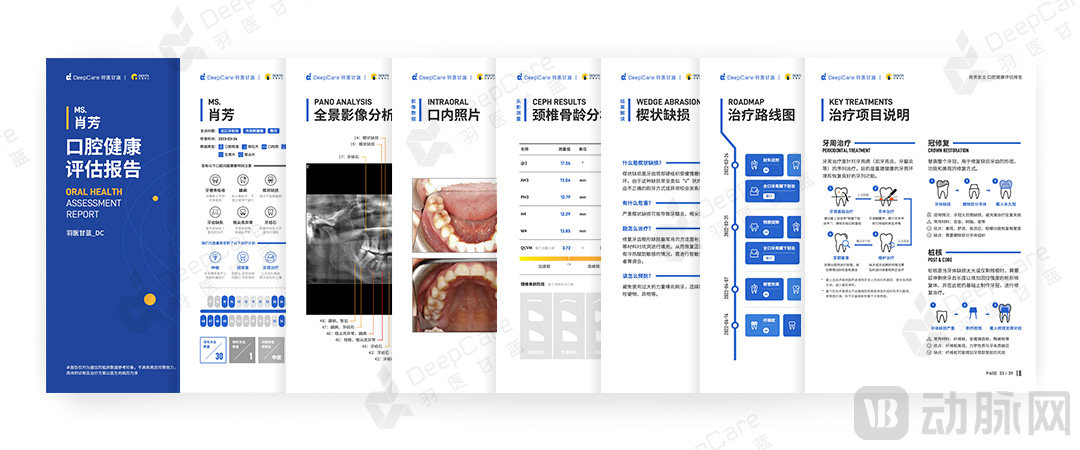
According to Dr. Ding Peng, the “Oral Health Examination Report” has been implemented in nearly 4,000 dental healthcare institutions worldwide, serving millions of individuals annually. Starting this year, DeepCare has established strategic partnerships with leading health examination providers, insurance companies, and commercial banks, expanding its service scope from patients visiting dental clinics to individuals seeking proactive oral health management. The expected service volume is projected to reach tens of millions of users.
“Why do Chinese individuals who perceive their oral health as good still need to proactively manage and maintain it?” Dr. Ding Peng explained, “Data from the Fourth National Oral Health Epidemiological Survey shows that 90% of adults in China have varying degrees of oral health issues, yet the treatment rate remains extremely low.” He added, “The vast majority of these oral problems are still in the early to middle stages of development, with no obvious pain. This group, which is ‘unaware of pain,’ constitutes the ‘healthy population’ that requires regular proactive management. At this stage, the cost of simple treatments is relatively low and affordable for the general public, thereby avoiding the high treatment costs and pain associated with worsened conditions. Although this seemingly simple rationale is widely understood, transforming it into a societal behavioral consensus is challenging—a gap that technological innovation can help bridge.”
DeepCare’s AI technology can automatically analyze multimodal imaging data, including 2D and 3D dental radiographs, intraoral scans, and both intraoral and extraoral photographs, with multiple technologies reaching industry-leading standards. Notably, the application scenario for natural-light photography spans both “clinical” and “home” settings. Unlike other dental images that require professional medical devices for acquisition, intraoral photographs can be captured using just a DSLR camera or a smartphone. While smartphone-captured intraoral photos are the most convenient and accessible, analyzing them effectively places higher demands on AI capabilities, as the algorithms must maximize analytical accuracy across varying conditions such as focus, angle, and ambient lighting. Furthermore, AI analysis of intraoral photographs enables oral screening and self-examination outside of hospitals and clinics, providing the entire population with an AI assistant for 24/7 oral health monitoring in home settings.
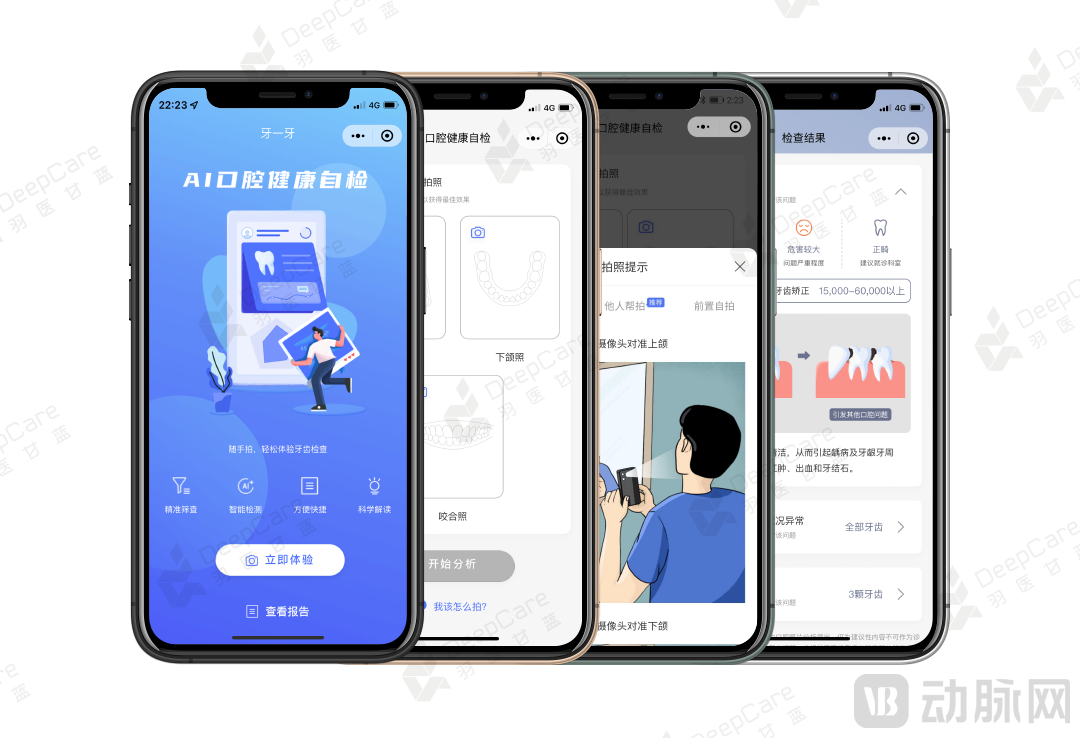
The tool mentioned by Dr. Ding is “Ya Yi Ya,” a mini-program recently launched by DeepCare. “With iterative upgrades, the algorithm’s screening performance will continue to improve, and its applications can be extended to more consumer scenarios, such as simulating facial aesthetics after orthodontic treatment and modeling color outcomes following teeth whitening. Furthermore, this mini-program will serve as a significant traffic entry point. We have already partnered with multiple online health service platforms and insurance companies in China to reach a broader population and uncover additional needs,” Dr. Ding added.
Whether it is an oral health screening report in a clinic or physical examination setting, or a self-health check at home, DeepCare has been striving to empower individuals to take proactive management of their oral health. Consequently, empowering the formulation and implementation of treatment plans has naturally become the “next milestone” for AI. Unlike cinematic scenarios where robots completely replace doctors in delivering treatment, DeepCare leverages its AI capabilities combined with its independently established structured diagnosis and treatment database. It assists physicians in generating personalized treatment plans tailored to each patient’s specific condition and guides the implementation process, thereby empowering dentists, particularly those at the primary care level.
Taking dental implant surgery as an example, in recent years, an increasing number of dentists have chosen to use surgical guides to perform implant procedures. These guides help clinicians precisely control the depth, position, and angle of implant placement, thereby avoiding damage to adjacent tooth roots and nerves, as well as preventing unnecessary lateral perforations. This enables less experienced practitioners to carry out surgeries with greater confidence. However, the customized design of surgical guides relies heavily on the technician’s individual expertise—even for a highly skilled technician with ten years of experience, the average time required to complete one guide is still one hour.
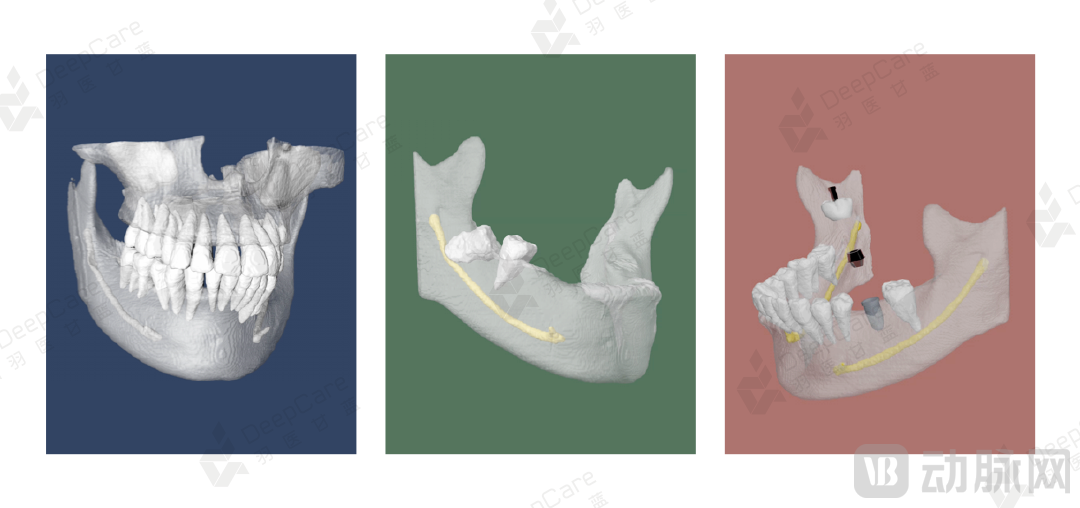
By leveraging AI technology for precise segmentation of 3D images and automatic registration and fusion of multimodal data related to dental implants, DeepCare enables doctors to obtain surgical guide files ready for 3D printing within minutes. Upon physician confirmation, chairside in-office printing can be performed, allowing for immediate implant surgery. This "diagnosis-to-surgery" approach eliminates the need for patients to make two or even three separate visits, enabling both doctors and patients to enjoy the tangible benefits of artificial intelligence and digital dentistry. For other clinical scenarios such as orthodontics and prosthodontics, AI is empowering business workflows following the same logic.
“For the oral care industry as a whole, the fundamental challenge to avoid involution and achieve sustainable growth lies in influencing and even transforming population-wide behavioral patterns. This entails empowering the entire population with the awareness and capability to proactively manage their oral health, fostering habitual regular dental check-ups and preventive care, thereby expanding the scale and societal proportion of individuals seeking professional dental services. Only by enlarging the overall market size can all stakeholders across the industry chain thrive and expand.”
Promoting the healthy development of the industry through technological innovation is DeepCare’s starting point.
Dr. Ding Peng continued, “Looking at the global market, there are three main participants in oral healthcare: individual consumers as payers, clinics and hospitals as healthcare service providers, and insurance companies as providers of dental insurance products. Consumers require oral health management and medical services throughout their lifecycle, healthcare providers need a stable and extensive customer base, and insurers seek to achieve population-wide coverage for dental insurance products. Under the traditional model, clinics and hospitals must engage in a series of high-cost marketing and educational activities to develop and meet consumer demand. However, AI-driven innovative dental products can link the interests of all stakeholders, creating a closed-loop value system.”
“Through AI innovation, individuals can perform screening and self-examination using simple and accessible methods. Early detection enables early treatment, thereby saving time and money while alleviating suffering. Through AI innovation, clinic operators gain business intelligence support for management, allowing them to allocate resources effectively, enhance operational efficiency, and reduce costs. Through AI innovation, experienced dentists can improve their efficiency and serve more patients within the same timeframe; junior and mid-career dentists can advance their clinical capabilities, as an AI system with extensive expertise provides chairside assistance, enabling them to adopt more advanced treatment modalities. This opens up new pathways for professional development among young dentists. By leveraging AI innovation combined with DeepCare’s own fine-grained, ultra-large-scale clinical data statistics, we can generate deep business insights and collaborate with insurance companies to design and develop pricing models for dental insurance products as well as AI-driven cost-containment models. This will propel China’s dental insurance products toward ‘high leverage’ and enable personalized premium pricing.” Whenever discussing technological innovation, Dr. Ding Peng’s face is always filled with excitement and pride.
“Our goal is to leverage innovative AI technologies to connect every node in the ‘patient care journey.’ We position ourselves not only as a provider of AI technologies and products but also as a builder of the industry’s ‘infrastructure.’ The new generation of infrastructure, powered by intelligence and data, will inevitably be the core driver of the next golden decade for the dental industry.” This statement by Dr. Ding Peng outlines DeepCare’s strategic positioning and offers a vision for the future of the dental industry.