

Shanghai Healthcare & Medication Emergency Platform: Lighting Up Community Care and Ensuring Seamless Access to Essential Medicines
The Shanghai epidemic has captured public attention. During the lockdown period, ensuring residents’ access to medical care and medications became an urgent priority. Recently, with the launch of online medical insurance payment services, the “Shanghai Emergency Platform for Medical Insurance-Covered Medications” has successfully integrated the entire process of “online consultation + medical insurance payment + medication delivery,” further alleviating the challenges faced by Shanghai residents in accessing healthcare and medicines during the pandemic.
The “Shanghai Emergency Platform for Medical Insurance Drugs” was jointly initiated by the Shanghai Digital Medicine Innovation Center, WeDoctor, Ruijin Hospital, and other medical institutions and pharmaceutical companies. Since its full launch on April 15, the platform has mobilized experts from across China to provide remote assistance to Shanghai, and established volunteer teams for drug supply assurance and community health ambassadors to deliver emergency medications to patients with chronic and severe conditions during the lockdown.
With the joint participation of the entire society and the support of digital healthcare platforms, efficient collaboration among physicians, community health ambassadors, and delivery volunteers has enabled this innovative initiative for “medical care, medicines, and medical insurance” to integrate resources across healthcare, pharmaceuticals, insurance, and digitalization. During the pandemic, it addressed bottlenecks and obstacles in accessing these services, thereby firmly safeguarding the basic livelihood of the population.
“With you in Shanghai, we will surely overcome this crisis!” Luo Liang (a pseudonym) had just completed his last medicine delivery of the morning by 2 p.m. To avoid having to remove and change his heavy protective suit, he had not taken a single sip of water since leaving home in the morning, leaving him both hungry and thirsty. Yet upon receiving a WeChat message from a patient, he felt an immediate warmth in his heart.
Luo Liang is an ordinary resident of Yangpu District in Shanghai. When the tranquility of daily life was disrupted by the epidemic, he began working from home. As a professional in the healthcare industry, his occupational sensitivity allowed him to quickly notice that medical resources were becoming strained as many “white-clad angels” devoted themselves to pandemic control efforts. Coupled with disruptions in pharmaceutical distribution, numerous patients encountered difficulties in accessing medical consultations and medications.
After the launch of Shanghai’s medical insurance drug platform, he proactively applied to join the Drug Supply Assurance Team, providing medication delivery services to residents with severe chronic conditions in Yangpu District. The team was responsible for the entire end-to-end process, including picking up medications from the warehouse, sorting, and final delivery. After retrieving drugs from the warehouse, they would sort the next day’s deliveries by area overnight. Early the following morning, the medications were loaded onto delivery vehicles, and the team set out at dawn to various subdistricts and communities across Yangpu. By the time they completed their deliveries and returned to their closed-loop managed residences, it was often well past midnight.
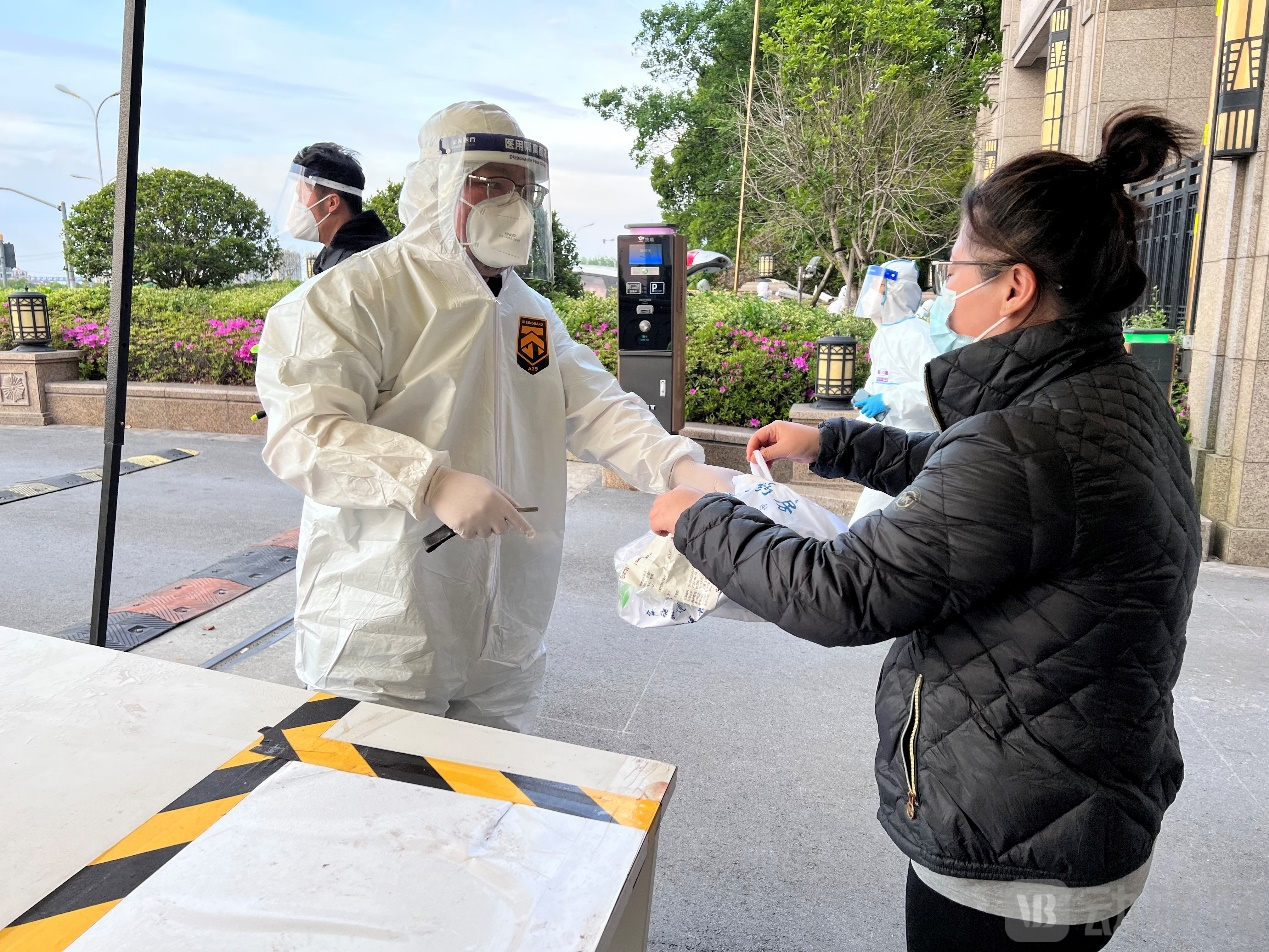 “Drug Supply Assurance Team” volunteers deliver medications to residential communities
“Although it is quite demanding, knowing that behind every medication order are anxious patients and their families waiting in anticipation makes it all worthwhile.” The dedication of volunteers in the Drug Supply Assurance Team has secured the “last mile” of drug distribution, ensuring that urgently needed medications reach the entrances of residential communities.
Previously, due to pandemic control requirements in Shanghai, many streets and communities were under “static management,” leading to a severe shortage of supply and delivery capacity. However, the supply of “life-saving medications” could not be interrupted. To deliver medicines to patients as quickly and extensively as possible, the “Shanghai Medical Insurance Drug Emergency Platform,” while further enhancing drug supply capabilities in collaboration with logistics and pharmaceutical distribution companies, established an emergency “Drug Supply Assurance Team” and recruited qualified volunteers to join the delivery workforce. With the establishment of the “Drug Supply Assurance Team,” all members entered closed-loop management and rapidly engaged in ensuring medication access for patients with severe chronic diseases, in compliance with pandemic control requirements. Their tasks included picking up medications from warehouses, compiling patient orders, assigning delivery tasks, coordinating delivery resources, and contacting patients. In these “unusual” times, a group of “ordinary people” rushed to the front lines of the pandemic response.
“We have connected with the emergency platform to provide online consultation, prescription, and medication dispensing services for residents in our community. Everyone can scan the QR code to consult doctors directly, purchase the necessary medications, and wait for home delivery,” said Wei Anhai, Community Health Ambassador of Community 00001. “Volunteers from the Medication Supply Assurance Team delivered the medicines to the entrance of our residential compound, and we are responsible for completing this ‘last 100 meters.’”
Wei Anhai previously served as the building group leader in his residential community. Upon learning that Shanghai had begun recruiting “Community Health Ambassadors,” he immediately signed up and became Shanghai’s Community Health Ambassador No. 00001. The role of a “Community Health Ambassador” involves collecting residents’ medical consultation and medication needs within their community, providing online consultation services and emergency medication coordination through a dedicated platform, and distributing medications to building group leaders or directly to patients.
In his “petition” to step down as the building group leader and assume the responsibilities of a “Health Ambassador,” Mr. Wei wrote: “I hope that in the upcoming medication delivery and distribution efforts, we can continue to uphold the spirit of our ‘last 100-meter relay.’” Mr. Wei noted that the Health Ambassador initiative has received strong support from the local neighborhood committee. The secretary of the neighborhood committee personally joined the effort, establishing a temporary Party branch to fully support residents’ needs for medical care and medication access.
“On the platform, each Health Ambassador corresponds to a heart-shaped lamp. Seeing more and more areas on the map being lit up is truly moving,” said Old Wei. Currently, Shanghai has lit up “a thousand lamps,” with over 1,300 volunteers joining the ranks of “Community Health Ambassadors,” covering all 175 subdistricts across the city. As more “Community Health Ambassadors” engage in their work, the emergency platform will be able to serve more patients in urgent need of medications.
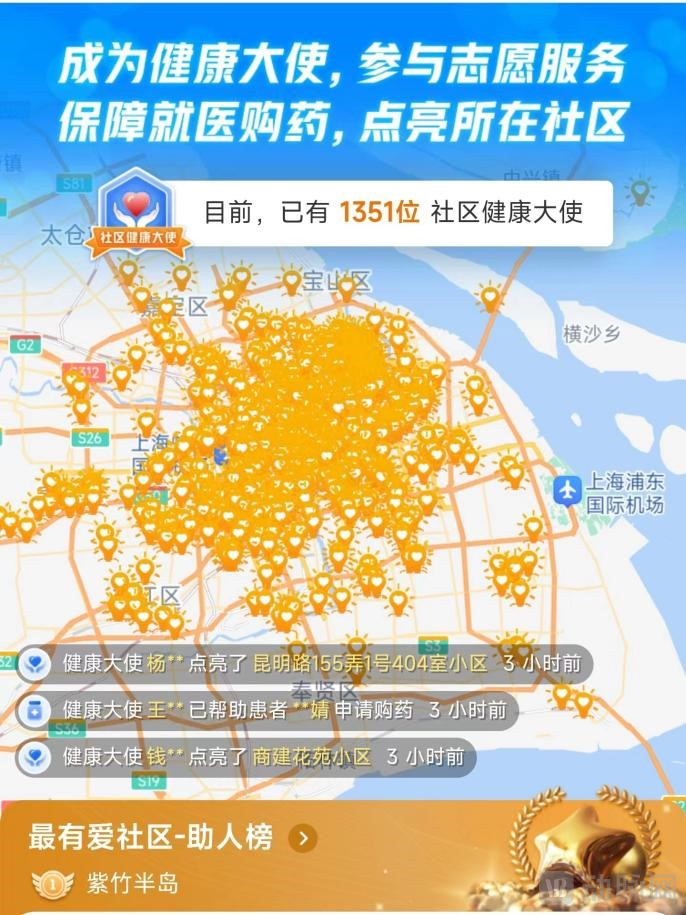
Over 1,000 Volunteers Become “Community Health Ambassadors”
“‘Community Health Ambassadors’ are community-based, providing residents with access to online consultations and emergency medication coordination, while directly liaising with the Medication Supply Assurance Team. By establishing a closed-loop service model, they deliver more professional, timely, and manageable support to address residents’ urgent needs,” said a platform representative. Currently, recruitment for “Community Health Ambassadors” is ongoing. The platform is mobilizing through multiple channels to engage more enthusiastic Shanghai citizens, particularly doctors, pharmacists, and psychological counselors with professional backgrounds, to achieve broader grid-based coverage across communities and illuminate the “light of health” for every community on the front lines of epidemic prevention and control.
“Previously, we volunteers collaborated with the platform to successfully navigate the ‘last 100 meters’ of medication delivery. Today, with the launch of online medical insurance payments, the entire healthcare and medication service loop has been closed.”
On April 27, Chen Xifeng, a community health ambassador in Yanji Wucun, Yangpu District, Shanghai, delivered urgently needed medications to Ms. Pan, a 75-year-old woman living alone in the same residential compound. This marked the “first order” fulfilled by Shanghai’s Emergency Platform for Medical Insurance-covered Drugs after it integrated online follow-up consultations and medical insurance settlement through the WeDoctor Internet Hospital affiliated with Shanghai WeDoctor Hospital.
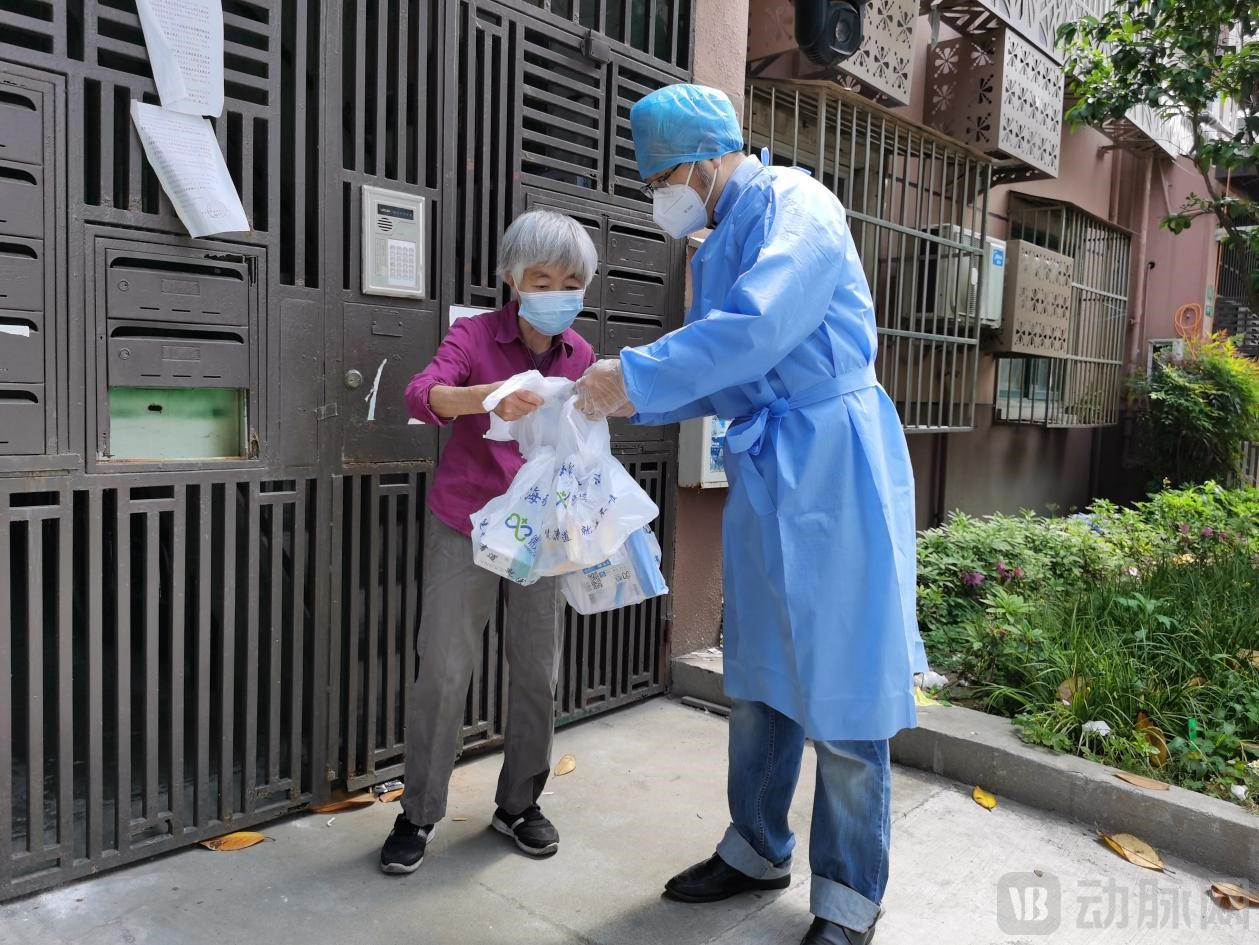
The digital “relay” for guaranteed medicine supply is officially complete—At 9:50 a.m., Chen Xifeng helped the elderly patient upload a valid prescription issued within the past two months and initiated an online consultation; at 10:04 a.m., Dr. Zhang Zheng, Associate Chief Physician of Endocrinology practicing at multiple sites including Shanghai Weiyi Hospital’s Internet Hospital, accepted the consultation and issued an electronic prescription; at 10:20 a.m., after Wang Yanmei, a licensed pharmacist at the Internet Hospital’s Prescription Review Center, completed the online prescription review, Chen Xifeng guided the elderly patient through the online medical insurance payment process. Subsequently, with the coordinated efforts of volunteer Xue Chunyan from the “Medicine Supply Guarantee Team” and health ambassador Chen Xifeng, the medication was delivered to the elderly patient by 1:40 p.m.
“Internet hospitals break through the constraints of time and space, enabling patients in need to consult with doctors and obtain prescriptions at the earliest opportunity, thereby providing timely assistance to many patients who urgently require medication.” On the Shanghai WeDoctor Internet Hospital platform, which supports this service, patients can clearly view physicians’ online availability, ensuring real-time access to medical consultations. Dr. Zhang Zheng stated that the introduction of online medical insurance payment will further facilitate follow-up visits, medication purchases, and insurance reimbursement, thereby alleviating the financial burden on patients seeking online medical care and prescription drugs.
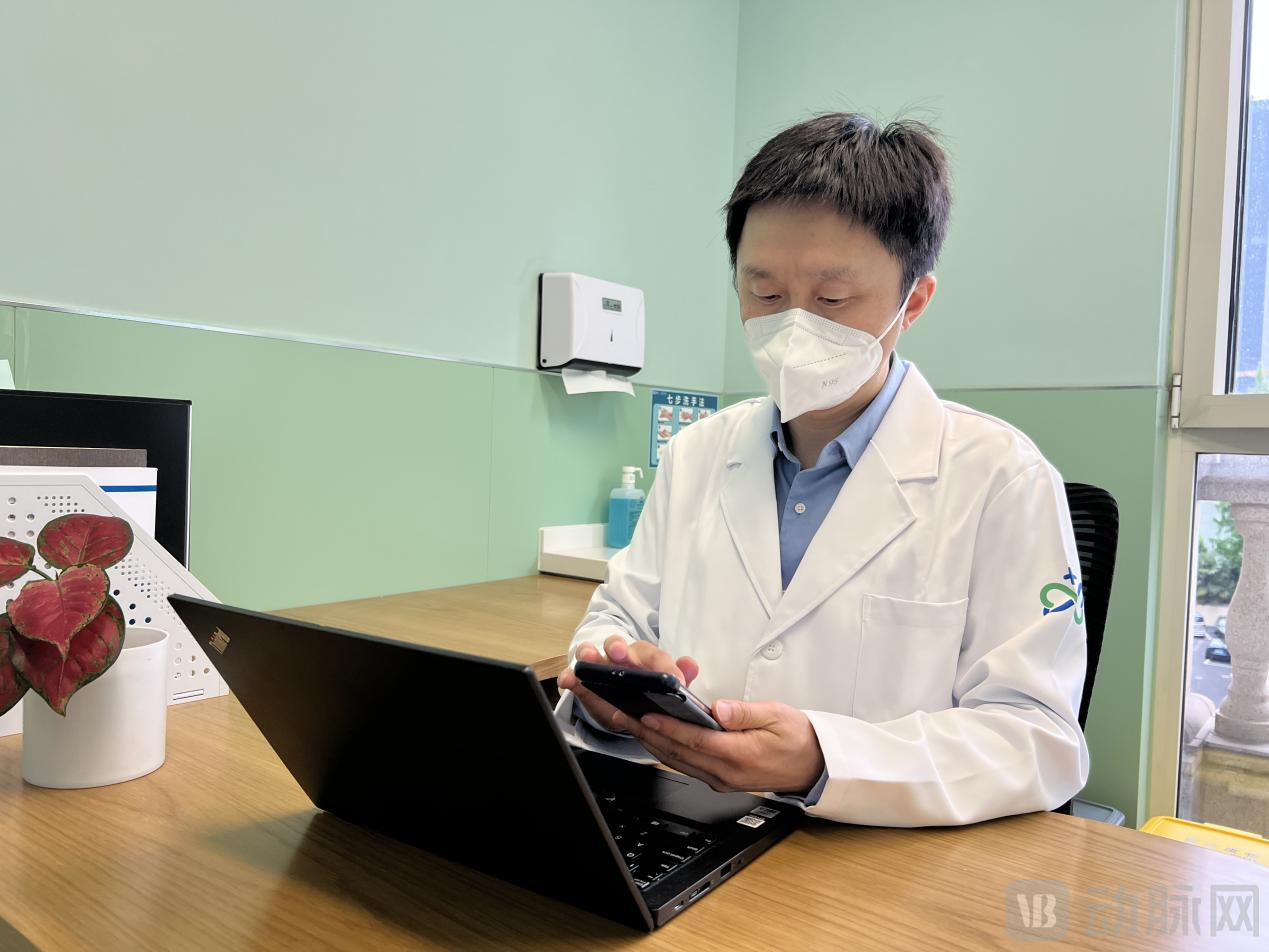
Dr. Zhang Zheng Prescribes Medication for an Elderly Patient During an Online Follow-Up Consultation
With the support of the Shanghai Municipal Health Commission and the Shanghai Healthcare Security Administration, and driven by the concerted efforts of relevant functional departments in Xuhui District and Yangpu District, Shanghai achieved full mobilization of physicians, community health ambassadors, and delivery volunteers through highly efficient collaboration during the lockdown period. It is reported that Yangpu District also specially organized assistance to facilitate liaison and coordination between platforms and grassroots sub-district offices, ensuring implementation across all 12 sub-district offices and their subordinate community residents’ committees in the district, thereby providing robust services and support for platform operations.
“The platform and volunteers have also significantly alleviated the workload of the neighborhood committee,” said Gao Junjie, Secretary of the Yanji Wuliu Village Neighborhood Committee in Yangpu District. He explained that previously, the neighborhood committee had designated specific staff to coordinate medical consultations and medication access; however, due to the complexity of epidemic prevention and control tasks, there was a severe shortage of personnel. Now, through close collaboration among the platform, volunteers, and the neighborhood committee, a dual-channel service model combining online and offline approaches has been established, creating an effective coordinated mechanism to ensure residents’ access to medical care and medications.
“With the combined efforts of all sectors of society, the emergency platform has basically ensured that most medication orders are delivered to patients within 72 hours, with some urgent medications delivered on the same day or the next day.” A relevant person in charge of the platform further stated that, under the guidance of government departments, the platform will devote greater resources to deeply integrate comprehensive resources across healthcare, pharmaceuticals, insurance, and data. By mobilizing additional forces, including physicians, community health ambassadors, and delivery volunteers, the platform aims to better safeguard Shanghai residents’ access to medical care and medications, thereby protecting the health of Shanghai.