

HuiZe Health Files IPO Prospectus: Building a Nationwide Digital Rehabilitation and Care Network Spanning Over 500 Cities and 10,000 Medical Institutions
In recent years, the integrated development of commercial insurance and health management has attracted significant attention.
On one hand, the insurance industry has seen sluggish performance. According to previous reports by VCBeat, during the first eight months of 2021, the five major A-share listed insurance companies collectively generated premium income of approximately RMB 1.8383 trillion, a decline from RMB 1.8490 trillion in the same period of 2020, indicating negative growth in premium income.
On the other hand, domestic health insurance products suffer from severe homogenization, primarily consisting of medical and critical illness insurance. With relatively uniform product structures, they fail to meet policyholders’ diversified and multi-tiered protection needs.
In this context, some argue that health management services can become one of the primary channels for customer acquisition in commercial insurance products. The reasons behind this are twofold: first, regulatory authorities have successively introduced policies in recent years to promote the integrated development of these two sectors; second, the industry value of health management has been recognized—it is no longer merely an adjunct to health insurance but plays a transformative role in reshaping the entire value chain of insurance products. (Health management is applicable not only to health insurance but also to life insurance and property and casualty insurance, such as bodily injury coverage in auto insurance.)
However, the integrated development of commercial insurance and health management is no easy feat. Some companies have chosen to establish their own health management subsidiaries, but this approach is asset-heavy, requires substantial investment, and has a long payback period, posing significant challenges to insurers’ understanding of health management. Consequently, more insurance companies are opting to collaborate with third-party providers of medical and health management services, procuring health management and other value-added services.
In the second approach, VCBeat identified a company that links insurance with medical health management services—Shanghai Huize Zhitong Health Technology Co., Ltd. (hereinafter referred to as Huize Health).
What drew VCBeat's attention,While Huize Health offers comprehensive health management services, ranging from prevention, diagnosis, and treatment to rehabilitation, as well as customized offerings such as cell therapy and overseas medical care, the company is committed to building a digital health and care technology platform. Centered on this digital focus, Huize Health has established a service network comprising more than 500 cities and over 10,000 offline institutions, extending its reach even to fifth-tier cities.
Moreover, Huize Health operates over 30 medical and elderly care institutions, with more than 13,000 beds and a platform workforce of over 10,000 physicians, nurses, rehabilitation therapists, and caregivers.
Amid a wide array of health management service offerings, why has Huize Health placed particular emphasis on care and nursing services? What distinguishes Huize Health’s care and nursing services? As a platform-based enterprise linking insurance companies with health management services, what competitive advantages does Huize Health hold? With these questions in mind, VCBeat interviewed Huang Wenhua, founder of Huize Health, to seek answers.
When interviewed by VCBeat, Huang Wenhua had already been in home quarantine for over a month due to the pandemic. However, this did not diminish his enthusiasm for discussing his work.
“Don’t let the fact that Huize Health was founded in 2019 fool you; I have actually been working in the health and wellness sector for over a decade.” Huang Wenhua’s voice came through the video, tinged with pride.
Holding titles such as U.S.-trained Ph.D. in Chemistry, MBA, co-founder of the Nasdaq-listed company Plug Power, and CEO of Lvkang Medical and Elderly Care, along with his experience as a senior executive at GE Asia-Pacific, these labels significantly enhance Huang Wenhua’s professional profile.
Yet, after such an impressive industry track record, why did Huang Wenhua choose to embark on a new journey by founding Huize Health? The reasons are primarily twofold:
First, as previously mentioned, the integrated development of health insurance and health management requires the participation of third-party institutions. Second, regarding care and nursing services, which constitute a significant proportion of health management, there remains a mismatch between demand and available resources and capabilities in China, indicating that the overall market is still an untapped blue ocean.
On one hand, according to the data from the seventh national population census in 2020, China’s population aged 60 and above reached 260 million. Meanwhile, data from the China National Committee on Aging indicates that over 180 million elderly people in China currently suffer from chronic diseases, accounting for 50% of the national burden of chronic disease patients. Furthermore, data from the Chinese Academy of Social Sciences shows that approximately 12% of the elderly nationwide are in a state of disability. Additionally, trends toward lower birth rates and an increasing number of empty-nest households have made elderly rehabilitation and nursing services essential needs for domestic families.
Against this backdrop, the "In-Depth Research and Analysis Report on the Current Status of China's Elderly Rehabilitation Services Industry (2022-2029)" predicts that by 2025, the average monthly care cost per elderly person in China will reach RMB 1,500, and the market size for elderly rehabilitation and nursing services will amount to RMB 828 billion.
On the other hand, in the face of substantial demand for healthcare and nursing services, China’s resources and capabilities in this sector remain somewhat inadequate.
According to the aforementioned research report, in terms of the number of registered elderly care institutions, there were 43,000 such institutions in China in 2013. However, the number began to decline from 2014 onward, only starting a slow recovery in 2018 and eventually reaching 39,000 by 2021. Nevertheless, a significant gap remains before supply and demand are balanced.
Moreover, China faces a substantial shortage of professionals in elderly rehabilitation services.
In accordance with the standards set forth in the “Basic Standards for Rehabilitation Hospitals (2012 Edition)” issued by the former Ministry of Health, which stipulate that each rehabilitation hospital bed should be staffed with at least 0.15–0.2 physicians and 0.3–0.4 rehabilitation therapists, the number of physicians in China’s rehabilitation hospitals should have been at least 45,000–60,000, and the number of rehabilitation therapists at least 90,000–120,000 in 2020.
However, the reality is that as of 2020, there were only 14,200 licensed physicians and 16,400 practicing therapists (including assistant physicians) in rehabilitation hospitals in China (data from the China Health Statistics Yearbook), indicating a substantial shortage of specialized professionals.
Furthermore, in Huang Wenhua’s view, although China’s current diagnostic and treatment capabilities are at a relatively high level, there are misconceptions regarding the philosophy of rehabilitation and nursing care. Specifically, many believe that medical services end once consultations are completed, surgeries are performed, and medications are dispensed. “In reality, post-diagnostic and post-treatment rehabilitation and nursing constitute the critical link in truly restoring patients from a sub-health state to a healthy one.”
Huize Health’s business layout is primarily divided into two aspects: first, the linkage and provision of health management services with a focus on rehabilitation and nursing care; second, the development of its own intelligent underwriting engine for individuals with pre-existing conditions, which assists insurance companies in expanding their product coverage scope and breaking through the limitations of single-form insurance products.
Let us first examine the linkage and provision of health management services.
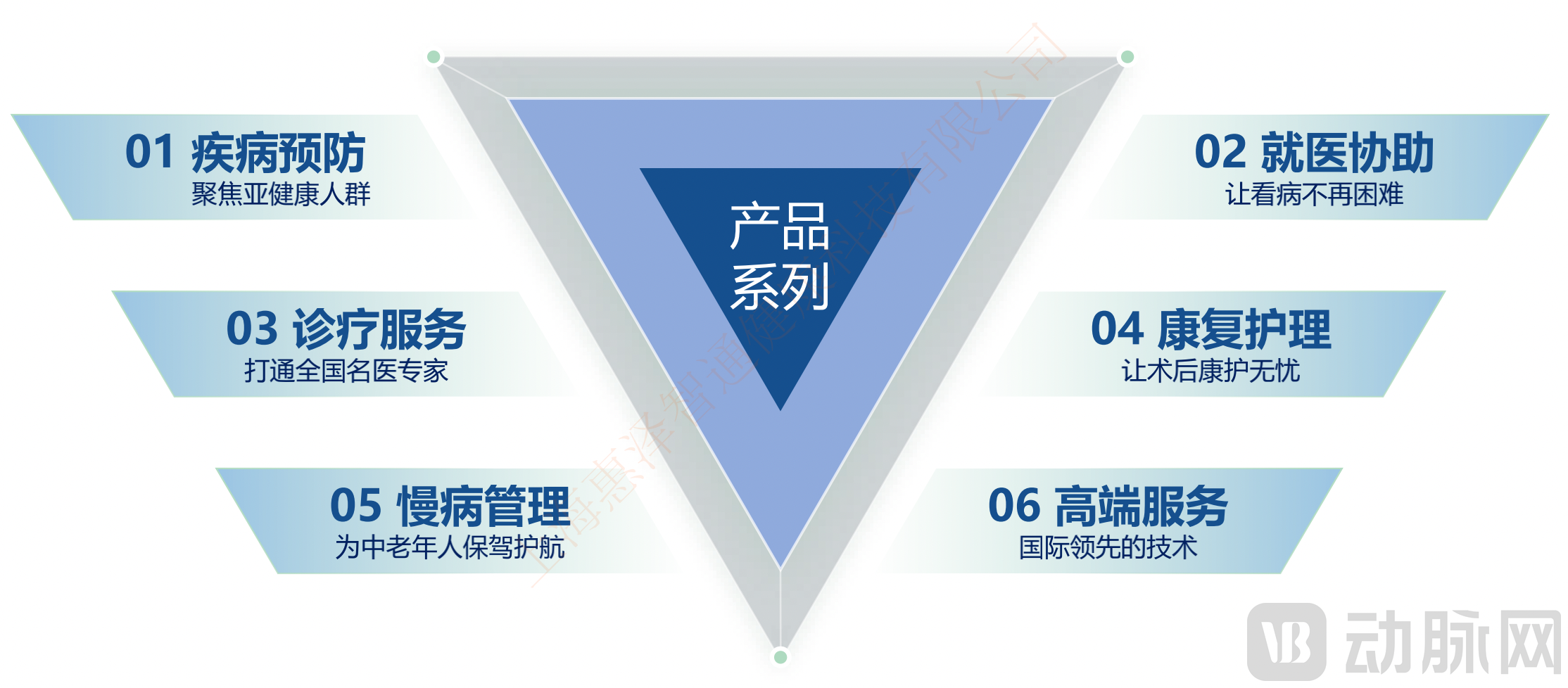
It is reported that the health management services provided by Huize Health are divided into six major categories:
1. Disease prevention, including health lectures, early cancer screening, stroke prevention, genetic testing, video consultations with physicians, and Traditional Chinese Medicine (TCM) conditioning;
Second, medical assistance services, including expert appointment scheduling, medical consultation accompaniment, hospitalization green channels, advance payment for hospitalization, priority examinations, and inpatient nursing care;
Third, diagnostic and treatment services, including online medication purchases, telemedicine, second medical opinions, multidisciplinary consultations (MDT), specialty drug services, and discharge assistance;
Fourth, rehabilitation and nursing services, including green-channel access to rehabilitation, inpatient rehabilitation, inpatient nursing, home-based nursing, home-based rehabilitation, remote guidance, nurse home visits, and sports injury rehabilitation;
5. Chronic disease management, including health check-ups, sleep management, psychological counseling, traditional Chinese medicine physiotherapy, single-disease management, and management of neck, shoulder, waist, and leg pain;
Sixth, high-end services including immune cell storage, stem cell therapy, CAR-T cell therapy, and overseas medical treatment.
Additionally, according to Huang Wenhua, in terms of diagnostic and treatment resources, Huize Health has established cooperative relationships with leading Grade-A tertiary hospitals in China, while in terms of pharmaceuticals, Huize Health collaborates with certain domestic chain pharmacies.
Notably, rehabilitation and nursing services are the most distinctive offering among Huize Health’s many health management services. Why has Huize Health chosen to prioritize its efforts in this area?
In this regard, Huang Wenhua stated that over the past decade, China’s rehabilitation industry has experienced rapid development, predominantly centered on hospital-based rehabilitation. However, home-based settings are equally important. This is because rehabilitation often involves repetitive training of specific behaviors to restore functions as closely as possible to their pre-illness state, such as joint range of motion, muscle tone, gait, and speech function.“Although home-based rehabilitation has certain limitations, such as the inability to use specialized rehabilitation medical equipment, it is a favorable option for patients in the stable phase of their disease.”
Furthermore, Huang Wenhua emphasized:“To achieve outcomes comparable to hospital-based rehabilitation, home-based rehabilitation must meet at least three conditions: rehabilitation assessment, training protocols, and a guidance system.”
Based on these three criteria,Huize Health has independently developed an intelligent rehabilitation assessment system capable of rapidly and accurately formulating personalized home-based training plans for clients. Furthermore, building upon this system, patients can utilize Huize Health’s proprietary AI-powered visual rehabilitation training guidance system to conduct correct and effective rehabilitation exercises in a home setting.
It is reported that Huize Health’s AI-powered visual rehabilitation training system tracks and locates over 30 key anatomical landmarks in real time, assesses the accuracy of rehabilitation movements, provides immediate feedback to patients, and corrects their posture to ensure that every exercise adheres to the prescribed rehabilitation protocol.
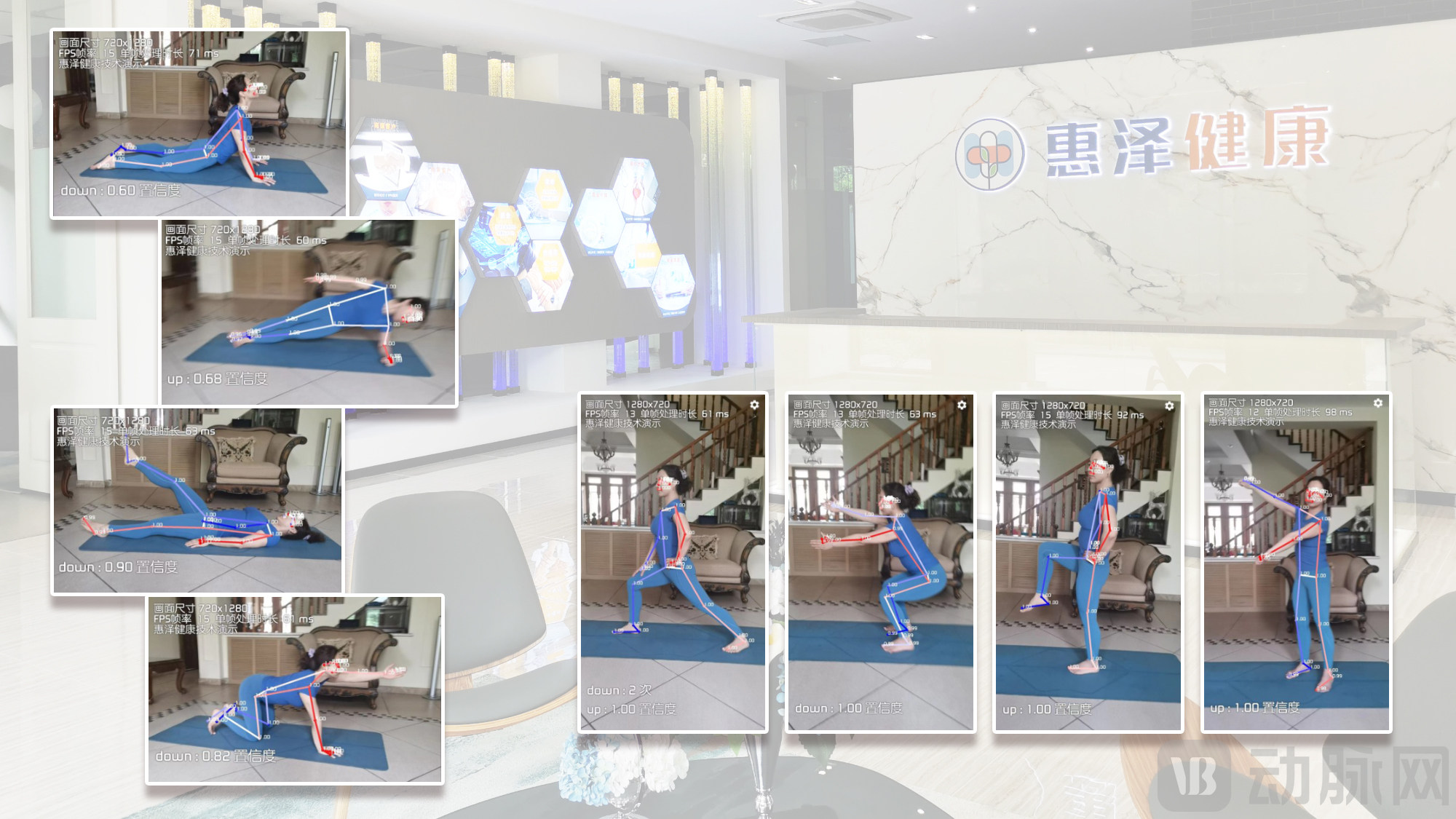
Furthermore, the system records data from each training session to facilitate comparison, thereby enabling trackable and quantifiable rehabilitation outcomes.Through Huize Health’s digital rehabilitation management platform, patients in fifth-tier cities can also receive guidance from rehabilitation experts in first-tier cities. In the future, the patient rehabilitation training data collected by this system can serve as a basis for health insurance claims, thereby empowering insurance companies to control costs.
Additionally, it is worth noting thatHuize Health’s healthcare and wellness services are delivered through two primary channels: self-built service facilities and collaborations with other health, elderly care, and medical institutions. Accordingly, Huize Health’s service team is divided into two segments: in-house staff and partnered personnel.
As of now, Huize Health has assembled a team comprising over 100 expert physicians across specialties including oncology, orthopedics, pediatrics, and gynecology; more than 200 rehabilitation therapists specializing in areas such as physical therapy (PT), occupational therapy (OT), and speech therapy (ST); and over 1,000 care aides. In addition, Huize Health has established collaborative partnerships with more than 2,000 physicians, 3,000 nurses, 2,000 rehabilitation therapists, and 5,000 care aides. The company has built a service network encompassing over 10,000 institutions across more than 500 cities, extending its reach to fifth-tier cities, with 30% of its services delivered in county-level and town-based markets.
When discussing the rationale for reaching grassroots markets, Huang Wenhua corrected a biased view: that demand for rehabilitation and nursing care in fifth-tier cities is low.
“Before entering this industry, I actually held the same view. However, as my understanding of the sector deepened, I found that the reality is quite the opposite,” said Huang Wenhua. He cited three main reasons: the development of information technology has largely removed barriers to communication; health management awareness has risen in lower-tier markets; and the continued penetration of commercial health insurance into these markets, coupled with further market education, has increased acceptance of health insurance among residents in counties and towns. “It is not that people in fourth- and fifth-tier cities lack rehabilitation needs; rather, we previously lacked the technical means and standardized products to meet those needs. Now, all of this is set to change.”
Moreover, somewhat surprisingly,Huize Health has also independently developed an intelligent underwriting engine for individuals with pre-existing pulmonary nodules. This engine can dynamically predict the risk of malignancy in pulmonary nodules over the next 2–4 years, serving as a basis for standardized health management of pulmonary nodules.Moreover, this model can be applied to the online intelligent underwriting process for health insurance, replacing health declarations, intelligent questionnaires, and manual underwriting. It also helps health insurers expand their coverage scope, enabling them to move from the red ocean market of "healthy individuals" to the blue ocean market of "individuals with pre-existing conditions."
“Huize Health positions itself as a platform offering comprehensive, end-to-end health management services. Through this platform, it connects insurance clients, corporate clients, individual clients, and various stakeholders including medical institutions, rehabilitation centers, integrated medical and elderly care facilities, pharmacies, and medical device providers, while empowering ecosystem partners to streamline upstream and downstream supply and demand, thereby driving revenue growth.”At the end of the interview, Huang Wenhua remarked with considerable emotion, “It has been my life’s ambition to establish three publicly listed companies. I am now just one step away from realizing this dream. Huize Health will pursue steady, pragmatic growth, advancing step by step toward the goal of becoming a publicly listed company.”