

Guard Medical Announces $11 Million Series B Funding and FDA-Cleared NPseal for Transforming Surgical Site Infection Prevention

Guard Medical
Wound Treatment Technology Developer
(Image source: Guard Medical official website)
Guard Medical, a medical technology startup founded in 2020 and headquartered in Miami, South Florida, is a developer of anti-infective care solutions for surgical wounds. Guard Medical has developed NPseal, an innovative wearable surgical wound dressing. NPseal offers a more affordable and user-friendly solution, making prophylactic negative pressure wound therapy (NPWT) for closing surgical incisions more accessible. Guard Medical is committed to improving the quality of life for surgical patients and helping to drive innovation in healthcare systems.
On April 6, 2022, the company announced that it had completed an $11 million Series B financing round, jointly invested by Bpifrance and Matignon Investissement et Gestion. Following the completion of this round, Guard Medical will continue to deepen clinical research and commercialization of its next-generation negative pressure wound therapy (NPWT) dressing, NPseal.
The founding team has many years of experience in technology R&D and business management.
Several key partners at Guard Medical are well-known industry veterans with many years of experience in the medical device sector. Some have long been engaged in corporate management, bringing extensive and mature expertise in company operations; others are among the leading experts in clinical surgery in the United States, with a keen sense for technological innovation; still others have achieved remarkable success in both corporate management and the research and development of clinical devices.
Machiel van der Leest, President and Founder of Guard Medical, is a seasoned medical device professional and entrepreneur. He holds a master’s degree from Delft University of Technology and has accumulated extensive expertise in both specialized technology and corporate management. In the field of medical device R&D, he has developed and launched more than 10 Class III devices in the interventional cardiovascular and neurovascular markets. In terms of corporate management, Machiel has held executive positions such as CTO, CSO, and CEO. Prior to joining Guard Medical, he served as CEO of ART—the bioresorbable stent company—where he raised over €100 million in funding.

President and Founder Machiel van der Leest
Dr. Frederick Cornhill, Chief Security Officer and Founder of the Company, earned his Ph.D. from the Department of Biomedical Engineering (BME) at the University of Oxford. Academically, he has authored over 100 scientific articles and is the inventor of more than 40 patents. He served as the founding chair of the BME Center at The Ohio State University, the BME Department at Cleveland Clinic, and the BME Institute at the University of Oxford. Most recently, he held the position of Co-Director of the Minimally Invasive Novel Technologies (MINT) Program at NewYork-Presbyterian and Weill Cornell Medicine. In the business realm, Dr. Cornhill has founded multiple medical technology companies and served on the boards of directors of numerous medtech startups. With over 40 years of corporate management experience in academic and commercial MedTech ventures, he possesses deep insights into global trends in medical technology development.

Chief Security Officer and Founder Dr. Frederick Cornhill
NPWT Technology for the Prevention of Surgical Site Infections
Surgical Site Infections (SSI) are widely recognized as a significant global epidemiological burden and remain among the most feared surgical complications. Statistics indicate that healthcare-associated infections (HAIs) add nearly $10 billion to U.S. healthcare costs, with over $3.2 billion annually attributed specifically to the treatment of SSI-related complications. Beyond imposing substantial financial burdens on national healthcare systems, SSIs lead to a range of severe consequences, including prolonged patient treatment durations, increased morbidity, and higher mortality rates.
Numerous peer-reviewed articles have demonstrated that the prophylactic use of Negative Pressure Wound Therapy (NPWT) on closed wounds can reduce surgical site infections (SSIs) by more than 50%. Negative Pressure Wound Therapy (hereinafter referred to as NPWT) refers to a wound dressing system that applies sub-atmospheric pressure (typically ranging from -55 mmHg to -175 mmHg), either continuously or intermittently, to the wound surface for therapeutic purposes. Clinical studies have shown that the timely prophylactic application of NPWT devices before the onset of surgical site infections can reduce the incidence of postoperative complications and promote wound healing. The use of NPWT devices exerts comprehensive effects, including increasing local blood flow, eliminating local edema, reducing the accumulation of wound exudate, inhibiting bacterial growth at the wound site, and promoting cell proliferation and granulation tissue formation. Currently, NPWT technology is widely used in the treatment of various acute and chronic wounds, including acute soft tissue defects, various chronic ulcers (pressure-related, vascular, and diabetic), and surgical wound dehiscence or infection.
However, most NPWT devices currently on the market have limited applications due to their high cost (ranging from $1,000 to $20,000) and complexity, failing to adequately meet medical needs. Addressing these industry pain points, Machiel, CEO of Guard Medical, and his team are developing solutions that better leverage NPWT technology, striving to make their product, NPseal, more affordable and user-friendly while ensuring therapeutic efficacy.
Conventional commercially available systems for negative pressure wound therapy (NPWT) primarily consist of a specialized dressing (bandage), a drainage tube, a negative pressure device (suction pump), and a fluid collection canister. The negative pressure device is the most critical component; it incorporates a pressure sensor designed to monitor negative pressure levels or detect loss of pressure. Proper negative pressure delivered by NPWT equipment not only prevents wound dehiscence or suture line disruption but also provides optimal dry conditions to promote wound healing. In traditional NPWT devices, the negative pressure mechanism is typically a vacuum suction pump powered by a DC motor or battery. Due to the presence of mechanical suction pumps, motors, and batteries, conventional NPWT systems are generally bulky and heavy, making them less suitable for portable use. When patients undergo continuous NPWT for up to ten hours or more, noise and vibration generated by the motor can reduce treatment comfort. Furthermore, traditional NPWT devices are generally expensive (ranging from $1,000 to $20,000), and suffer from drawbacks such as complex user interfaces, stringent post-use disinfection requirements, and cumbersome sterilization processes. However, their advantages include reusability and the ability to provide up to ten hours or more of treatment on a single charge.
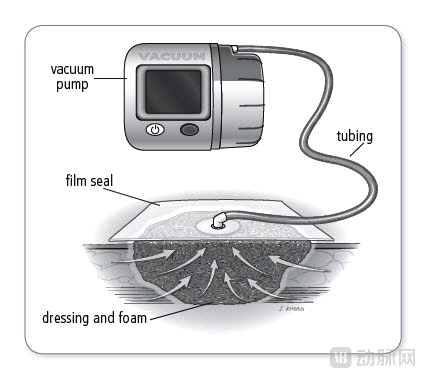
Traditional NPWT Devices
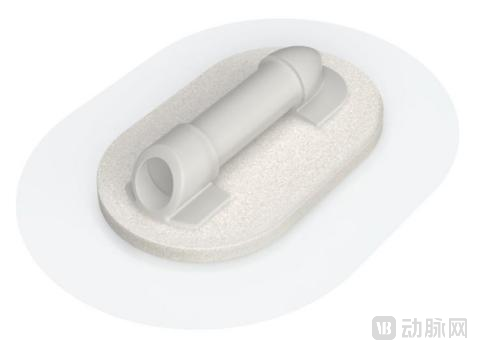
Integrated NPWT Device
Guard Medical’s NPseal is a disposable, wearable dressing with an integrated pump, comprising a proprietary pinch pump with a built-in pressure indicator, a breathable polyurethane film (which promotes exudate evaporation and facilitates wound healing), and a high-performance foam pad. The overall materials of NPseal are simple and lightweight, offering a degree of cost-effectiveness. The key design feature of NPseal is its proprietary pinch pump, which is made from soft, flexible, and lightweight materials. This proprietary pinch pump effectively evacuates air from the wound space and establishes negative pressure at -75 to -125 mmHg, allowing patients to easily maintain NPseal therapy at home through a simple squeezing action. Recent clinical studies on NPseal indicate that it supports various surgical specialties, including general surgery, colorectal surgery, plastic and reconstructive surgery, obstetrics (cesarean section), orthopedics, and dermatology. It is well-suited for inpatient and outpatient procedures in ambulatory surgery centers (ASCs) or office-based settings. Compared to traditional negative pressure wound therapy (NPWT) devices, NPseal offers advantages such as lower cost, portability, ease of use, and noise-free operation.
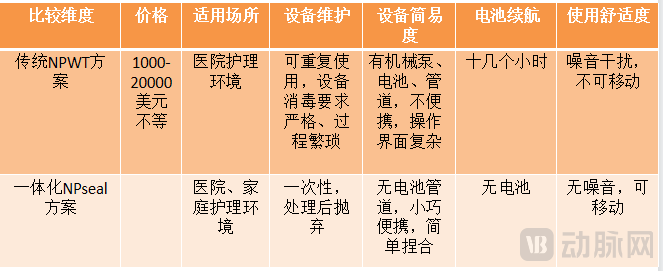
Comparison of Two NPWT Solutions
On June 29, 2020, following the FDA’s 510(k) clearance of its novel NPseal (the first single-use negative pressure wound therapy [NPWT] surgical dressing), Guard Medical secured an additional $5 million to accelerate market introduction and conduct post-market clinical investigations. Machiel stated, “We will further demonstrate the unique advantages of NPseal in terms of ease of use and cost-effectiveness. Our goal is to make NPWT accessible to all patients.”
Subsequently, Fletcher Spaght was commissioned to conduct a market study, which revealed a 75% acceptance rate of NPseal among surgeons. The study also observed that surgeons typically keep the device on patients for extended periods to achieve optimal clinical outcomes. On May 24, 2021, less than a year later, Guard Medical announced FDA approval to extend the recommended wear time of NPseal from 3 days to 6 days. “This is a significant step toward becoming the preferred NPWT device for treating various surgical wounds,” said Machiel.
Soon, on June 7, five patients were enrolled in the post-market study of NPseal. The initial cases demonstrated the rapid application and easy activation of NPseal. Its ease of use, combined with cost-effectiveness, makes it feasible to employ negative pressure wound therapy (NPWT) prophylactically for closed surgical wounds.
On February 15, 2022, Guard Medical announced the expansion of its NPseal product portfolio, which now includes three sizes—5 cm, 10 cm, and 15 cm—suitable for most closed surgical incisions across multiple specialties. FDA clearance of the larger-sized NPseal products may represent another significant milestone in establishing NPseal as the preferred dressing for negative pressure wound therapy (NPWT) of surgical incisions.
As the industrialization of Guard Medical’s NPseal project progresses, Guard Medical launched its Series B financing round on April 6 to support the commercialization and in-depth clinical research of NPseal, its next-generation negative pressure wound therapy (NPWT) dressing for therapeutic use. Reportedly, the expanded commercialization strategy aims to apply NPseal products to the management of highly exudative and chronic wounds, with the intention of further accelerating the implementation, growth, and fruition of the NPseal project’s industrialization.
According to a market research report released by P&S Intelligence, the global market value of disposable negative pressure wound therapy devices was $770.2 million in 2020 and is projected to grow at a compound annual growth rate (CAGR) of 8.1% from 2020 to 2030, reaching $1.6731 billion by 2030.
The surge in the incidence of chronic diseases such as diabetes and obesity, population aging, and technological advancements in negative pressure wound therapy (NPWT) devices for managing complex wounds have driven the growth of the global NPWT device market. Furthermore, heightened awareness of healthcare cost reduction has complemented this market growth. However, complications associated with NPWT devices have hindered market expansion. In the coming years, the surging focus on advanced therapeutic solutions and the substantial unmet needs in wound care will present new opportunities for market participants.
In the coming years, within the application segment, the highest compound annual growth rate (CAGR) in the single-use negative pressure wound therapy (NPWT) device market is projected to occur in the surgical chronic wound category. As surgeries frequently result in postoperative wounds, demand for single-use NPWT devices is rising among patients recovering at home or those with limited mobility. In recent years, the increase in cesarean section deliveries has also driven greater demand for wound care products that minimize the risk of postoperative infection.
The global market for disposable negative pressure wound therapy (NPWT) devices spans multiple regions, including North America, Asia-Pacific, and Europe. North America has historically held the largest share of the disposable NPWT device market, driven by the presence of numerous market players, rising healthcare expenditures, and extensive research and development in advanced wound care. In recent years, demand for disposable NPWT devices has grown year over year in middle-income and conflict-affected countries as a means to alleviate economic burdens. The Asia-Pacific market is projected to register the highest compound annual growth rate (CAGR) from 2020 to 2030.
The leading global manufacturers of negative pressure wound therapy (NPWT) devices include Acelity (KCI), Smith & Nephew, and Cardinal Health, with these top three players collectively holding nearly 65% of the market share. In the domestic market, Huayang Medical Electronics Co., Ltd. pioneered the launch of its Foryou NPWT products and associated patent portfolio in China in 2010. In 2013, it became the first Chinese company in the industry to enter the U.S. market (via FDA 510(k) clearance). In 2016, Huayang Medical Electronics was ranked among the top four international NPWT companies by the renowned research firm TechNavio. Since then, emerging domestic players such as Yunke Medical, with its iNPWT mobile negative pressure wound therapy system, have also risen to prominence. However, overall, the Chinese NPWT device market (including both traditional and single-use devices) has yet to experience significant industry disruption.
In summary, both globally and within China, higher-quality experimental studies are still needed to develop ideal foams for advanced NPWT devices in terms of microstructure, pore size, and material properties, so that NPWT equipment can keep pace with human healthcare demands. We await further developments.