

Tuwhale Tech Launches 'Zhiji' App to Advance Digital Human Health with Trusted, Visual, and Actionable Solutions
The digital health sector is experiencing rapid development.
On one hand, the digital transformation of the health industry is driving the development of the digital health sector. According to the *2021 iCapital China Health Industry White Paper*, if the scope of China’s health industry is expanded to include segments closely related to medical and health services within the elderly care market, the acceleration of China’s aging society means that over the next decade, the Chinese health industry is highly likely to grow from a market of less than $2 trillion in 2021 to one exceeding $5 trillion (approximately RMB 32 trillion) by 2030, at an average annual growth rate of over 10%. It is also poised to become the only national market globally that combines such substantial scale with such rapid growth in the multi-trillion-dollar range.
On the other hand, in-depth development in the digital health sector has further expanded its application scenarios and scope. From initially addressing the challenge of medical information silos and achieving interconnectivity between healthcare institutions through healthcare informatization, it has gradually evolved to internet-based healthcare services integrating “medical care + pharmaceuticals,” and further expanded into multiple businesses centered around the digital health ecosystem, including digital health management and digital health infrastructure.
In the ongoing deepening of exploration within the digital health sector, achieving human body digitization and visualization through physiological data acquisition has become a key development direction. This approach facilitates improved personal health management and preoperative planning for clinical diagnosis and treatment (such as virtual surgery). Founded in June 2019, Tujing Technology is precisely such a company, leveraging virtual reality, big data, and artificial intelligence to build a cloud-based platform for 3D human body visualization.
“ZhiJi” App Launches, Targeting Pain Points in User Health Management
On the one hand, the Outline of the “Healthy China 2030” Plan emphasizes national health, calling for “integrating health into all policies, accelerating the transformation of development models in the health sector, and safeguarding and ensuring people’s health in a comprehensive and full-lifecycle manner,” thereby driving heightened attention to health at the policy level.
On the other hand, with rising living standards and heightened health awareness during the pandemic, people have developed greater demands for disease understanding and healthy lifestyles. They aspire to better comprehend the causes of diseases, maintain health, prevent illnesses, and achieve more effective recovery from disease.
However, significant pain points persist in health and disease management. For instance, during the health management process, individuals often lack awareness of which high-risk factors may lead to disease. This limited understanding of health risk factors contributes to the onset of certain conditions. Furthermore, the extremely brief consultation times with physicians make it difficult for patients to fully comprehend the causes and progression of their diseases, thereby hindering effective self-management through strict adherence to medical advice and ultimately impeding recovery. In light of these challenges, TuJing Technology has developed and recently launched the “ZhiJi” APP, which aims to help patients better manage their health by focusing on three core principles: “Trustworthy,” “Visualizable,” and “Usable.”
Trustworthy, Visual, and Usable: The ZhiJi App Empowers Health Management
Unlike other digital human applications, the Zhiji App directly addresses user pain points, striving to deliver a trustworthy, visual, and usable user experience.
Trusted: Data sourced from user uploads, fully ensuring authenticity
The authenticity of data is the foundation for ensuring the precision of digital human models. In the past, the accuracy of digital human models was questioned, partly because users had low levels of engagement and could not understand the relevance of the final results to themselves, leading to doubts about the credibility of digital humans. The “Zhi Ji” app places greater emphasis on user data collection during its development, allowing users to personally witness and participate in the data collection process, thereby truly engaging them in the entire process of managing their own health.
First, the data is sourced directly from user uploads. For instance, when users undergo physical examinations or visit hospitals for consultations, they can take photos of relevant forms and test results for upload. The “Zhiji” app then captures and inputs this user-uploaded data through its image recognition functionality. Second, users’ health statuses are often changing in real time. To better manage the dynamic nature of human physiological data, Tujing Technology is also developing the Tujing Fully Automated Biochemical Analyzer. This product is currently in the process of obtaining medical device certification. In the future, Tujing Technology will enable rapid user testing through its point-of-care testing products, allowing for the timely upload and entry of multiple test indicators, thereby meeting users’ needs for tracking their dynamic health data.
By uploading and interacting with their own test data, users actively participate in the data collection process, which further enhances their trust in the data and strengthens their perception of the connection between their digital twin and themselves.
Visualization: 3D human body visualization to help users understand themselves
According to Li Benzhan, General Manager of Tu Jing Technology, his resolve to develop the Zhiji APP was strengthened after he learned from a friend’s illness about the hardships faced by cancer patients.
He pointed out that in hospital settings, doctors often explain the progression and deterioration of diseases, as well as the process of carcinogenesis, to patients within extremely short consultation times. Patients are frequently unable to digest such a large amount of information in a brief period and can only nod in agreement. Although the internet is currently flooded with various materials that patients can easily access, they still struggle to fully understand the corresponding terminology and changes in disease symptoms.
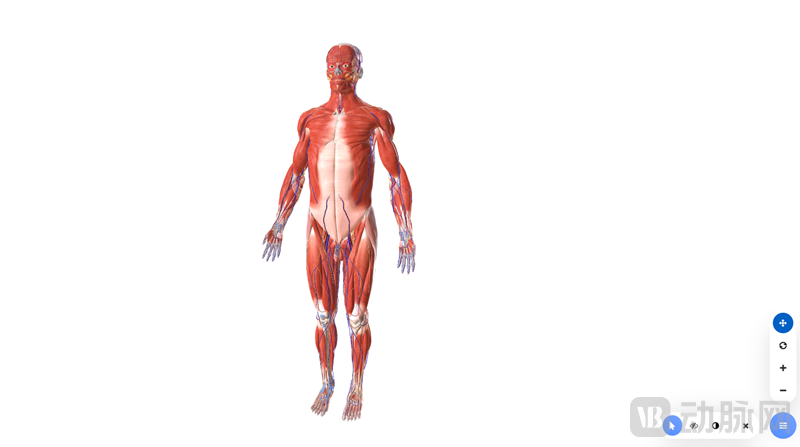
Meanwhile, “Zhi Ji” leverages trusted data and 3D visualizations to more effectively present users’ current health status. Its disease-related educational content helps patients better understand their conditions, even by visually displaying the physiological changes occurring within their bodies, thereby enabling users to gain a deeper comprehension of the educational material and a better understanding of their own health.
Available: Prevent problems before they arise, empowering users to take charge of their health
Built on the foundations of “trustworthiness” and “visibility,” users can gain a better understanding of the progression and development of relevant diseases. Meanwhile, changes in the status of the digital human body, derived from variations in users’ own data, are grounded in reliable data and integrated with artificial intelligence algorithms. By leveraging predictive models to provide targeted “health recommendations” based on trends in users’ health status, this approach helps users take proactive measures to prevent potential health issues before they arise.
When a user’s disease is still in its early stages, they can detect changes in their own body and take action to enable earlier prevention, diagnosis, and treatment, thereby nipping the disease in the bud before it worsens.
Powerful Team Lineup, Specializing in Digital Human Health
The creation of the Zhiji APP is attributable to the strong capabilities of the Tuojing Technology team.
It is reported that TuJing Technology has established an R&D team of more than 30 members. The team is led by Academician Zhong Shizhen of the Chinese Academy of Engineering and Academician Liu Yunyi of the Chinese Academy of Sciences, with Professor Fang Chihua, Director of the Department of Hepatobiliary Surgery at Zhujiang Hospital of Southern Medical University, serving as the principal investigator. With over two decades of specialized experience in medical 3D visualization, this professional R&D team has laid the foundation for the development of TuJing Technology’s Human Body 3D Visualization Cloud Platform.
Furthermore, Tujing Technology has collaborated with multiple universities and research institutions in China. These collaborations include joint research and development with the Suzhou Institute of Biomedical Engineering and Technology, Chinese Academy of Sciences, on 3D model reconstruction based on medical imaging; and cooperation with Zhujiang Hospital of Southern Medical University in areas such as 3D visualization of the liver, AI-based prediction of disease progression, and 3D visualization data-assisted diagnosis and treatment.
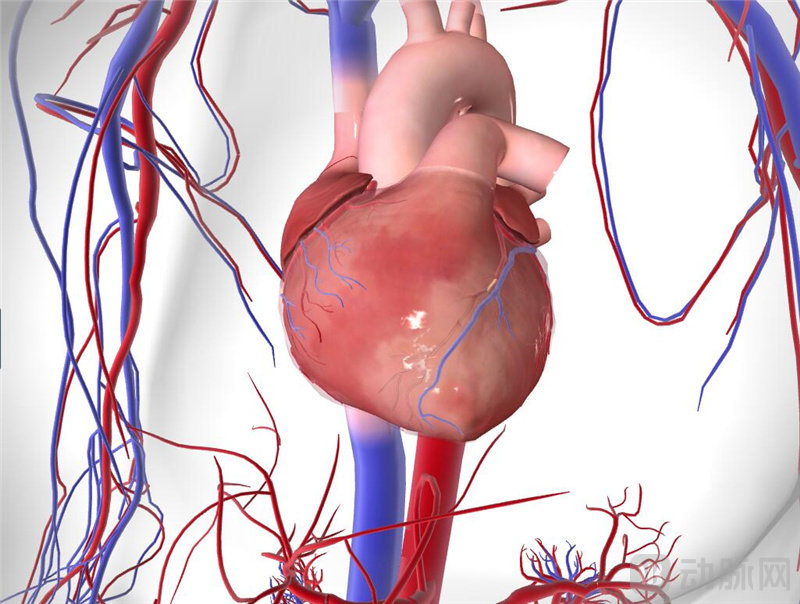
Currently, Tuojing Technology’s human anatomical models are highly detailed, comprising a total of 7,356 components and over 600 medical 3D models, with coverage extending from human organs to blood vessels and nerves. These foundational assets have established Tuojing Technology’s competitive advantage in the digital human health sector. In addition to the aforementioned Zhiji APP, Tuojing Technology has also developed a 3D Human Visualization Cloud Platform, providing research support to hospitals, scientific research institutions, and other entities.
“Digital Human” Research Continues to Deepen, with a Promising Future
The decision to focus on the digital human body sector reflects Tujing Technology’s optimism about the industry’s growth prospects. According to Li Benzhan, the industry still faces numerous pain points, which also present development opportunities for Tujing Technology.
He pointed out that current research still has shortcomings and is yet to fully meet the needs of hospital physicians and patients. “Hospital physicians seek visualization of the digital human body, going beyond merely clear anatomical structures and well-defined disease progression. They hope to gain more comprehensive and accurate insights to better diagnose and treat patients. Patients, on the other hand, wish to better understand their own bodies in order to maintain their health. These needs have not yet been effectively addressed. The value and role of the digital human body in related fields will continue to grow in the future.”
For society as a whole, the development of the digital human health sector will, on one hand, help patients gain a better understanding of diseases, thereby alleviating current tensions in doctor-patient relationships caused by unclear disease etiologies. On the other hand, it aligns with the “Healthy China” strategy by promoting preventive care to help reduce medical expenditures. Ultimately, it aims to shape individual destinies by enabling people to maintain healthier and more vibrant bodies.
As a tech startup, Tujing Technology aims to leverage its own capabilities to contribute to the industry, ultimately helping a broader user base better manage their health and further supporting the realization of the “Healthy China” initiative.