A Win-Win Collaboration: Chemical Giants Embrace Synthetic Biology Startups

Bota
Synthetic Biology Technology Platform Provider
Against the backdrop of “carbon neutrality,” we often envision how synthetic biology will revolutionize the traditional chemical industry in the manufacturing sector, and eagerly anticipate the disruptive changes it will bring. However, the targets of this supposed revolution—the established giants of the traditional chemical industry—have clearly not sat idly by. Instead, they have shifted from defense to offense, embracing innovation with a proactive attitude. Long before synthetic biology became a hot topic, these industry leaders had already made strategic moves in this area, even earlier than many synthetic biology startups.
Several well-known chemical giants, including DuPont, BASF, LG Chem, and DSM, have already made significant strides in the field of synthetic biology. In recent years, BASF acquired Isobionics, a biotechnology company specializing in the production of natural flavors and fragrances, and simultaneously entered into a collaboration agreement with Conagen, another company focused on the fermentation of fragrance ingredients.Investing in Bota is a key move for BASF to further expand its footprint in the field of industrial biotechnology.
So, what does entering the field of synthetic biology mean for the chemical industry? What kind of win-win scenario will emerge as chemical giants partner with synthetic biology startups? As traditional chemistry and synthetic biology become intertwined, what surprises will they bring to the industry?
VCBeat New Medicine and VCBeat Orange Bureau, in collaboration with Matrix Partners China, invited Cheryl Cui, Co-founder and CEO of Bota Biosciences; Zhiyun Yu, Partner at Matrix Partners China; and Mingyu Xue, Investment Vice President at Matrix Partners China. The discussion centered on the theme “What Has Been Accelerated by the Support of Traditional Chemical Giants?” and addressed current hot topics of interest in the synthetic biology industry. This article presents selected excerpts from the conversation.
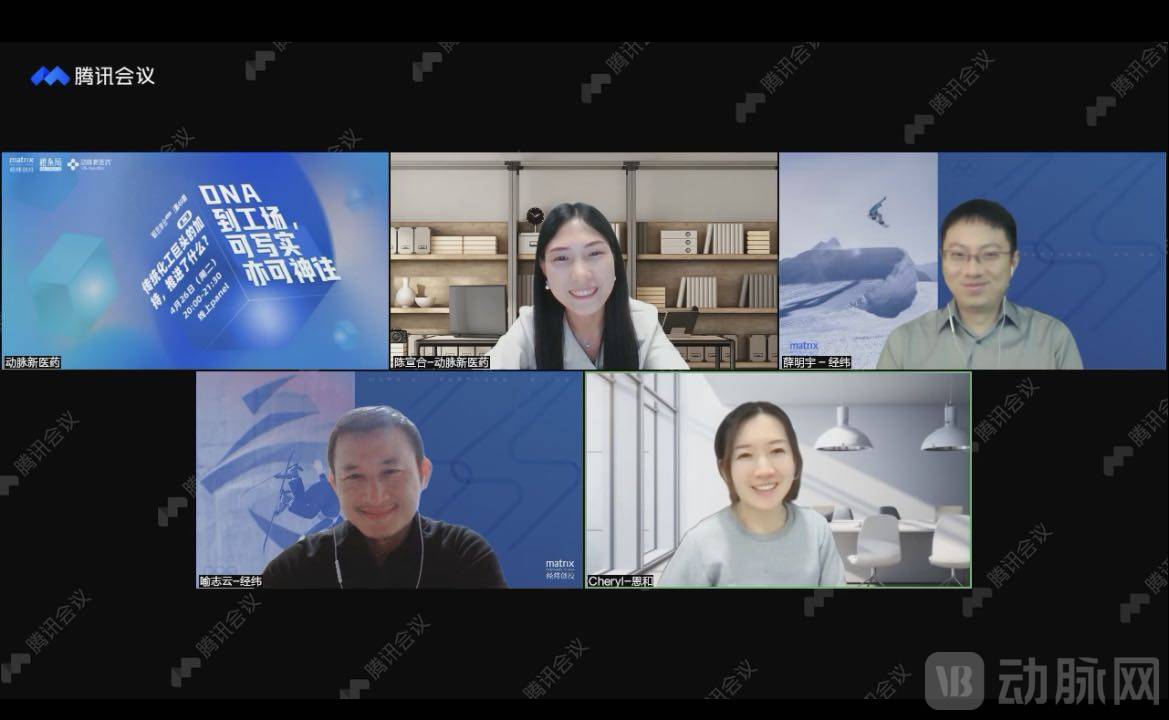
[VB Think Tank]】-【Synthetic Biology Series] Phase II Online Salon
Front row (top), from left to right: Chen Xuanhe, Reporter/Senior Researcher at VCBeat New Medicine; Dr. Xue Mingyu, Vice President of Investment at Matrix Partners China
Second row (bottom), from left to right: Dr. Zhiyun Yu, Partner at Matrix Partners China; Dr. Hao Cui, Co-founder and CEO of Bota Biosciences
Why Are Synthetic Biology Startups Gaining Favor with the Traditional Chemical Industry?
To understand why synthetic biology startups are favored by traditional chemical giants, we may draw insights from the collaboration between Bota and BASF.
Bota Bio, established in 2019, aims to systematically and engineeringly edit organisms by building a standardized, automated, high-throughput experimental platform integrated with machine learning and artificial intelligence. The company develops efficient, green, low-cost industrial biotechnologies suitable for large-scale production, providing key technological solutions for various industries, including chemicals, food, agriculture, and pharmaceuticals.
Regarding the reasons for investing in Bota, Markus Solibieda, Managing Director of BASF Venture Capital, has publicly stated, “Bota’s founding members possess extensive experience in biotechnology, chemistry, and entrepreneurship. Meanwhile, its highly innovative biological platform can accelerate product development and facilitate sustainable, cost-effective production.”“The investment in Bota will further strengthen BASF’s sustainability initiatives and enhance its innovation potential in the rapidly growing Asian market.”
It took BASF nearly a year to select and finalize Bota as its investment partner. “Our initial contacts with BASF began in March 2020, just as the pandemic was starting to rage globally. At that time, we held our earliest discussions and negotiations with BASF online. The entire process, from initial contact to finalizing the investment partnership, lasted approximately one year. BASF conducted thorough due diligence on our team and technological background. We strongly sensed their emphasis on emerging biotechnologies and sustainable development strategies within the global context of carbon neutrality,” introduced Cheryl Cui.
The enduring success of industry giants over a century stems from their ability to rapidly respond to subtle market shifts and continuously embrace innovation. Venturing into synthetic biology represents a new survival strategy for traditional chemical giants amidst the wave of innovation.
What Surprises Will the “Interweaving” of Traditional Chemistry and Synthetic Biology Bring to the Industry?
What kind of synergy and disruption will emerge when traditional chemical giants join forces with synthetic biology companies?
“As a chemical company with over a century of history, BASF boasts a profound corporate culture and strong capabilities in expanding its international market. Given the extensive scope of BASF’s business, which spans six major sectors—chemicals, materials, industrial solutions, surface technologies, nutrition & care, and agricultural solutions—the company has adopted the slogan ‘We made chemistry.’” Cheryl Cui shared her impressions of collaborating with the BASF team.“BASF has a profound understanding and judgment of global market trends, while also being able to deeply explore and gain insights into customer needs.”
The McKinsey Global Institute (MGI) released a report titled “The Bio Revolution: Innovations Transforming Economies, Societies, and Our Lives,” which pointed out that 60% of industrial products could be manufactured through biotechnology in the future. “However, this will undoubtedly require a long period of accumulation and development,” said Cheryl Cui. “Over the past century of development in the chemical industry, many processes have undergone extensive cost optimization. Therefore, attempting to replace such a wide variety of products with biotechnology all at once faces extremely high cost requirements. Under these circumstances, startups may prioritize selecting categories more suitable for biotechnological approaches as their initial focus.”
“Raw materials can be applied across industries, but the requirements for products vary among different niche sectors. Our partners help usDiscovering New Frontiers, Exploring New Market Applications, and Gaining Insights into Market Demandplayed a very critical role in this aspect,” said Cheryl Cui.
For BASF, investing in synthetic biology companies such as Bota is primarily aimed at strengthening its sustainability initiatives; for Bota, close collaboration with BASF will provide stronger support in launching new products and scaling up production.
The above discussion primarily represents the field of biomanufacturing, whereas synthetic biology undoubtedly covers a broader scope.
The development trajectory of any industry mirrors the logic of scientific research: identifying problems and solving them. Therefore, in the current field of synthetic biology, two inevitable industrial challenges are “product selection” and “process scale-up.”
What insights do various industry stakeholders offer on these two major challenges, and how are they joining forces to drive the advancement of synthetic biology?
Chemical Synthesis and Biosynthesis: Industry Giants and Startups Join Forces to Drive Industrial Momentum Forward
“In many industries, it is common to see ‘industry giants and startups moving forward in tandem,’ a phenomenon not limited to the field of biomanufacturing. The reason lies in the fact that large corporations possess robust industry resources, including insights into market trends and customer needs, as well as the ability to connect upstream and downstream segments of the industrial chain. These advantages create numerous opportunities for collaboration with startups,” pointed out Xue Mingyu, Vice President of Investment at Matrix Partners China. He noted that such interactions and collaborations between large listed companies and small startups exist not only in the biomanufacturing sector but also across many other industries, serving as one of the key drivers propelling the entire industrial landscape forward with rapid momentum.
From the perspective of end markets, the United States and China differ significantly. The U.S. end market is predominantly led by global chemical giants, whereas in many traditional chemical subsectors, Chinese chemical companies take the lead, even extending their influence to the global market. Although Chinese chemical giants lag somewhat behind in terms of the timeline for deploying synthetic biology initiatives, this delay has minimal impact.This clustered nature of China’s chemical industry may facilitate easier and deeper collaboration between the sector and startups in the field of synthetic biology.
For instance, in late May 2021, Angel Yeast, the leading yeast manufacturer, entered into a strategic partnership with the synthetic biology startup Synrise Biotechnology, and jointly established Hubei Angel Synrise Biotechnology Co., Ltd. to promote the development of a green industrial cluster based on synthetic biology technologies. As the top enterprise in Asia and the third largest globally, with its core business focused on the production of various yeast products, Angel Yeast has accumulated extensive expertise in the large-scale industrial production of yeast. Synrise Biotechnology leverages yeast as a cell factory to synthesize high-value-added products.
The establishment of this strategic partnership addresses Sensynth’s urgent need for production facilities, as Angel Yeast provides pilot-scale production workshops and equipment that require only minor modifications by Sensynth for immediate use. Leveraging Angel Yeast’s advantages in supply chain management, manufacturing processes, and in-process quality control further enhances the flexibility of Sensynth’s industrialization strategy. For Angel Yeast, collaborating with Sensynth mitigates its reliance on a single product line, thereby advancing the company’s sustainable development. Moreover, deep cooperation with Sensynth creates synergistic support for the growth of Angel Yeast’s other subsidiary business segments.
Overall, in the manufacturing sector, collaborations between traditional chemical giants and synthetic biology startups are undoubtedly one of the future trends in the industry.
Trust and Support, Funding and Resources: Capital Accompanies Synthetic Biology Startups on Their Growth Journey
“In the early stages of synthetic biology’s development, the initial support undoubtedly came from early-stage venture capital firms. At the beginning of 2020, few companies in China’s industry sector were even using the term ‘synthetic biology.’ During our fundraising efforts, Bota had to provide extensive explanations. We were fortunate to encounter Bota’s early investors, including Matrix Partners China, at that time. Throughout our journey, they have provided us with substantial support in terms of funding, industry resources, and corporate management,” said Cheryl Cui, reflecting on how Matrix Partners China, as an early investor, has empowered the team’s development.
Prior to BASF’s investment in Bota, Matrix Partners China, as the lead investor, participated in Bota Biosciences’ Series A financing round. “Our investment in Bota was primarily driven by our confidence in Cheryl and her team, our trust in their capabilities, and our positive outlook on the industry,” said Yu Zhiyun, Partner at Matrix Partners China, who led the firm’s investment in the Bota team. “Bota is the first company Matrix has invested in within the synthetic biology sector, specifically in the niche of biomanufacturing. We had known Cheryl for a long time before she founded Bota. I recognize that Cheryl holds herself to very high standards in her work and maintains equally high expectations for team execution. The human factor is a critical consideration for early-stage institutional investors like us. To this day, we still regard Bota as a world-class team that not only matches top international teams but also leverages certain advantages inherent to Chinese enterprises.”
“Secondly, we began to gain an in-depth understanding of the synthetic biology industry three years ago, in 2019. We found that although this sector has several decades of industrial development history and has navigated numerous pitfalls, it is now emerging from these challenges. It undoubtedly holds strong prospects for future growth, with abundant opportunities within.”
Yu Zhiyun stated that within Jingwei, the investment team comprises over 40 professionals, while the post-investment services team has more than 90 members. “As an early-stage investment firm, we place great emphasis on delivering value-added post-investment services to our portfolio companies. Currently, these services primarily encompass six major modules: proactive diagnostics, industry chain synergy, emergency medical support, front-end empowerment by due diligence teams, the ‘Yiwan Entrepreneurship Camp’ startup ecosystem community, and empowerment through Sci-Tech Innovation Hub activities.”
Furthermore, as investment institutions systematically lay out their strategies in the field of synthetic biology, increasingly profound industry insights can provide significant support to startups. Take product selection as an example.
“A large number of synthetic biology startups in the market are extending their laboratory achievements into industrial applications—such as which cellular pathways the team has constructed, which microbial strains they have developed, and which enzymes they have studied... Their product selection strategy is essentially a linear extension of their laboratory results.” Pointed out Xue Mingyu, Vice President of Matrix Partners China, this approach to product selection is more self-centered rather than being driven by market demand and customer needs, highlighting the necessity to find a fit with the market.
Yu Zhiyun believes that,“Product selection” critically requires a “begin-with-the-end-in-mind” product mindset grounded in a whole-industry-chain perspective.“The leap in the field of synthetic biology from the laboratory to the industry is by no means about doing whatever we are capable of producing. Instead, the core mindset must be reversed: we should leverage synthetic biology technologies to address what the market truly needs.”
Yu Zhiyun stated that a product may be selected as a candidate for biosynthetic pathway development due to prohibitively high costs or insufficient supply associated with traditional synthesis methods, or because of severe pollution issues.Companies should consider pursuing biosynthesis only when it offers significant advantages over traditional chemical synthesis. Before committing, they must also evaluate whether the cost of biosynthetic manufacturing can be reduced to a sufficiently competitive level and whether their chosen synthetic biology platform possesses long-term competitiveness.
“This is also what we often say now,”Biomanufacturing in synthetic biology follows a three-step approach: producing the product, manufacturing it cost-effectively with high quality, and commercializing it.“Xue Mingyu, Vice President of Matrix Partners China, added that before selecting products, companies should consider issues from multiple dimensions, such as: ‘Can the chosen product be sold? How much can be sold? To whom? Through what sales channels? Are the customers B2B or B2C? … These are all questions founders should clarify at the outset.’”
Beyond financial support, investment firms possess valuable industry resources and the ability to form insights and judgments from a whole-industry-chain perspective—key factors that drive the rapid growth of synthetic biology startups and help them avoid unnecessary detours. Of course, finding an investor that understands the technology, appreciates the team, and shares the startup’s values is no easy task. Amid the heightened enthusiasm surrounding synthetic biology, both startups and investors can sometimes become impetuous. One thing is certain: with trust and support, capital and resources, a strong investment partner can accompany synthetic biology startups throughout their growth journey.
Glory and Troughs, Hardships and Rebirth: Insights for the Synthetic Biology Industry from the Development History of a U.S. Synthetic Biology Giant
Amyris, a pioneer in synthetic biology, successfully went public and reached the peak of the capital market, enjoying unparalleled prominence, thanks to its impressive track record in the industrial production of artemisinin. However, this success was short-lived. When large numbers of African farmers began producing substantial quantities of artemisinin using traditional cultivation methods, the compelling commercial narrative of biosynthetic artemisinin came to an end. Amyris also attempted to produce petroleum substitutes by feeding sugar to bacteria, but coincided with a sharp global decline in oil prices, which erased the cost advantage of biofuels and dealt another blow to the company. It was only when Amyris shifted its focus to the consumer sector—leveraging synthetic biology to manufacture raw materials such as vitamin E and squalene, and launching its own consumer brands—that it began to see a turning point for its survival.
Zymergen, a leading company in synthetic biology, staked its entire future on Hyaline, a flexible screen material for mobile phones and televisions. However, it suffered a major failure due to misjudging market demand and encountering challenges in process scale-up, leading to the CEO’s resignation and a precipitous drop of more than half in its stock price… Ginkgo Bioworks, shorted by Scorpion Capital amid suspicions of self-dealing transactions, also entered a period of sluggish stock performance following the public outcry…
The aforementioned star players in the field of synthetic biology have all experienced varying degrees of ups and downs, triumphs and setbacks in their corporate development. However, by learning from the pitfalls they encountered in product selection and process scale-up, and drawing lessons from their fluctuating fortunes, the synthetic biology industry—having endured its growing pains—can progress more smoothly and sustainably. Only then will the industry’s “second spring” blossom with greater brilliance.
“For any enterprise, identifying genuine customer needs is particularly important, especially in the field of synthetic biology.Assessing the Extent to Which Synthetic Biology Can Address Customers’ Genuine Needs“If it is feasible and offers significant advantages through biosynthetic approaches, then we should pursue it with full commitment; if it is not currently achievable and there is a substantial gap between reality and our aspirations, then we should return to the fundamentals of the technology to assess whether it remains immature and whether the present moment is appropriate for leveraging synthetic biology to address this need.”
Xue Mingyu, Vice President of Matrix Partners China, stated that the transition of synthetic biology from the laboratory to industrial application places exceptionally high demands on founders. “Founders must not only possess scientific expertise but also understand industrial-scale scale-up, and, crucially, grasp market needs and dynamics.”How can the pathway from science to engineering to market, and from the laboratory to industry, be effectively bridged? These are critical questions.”
While product selection and process scale-up remain the “two major mountains” that the synthetic biology industry has yet to conquer, there are still fundamental strategies to follow to ensure one does not slip back or fall behind during the ascent. By drawing on the industry’s historical development for experience, learning from past failures, actively leveraging external resources to complement strengths and address weaknesses, and pursuing win-win cooperation, startups can undoubtedly become more “robust,” advancing each step of their development with greater steadiness and resilience.
Cheryl Cui shared that Bota’s current progress is relatively positive and largely in line with expectations.
“For a synthetic biology company, both the technology platform and the products are crucial. A platform that fails to yield high-quality products is not a good one, and without a robust platform, it is difficult to consistently develop superior products. However, it is challenging for a company to build end-to-end capabilities all at once, and this approach is unrealistic for most enterprises,” introduced Cheryl Cui. In its early stages, Bota chose to leverage its team’s strengths to establish a strong technology platform, and then began developing related products based on this foundation. During the platform-building process, Bota allowed itself ample time for careful consideration in product selection. “Meanwhile, capital empowerment and collaborations with industry partners have provided significant support in this regard.”
“Our team’s strength lies in platform technology; for product manufacturing, we have partnered with industry collaborators to jointly advance product commercialization.”
“Overall, in the course of the company’s development, weLeveraging its own strengths, it actively engages external industry partners in areas where it lacks advantage, continuously learning from them through collaboration to address its weaknesses.“Move forward step by step, at a steady pace. We believe that the translation of scientific research into industry and the leap from product to brand will both be spiral processes of upward progress. No matter which path is taken, the ultimate requirement is to get things done,” concluded Cheryl Cui.
This article features only selected excerpts from the guest’s discussion on this topic. For more insightful discussions on hot topics in the synthetic biology industry, please watch the event replay: scan the QR code below to access the video recording.

For more information on the synthetic biology industry, please scan the QR code below to add our assistant and join the [Synthetic Biology] Industry Exchange Group.