

Accenture Report Insights: Laboratory Digitalization Gains Momentum
Introduction:
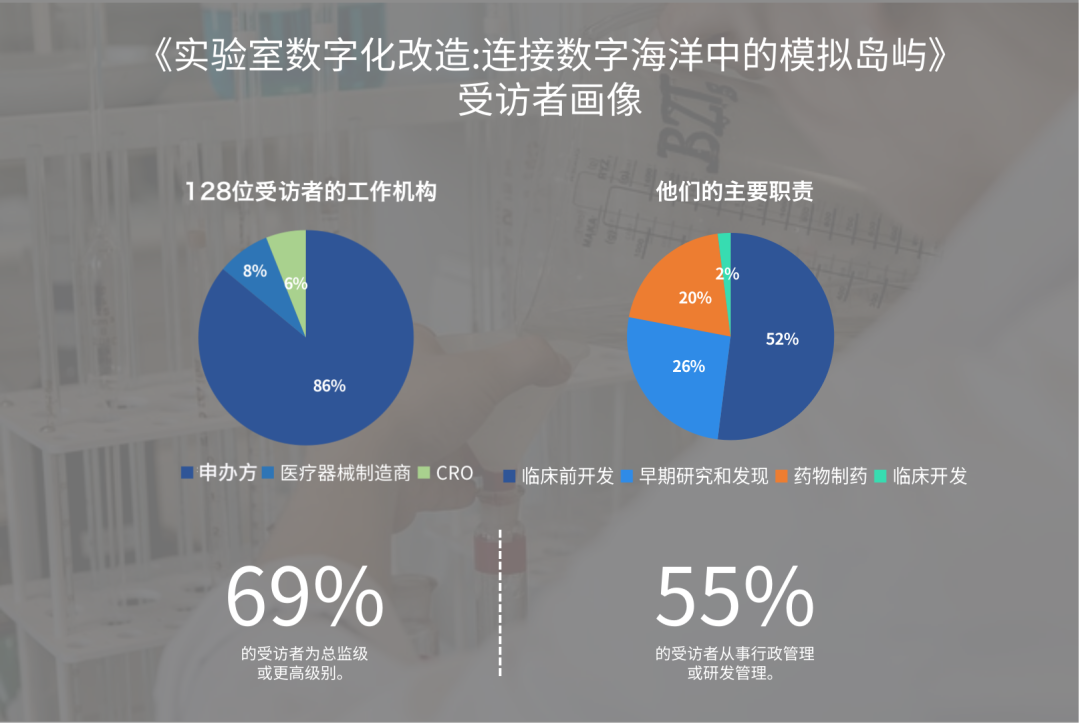
This is a survey conducted by Accenture among 128 leaders in the life sciences industry, aimed at understanding the extent to which pharmaceutical companies have undergone digital transformation, ranging from the maturity of their digital strategies to the level of implementation of digital technologies in laboratories.
Among the respondents, 86% were sponsors of clinical trials, 8% were medical device manufacturers, and 6% were CRO companies.
Of these, 52% are engaged in preclinical development, 26% in early-stage research and discovery, 20% in drug manufacturing, and 2% in clinical development.
As the digital wave surges, only 23% of the laboratory industry has adopted it
From academic institutions and nationally funded research institutes to global pharmaceutical and biotechnology companies, thousands of laboratories across the life sciences ecosystem have developed a diverse array of transformative therapies for patients worldwide.
Nevertheless, when they step into the laboratory, they are typically confronted with a work environment whose appearance and operations remain unchanged from the last century. In other words, despite the passage of decades, laboratories have not achieved substantial improvements in productivity or processes; most instruments remain unconnected, and data exists in isolated silos.
On the other hand, the convergence of science and technology is creating more novel products at an unprecedented pace. According to Accenture research forecasts, new scientific therapies will account for 54% of sales between 2017 and 2022, up from 47% between 2012 and 2017. Leaders in this field are heavily investing in emerging technologies to improve clinical outcomes and patient experiences, while partnering with ecosystem collaborators to accelerate innovation. With each advancement, emerging science increases the pressure on laboratories to adapt to these more complex discovery pathways and quality control scenarios.
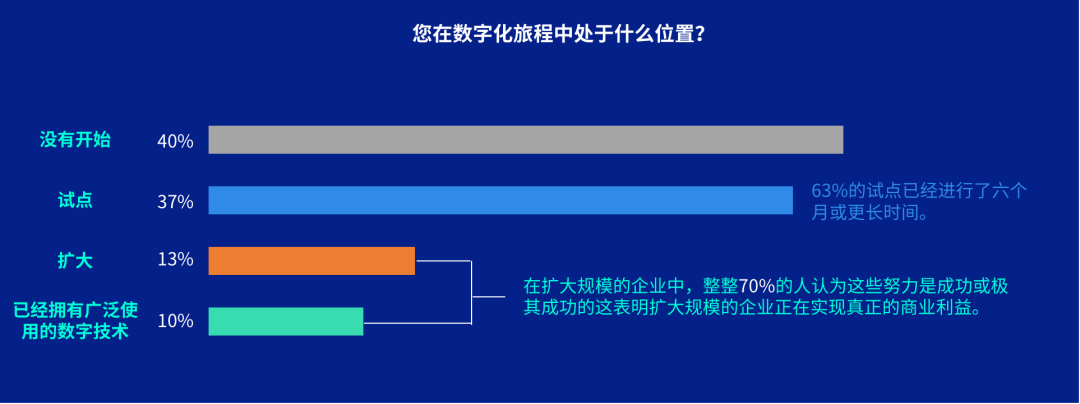
The pace of innovation in the life sciences industry is accelerating, requiring laboratories to make substantial investments to keep up. However, survey results indicate that 40% of organizations have not yet begun applying digitalization to their R&D or quality control laboratories, while another 37% remain in the pilot phase.
In contrast, the evidence for positive return on investment is strong: 70% of respondents scaling up their operations reported achieving commercial value that exceeded expectations.
Laboratory Digitalization Is Gaining Momentum, Becoming an Irreversible Trend with a Promising Future
In an isolated environment, increasing data only increases system memory usage, leading to disorder.
A wave of technological transformation has swept across nearly every industry. In 2019, global spending on digital transformation reached $1.25 trillion, and it is projected to surge to $1.97 trillion by 2022. It is estimated that over 80% of the world’s population is now digitally connected. We all live, learn, and work in a digital world.
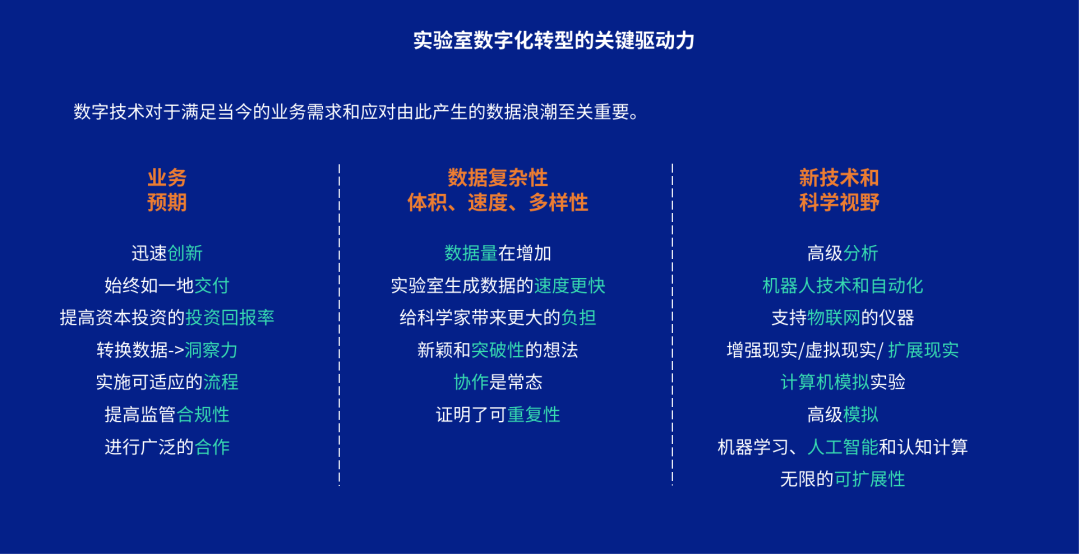
However, progress has been slow in pharmaceutical and biotechnology R&D and quality control laboratories. While new technologies have generated vast amounts of data, they have also exposed a critical weakness: the inability to harness the power of this data deluge. Whether in research laboratories or those generating and analyzing clinical data, the volume, velocity, and variety of data produced by researchers are overwhelming the systems designed to support them. Up to 70% of experiments are irreproducible, often due to the inability to locate original research data or because experimental conditions (metadata) are inconsistently or inadequately recorded.
Undoubtedly, the current situation brings not progress but impediments. Unless we take immediate action to bring order to this chaos, we are likely to miss the opportunity to successfully advance science and improve people’s lives around the world.
In a Data-Driven World, Which Areas Are Industry Leaders Focusing on for Improvement?
The life sciences industry is at an inflection point, and we are increasingly recognizing that maintaining competitiveness requires better utilization of all data assets.
The sufficient maturity of technologies such as extended reality, artificial intelligence, machine learning, and the Internet of Things has provided a critical prerequisite for building truly data-driven “digital laboratories.”
However, the digitalization of laboratory experiments is not an overnight endeavor; it requires a gradual, context-specific approach underpinned by careful planning based on effective, sustainable, and comprehensive data.
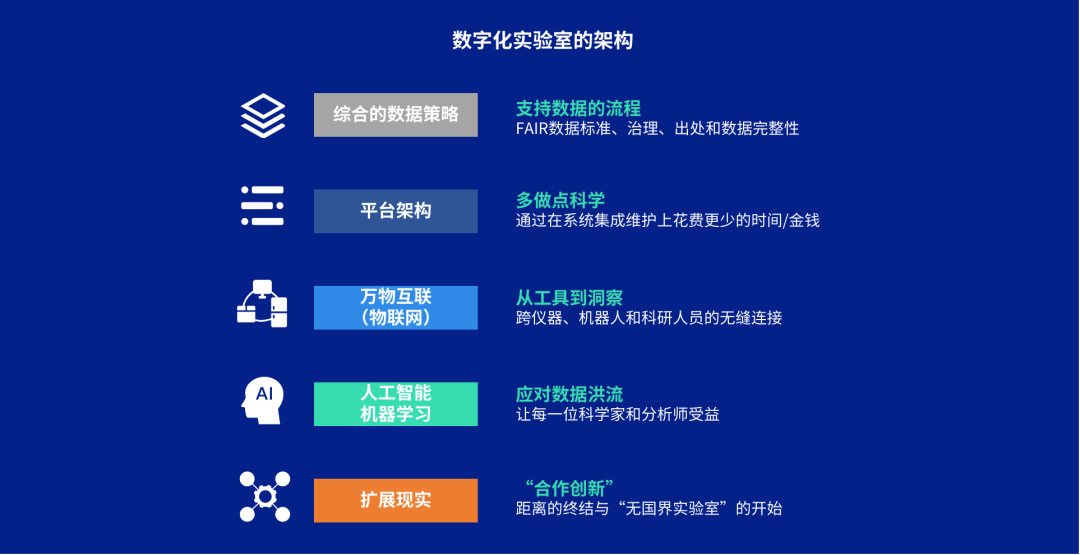
The digitalization process should be implemented in phases, tailored to the laboratory’s specific circumstances. The ultimate “ideal” stage entails a redefined laboratory environment driven by an end-to-end data supply chain, deeper adoption of artificial intelligence, comprehensive laboratory automation, and the implementation of computational methods and simulations.
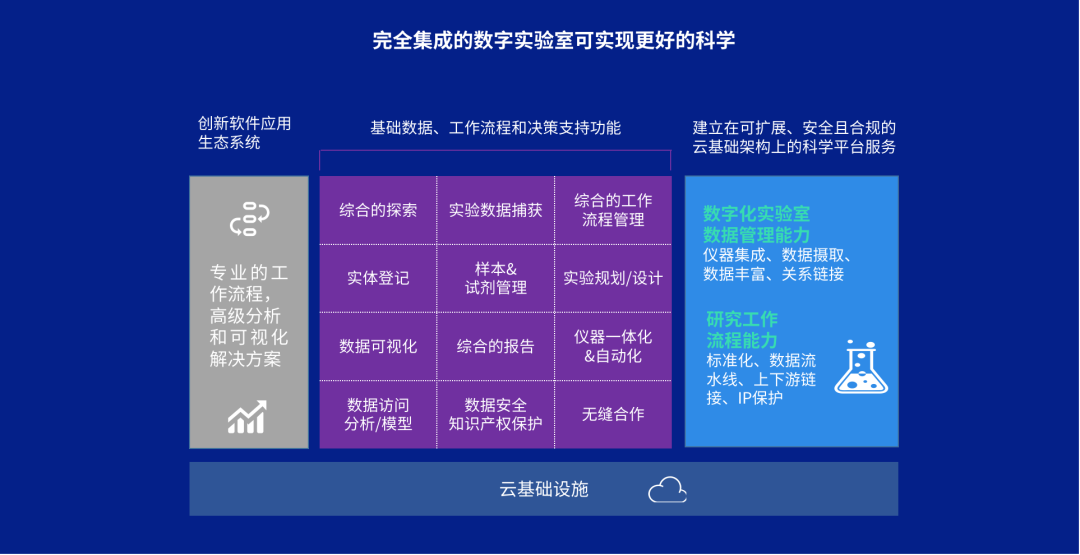
When asked, “Which operational challenges or business issues do you hope to address through digitalization?”
60% of respondents hope to improve overall laboratory operations, including instrument utilization and maintenance, while 59% seek assistance or enhancement of staff workflows within the laboratory. This aligns closely with our customer surveys, which indicate that rational resource allocation and efficient collaborative processes are common pain points in laboratories.

The Ultimate Goal of Datafication: Building a Bridge to Analog Islands in the Digital Ocean
The pandemic has accelerated our thinking on digital laboratories. Although not everyone set sail from the same port, nor did everyone’s journey follow the same route, the general direction remains largely consistent.

Through ideation, evaluation, cultivation, and scaling, it has gradually evolved into an integrated platform.
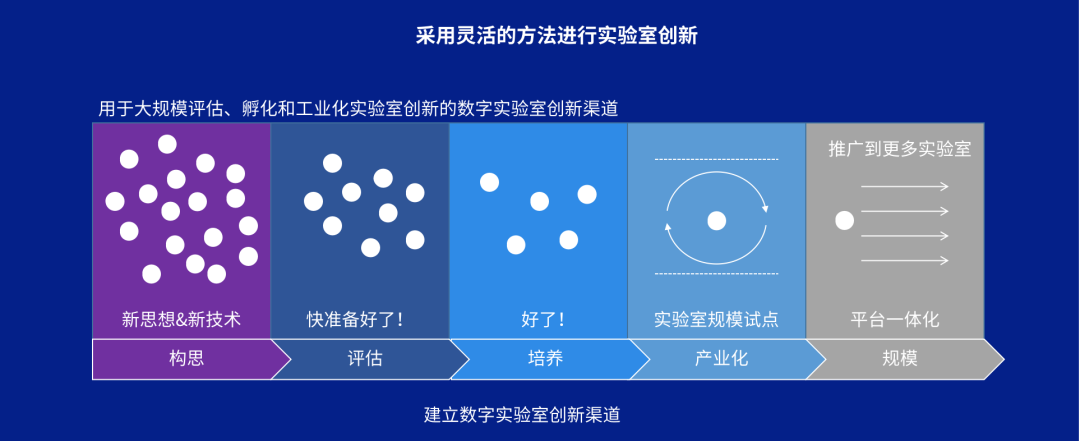
We have reason to expect that, in the future, modern digital laboratories will truly transform the way innovative biopharmaceutical products are created and brought to market. Researchers can leverage prior research from internal collaborators and external partners, real-world evidence, and public research efforts to rapidly identify new disease targets as well as potential novel therapies and therapeutic pathways. By employing models powered by artificial intelligence, machine learning, and digital twin technologies, much of the work can be conducted digitally, significantly reducing the subsequent tasks that need to be performed in physical laboratories.
Within R&D laboratories, complex and miniaturized analyses that were previously unattainable will become routine and fully automated. This transformation will accelerate insights throughout the discovery process, significantly shortening the time required to advance promising new therapies into clinical trials and increasing the likelihood of clinical success for candidates entering the clinical pipeline.
The laboratory has become a familiar and comfortable working environment for researchers. Extended reality (XR) is used to facilitate technology transfer, training, and technical support for new methodologies, while also guiding laboratory staff in the implementation of these methods.
High-level testing automation will further enhance quality and reduce variability in quality control operations, thereby improving the accuracy of test execution.
Digital Lean Quality Inspection Laboratory, guided by an integrated manufacturing and quality control “control tower,” will provide real-time predictive analytics to ensure transparency throughout the manufacturing and quality inspection processes. This will reduce the process control efforts required from manufacturing and laboratory personnel, enabling them to focus on predicting and preventing adverse events rather than reacting to them after they occur. In turn, this will enhance visibility into quality inspection laboratory performance, asset utilization, and resource scheduling, thereby supporting long-term strategic laboratory planning.